
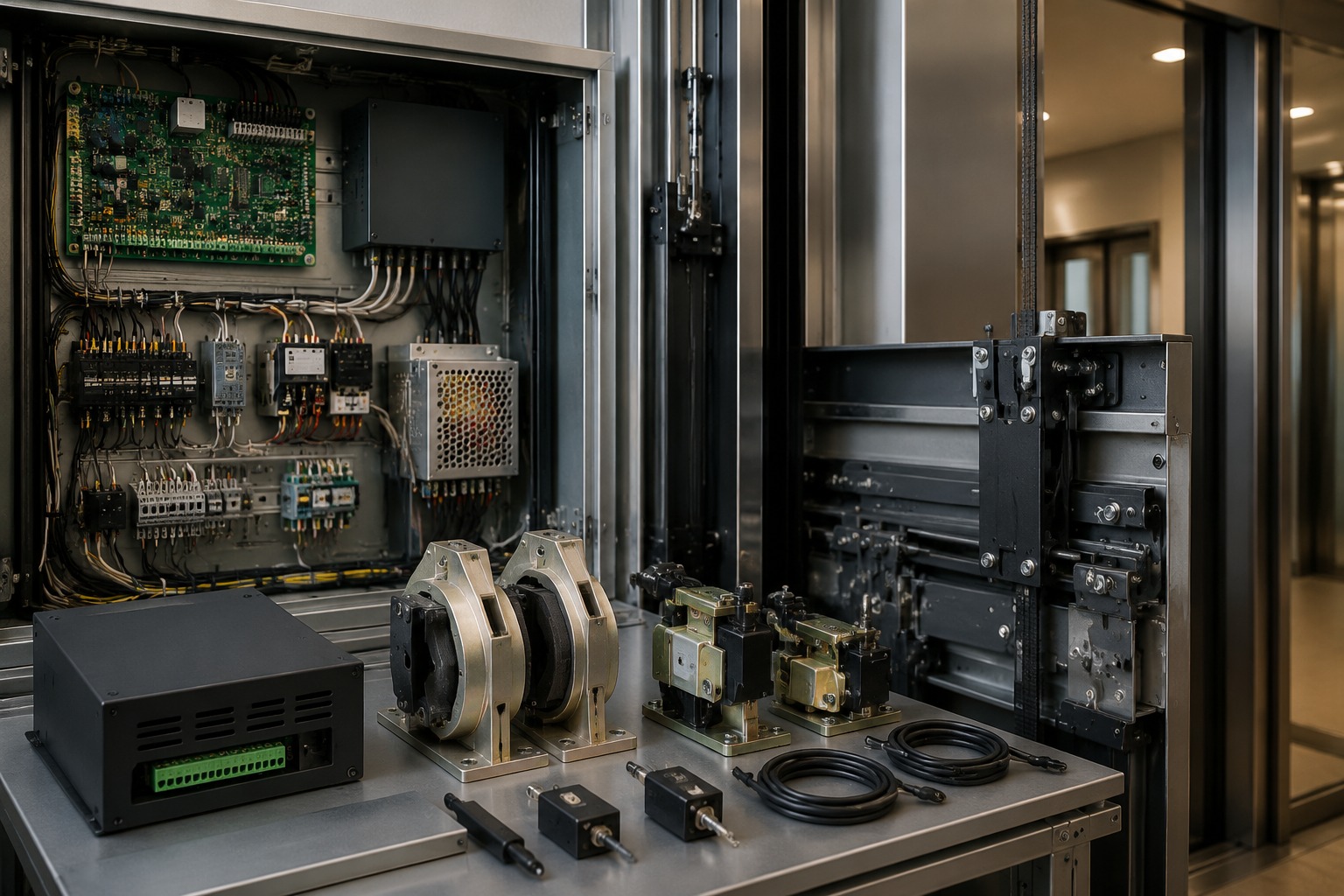
Brake power components are small parts with a large safety role in any elevator system. In practical terms, they help the brake open when the lift needs to run and help the brake close correctly when the car must stop. For maintenance companies, distributors, building owners, and modernization contractors in India, choosing the right brake release power supply, constant current brake supply, 48V brake power module, and related controller parts is essential for reducing downtime and preventing repeat faults.
Across Indian cities such as Mumbai, Delhi NCR, Bengaluru, Chennai, Hyderabad, Pune, Ahmedabad, and Kolkata, lift traffic is rising in residential towers, hospitals, metro-linked commercial blocks, hotels, and industrial sites. In these environments, brake circuits must perform reliably during normal operation, leveling, emergency rescue procedures, and restart after power disturbances. A weak or mismatched brake power part may lead to delayed release, noisy operation, overheating, nuisance shutdowns, or unsafe stopping behavior. That is why buyers today are paying closer attention to model matching, current stability, voltage accuracy, insulation quality, and replacement testing.
This guide explains how elevator brake power parts work, where different product types fit, what warning signs to watch for, how to test after replacement, and how to plan maintenance stock for the Indian market. It also covers 2026 trends, including smarter diagnostics, sustainability pressure, and modernization demand in aging building stock.
For teams already sourcing parts, it is useful to review specialized options such as a brake release power supply for lifts, a constant current brake release power supply, a 48V brake power supply unit, or a wire rope brake controller for elevator applications. Each suits different control logic, brake coil requirements, and field conditions.
What brake release power supplies actually do
A brake release power supply converts and regulates electrical power so that the elevator brake coil receives the correct energy to release the brake at the right moment. In most traction lifts, the brake is spring-applied and electrically released. This means the brake remains mechanically engaged unless electrical power energizes the coil to open it. The power supply therefore plays a direct role in motion readiness, ride quality, and stopping dependability.
When an elevator controller commands movement, the brake release circuit must energize quickly and within the correct output range. If output is unstable, release can be slow or incomplete. This may create drag on the machine, increase heat, cause abnormal sounds, or trigger faults related to starting torque, drive current, or motor speed feedback. In buildings with high duty cycles, such as office towers in Gurugram or mixed-use projects in Mumbai, even minor brake release irregularities can become repeated service calls.
Brake release power supplies are also relevant during rescue scenarios. If a lift must be moved under controlled conditions for passenger evacuation, the brake release system must respond predictably. That does not mean the power supply acts alone; it works together with the main controller, safety chain, drive logic, and machine brake assembly. Still, if the supply is weak, unstable, or incompatible, the entire process becomes less dependable.
In modernization work, technicians often face mixed-generation equipment. A building may retain an older machine while upgrading control boards, landing fixtures, or drive systems. In such cases, the brake power module must be selected by electrical characteristics, physical fit, and application logic rather than by visual similarity alone. Output voltage, inrush current behavior, holding current needs, connector type, mounting pattern, and thermal behavior all matter.
| Brake power function | Why it matters | Typical field symptom if weak | Risk level | Recommended check | Common site type in India |
|---|---|---|---|---|---|
| Initial brake release | Allows car movement at startup | Car hesitates before moving | High | Measure output during release command | Residential towers |
| Current stability | Prevents partial release and heat | Buzzing or drag sound | High | Check coil current waveform | Commercial complexes |
| Holding performance | Keeps brake open during travel | Intermittent trip while running | High | Monitor sustained output voltage/current | Hospitals |
| Thermal tolerance | Supports repeated operation | Fault after peak traffic | Medium to high | Inspect heat marks and ventilation | Metro-linked offices |
| Signal coordination | Matches controller timing | Erratic start-stop sequence | High | Review command timing and relays | Hotels |
| Rescue support | Helps controlled emergency release | Rescue movement not available | Critical | Perform rescue-mode verification | High-rise buildings |
The table above shows why these parts should never be treated as generic electrical accessories. They are part of a safety-related control chain and should be evaluated by function, not only by appearance or price.
Where constant current brake supplies are most useful
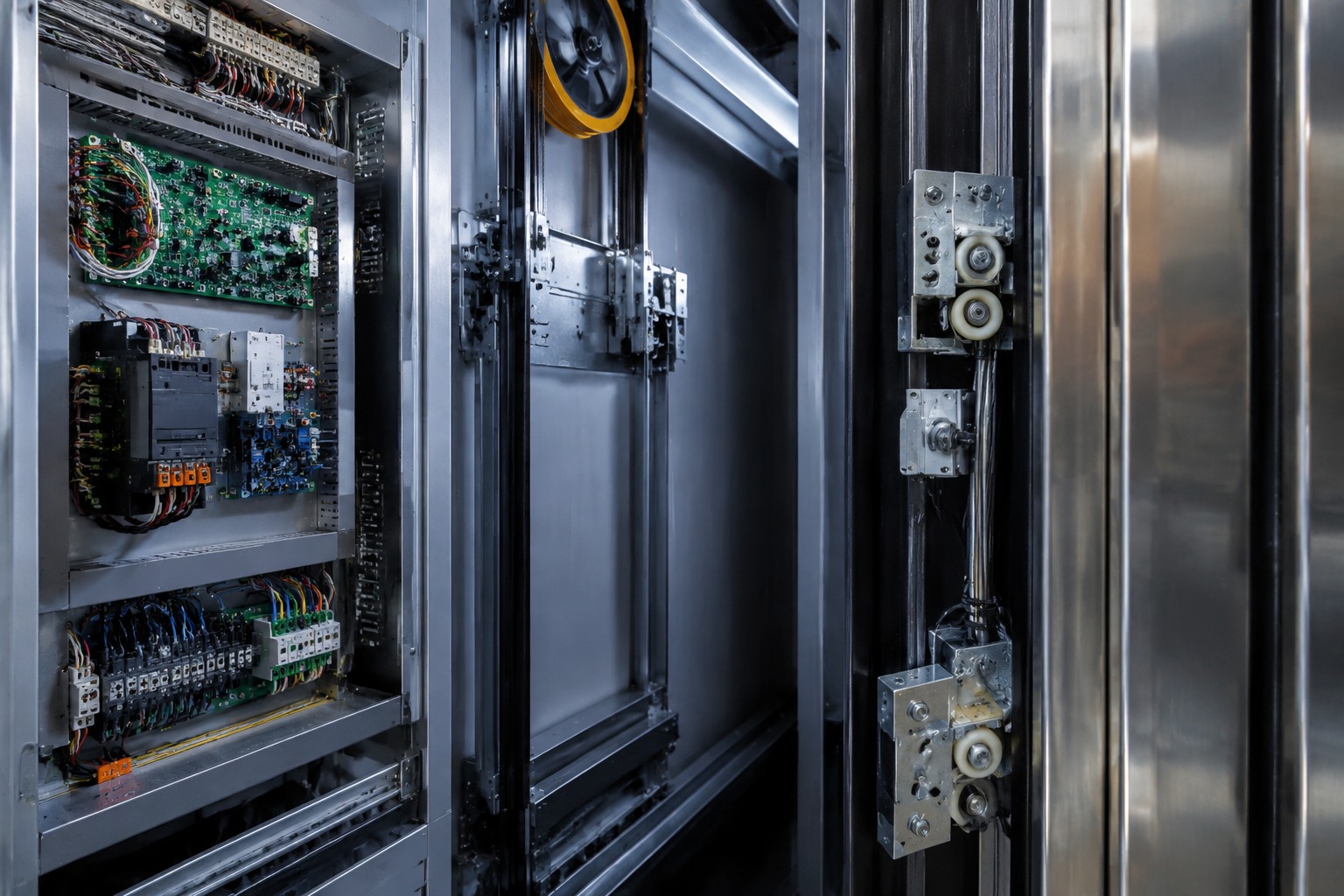
A constant current brake supply is designed to maintain a controlled current to the brake coil. This is especially useful in systems where coil performance depends more on stable current than simple voltage availability. In practice, constant current designs can improve consistency when supply fluctuations, thermal variation, or coil characteristics might otherwise affect release performance.
In India, power quality can vary by region, building infrastructure, and backup power arrangement. Sites that frequently transfer between mains supply, generator backup, UPS-supported control circuits, or variable loading conditions may benefit from more stable brake coil energization. This is one reason constant current brake power supplies are often considered in modernization and recurring fault cases.
Typical use cases include high-cycle passenger lifts, older elevators with sensitive brake coils, systems that have shown repeated partial-release symptoms, and applications where the manufacturer’s original control design calls for regulated coil current. In service-intensive properties such as shopping centers in Chennai or corporate campuses in Bengaluru, this type of supply can support more repeatable operation through daily peak periods.
However, constant current is not automatically the right choice for every lift. Selection depends on the brake coil specification, original equipment design, drive timing, and service history. If the wrong type is installed, the brake may release too slowly, remain over-energized, or operate outside intended parameters. That is why maintenance teams should compare electrical data carefully before substitution.
For buyers looking at regulated options, a dedicated constant current brake release power supply can be relevant where the application requires steady coil behavior and dependable release response.
| Application scenario | Why constant current helps | Expected benefit | Possible limitation | Best buyer type | Priority level |
|---|---|---|---|---|---|
| High-traffic office lift | Reduces release variation across cycles | Fewer nuisance stops | Needs exact matching | Maintenance company | High |
| Older modernization project | Supports sensitive coil behavior | More stable operation | Controller compatibility review needed | Modernization contractor | High |
| Generator-backed building | Handles supply fluctuation better | Improved consistency | Not a fix for all power issues | Building owner | Medium |
| Hospital lift | Supports predictable release timing | Reduced service risk | Requires careful testing | Facility team | High |
| Freight lift | Helps under repetitive load cycles | Lower heat-related instability | May need higher durability grade | Industrial operator | Medium |
| Recurring brake fault site | Improves current control | Faster root-cause isolation | Cannot correct mechanical wear | Distributor/service partner | High |
The explanation here is important: constant current products are useful when the lift needs controlled coil energization, but they are not a shortcut around worn brake linings, damaged coils, poor wiring, or incorrect controller timing. Electrical stability and mechanical condition must be evaluated together.
The line trend above reflects a realistic market pattern: demand for elevator brake power parts in India is increasing due to new construction, higher maintenance expectations, and growing modernization in mature urban building stock.
Key points when selecting a 48V brake power supply
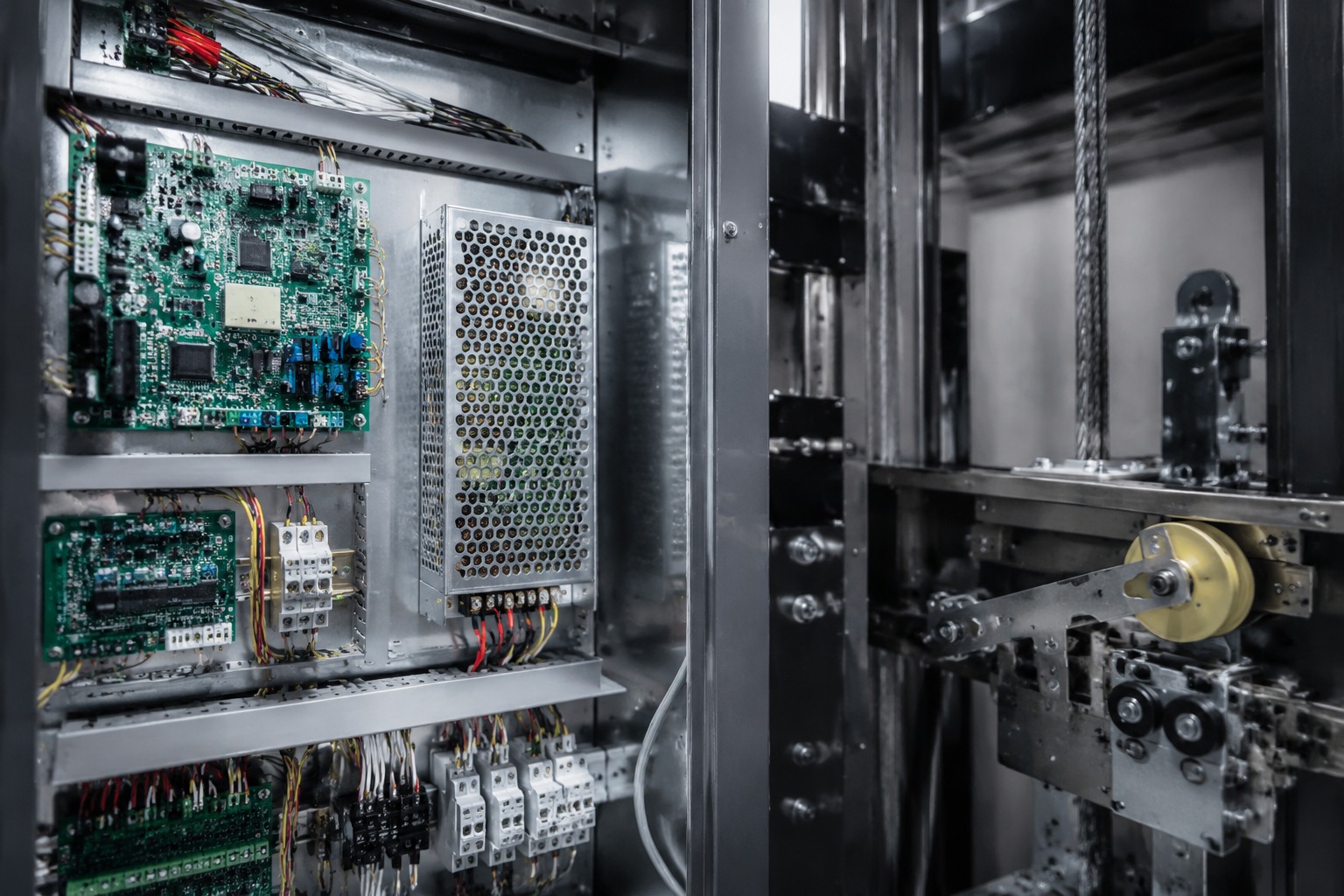
A 48V brake power supply is common in certain elevator applications, but selection should never be based on voltage rating alone. Buyers must confirm whether the output is DC48V under load, what tolerance is acceptable, what current profile is required at release and during holding, and how the unit interacts with the brake coil and controller logic.
Technicians in the field often see similar-looking 48V modules with different internal behavior. One may be suitable for a specific machine-brake combination, while another may produce inconsistent release timing or excessive heating. The output regulation method, protection design, connector layout, insulation class, and ambient temperature tolerance are all relevant. This matters even more in Indian climates, where machine rooms or top-floor control areas can face significant heat in summer months, especially in cities such as Nagpur, Jaipur, Surat, and Hyderabad.
A proper 48V supply review should include input range, output current, ripple level, duty cycle tolerance, mounting dimensions, terminal orientation, and whether the unit is designed for original replacement or approved-compatible use. If the building is near coastal areas such as Chennai, Kochi, Visakhapatnam, or Mumbai Port zones, humidity and corrosion resistance should also be considered. For inland logistics hubs like Bhiwandi, Pune, and Ahmedabad, dust ingress and heat stress can be equally important.
Where exact replacement is required, a model-specific DC48V brake power supply can help reduce mismatch risk when specifications line up with the installed system.
| Selection factor | What to confirm | Why it matters | Common mistake | Field impact | Recommended action |
|---|---|---|---|---|---|
| Output voltage | True DC48V under working load | Ensures proper release | Checking no-load value only | Weak or delayed opening | Test under command condition |
| Current capability | Release and holding demand | Prevents coil underpower | Ignoring inrush need | Intermittent trips | Match coil data sheet |
| Thermal design | Heat dissipation and duty cycle | Supports peak traffic use | Using light-duty alternative | Shutdown after repeated runs | Check operating temperature |
| Protection features | Short-circuit and overload handling | Improves circuit safety | Choosing unprotected module | Further board damage | Review protection specification |
| Connector compatibility | Pinout and terminal style | Avoids wiring errors | Assuming plug shape is enough | Miswiring or fault code | Compare wiring diagram |
| Environmental suitability | Humidity, dust, and vibration tolerance | Extends service life | Ignoring site conditions | Premature failure | Inspect installation environment |
The explanation from this table is straightforward: a 48V brake power supply should be treated as an application-specific control part. A voltage label alone does not guarantee correct field performance.
Notes on wire rope brake controllers
Wire rope brake controller assemblies are used in specific elevator configurations where rope-related braking or associated control logic needs coordinated operation. These products should be assessed not just as a stand-alone controller, but as part of a larger safety and motion control arrangement. The control sequence, input signals, relay logic, feedback behavior, and compatibility with the installed system are all critical.
In practical service work, technicians may encounter these controllers during modernization, fault tracing, or rescue-related system review. Symptoms linked to wire rope brake controller issues can include failed release commands, delayed response, inconsistent feedback to the main controller, or alarms that only appear under certain travel directions or load conditions.
In the Indian market, this becomes important in older commercial buildings, institutional sites, and installations where partial upgrading was done over time. A controller may appear physically intact but still show age-related relay wear, solder fatigue, capacitor deterioration, or unstable triggering. If a building has experienced water ingress during monsoon periods, electrical oxidation and terminal degradation should also be suspected.
For applications that specifically require this category, a wire rope brake controller should be selected after confirming model logic, signal arrangement, and installation condition.
When evaluating a controller, service teams should ask the following: Is the fault electrical, mechanical, or both? Does the controller output correspond to command timing? Are the contacts clean and stable? Is the brake coil healthy? Has the rope or machine-side brake hardware been inspected separately? Correct diagnosis saves both time and return visits.
The bar comparison highlights that residential and commercial segments drive most demand, but modernization is growing faster because many installed lifts now need targeted replacement of brake-related electrical parts rather than full system replacement.
Common signs of brake circuit failure
Brake circuit faults are not always obvious at first. Sometimes the elevator still runs, but with increasing noise, delayed start, heat smell, or occasional fault resets. Recognizing early signs can prevent breakdowns and secondary damage.
Common indicators include a humming brake coil, jerky start, delayed opening, overheating power module, blown fuse in the brake branch, darkened terminals, intermittent brake release errors, inconsistent leveling, or unexplained drive overload alarms. In some cases, passengers may report that the car feels slow to start after the doors close. In others, the machine room technician may notice rising temperature around the brake supply or a repeated clicking relay.
Electrical causes can include failing rectifier sections, unstable output capacitors, weakened solder joints, damaged wiring insulation, poor earthing, oxidized connectors, or controller output timing problems. Mechanical causes may include worn brake shoes, sticky armature movement, contamination, incorrect air gap, or weakened spring behavior. Because electrical and mechanical symptoms can overlap, diagnosis should never stop after replacing one suspected part.
| Failure sign | Likely electrical cause | Possible mechanical link | Immediate risk | Site action | Escalation priority |
|---|---|---|---|---|---|
| Brake buzz during run | Unstable holding current | Partial release gap issue | High | Stop for inspection if severe | Urgent |
| Delayed startup | Weak release output | Sticky brake armature | High | Check supply and movement timing | Urgent |
| Burn smell near panel | Overheated power module | Brake drag causing load | Critical | Isolate and inspect | Immediate |
| Intermittent trip fault | Loose connector or relay issue | None or minor | Medium | Review wiring and logs | High |
| Frequent fuse blowing | Shorted brake supply or coil | None | Critical | Do not repeatedly reset | Immediate |
| Jerky stop or release error | Poor timing or low output | Incorrect brake adjustment | High | Electrical and mechanical joint check | Urgent |
The table demonstrates why fault history matters. A single symptom can have more than one root cause, so maintenance teams should combine voltage and current measurement with physical brake inspection and controller review.
Testing steps after replacing brake power parts
After replacing a brake release power supply, constant current unit, 48V module, or wire rope brake controller, testing should be systematic. The goal is not simply to confirm that the lift runs once; it is to confirm that the brake circuit performs safely across repeated cycles and operational conditions.
Start with basic verification: model number, wiring correctness, terminal tightness, insulation condition, connector seating, and visual clearance around the module. Next, confirm input supply condition and output value under actual command. Then observe brake response timing relative to controller command and drive startup. If available, compare with the manufacturer’s expected sequence.
Run repeated no-load cycles, followed by normal-load operation where permitted by procedure. Listen for drag, chatter, delayed release, or abnormal contactor sound. Check module temperature after multiple trips. Review fault history in the controller and drive. Verify rescue-related function if the site procedure allows it. Finally, document readings so future technicians can compare changes over time.
In large Indian sites managed by facility companies, good reporting is especially valuable. A maintenance note stating only “part replaced, lift normal” is too weak for recurring brake issues. Better documentation includes output voltage/current, coil resistance, observed response time, ambient temperature, and any remaining concern. This supports stronger preventive maintenance in cities with demanding uptime expectations such as Bengaluru tech parks, Mumbai hospitals, and Delhi commercial towers.
| Test stage | What to do | Tool needed | Acceptance focus | Common oversight | Documentation point |
|---|---|---|---|---|---|
| Visual inspection | Check mounting and wiring | Hand tools and torch | No loose or stressed cable | Ignoring heat marks nearby | Photo before closeout |
| Input verification | Measure incoming supply | Multimeter | Within required range | Skipping load condition check | Record measured value |
| Output verification | Measure active output | Multimeter or clamp meter | Stable release/hold output | Measuring only at idle | Record command-state values |
| Brake response check | Observe release timing | Visual/audio timing support | Smooth coordinated start | Not comparing repeated cycles | Note timing behavior |
| Thermal review | Check heat after cycles | IR thermometer if available | No abnormal overheating | Testing too briefly | Capture peak temperature |
| Functional run test | Run multiple trips and review logs | Controller diagnostics | No new brake-related faults | Skipping trend confirmation | Save fault log status |
The practical lesson is simple: replacement without structured testing often leads to repeat callbacks. Strong test discipline lowers both downtime and maintenance cost.
This area chart reflects an important trend in India: more maintenance teams are moving from emergency replacement to planned brake circuit maintenance, especially in premium residential and institutional buildings.
Maintenance strategy and spare stock planning
Brake power parts should be included in a broader spare planning strategy, especially for maintenance providers managing multiple sites. The ideal stock level depends on brand mix, installed base age, traffic intensity, lead time, and fault history. A service company handling mixed brands across Pune, Navi Mumbai, Noida, and Chennai will usually benefit from a tiered stock plan rather than a one-size-fits-all inventory.
Fast-moving brake electrical parts should be categorized by criticality. For example, exact-model brake release power supplies and common 48V units may justify local stock if many contracts use them. Less common controllers may be held at regional warehouse level. The goal is to balance carrying cost against downtime risk.
Maintenance planning should also consider monsoon disruptions, intercity transport delay, customs timing for imported items, and peak repair seasons after summer heat stress. Ports such as Nhava Sheva, Chennai Port, and Mundra can influence replenishment timing for certain imported elevator components. Inland distribution through logistics hubs like Delhi NCR, Bengaluru, Hyderabad, and Ahmedabad also affects service response expectations.
From a supplier perspective, strong support goes beyond sending a part number. Technological capability matters because buyers need accurate model matching and application review. A capable parts partner helps compare output specifications, connector type, board revisions, and replacement suitability to reduce mismatch risk. Manufacturing capability matters because quality inspection, stable sourcing, protective packaging, and traceable handling reduce transit damage and hidden defects. Service capability matters because responsive communication, confirmation photos, and practical shipment coordination help maintenance teams restore elevators faster.
These three strengths are especially useful for India-focused buyers. First, technological capability supports accurate cross-checking for control boards, brake power modules, sensors, and related elevator spare parts. Second, manufacturing and sourcing discipline helps maintain stable quality across repeated orders. Third, service capability improves turnaround for urgent breakdown cases and planned modernization supply. Together, these reduce downtime and improve replacement confidence.
| Stock category | Suggested holding level | Best location | Reason | Review frequency | Typical user |
|---|---|---|---|---|---|
| Common brake release supply | High | Local service branch | Frequent demand and urgent replacement | Monthly | Maintenance company |
| 48V brake power unit | Medium to high | Regional warehouse | Common but model-sensitive | Monthly | Distributor |
| Constant current supply | Medium | Regional technical stock | More application-specific | Quarterly | Modernization contractor |
| Wire rope brake controller | Low to medium | Central stock | Lower volume, higher value | Quarterly | Specialized service partner |
| Connectors and wiring accessories | High | Technician vehicle/local store | Needed during replacement work | Monthly | Field service team |
| Reference test unit | Low | Technical lab or main branch | Supports diagnosis and comparison | Half-yearly | Advanced service organization |
The table above explains how stock planning should align with urgency, installed base, and replacement complexity. Excess stock ties up capital, but no stock creates expensive downtime.
Buying advice for India: how to choose a dependable supplier
Indian buyers usually compare price first, but brake power components should be sourced through a wider evaluation framework. A dependable supplier should support technical confirmation, not only shipping. Ask whether the supplier can verify model details, share product photos, confirm markings, check packaging protection, and respond quickly if a field question arises. This is especially important when managing high-rise service contracts where passenger disruption creates reputational risk.
Look for suppliers that understand elevator part matching across different brands and can help confirm whether a replacement is exact, equivalent, or application-compatible. For brake-related parts, insist on clear identification of voltage, current behavior, connector layout, and intended model use. Ask about inspection process before dispatch. Strong packaging is also important because damaged terminals or cracked housings can turn an urgent repair into a second service visit.
In many cases, the best supplier is not the cheapest source, but the one that reduces total service cost. Lower mismatch risk, fewer repeat failures, better communication, and more reliable packing often save more money than a small difference in unit price.
The comparison chart shows that technical confirmation and inspection matter almost as much as delivery. For safety-related parts, sourcing discipline directly affects service outcomes.
Applications across industries and Indian case-style examples
Brake power parts are used across many sectors. In residential high-rises, they support daily start-stop operation under heavy commuting patterns. In hospitals, smooth and reliable brake control helps maintain consistent lift performance for stretchers and emergency movement. In hotels, ride comfort and low noise matter. In industrial and freight applications, robust performance under heavier duty cycles is important. In modernization projects, brake power parts often become key items because older modules are more likely to fail with age than larger mechanical assemblies.
Consider a residential tower cluster in Pune where a lift showed intermittent delayed starts during evening peak hours. The root cause was not the drive but an aging brake power unit whose output dropped after heating. After replacement and cycle testing, the start hesitation disappeared. In another example from a hospital property in Chennai, technicians found repeated brake release alarms after power changeover events. A current-regulated supply improved consistency, but the final fix also required terminal cleaning and wiring correction. In a commercial building in Noida, a modernization contractor reduced callback frequency by stocking common brake release modules and 48V units locally rather than waiting for emergency procurement.
These examples show that the most effective approach combines correct part selection, good diagnosis, and post-replacement verification. Buyers who treat brake power parts as strategic maintenance items usually achieve better uptime.
2026 outlook: technology, policy, and sustainability trends
Looking ahead to 2026, the Indian elevator spare parts market is expected to place greater value on traceability, predictive maintenance, and energy-aware component selection. More buildings are adopting digital maintenance records, making it easier to track repeat faults and identify weak brake circuit components before failure. This will increase demand for stable, well-documented brake power modules and easier model matching support.
Policy and compliance pressure will also continue to influence buying behavior. Building owners are more aware of safety accountability, especially in premium housing, healthcare, public-use properties, and infrastructure-linked developments. This means maintenance providers may face tighter expectations around preventive inspection, documented testing, and correct spare use.
Sustainability is another factor. While a brake power supply is a small item, the broader trend is to extend elevator life through targeted modernization rather than total replacement. Replacing aged control electronics, power modules, and safety-related accessories can reduce waste compared with removing complete systems early. Better packaging, lower damage rates in transport, and improved part life also support sustainability goals. In India’s major urban centers, where modernization of existing stock will accelerate, these points will matter more each year.
FAQ about elevator brake power parts
What is the main job of a brake release power supply?
It provides the correct electrical output so the brake coil can release the brake at the correct time and hold it open properly during travel.
How do I know if I need a constant current type?
Check the original application design, coil specification, and fault history. Constant current types are useful when stable coil current is required for reliable release performance.
Is any 48V brake power supply interchangeable with another 48V unit?
No. Voltage alone is not enough. Output behavior, current capacity, timing compatibility, connector layout, and thermal design must be matched.
What are the most common warning signs of brake circuit trouble?
Delayed startup, buzzing brake, repeated brake alarms, overheating module, burnt smell, blown fuse, and inconsistent stopping or leveling behavior.
Should I replace the supply if the brake is noisy?
Not immediately without diagnosis. Noise can come from unstable electrical output, but it can also result from mechanical wear, contamination, or incorrect adjustment.
Why is testing after replacement so important?
Because a lift that runs once is not necessarily stable. Repeated cycle tests, output measurement, and thermal checks are needed to confirm reliable operation.
How many spare brake power parts should a service company keep?
It depends on installed base, fault frequency, and lead time. Common modules often justify branch stock, while specialized controllers may stay in regional or central inventory.
What should I ask a supplier before ordering?
Ask for model confirmation, electrical specification check, product photos, packaging details, quality inspection status, and lead time.
Can these parts help in modernization projects?
Yes. Brake power modules are often replaced during modernization to improve reliability without changing the full elevator system.
What makes a parts supplier useful for India-based buyers?
Good technical matching support, stable sourcing, careful quality checks, protective packaging, and responsive service for urgent downtime cases.
For elevator operators and service teams in India, brake power components are not minor accessories. They are essential parts of safe stopping and dependable release control. Whether the need is a standard brake release module, a constant current unit, a DC48V brake power supply, or a wire rope brake controller, the right decision depends on correct identification, application matching, careful replacement, and disciplined testing. Buyers that combine technical review with smart spare planning are better positioned to reduce downtime, manage modernization efficiently, and support safe lift operation across demanding residential, commercial, healthcare, hospitality, and industrial environments.