
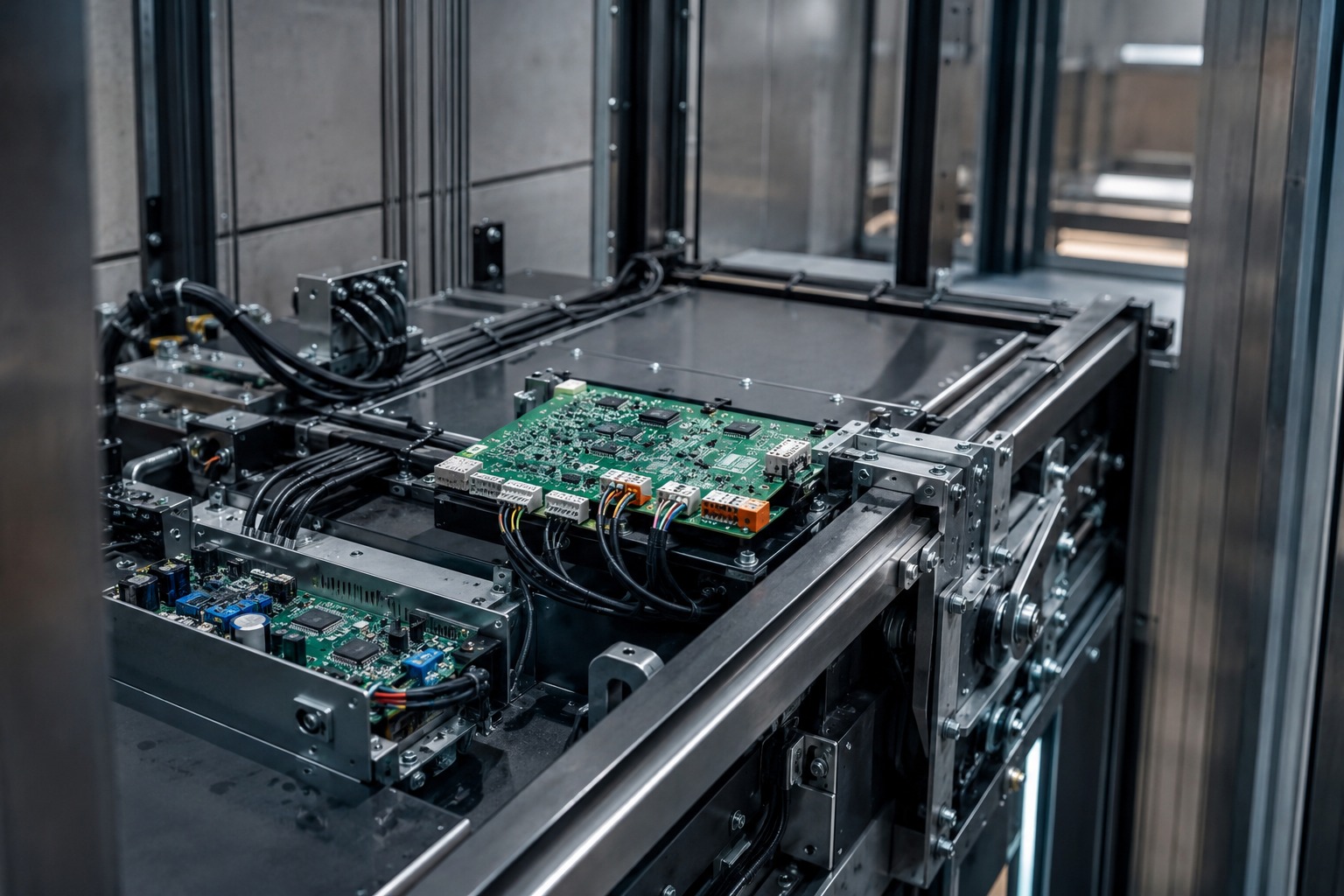
A car top communication board is a key electronic interface used in many elevator systems to transmit signals between the car top devices and the main controller. In practical maintenance work, it helps connect door zone signals, safety circuits, inspection controls, sensors, intercom-related lines, and other operational feedback so the lift can run safely and predictably. When this board becomes unstable, technicians may see door operation faults, intermittent inspection mode issues, loss of signal feedback, unexplained stoppages, or communication alarms between subsystems. For building owners, maintenance contractors, and modernization teams across India, understanding this board is important because the right diagnosis can reduce repeated call-backs, prevent unnecessary board changes, and shorten downtime.
In cities such as Mumbai, Delhi NCR, Bengaluru, Chennai, Hyderabad, Pune, Ahmedabad, and Kolkata, elevator traffic intensity is high in residential towers, hospitals, hotels, malls, IT parks, metro-linked buildings, and industrial campuses. That means maintenance teams need reliable troubleshooting procedures and dependable spare parts planning. If you are evaluating a replacement for a Toshiba system, the first step is not only checking the board model, but also confirming connector layout, wiring condition, communication protocol, firmware compatibility, and linked devices such as the inspection box. In many cases, signal problems blamed on the board actually come from damaged harnesses, oxidized plugs, loose terminals, moisture, vibration, or mismatch between revision numbers.
This guide explains what the car top communication board does, how to identify common communication failures, what to verify before replacing a Toshiba car top board, how to inspect cable connectors and communication protocols, how the board links with the inspection box and maintenance interface, and how to test communication after repair. It also covers spare parts planning for elevator service companies in India, local procurement concerns linked to trade hubs like Nhava Sheva, Chennai Port, Mundra, and Kolkata Port, and future trends through 2026 in technology, policy, and sustainability.
For readers looking for product-specific options, a Toshiba elevator car top communication board should always be selected through careful model matching rather than visual similarity alone. In some installations, related interfaces may also require a Toshiba elevator expansion board or a compatible elevator inspection box and mobile switch box when service access and inspection communication are affected together.
What a car top communication board does
The car top communication board acts as a signal management node mounted on or near the elevator car top assembly. Its job varies by brand and control architecture, but in most systems it supports transmission of status and control signals between the car top environment and the main elevator controller. This may include door operator feedback, landing and car top sensor signals, safety chain inputs, inspection commands, leveling information, and interface signals from auxiliary devices.
In a modern elevator, the car top is not just a mechanical surface above the cabin. It is an active service zone where multiple electrical components meet: door operators, light curtains, limit sensors, junction terminals, traveling cable connections, maintenance controls, and inspection switches. The communication board helps organize and route these signals in a stable and predictable format. Without a healthy board, data may be delayed, lost, distorted, or interpreted incorrectly by the control system.
In Toshiba and similar systems, the board often works as an intermediary that reduces wiring complexity and improves modular serviceability. Rather than routing every device directly to the main control cabinet, grouped signals can be handled through a communication path or dedicated interface board. This design can improve diagnostics and support faster maintenance, but it also means the board becomes a critical point of failure if the environment is harsh, connectors loosen, or compatibility is ignored during replacement.
Typical functions of a car top communication board include:
| Function | What It Supports | Why It Matters |
|---|---|---|
| Signal transmission | Sends and receives operational signals from car top devices | Keeps controller aware of actual field conditions |
| Door interface | Links door operator status, open/close feedback, and fault inputs | Helps prevent door-related shutdowns and nuisance faults |
| Inspection mode support | Receives commands from top inspection controls and service switches | Allows safe maintenance movement and technician access |
| Safety monitoring | Handles some safety-related status or confirmation signals | Supports controlled response to abnormal conditions |
| Sensor integration | Connects door zone, leveling, and related field sensors | Improves floor accuracy and stable operation |
| Maintenance diagnostics | Provides data pathways useful during service checks | Makes troubleshooting faster and more precise |
The table above shows why this board cannot be treated as a simple accessory. It is part of the communication backbone that helps the lift coordinate movement, door action, and service access. When troubleshooting elevators in high-rise apartments in Gurugram, IT towers in Bengaluru, or hospital installations in Chennai, technicians often discover that communication stability on the car top side directly affects ride reliability and maintenance safety.
From an application perspective, these boards are relevant in residential buildings, commercial complexes, healthcare facilities, hospitality properties, factories, logistics centers, and mixed-use towers. In modernization projects, especially in older Indian buildings where wiring ages have become a concern, changing a failed communication board may need to be combined with connector renewal, cable re-termination, or inspection box replacement.
Common communication failure signs
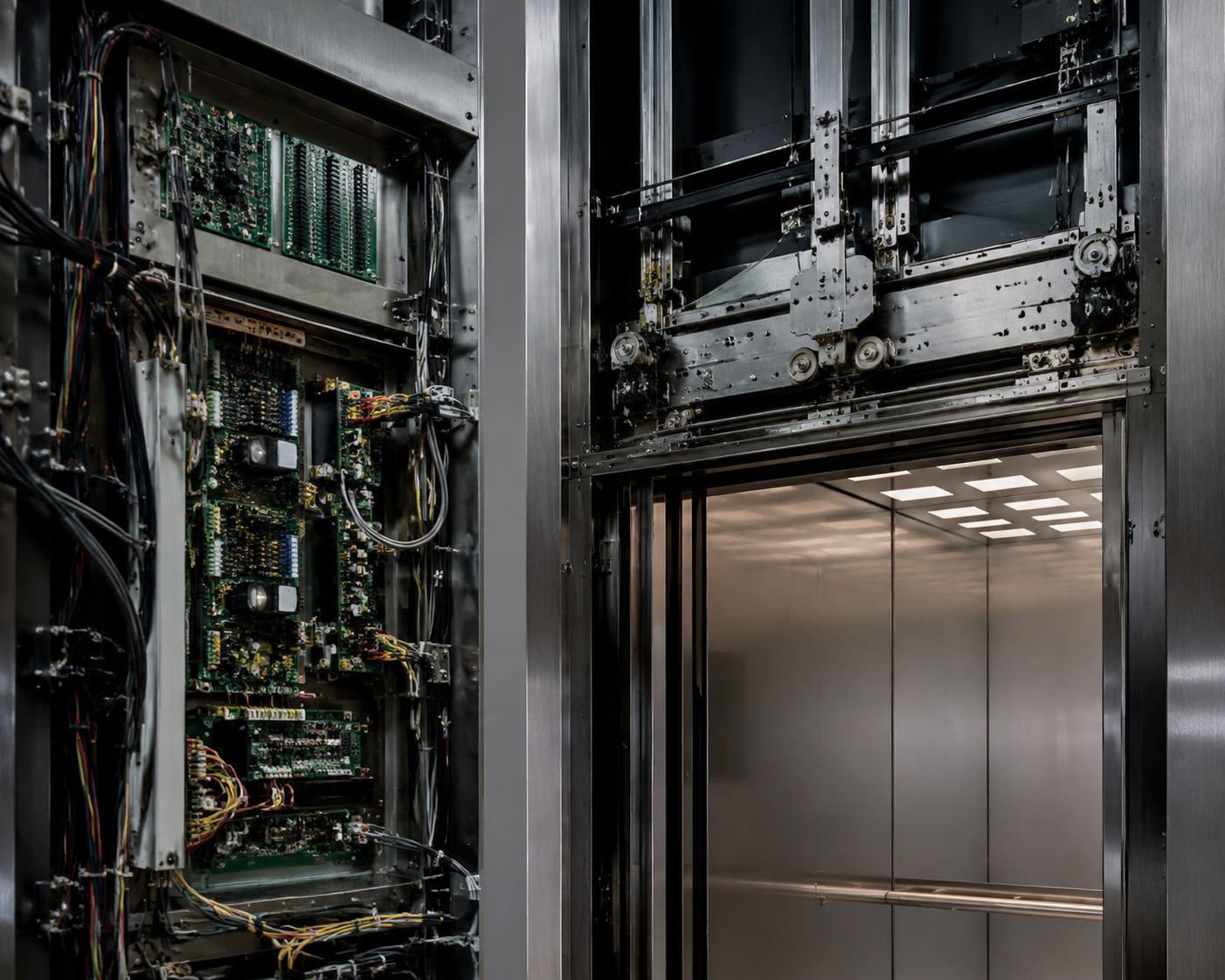
Communication failure on the car top side rarely appears in only one way. Sometimes the elevator completely stops and logs a communication alarm. In other cases, the fault is intermittent and harder to catch. The technician may reset the lift, find it running normally, and then receive another complaint later in the day. This is why symptom-based diagnosis is essential.
Common field signs include random door reopening, failure to enter or maintain inspection mode, intermittent communication loss during travel, irregular door operator response, delayed status feedback, unregistered sensor inputs, and repeated fault code history related to serial communication or board link loss. In humid coastal environments such as Mumbai, Kochi, Visakhapatnam, or Chennai, oxidation at connectors is also a frequent hidden cause.
| Failure Sign | Likely Cause Area | First Check |
|---|---|---|
| Inspection controls not responding | Inspection box link, board power, switch wiring | Measure supply voltage and inspect top box harness |
| Door faults appearing intermittently | Door interface signal disruption | Check communication board connector seating and cable flex points |
| Controller shows communication alarm | Protocol issue, broken pair, damaged board | Review fault log and verify communication line continuity |
| Lift stops unexpectedly between calls | Signal dropout or unstable feedback | Inspect traveling cable condition and board LEDs |
| Leveling or zone errors | Sensor input instability | Check sensor voltage, alignment, and signal path to board |
| After reset the lift runs temporarily | Thermal issue, loose connector, board aging | Test under normal load and vibration conditions |
The practical value of the table is that it links visible symptoms to likely inspection points. Too often, maintenance teams replace the car top board first because it appears to be the fastest option. But if the real cause is a fatigued cable inside the traveling cable bundle, a cracked plug housing, or a poorly matched replacement revision, the same fault will return. A structured diagnosis method reduces wasted parts and technician hours.
Another major warning sign is environment-related degradation. Dust, oil vapour, water ingress, rodent damage, and heat stress can all affect communication quality. In industrial corridors around Pune, Faridabad, and Sanand, vibration and contamination may accelerate connector wear. In luxury residential towers, by contrast, intermittent failures may come more often from aging harnesses or prior repair modifications made without original layout discipline.
Technicians should also distinguish between a communication board fault and an upstream controller problem. If multiple unrelated nodes lose data, the issue may not be located on the car top side at all. Proper fault isolation means checking power supply health, ground integrity, shielding, and controller-side communication port behavior before declaring the car top board defective.
The line chart reflects a realistic demand growth pattern in India as urban construction, modernization, and maintenance discipline continue to expand. Increased high-rise density and the push for reduced downtime are both driving stronger demand for reliable board-level replacement parts.
Toshiba car top board replacement notes
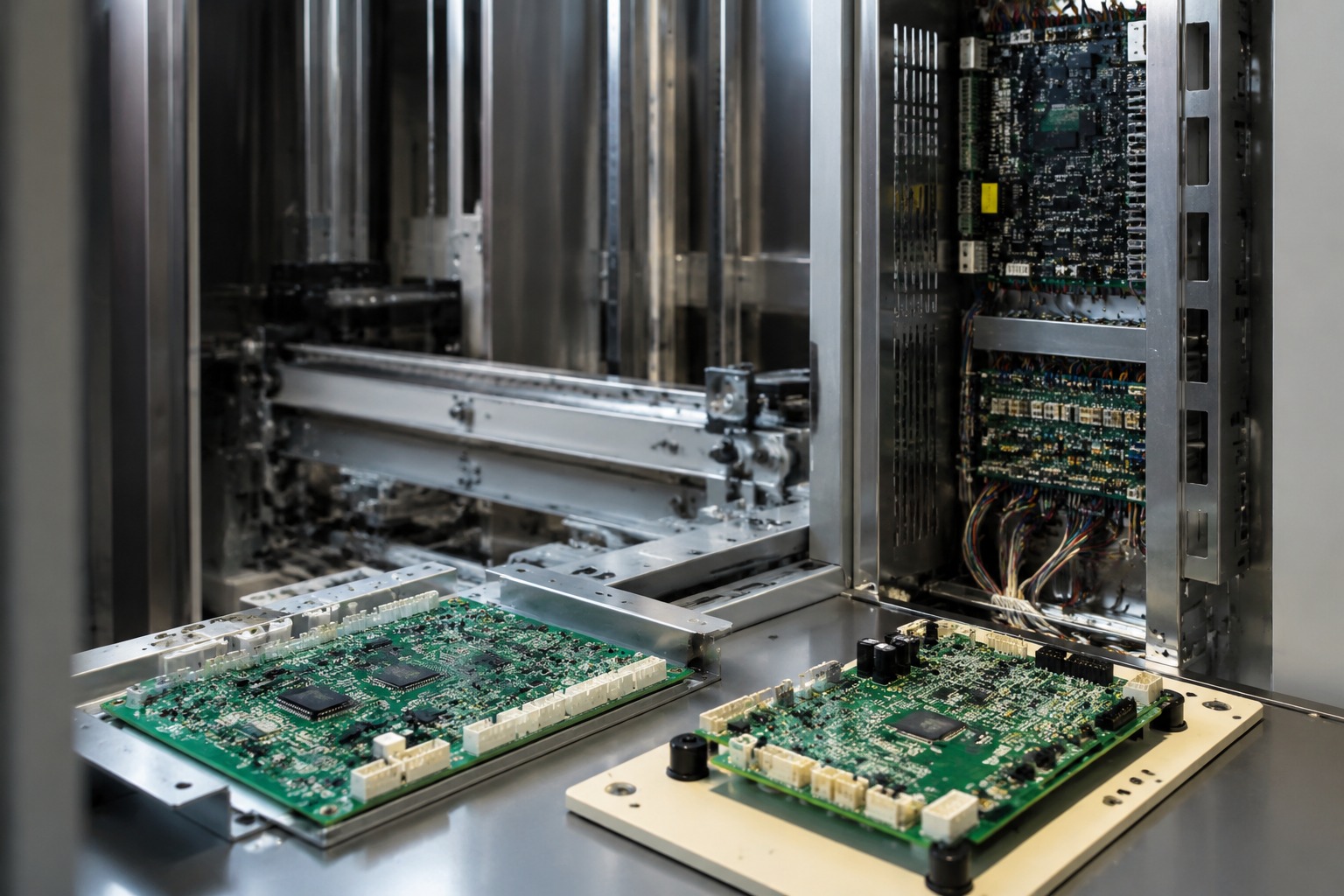
Replacing a Toshiba car top communication board requires more than matching the brand name. Service companies should verify board code, hardware revision, software or firmware dependency where applicable, connector position, mounting dimensions, communication type, and the linked car top devices. A board that looks almost identical may still have a different pin assignment or protocol expectation. This is especially important in older installations where multiple upgrade stages may have occurred over time.
Before replacement, technicians should document the original board thoroughly. Good practice includes taking high-resolution photos of all connectors, labeling cables, recording LED behavior, noting dip switch positions, checking terminal numbers, and confirming power input values. If the lift is in a premium commercial building where uptime matters, this preparation helps reduce restart risk and speeds recovery if any connector is misplaced.
For Toshiba systems, replacement notes often include these steps:
| Replacement Step | What to Confirm | Service Importance |
|---|---|---|
| Model identification | Part number, revision code, and board family | Prevents incompatible installation |
| Visual comparison | Connector layout, heatsinks, relays, sockets, labels | Reduces mismatch risk from similar-looking boards |
| Power specification | Input voltage range and grounding arrangement | Protects replacement board from startup damage |
| Connector mapping | Every plug position and wire color sequence | Avoids reversed or shifted wiring |
| Associated components | Inspection box, expansion board, door module links | Ensures the full signal path is healthy |
| Post-install validation | Communication status, travel test, inspection test | Confirms the lift is ready for safe return to service |
This table matters because most replacement problems happen outside the board itself. Incorrect cable reinstallation, missing grounding, poor terminal locking, or failure to identify a related damaged expansion board can create fresh faults after the board is installed. Where systems require additional interface compatibility, checking the linked Toshiba elevator expansion board is often wise, especially if communication errors spread across more than one subsystem.
For buyers in India, import lead time can also affect replacement strategy. If a site in Bengaluru or Noida cannot afford repeated shutdowns, it is often smarter for the service provider to keep one tested spare board for recurring Toshiba models rather than wait for emergency shipment through major logistics channels. Port congestion, customs timing, and inland transport to second-tier cities can all extend replacement time.
From a technological capabilities perspective, our team supports careful model matching based on photos, labels, connector detail, and application context rather than only rough product naming. That matters for Toshiba elevator electronics because subtle differences in board generation can affect actual field compatibility. By reviewing markings, plug layout, and related car top hardware, we help buyers lower the risk of ordering a part that fits physically but fails electrically or operationally.
Cable connector and protocol checks
Many communication issues blamed on the board are actually caused by cable or connector problems. The car top area experiences continuous vibration, temperature variation, movement-related stress, and, in some installations, dust or moisture. Traveling cables flex over long periods, and connector clips can loosen after repeated service access. That is why every board diagnosis should include physical line checks and protocol verification.
Technicians should inspect cable jackets for cracks, compression points, insulation wear, and signs of oil or water exposure. Connector pins should be checked for oxidation, discoloration, bent contacts, weak locking, or improper crimping. Where communication uses shielded pairs, continuity and shielding integrity should be verified. A clean-looking connector can still fail electrically if the pin tension has weakened.
| Check Item | Inspection Method | Common Findings |
|---|---|---|
| Connector fit | Manual seating check and lock verification | Loose plug, incomplete latch engagement |
| Pin condition | Magnified visual inspection | Oxidation, pitting, bent pins, uneven contact |
| Cable continuity | Multimeter or continuity tester | Broken core, intermittent line, high resistance |
| Shield integrity | Ground and shielding path verification | Noise susceptibility and unstable communication |
| Protocol alignment | Check board specification and controller expectation | Communication mismatch after replacement |
| Harness routing | Physical tracing across moving points | Chafing, pinch damage, tension stress |
The purpose of the table is to separate electrical, mechanical, and protocol-level causes. In the field, all three categories can create nearly identical symptoms. A damaged communication pair may mimic a failed board, and a protocol mismatch can mimic a cable issue. If a replacement part is sourced without confirming system communication expectations, the lift may remain down even when power and wiring appear correct.
Protocol checks are especially important in modernization and mixed-service environments. Some buildings in India have elevators that have gone through phased upgrades over many years. A car top board may have been changed once, the door operator at another time, and the main controller later. Unless records are clear, the technician must confirm what the current system architecture expects. This is why service documentation and photo-based technical comparison are so valuable.
In high-traffic commercial properties, maintenance contractors should consider periodic connector inspection as part of preventive maintenance, not only reactive repair. Small issues like contact oxidation or harness abrasion can be corrected before a full communication failure occurs.
Inspection box and maintenance interface links
The car top communication board is closely connected with the inspection box and maintenance interface. During servicing, technicians depend on the inspection controls mounted on the car top to move the lift safely at inspection speed, verify door response, and perform adjustment work. If the communication board cannot reliably process or transmit these commands, maintenance becomes more difficult and potentially unsafe.
The inspection box may include emergency stop, up and down buttons, inspection/normal selector, lamp provisions, sockets, and related service interfaces. In many elevator designs, the box itself is not the root cause when controls fail. The issue may be in the communication link between the inspection device and the board, or between the board and the controller. That is why the entire chain should be checked together.
Where top-side service access hardware is aged or physically damaged, replacing the board alone may not restore stable maintenance operation. Evaluating the condition of the inspection box and mobile switch box for elevator maintenance can be essential, especially in older residential societies, hotels, and institutional buildings.
| Linked Item | Connection to the Board | Service Impact |
|---|---|---|
| Inspection up/down controls | Command input path | Enables safe maintenance travel |
| Inspection/normal selector | Operating mode signal | Prevents incorrect mode switching |
| Emergency stop circuit | Safety-related top-side link | Supports technician protection |
| Service indicator lamps | Status output or feedback line | Helps quick visual diagnosis |
| Door maintenance interface | Related signal exchange with operator side | Improves troubleshooting of door faults |
| Controller communication path | Main system data connection | Determines whether commands are executed correctly |
The explanation behind this table is simple: inspection performance depends on system communication health. If the inspection box buttons are mechanically fine but the communication board path is unstable, the technician experiences unreliable response and may lose valuable troubleshooting time. In busy buildings such as hospitals in Hyderabad or shopping malls in Mumbai, that delay can significantly affect operations.
From a manufacturing capabilities perspective, we focus on stable sourcing, model-based part verification, careful quality inspection, and protective packaging for elevator electronics and connected accessories. For buyers managing long-distance transport to India or inland dispatch from ports to cities like Jaipur, Lucknow, Coimbatore, Indore, or Guwahati, packaging quality matters because impact damage to connectors and boards can create avoidable installation failures.
The bar chart shows how replacement demand typically concentrates in high-volume elevator sectors. Residential towers lead because of the huge installed base in Indian cities, while office buildings and hospitals also show strong demand due to uptime expectations and intensive usage cycles.
Testing communication after repair
After any car top communication board repair or replacement, testing should go beyond a simple power-on check. A board may appear healthy when the lift is stationary but fail under travel vibration, door cycling, or inspection mode transition. A proper post-repair test sequence should confirm electrical stability, communication integrity, functional command response, and normal fault history behavior.
A practical post-repair testing process includes visual confirmation, supply voltage measurement, LED status review, inspection mode test, door cycle test, floor travel test, repeated start-stop sequence, and fault log review. If possible, the lift should be tested during realistic operating conditions rather than only in an idle machine room environment.
| Test Stage | What to Do | Acceptance Goal |
|---|---|---|
| Power-up check | Verify voltage, grounding, LED startup behavior | Board powers normally with no abnormal indication |
| Inspection mode test | Operate top controls in both directions | Commands are consistent and immediate |
| Door cycle verification | Run repeated open/close sequences | No missed command or unexpected reopening |
| Travel communication test | Move across several floors repeatedly | No communication loss during motion |
| Sensor response check | Confirm zone and related input recognition | Stable feedback without dropouts |
| Fault history review | Read current and stored alarms after testing | No recurring communication or linked faults |
The value of this table is that it converts repair completion into measurable steps. Without a structured test sequence, a board replacement may be declared successful too early. Then the customer reports another stoppage when passenger traffic increases, door cycles become frequent, or temperature rises during the day.
Case experience in India shows that successful testing is especially important after emergency repairs in occupied buildings. For example, a service company handling a mixed-use tower in Pune may replace a suspected board in the morning, but unless it checks repeated door cycles and inspection transitions, the same intermittent fault could return during evening peak traffic. Similarly, in coastal cities, a connection that appears acceptable during a dry inspection may become unstable again if corrosion was not fully addressed.
From a service capabilities perspective, responsive communication, clear model confirmation, and practical support during part selection are just as important as the part itself. Maintenance companies value suppliers who can help verify compatibility quickly, reduce trial-and-error ordering, and support urgent downtime recovery. For service teams managing portfolios across multiple Indian cities, fast matching and dependable dispatch can directly improve contract performance.
The area chart highlights a major service trend: companies in India are gradually moving from pure emergency replacement toward planned stocking and preventive electronics management. This shift is driven by pressure to reduce downtime and improve maintenance transparency.
Spare parts planning for service companies
For elevator maintenance companies, distributors, and modernization contractors in India, spare parts planning for car top communication boards should be based on installed base, model concentration, age profile, critical-site priority, and lead time exposure. Companies that manage Toshiba elevators across several regions often benefit from maintaining a small but disciplined stock of high-risk boards and related accessories.
Not every branch needs to hold every board. A better strategy is to classify parts by service frequency, brand concentration, replacement urgency, and sourcing difficulty. For example, a company serving Mumbai, Navi Mumbai, Thane, and Pune may use one regional electronics stock point near a major transport corridor, while another company operating in Chennai, Coimbatore, and Hyderabad may maintain shared stock linked to southern dispatch routes.
Spare planning should also include associated items. A communication board replacement may fail if the damaged connector housing, inspection box switch, cable plug, or related expansion interface is not available at the same time. Planning only for the board but not the surrounding signal path creates avoidable return visits.
| Stock Planning Factor | Why It Matters | Suggested Action |
|---|---|---|
| Installed brand base | Higher Toshiba population means higher replacement probability | Track site count by model family |
| Part criticality | Communication board faults can stop lift operation | Keep at least one tested spare for common models |
| Lead time risk | Imports and inland transport may delay supply | Plan stock around realistic procurement timelines |
| Site category | Hospitals and premium commercial sites need faster recovery | Prioritize emergency inventory for critical contracts |
| Related accessories | Connectors and inspection links may fail together | Stock paired service items, not board only |
| Failure history | Past trends predict future demand better than guesswork | Review call-back records quarterly |
The explanation is straightforward: spare parts planning is not just procurement; it is a downtime control strategy. Service companies that base inventory on real failure patterns usually perform better than those ordering only after breakdown. In India, where site access, approvals, logistics delays, and customer expectations vary significantly by region, planned stock can make a strong commercial difference.
In terms of buying advice, customers should ask suppliers about model matching process, condition verification, quality inspection, packaging standards, availability of related boards, and response speed. For large projects or annual maintenance portfolios, it is also useful to ask whether the supplier can support a wider range of elevator electronics and accessories such as control boards, door parts, sensors, encoders, guide shoes, power supplies, buttons, and intercom components. A broader support base simplifies procurement for maintenance companies working across multiple brands.
Our role in this market is to support maintenance companies, distributors, building owners, and modernization contractors with dependable sourcing for compatible elevator spare parts. Rather than pushing one-size-fits-all substitutions, we focus on board identification, stable quality checks, protected delivery, and responsive communication to help customers reduce downtime and avoid mismatch issues.
The comparison chart reflects the main factors service companies consider when evaluating suppliers. For communication boards, model matching accuracy and downtime reduction are often more important than the lowest upfront price, because an incorrect or poorly protected part can create longer shutdowns and higher total cost.
FAQ about car top communication boards
What is the main job of a car top communication board?
Its main job is to transmit and manage operational signals between devices located on the elevator car top and the controller or linked control modules. It helps support door communication, sensor feedback, inspection control, and related maintenance interfaces.
How do I know if the board is bad?
Typical signs include intermittent communication alarms, non-responsive inspection controls, repeated door faults, unstable signal feedback, and failures that temporarily clear after reset. However, cables, connectors, power supply issues, and protocol mismatch must be ruled out before confirming board failure.
Can a connector issue look like a board failure?
Yes. Loose plugs, bent pins, oxidized contacts, damaged harnesses, or broken conductors in the traveling cable can create the same symptoms as a failed board. This is very common in aging elevators and in humid or vibration-prone environments.
Why is Toshiba board replacement sensitive?
Because visually similar Toshiba boards may differ in revision, pin assignment, communication expectations, or linked interface requirements. Correct replacement depends on exact identification and checking associated devices.
Should the inspection box be checked during board replacement?
Yes. Since the inspection box and maintenance interface are closely linked to the car top communication path, a damaged switch box, worn selector, or poor harness can continue causing faults even after a new board is installed.
What tests should be done after repair?
At minimum, check power and grounding, LED behavior, inspection mode operation, repeated door cycles, multi-floor travel, sensor response, and fault history. Ideally, test the lift under realistic operating conditions.
Is it worth keeping spare boards in stock in India?
For companies with recurring Toshiba installations or service portfolios covering critical buildings, yes. Lead times, logistics, and customer uptime expectations make strategic stocking a practical advantage.
What related parts should be considered together?
Inspection boxes, expansion boards, cable connectors, door operator interfaces, sensors, encoders, power supplies, and other elevator electronics may all influence communication stability. It is often more efficient to plan the full signal path instead of only one board.
Which industries most often need this part?
Residential towers, commercial offices, hospitals, hotels, shopping centers, and industrial facilities all use elevators where communication reliability matters. High-traffic and mission-critical sites usually show the highest urgency.
What are the 2026 trends affecting car top communication boards in India?
Through 2026, the market is moving toward smarter diagnostics, stronger preventive maintenance practices, greater demand for verified compatible replacements, and more attention to sustainability. Building operators increasingly want repair-first logic, longer service life, reduced electronic waste, and documented maintenance quality. Policy trends in urban safety compliance and modernization oversight are also likely to push more disciplined spare parts management and recordkeeping.
Looking ahead, three trends stand out. First, technology: more elevators will use better onboard diagnostics and digital maintenance workflows, making communication faults easier to isolate. Second, policy: as urban infrastructure expands and safety expectations rise, maintenance records and component traceability are likely to receive greater scrutiny. Third, sustainability: service companies and building owners will place more value on extending component life where possible, reducing waste through accurate replacement, and avoiding unnecessary board disposal caused by misdiagnosis.
For the India market, this means successful elevator service will depend not only on having access to parts, but on matching the right part, understanding the complete communication path, and supporting field teams with practical technical guidance. Whether the project is in a metro city, an industrial corridor, a coastal high-rise cluster, or a growing tier-2 urban center, the same principle applies: stable communication on the car top side is essential for safe operation, effective maintenance, and reduced downtime.