
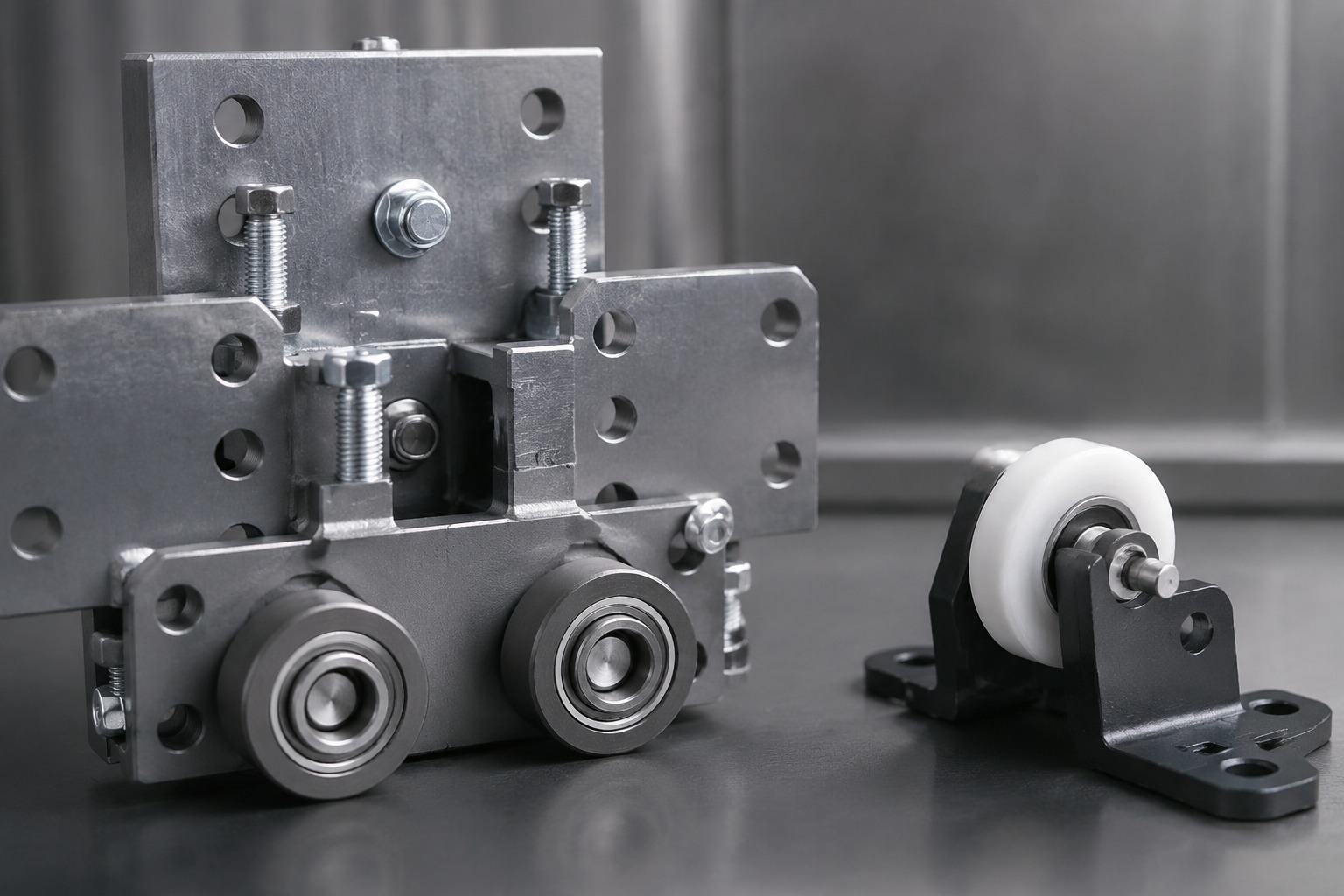
Elevator door hanging plates are load-bearing and guiding components that help the car door and hall door move in a controlled, stable, and quiet way. In practical terms, they hold the rollers, support the moving door panel, keep the panel aligned with the track, and influence how smoothly the door opens and closes. When the hanging plate is bent, mismatched, worn, or installed out of line, the first signs are usually scraping noise, vibration, uneven gaps, roller damage, repeated reopening, or door operator faults. For building owners and maintenance companies in India, choosing the correct hanging plate is not only about fitment. It also affects passenger comfort, shutdown frequency, and long-term wear on operators, locks, sill guides, and rollers.
Across India, from Mumbai commercial towers and Pune IT parks to Chennai hospitals, Hyderabad residential high-rises, Delhi NCR offices, and industrial sites near Ahmedabad and Bengaluru, door system reliability is one of the most frequent maintenance concerns. Dust, humidity, coastal corrosion, traffic intensity, and inconsistent legacy documentation all make exact part matching essential. This is especially true during modernization, when original drawings may be incomplete and technicians must identify parts by opening width, pulley size, fixing hole position, and brand series.
In most elevator systems, the hanging plate works together with the track, pulley or roller assembly, guide shoes, coupling mechanism, door lock zone, and operator settings. A correctly selected plate reduces noise, keeps the center line stable, and helps the door operator use less force. A poorly selected part can cause side loading on rollers and accelerate damage even if the motor and controller are healthy. That is why experienced buyers in India increasingly verify dimensions, door opening distance, roller diameter, and model family before ordering replacement parts.
For buyers sourcing replacements, it helps to compare actual applications. If you need a landing-side component for a standard opening range, the hall door hanging plate for 800 to 900 mm opening with 65 mm pulley is a useful reference point for checking configuration. If your requirement is on the moving car side for a wider opening, the car door hanging plate for 1000 to 1100 mm opening can help confirm dimensional matching. For brand-specific maintenance work, especially on older installations, the Hitachi NF door hanging plate is often reviewed during model identification.
India elevator parts market: why door hardware selection matters
India’s elevator installed base keeps expanding in metro cities, satellite towns, logistics corridors, and mixed-use projects. With more elevators entering mid-life service periods, maintenance teams are replacing not only electronic components but also mechanical door hardware. Door systems experience high cycle counts every day, so hanging plates, rollers, track liners, and door guides often become routine replacement items. In cities with heavy passenger traffic such as Mumbai, Delhi, Kolkata, Chennai, and Bengaluru, door assemblies may see significantly more cycles than those in low-rise residential buildings. At ports and trade hubs such as Nhava Sheva, Mundra, and Chennai Port, warehouse and industrial passenger lifts also face dusty environments that can shorten roller life.
For the India market, the most common purchasing priorities are correct compatibility, stable quality, reasonable lead time, safe packaging, and responsive technical confirmation. Many customers do not simply ask for a brand name. They ask for opening width, panel type, pulley size, bracket dimensions, and whether the part is for the car door or hall door. This practical buying behavior reduces mismatch risk and is particularly important in modernization projects where several generations of parts may look similar but mount differently.
| Market factor in India | Effect on door hanging plate demand | Typical buyer concern | Common response | Operational benefit | Risk if ignored |
|---|---|---|---|---|---|
| Growth of residential towers | Higher replacement volume after warranty periods | Affordable compatible parts | Confirm dimensions and opening width | Lower downtime | Repeat service calls |
| Commercial high traffic buildings | Faster roller and plate wear | Durability under frequent cycles | Choose correct material and pulley size | Quiet operation | Noise and vibration |
| Modernization of older lifts | Legacy model matching becomes critical | Unknown original documentation | Use photos, measurements, and hole spacing | Accurate fitment | Installation delay |
| Coastal environments | Corrosion can affect assemblies | Surface condition and packaging | Request protected storage and inspection | Longer service life | Rust and seizure |
| Tier 2 and Tier 3 city expansion | Need for distributor support rises | Fast logistics | Stock common configurations | Better maintenance planning | Long outage periods |
| Safety and service expectations | More preventive replacement | Reliable quality screening | Model verification before dispatch | Safer door movement | Door faults and callbacks |
The table above shows why the demand for hanging plates in India is tied not only to new installations but also to the large service market. Buildings with heavy footfall need dependable mechanical door parts because even minor alignment problems can escalate into complaints, nuisance shutdowns, and more expensive repairs.
What door hanging plates do
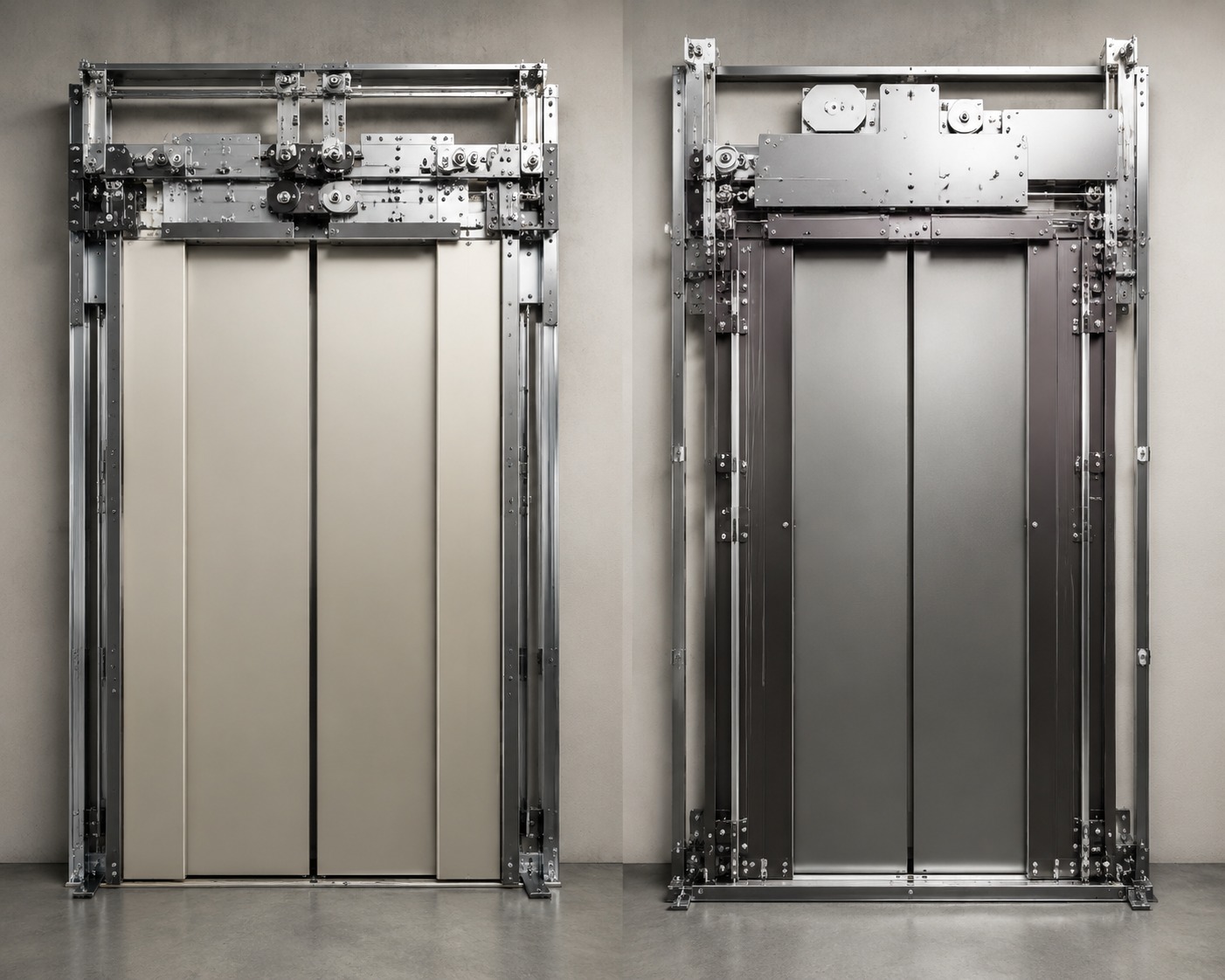
A door hanging plate is the structural mounting element that carries the moving door panel through rollers or pulleys running on the track. It positions the door panel relative to the header, controls vertical and lateral support, and maintains the geometry required for smooth opening and closing. In many elevator arrangements, the plate also influences the relative position of couplers and lock engagement because door panel movement must stay consistent through the full travel distance.
Its functions can be understood in five simple ways. First, it carries weight. Second, it keeps the panel aligned with the track. Third, it provides stable mounting for roller assemblies. Fourth, it helps maintain the opening path so the panel does not twist or drag. Fifth, it supports quiet movement by reducing irregular contact and vibration. If any of these functions are compromised, the operator may compensate temporarily, but overall wear increases.
In service conditions, technicians often identify a failing hanging plate through symptoms rather than visual damage alone. A door that closes with a knock near the end of travel, a panel that shakes at mid-run, or a roller that wears on one side can all point to a misaligned or deformed plate. In some cases the plate itself is intact, but the wrong opening-distance model was installed, forcing the system into awkward geometry. That is why selecting by dimensions and application matters more than relying on appearance alone.
| Main function | How the hanging plate contributes | Visible field symptom when faulty | Effect on passengers | Related part affected | Recommended action |
|---|---|---|---|---|---|
| Load support | Holds the moving door panel via rollers | Panel sags or drags | Rough movement | Sill guide | Check straightness and fasteners |
| Alignment | Keeps door centered on track | Uneven side gap | Door rub noise | Track and guides | Measure lateral position |
| Stable travel | Controls panel path through full opening | Shaking at mid-travel | Perceived poor quality | Operator linkage | Verify model and geometry |
| Noise control | Reduces vibration transfer | Rattling or knocking | Comfort complaints | Rollers and header | Inspect wear and mounting |
| Consistent lock relationship | Maintains proper panel movement | Door reopens or fails to lock | Service interruption | Door lock and coupler | Check full-travel alignment |
| Longer component life | Prevents side loading and skew | Frequent roller replacement | Repeated maintenance visits | Pulleys, guides, operator | Replace mismatched plate |
The explanation from this table is straightforward: the hanging plate is not an isolated bracket. It is a geometry-critical part that protects the whole door system. Replacing only the roller without checking the plate can solve noise for a few weeks, but the root cause may remain.
Car door versus hall door hanging panels
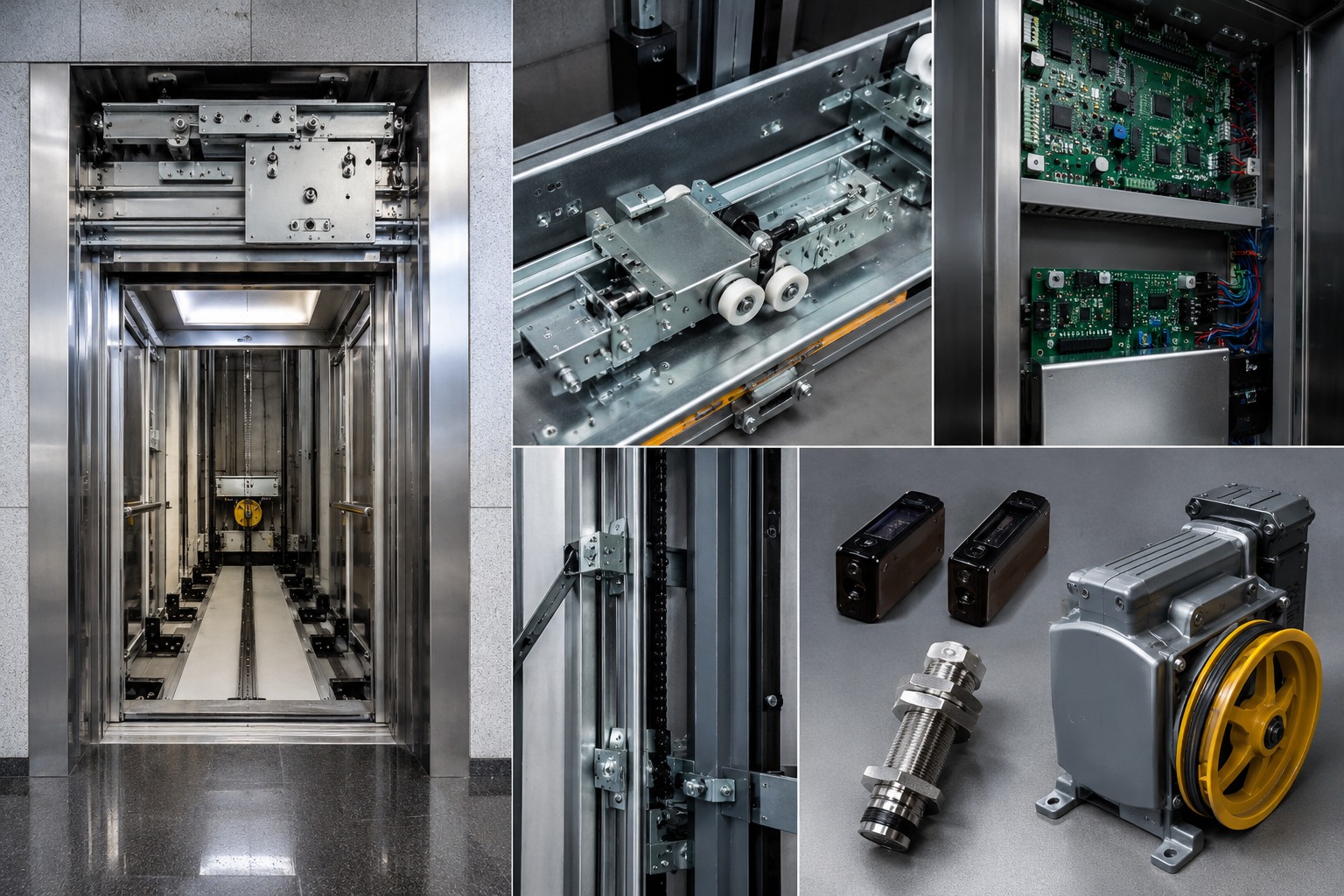
Car door hanging plates and hall door hanging plates may look similar, but their job environment and mounting arrangement are different. The car door hangs on the elevator car and moves with it between floors. It must work closely with the door operator and coupling mechanism. The hall door, also called the landing door, is fixed at each floor and is opened mechanically when the car arrives and engages the unlocking and coupling components. Because of these different roles, mounting dimensions, bracket layout, and opening distance requirements often differ.
When ordering parts, confusion between car and hall door plates is one of the most common causes of mismatch. A maintenance contractor may know the opening width but overlook whether the plate is from the car side or landing side. In practice, the car side usually requires attention to operator compatibility and moving-panel behavior, while the hall side requires floor-by-floor consistency and reliable engagement with the landing mechanism. A supplier that asks for both location and opening size usually helps prevent avoidable errors.
For example, buyers replacing landing components in residential projects often compare dimensions against the hall door hanging plate for 800 to 900 mm openings, while those working on car-side door motion in wider entrances may evaluate the car door hanging plate for 1000 to 1100 mm openings. These references are useful because the opening range immediately narrows the correct family of parts.
| Comparison point | Car door hanging plate | Hall door hanging plate | Why the difference matters | Common buying mistake | Check before ordering |
|---|---|---|---|---|---|
| Installation location | Mounted on the elevator car | Mounted at each landing | Different operating conditions | Assuming one part fits both | Confirm side and floor usage |
| Main counterpart | Door operator and coupler | Landing lock and door panel | Affects geometry and travel | Ignoring operator linkage | Send photo of assembly |
| Service movement | Moves with the car between floors | Stays fixed at floor entrance | Vibration profile differs | Using hall part on car side | Check mounting layout |
| Replacement pattern | Often one per car set | Multiple identical floor sets | Stock planning is different | Underestimating quantity | Count total landings |
| Adjustment focus | Operator timing and panel balance | Unlocking and smooth engagement | Fault symptoms differ | Wrong diagnosis | Review service history |
| Typical verification | Opening width and car mechanism | Opening width and landing arrangement | Ensures exact fit | Only checking brand name | Measure holes, pulley, and spacing |
The practical meaning of this comparison is simple: even when a part is called a door hanging plate, car-side and hall-side assemblies are not interchangeable by name alone. Technicians in Gurgaon, Noida, Navi Mumbai, and Coimbatore often save time by labeling parts during dismantling and comparing dimensions immediately.
How opening distance affects part selection
Door opening distance is one of the most decisive selection factors. The hanging plate must suit the travel geometry of the door panel. If the plate is intended for 800 to 900 mm openings, its dimensions and roller position may differ from a version intended for 1000 to 1100 mm openings. Even small dimensional differences can change the way load is distributed and how the panel tracks along the header.
This matters because the elevator door system is not infinitely adjustable. Technicians can fine-tune alignment, clearances, and operator parameters, but they cannot fully correct a basic mismatch in part geometry. A plate designed for a narrower opening may place the roller center incorrectly on a wider door, leading to skew, poor weight distribution, and noise. Conversely, using a wider-opening plate on a smaller panel can create awkward mounting relationships or clearance issues.
In India, maintenance teams often handle mixed building portfolios with different brands and opening widths. The fastest way to reduce errors is to record four points before ordering: opening distance, pulley diameter, car or hall application, and exact hole spacing. If a project is being modernized, it also helps to note whether the current plate has been modified on site, because prior drilling or welding may hide the original specification.
| Door opening range | Typical application | Selection focus | Likely matching concern | Field note | Suggested verification |
|---|---|---|---|---|---|
| 700 to 800 mm | Compact residential lifts | Bracket position | Limited clearance | Space is tighter in header | Measure overall plate length |
| 800 to 900 mm | Common residential and office lifts | Pulley size and side type | Hall door mismatch | Very common replacement range | Check landing-side configuration |
| 900 to 1000 mm | Mid-size passenger lifts | Track alignment | Mixed generation assemblies | Verify original brand family | Compare hole spacing |
| 1000 to 1100 mm | Commercial and hospital lifts | Load distribution | Car side geometry errors | Wider panels amplify skew | Confirm roller center distance |
| 1100 to 1200 mm | Heavy traffic entrances | Structural rigidity | Noise under high use | Frequent cycles increase wear | Inspect track condition too |
| Custom modernization sizes | Retrofit projects | Exact dimensional mapping | No catalog certainty | Photos and measurements are vital | Create a part comparison sheet |
The explanation of this table is that opening distance is more than a catalog number. It is a direct indicator of geometry. A buyer who confirms the range early usually shortens procurement time and reduces the chance of return shipments.
Roller pulley size and wear checks
The roller or pulley attached to the hanging plate is a critical wear part. Its diameter, profile, bearing condition, and running surface all affect noise, stability, and tracking. A 65 mm pulley, for example, may be standard in a certain landing-door assembly, while other systems use different sizes. Replacing a worn pulley with the wrong diameter can change door height relation and rolling contact, which may create more problems than it solves.
Wear checks should include visual and dimensional inspection. Look for flat spots, edge chipping, uneven shine on one side, cracked material, bearing roughness, and play in the axle. Also inspect the track surface, because a damaged track can destroy a new roller quickly. If the roller wears repeatedly on one edge, the likely cause is misalignment or a bent hanging plate rather than poor roller quality alone.
Technicians should also note environmental conditions. In dusty sites around industrial corridors such as Sanand, Sriperumbudur, Bhiwandi, and Chakan, abrasive particles can accelerate wear. In coastal areas such as Kochi, Chennai, and Visakhapatnam, corrosion and humidity can affect bearings and fasteners. Preventive inspection is therefore more valuable than waiting for severe noise.
| Inspection item | What to look for | Likely cause | Effect on door operation | Urgency level | Corrective action |
|---|---|---|---|---|---|
| Pulley diameter | Mismatch with original size | Wrong replacement part | Geometry error and noise | High | Install correct diameter |
| Rolling surface | Flat spot or severe polish line | High cycle wear or track issue | Rhythmic knocking | High | Replace roller and inspect track |
| Edge wear | One-sided abrasion | Plate or track misalignment | Skewing door panel | High | Realign full assembly |
| Bearing condition | Rough turning or play | Age, dust, moisture | Drag and vibration | Medium to high | Replace pulley assembly |
| Fastener security | Loose nut or axle shift | Vibration or poor maintenance | Rattle and safety risk | High | Retighten or replace hardware |
| Track contact | Metal marks or scoring | Severe wear or debris | Jerky movement | Medium | Clean, dress, or replace track |
This table explains that pulley wear is a system symptom. Replacing the roller without checking alignment, track condition, and the hanging plate can lead to repeat failure. Good maintenance teams treat these parts as a linked set.
Hitachi NF door hanging plate notes
The Hitachi NF door hanging plate is frequently discussed in service and modernization work because older and active installations may require exact series matching. As with many branded elevator parts, the challenge is that field teams may use the same general name for several similar-looking versions. For that reason, brand identification alone is not enough. The best practice is to confirm the NF series reference together with dimensions, mounting holes, pulley arrangement, and whether the assembly belongs to the car door or hall door.
On some sites, technicians replacing a worn NF assembly find that the previous component was altered during earlier maintenance. Extra drilled holes, welded tabs, or substituted rollers can make identification confusing. In such cases, photos from multiple angles, thickness measurements, and side-by-side comparison with the removed part become important. If you are sourcing a replacement for this family, the Hitachi NF door hanging plate reference product can help verify whether the visible configuration matches your requirement.
For buildings in India using Hitachi-related systems, especially in older apartments, commercial premises, and institutional facilities, procurement success often depends on careful model matching rather than rush ordering. It is wise to confirm if the roller is included, whether the pulley diameter matches the installed assembly, and whether left-right orientation matters. These details save installation time and reduce technician frustration on site.
| Hitachi NF check point | Why it matters | What technicians should record | Common site complication | Buying recommendation | Expected result |
|---|---|---|---|---|---|
| Series confirmation | Similar parts may not be interchangeable | Model family and photos | Only partial label remains | Match by series and dimensions | Lower mismatch risk |
| Application side | Car and hall versions differ | Exact installation location | Part removed without notes | Mark before dismantling | Faster procurement |
| Mounting hole spacing | Critical for fitment | Center-to-center dimensions | Old plate modified on site | Send measurement sketch | Better installation accuracy |
| Pulley arrangement | Affects travel and height relation | Diameter and quantity | Substitute roller already fitted | Verify original or current design | Smoother operation |
| Material condition | Shows whether replacement is urgent | Bending, rust, cracks | Surface paint hides damage | Inspect after cleaning | Safer decision making |
| Operator relationship | Travel geometry must remain stable | Linkage and panel movement photos | Multiple adjustments made over time | Review full door system | Reduced callback rate |
The key lesson from this table is that NF parts should be treated as model-specific mechanical assemblies, not generic brackets. Better records lead to better fitment.
Installation alignment checklist
Correct installation is just as important as correct part selection. A new hanging plate can still produce noise if alignment is poor. During installation, technicians should verify header condition, track straightness, roller contact, panel verticality, side clearances, sill guide engagement, and full-travel smoothness. The panel should move freely without visible binding, and the operator should not need excessive force to complete travel.
Alignment should be checked at closed, half-open, and fully open positions. Some faults appear only at one point in travel. For example, a door may look aligned when closed but twist when fully open due to track error or an incorrectly positioned plate. It is also useful to check landing engagement floor by floor because one landing may reveal slight header variation that the others do not.
After installation, perform repeated cycles under observation. Listen for clicking, scraping, or roller chatter. Watch if the coupler engages cleanly, if the landing door opens symmetrically, and if the operator current or effort appears unusual. Technicians who document these checks systematically usually prevent early callbacks.
| Alignment item | How to check | Acceptable condition | Warning sign | Probable issue | Action required |
|---|---|---|---|---|---|
| Header and track condition | Visual check and straightedge | Straight and clean surface | Scoring or bends | Track damage | Repair before final setting |
| Plate mounting security | Torque and visual verification | Firm and even seating | Movement under load | Loose or distorted mounting | Refit and tighten correctly |
| Door panel verticality | Measure panel plumb | Stable and upright | Panel lean | Uneven support geometry | Adjust mounting points |
| Roller running contact | Observe during manual travel | Smooth and centered contact | Edge riding | Misalignment or wrong plate | Realign or replace part |
| Side and sill clearances | Measure gap consistency | Uniform clearance | Rubbing at one side | Skew or panel sag | Correct lateral position |
| Full cycle test | Run multiple open-close cycles | Quiet, repeatable movement | Knock, reopen, or drag | Operator or geometry issue | Fine-tune and recheck |
The table above shows that installation quality should be measured, not assumed. A disciplined alignment checklist helps maintenance teams deliver better outcomes, especially in high-use sites such as shopping centres in Mumbai, hospitals in Chennai, and office blocks in Gurugram.
Maintenance tips for door systems
Preventive maintenance for elevator door systems should include regular cleaning, wear inspection, fastener checks, track condition review, and observation of door travel behavior. Dust buildup is often underestimated in India, particularly in construction-heavy zones and mixed-use properties where lobby contamination is common. Dirt on the track can increase rolling resistance, while debris at the sill can force the panel out of natural travel.
A good maintenance routine should separate temporary symptoms from root causes. For example, adding lubricant where it is not recommended may quiet the system briefly but attract dust and worsen long-term performance. Instead, follow the equipment-appropriate maintenance method, inspect rollers and guides, and replace worn parts before they damage connected components. Record unusual noise locations, because mid-travel noise often indicates alignment problems while end-of-travel knocks may indicate stop setting or operator-related issues.
Maintenance also includes planning. Buildings with peak traffic, such as business parks in Bengaluru, metro-linked developments in Delhi NCR, and hospitality properties in Goa, should keep common door consumables in stock. That may include rollers, guides, sensors, lock accessories, and compatible hanging plates for the installed systems. This approach reduces downtime and avoids emergency sourcing at inflated costs.
Looking toward 2026, three trends are shaping door system maintenance in India. First, digital maintenance records are improving part matching. Technicians increasingly save photos, dimensions, and service history in mobile systems, reducing repeat identification work. Second, policy and safety expectations continue to encourage proactive maintenance and modernization, especially in older residential and commercial buildings. Third, sustainability goals are pushing buyers to extend equipment life through better-fit replacement parts instead of repeated trial-and-error changes. A correctly matched hanging plate may seem like a small item, but it contributes to lower waste, fewer repeat visits, and more efficient operation.
Applications, industries, and field examples
Door hanging plates are used wherever elevator doors cycle repeatedly and must remain aligned over time. In residential towers, the priority is smooth and quiet movement because residents notice noise quickly. In commercial buildings, reliability under frequent traffic matters more because door faults directly affect occupancy flow. In hospitals, stable, accurate door travel is important for trolleys and patient movement. In hotels, guest experience makes noise reduction especially valuable. In industrial office buildings, robust operation under dusty conditions becomes a major requirement.
Consider a residential case in Pune: a mid-rise apartment building reported recurring door noise and periodic reopening on upper floors. Roller replacement had already been attempted twice. After inspection, the issue was traced to an incorrectly matched landing-door hanging plate installed during a previous repair. Once the opening width and pulley size were matched correctly, the noise dropped and repeat faults stopped. In another example from Chennai, a commercial property near the coast faced accelerated bearing wear due to humidity. The maintenance team improved outcomes by changing rollers, checking plate alignment, and tightening storage and packaging practices for spare parts.
These examples reflect a common lesson across India: the cheapest immediate replacement is not always the lowest total maintenance cost. Correct model matching usually saves more than rushed substitution.
How to choose reliable suppliers in India
When comparing local suppliers, importers, and specialized elevator parts distributors, buyers should look beyond catalog photos. The most reliable suppliers ask detailed questions, verify model families, inspect outgoing parts, package them properly, and respond quickly when drawings are unclear. This is especially helpful for maintenance companies serving multiple brands such as Hitachi, Toshiba, KONE, Mitsubishi, and others across varied portfolios.
In large markets such as Delhi NCR, Mumbai, Bengaluru, Hyderabad, Ahmedabad, and Kolkata, buyers may find many traders offering similar product names. The real difference usually appears in technical confirmation and consistency. A supplier that can help distinguish car-door from hall-door assemblies, confirm opening range, and cross-check roller size provides more value than one that only quotes price.
| Supplier evaluation point | What good suppliers provide | Why it matters for hanging plates | Buyer question to ask | Positive sign | Risk if absent |
|---|---|---|---|---|---|
| Technical verification | Checks dimensions and application side | Prevents mismatch | Can you confirm by drawing or photo? | Detailed review process | Wrong part received |
| Quality screening | Visual and dimensional inspection | Mechanical accuracy is critical | Do you inspect before dispatch? | Clear QC steps | Installation problems |
| Packaging | Protected packing for transit | Avoids bent or scratched parts | How are parts packed? | Reinforced protection | Transit damage |
| Model range | Support for multiple brands | Useful for mixed portfolios | Do you handle legacy models? | Broad cross-brand experience | Limited sourcing options |
| Communication speed | Fast replies on urgent maintenance | Reduces lift downtime | How quickly do you respond? | Responsive service team | Project delays |
| Documentation support | Part photos and matching assistance | Helps modernization projects | Can you compare with removed part? | Practical identification help | Ordering uncertainty |
The value of this table is that it turns supplier selection into a measurable process. For elevator maintenance companies in India, this often leads to better service reliability and fewer urgent return requests.
Our capabilities for elevator door spare parts
For customers in India, our role is to support accurate sourcing and dependable replacement of elevator parts used in maintenance, distribution, building operations, and modernization. On the technology side, we focus on careful model matching across a wide range of elevator systems and components. That means we review part application, dimensions, opening distance, pulley size, and brand family rather than relying only on a generic item name. This is especially valuable when customers need help with door operator parts, locks, sensors, guide shoes, control boards, encoders, buttons, light curtains, intercom parts, and related lift accessories together with door hanging plates.
From a manufacturing and quality perspective, we work with stable sourcing channels and apply consistent inspection attention to mechanical details that affect fit and service life. For door hardware, that includes visual condition, dimensional consistency, and packaging protection so parts arrive ready for field installation. In modernization work, where older buildings may have mixed generations of components, this disciplined approach helps customers reduce the risk of ordering near-lookalike parts that do not align properly on site.
In service terms, we support maintenance companies, distributors, building owners, and modernization contractors with responsive communication and practical replacement guidance. Customers often come to us because downtime is expensive and the right part must be matched quickly. Our aim is to help buyers in India source compatible replacements efficiently, protect equipment continuity, and keep elevator systems operating safely and smoothly.
FAQ about elevator door hanging plates
1. What is the difference between a door hanging plate and a roller?
The hanging plate is the structural mounting component that supports and positions the door panel, while the roller or pulley is the moving element that runs on the track. Both must match correctly for quiet operation.
2. Can I replace only the roller if the door is noisy?
Sometimes yes, but not always. If the noise is caused by a bent plate, misalignment, or wrong opening-distance model, replacing only the roller may give only temporary improvement.
3. How do I know whether I need a car door or hall door hanging plate?
Check where the part is installed. If it is on the moving elevator car door assembly, it is a car door part. If it is on the landing entrance at each floor, it is a hall door part.
4. Why does door opening distance matter so much?
Because it affects geometry, load distribution, and roller position. A plate for 800 to 900 mm openings may not work properly on a 1000 to 1100 mm door arrangement.
5. What measurements should I send before ordering?
Provide opening width, car or hall application, pulley diameter, overall plate dimensions, hole spacing, and clear photos from front and side angles.
6. Are Hitachi NF door hanging plates interchangeable with other models?
Not automatically. Even within similar-looking assemblies, differences in mounting and roller configuration can matter. Confirm the exact series and dimensions before ordering.
7. What causes repeated roller wear?
Common causes include misaligned tracks, bent hanging plates, wrong pulley size, debris, poor bearing condition, and high traffic combined with delayed maintenance.
8. Which buildings in India should keep spare door hanging parts in stock?
High-traffic residential complexes, hospitals, offices, hotels, and buildings with multiple elevators or remote service access should consider keeping key door spares ready.
9. What maintenance interval is best?
The right interval depends on traffic, environment, and building type, but regular inspection during preventive maintenance visits is recommended, especially for noisy or high-cycle doors.
10. What trends will affect door spare parts by 2026?
Expect more preventive replacement, better digital part identification, increased modernization of older lifts, and stronger interest in durable, well-matched parts that reduce waste and repeat service calls.
In summary, elevator door hanging plates play a central role in smooth movement, stable alignment, and noise control. In the India market, the most successful replacement strategy is to confirm whether the part is for the car door or hall door, verify the opening distance, inspect pulley size and wear, and use careful model matching for series such as Hitachi NF. When part selection, installation alignment, and preventive maintenance are handled together, elevator doors operate more quietly, faults reduce, and building users experience more reliable service.