
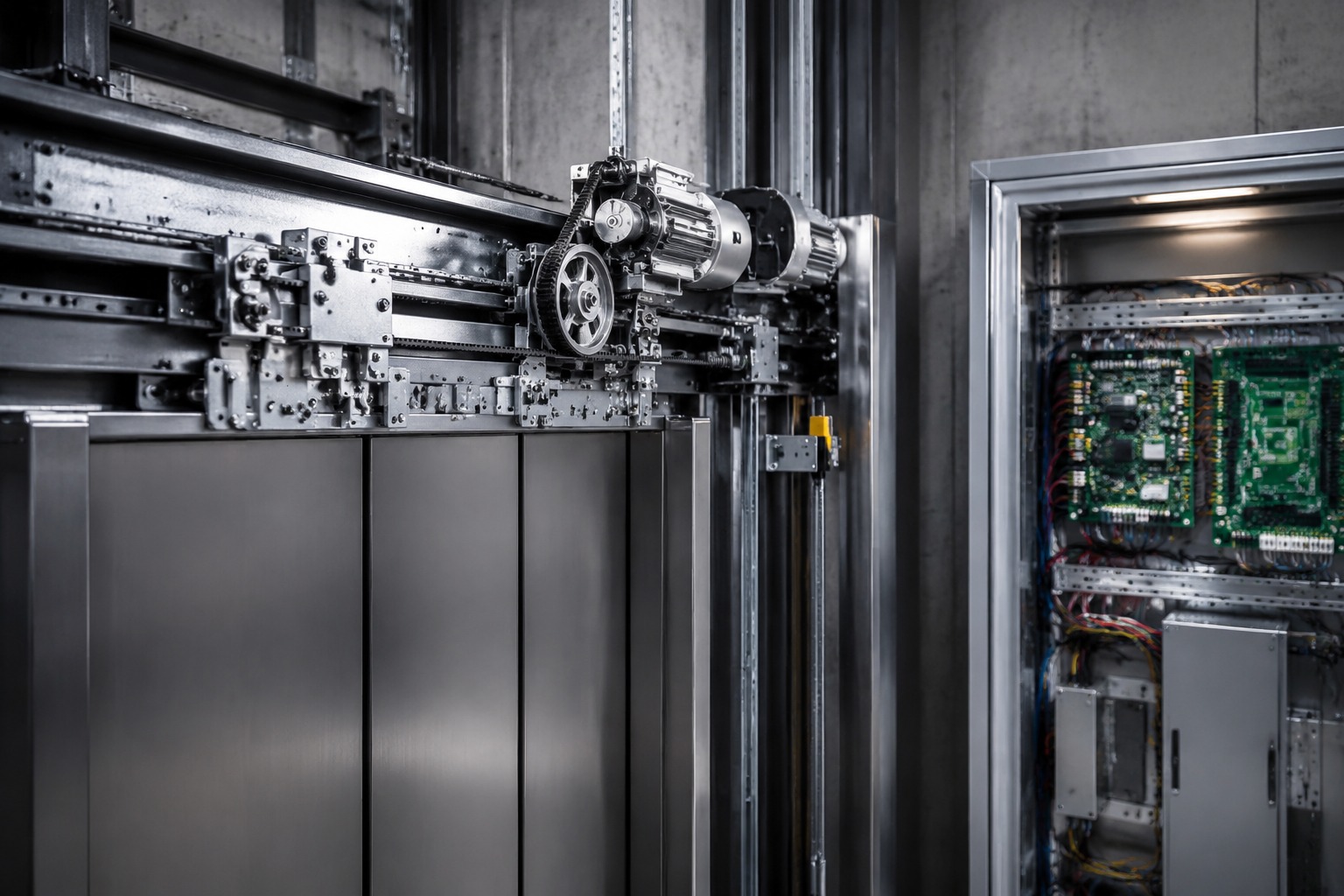
Reliable elevator operation depends heavily on one component that is often noticed only when it fails: the door motor system. If elevator doors open too slowly, close with inconsistent force, reverse unexpectedly, or make abnormal noise, the root cause is often linked to the motor, belt, pulley, controller settings, door hanger condition, or poor commissioning. In India, where lifts run in high-rise housing, hospitals, malls, metro-linked offices, hotels, and industrial facilities under heavy daily traffic, stable door opening performance is not simply a convenience issue. It affects passenger safety, waiting time, maintenance cost, and tenant satisfaction.
The direct answer is simple: door cycle speed is controlled by the interaction between the door motor, drive or controller parameters, mechanical transmission parts such as belts and pulleys, and the friction level of the panels and hanger assembly. When these parts are correctly matched and properly adjusted, doors open and close smoothly. When one part drifts out of tolerance, the entire door operator begins to show symptoms. For Indian maintenance companies and modernization contractors, this means that troubleshooting should never focus on the motor alone. It must include electrical settings, component compatibility, installation quality, and preventive inspection intervals.
Across Mumbai, Pune, Bengaluru, Hyderabad, Chennai, Delhi NCR, Ahmedabad, and Kolkata, many building owners are now moving from reactive replacement toward planned maintenance and model-matched spare sourcing. This shift is especially important in busy sites where downtime has immediate operational impact, such as mixed-use towers near Bandra Kurla Complex, IT campuses in Whitefield, hospital buildings in Hyderabad, retail properties in Gurgaon, and logistics-linked commercial sites near JNPT, Chennai Port, and Mundra. In these markets, compatible door motors, belts, encoders, controller boards, and door operator accessories are increasingly treated as uptime-critical parts rather than general consumables.
Door motor selection also varies by application. Residential towers may prioritize low noise and smooth starts. Hospitals demand controlled closing torque and reliable obstacle response. Commercial office towers need fast yet stable door cycles. Hotels often want quiet operation and minimal door shake. Industrial passenger lifts may require stronger tolerance for dust, heat, and inconsistent power quality. A good procurement decision therefore depends on brand compatibility, controller matching, shaft environment, traffic load, and local maintenance capability.
For buyers in India, the most practical approach is to confirm the exact lift model, operator type, motor specification, connector format, mounting size, door width, and controller parameter range before ordering. A door motor that appears visually similar may still be wrong if the belt profile, feedback signal, torque curve, or pulley dimensions do not match. This is why careful sourcing, serial or model verification, and packaging protection are important, particularly when parts move through long-distance domestic routes or arrive through port-connected distribution hubs.
Below is a quick overview of common door operator product categories used in replacement and modernization work.
| Product Category | Main Function | Typical Failure Symptom | Best Use Case | Inspection Priority | Replacement Urgency |
|---|---|---|---|---|---|
| Door motor | Drives opening and closing motion | Weak torque, jerking, overheating | Major performance restoration | Very high | Immediate if lift is unreliable |
| Door motor belt | Transfers motion from motor to operator | Slip, noise, poor synchronization | Routine wear replacement | High | High once cracks or stretch appear |
| Pulley and sheave parts | Guide and transmit belt movement | Misalignment, vibration, uneven wear | Mechanical correction | High | Medium to high |
| Door hanger and rollers | Support panel travel | Panel drag, wobble, hard closing | Older installations | Very high | High for safety and smoothness |
| Controller or drive board | Controls speed, torque, learning cycle | Irregular speed, fault codes, reversal | Electrical troubleshooting | Very high | Immediate if settings cannot hold |
| Encoder and sensor parts | Feedback for position and speed | Hunting, stop error, inconsistent timing | Precision door control | Medium to high | Based on diagnostic result |
This table matters because many field failures in India are multi-cause events. A weakened belt may trigger slipping, but the complaint appears as slow opening. A worn hanger may raise friction, but the symptom looks like low motor torque. A mismatched controller parameter may produce strong closing force, yet the motor itself is healthy. Good diagnosis starts with the system, not a single part.
Common Elevator Door Motor Problems
The most common elevator door motor problems fall into electrical, mechanical, and parameter-related categories. In Indian field conditions, all three often overlap because temperature variation, dust, humidity, inconsistent maintenance intervals, and high passenger traffic accelerate wear.
1. Slow door opening or closing: This is often caused by low motor torque, belt slip, excessive panel friction, poor lubrication in approved points, or an incorrect speed parameter. In many residential and commercial lifts, technicians first notice increased opening time before any fault code appears.
2. Door reversal during closing: If the controller detects excess resistance, doors may reopen. This can be caused by a dragging sill groove, panel misalignment, hanger wear, motor torque instability, or overly sensitive detection settings.
3. Jerky movement: Doors that start with a sudden pull or stop abruptly may indicate damaged belts, worn pulleys, poor motor feedback, or unstable drive settings. Jerking is especially common after partial replacement where old mechanical parts remain in service with a new motor.
4. Abnormal sound: Squealing, rattling, and clicking often point to pulley wear, bearing fatigue, loose mounts, or belt tooth damage. A humming motor with low output may suggest winding, bearing, or drive issues.
5. Overheating: Continuous operation in high-use sites such as malls, hospitals, and metro-adjacent towers can raise thermal stress. Overheating may be linked to mechanical resistance, overloading, repeated retries, or poor ventilation in the operator assembly.
6. Inconsistent closing force: Some doors close softly when empty but become rough during peak traffic. This usually indicates unstable commissioning, belt wear, variable friction, or controller settings drifting from the intended torque profile.
The following table helps maintenance teams isolate probable causes before ordering parts.
| Observed Symptom | Likely Motor Cause | Likely Mechanical Cause | Likely Controller Cause | Field Check | Recommended Action |
|---|---|---|---|---|---|
| Slow opening | Low output torque | Belt slip or panel drag | Speed parameter too low | Measure cycle time and inspect belt tension | Adjust settings and replace worn parts |
| Hard closing | Torque instability | Misaligned hanger | Closing torque too high | Observe final 20% of travel | Recommission and inspect rollers |
| Repeated reopening | Weak drive response | Excess resistance in panel path | Obstruction logic too sensitive | Check sill, guide, and fault history | Clean path and retune controller |
| Jerky start | Motor feedback issue | Damaged belt teeth | Acceleration setting too aggressive | Inspect start-up motion frame by frame | Replace belt and optimize ramp |
| Noise during travel | Bearing wear | Pulley wear or loose cover | Not usually primary | Use sound source check at operator head | Replace bearing-related parts |
| Overheating | Internal electrical stress | High friction load | Excess retry cycles | Check current draw and duty cycle | Reduce load source and inspect motor |
In India, a practical troubleshooting sequence is: confirm fault history, inspect belt condition, run doors in inspection mode, measure door cycle time, listen for pulley noise, check panel free movement by hand where allowed, then review speed and torque parameters. This reduces unnecessary part replacement and helps avoid repeat service visits.
The line trend above reflects a realistic market direction: replacement demand for door operator parts continues to rise as the installed base ages and modernization work expands across major Indian cities. It also shows why planned sourcing matters. Sudden part shortages can prolong downtime if model matching has not been done in advance.
Benefits of Permanent Magnet Synchronous Door Motors
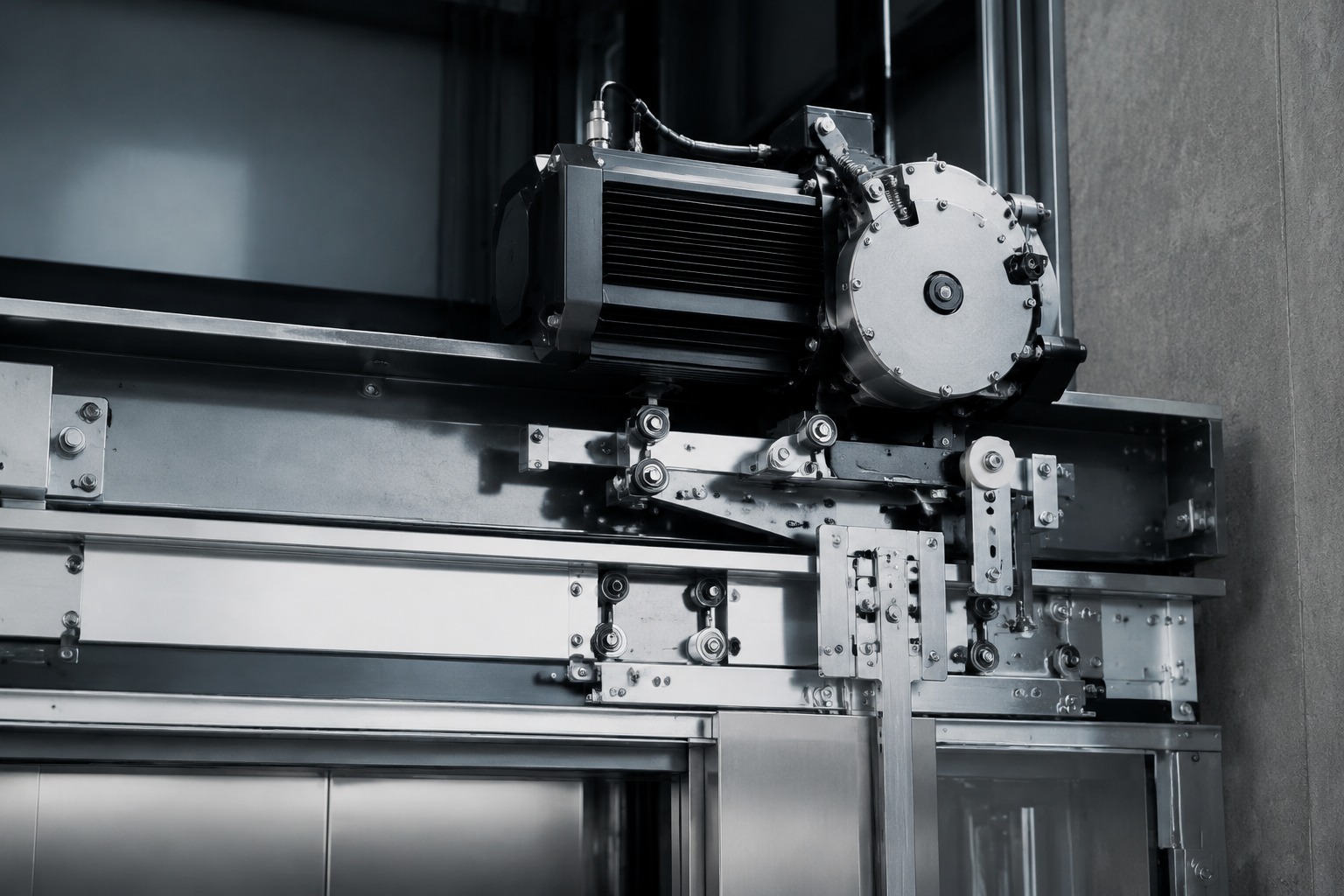
Permanent magnet synchronous door motors are increasingly preferred in elevator modernization and replacement work because they provide efficient torque output, precise speed control, compact construction, and stable response under frequent cycling. Compared with older designs, they can improve door opening consistency and reduce unnecessary stress on transmission parts when correctly commissioned.
For Indian projects, the main benefits are practical rather than theoretical. In high-traffic buildings, smoother torque delivery helps reduce impact at start and stop. In premium residential and hotel projects, quieter operation improves passenger comfort. In modernization jobs, compact size can help where installation space around the operator is limited. Better efficiency also supports lower heat generation during repeated operation, which matters in warm climates and enclosed machine spaces.
Another major advantage is control precision. Permanent magnet synchronous systems can maintain repeatable motion across opening, slowdown, and closing phases. This is useful where consistent door timing is required, such as hospitals, office towers, and public buildings. When paired with a compatible controller, they also support finer tuning of acceleration and closing force.
For customers seeking compatible replacement options, a permanent magnet synchronous door motor for Hitachi lift applications can be a practical choice where stable cycle control and reliable model matching are needed.
| Factor | Permanent Magnet Synchronous Motor | Conventional Older Type | Impact on Door Performance | Best Fit in India | Buying Note |
|---|---|---|---|---|---|
| Torque response | Fast and stable | Less refined | Smoother starts and stops | High-traffic buildings | Confirm controller compatibility |
| Energy efficiency | Higher | Lower | Reduced heat build-up | Busy commercial sites | Useful in heavy cycle duty |
| Noise level | Lower when installed well | Often higher | Better ride environment | Hotels and residences | Also inspect hanger condition |
| Control precision | High | Moderate | Improved closing consistency | Hospitals and offices | Requires correct parameter setup |
| Compactness | Usually better | Bulkier | Helps in tight operator spaces | Modernization jobs | Check mounting dimensions |
| Lifecycle stability | Strong if matched correctly | Variable | Fewer repeat adjustments | Service contractors | Source exact model data |
The table shows that motor technology alone does not guarantee better results. The best outcome comes from correct motor-controller matching, clean installation, proper belt alignment, and accurate commissioning. Where those conditions are met, permanent magnet synchronous door motors can noticeably improve performance and reduce callbacks.
Notes on Hitachi HGE and UAX Door Motors
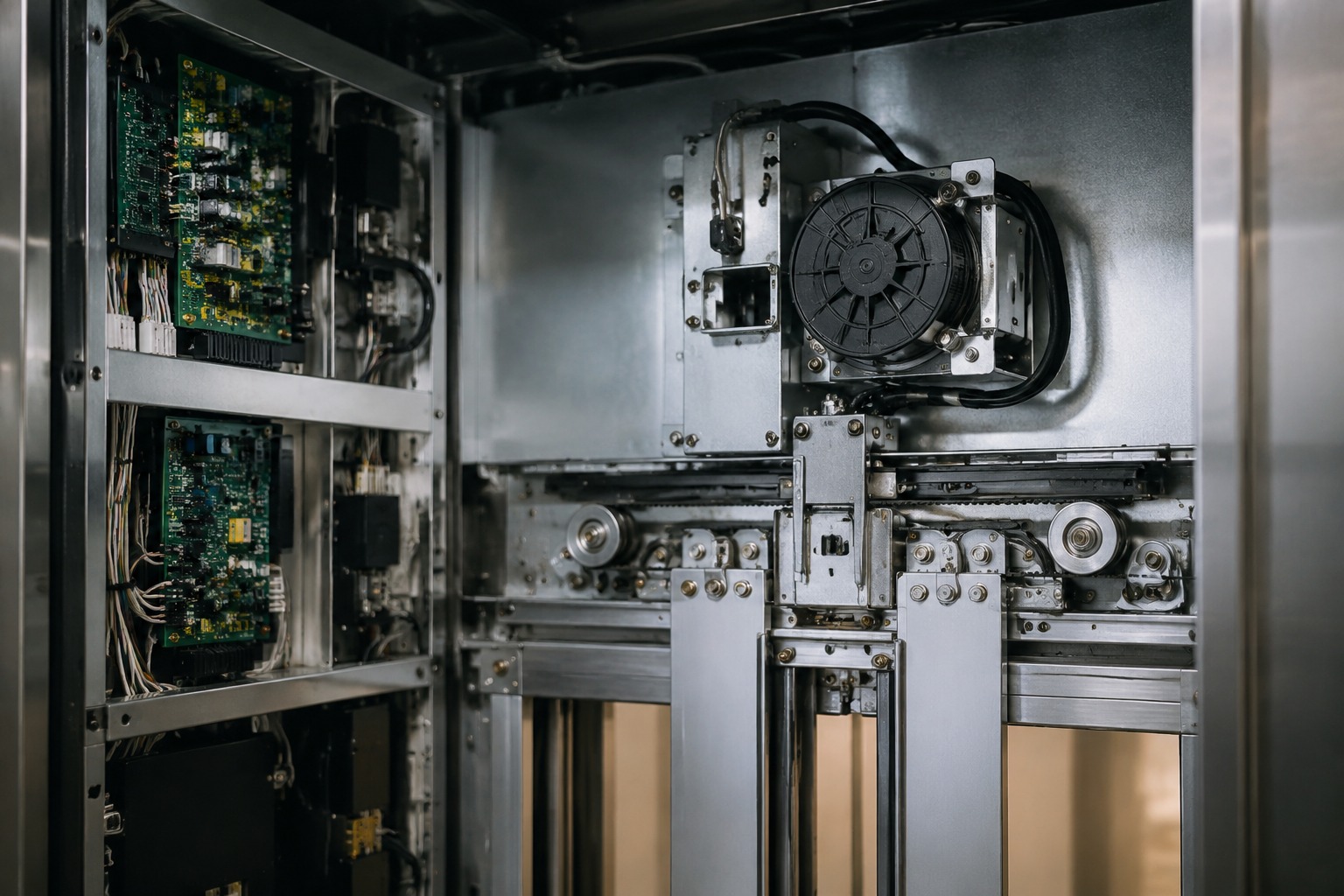
Hitachi-related door motor applications are widely discussed in replacement and modernization work because many service teams need compatible parts for installed lifts in residential towers, commercial buildings, and institutional properties. When dealing with HGE and UAX door motor notes, the key issue is not just brand identification. It is exact model confirmation, mounting detail verification, electrical parameter matching, and controller communication alignment.
Technicians should pay attention to nameplate data, shaft size, pulley specification, connector configuration, cable length, feedback format, and operator assembly dimensions. Even within the same brand family, variations in production batch or application setup can affect compatibility. This is especially important when parts are shipped to regional service centers in cities such as Nagpur, Coimbatore, Jaipur, Kochi, and Lucknow, where field teams need reliable first-time fitment.
For HGE-related requirements, a compatible HGE permanent magnet synchronous door motor may be considered after confirming the existing operator details and replacement objectives.
From a technical capability perspective, successful supply depends on careful model matching, understanding of cross-reference details, and inspection of key dimensions before dispatch. This helps reduce installation risk, especially where the site is under pressure to restore lift availability quickly. From a manufacturing capability perspective, stable component quality, inspection before packing, and protection against transit damage are important because door operator parts can suffer from impact or misalignment if poorly packed. From a service capability perspective, responsive communication, photo verification, label checking, and support during part confirmation are often what prevent expensive ordering mistakes.
| Checkpoint | Why It Matters | Risk if Ignored | Verification Method | Suitable for HGE/UAX Work | Field Tip |
|---|---|---|---|---|---|
| Nameplate model | Confirms core compatibility | Wrong motor ordered | Photo and serial check | Yes | Capture full label clearly |
| Mounting dimensions | Ensures fit on operator | Cannot install directly | Measure bracket spacing | Yes | Include side-view photos |
| Pulley size | Affects speed and belt fit | Wrong cycle timing | Measure diameter and profile | Yes | Check wear pattern too |
| Connector type | Electrical connection integrity | Rewiring delays | Photo compare pin layout | Yes | Do not assume same plug |
| Feedback or encoder data | Supports stable control | Hunting and faults | Review controller docs | Yes | Match both voltage and signal |
| Controller parameter range | Affects commissioning | Unsafe or unstable motion | Read current settings | Yes | Save original values first |
The explanation here is straightforward: many replacement problems are not product-quality problems but specification problems. Accurate checking before procurement is the most effective way to avoid repeat downtime.
Signs That a Door Motor Belt Needs Replacement
The belt is one of the most common wear items in the door operator system. It transmits motion, stabilizes door travel, and influences timing. A worn belt may still function for a period, but it gradually causes speed inconsistency, vibration, noise, and repeated adjustments. In India’s dusty or high-duty environments, belt wear can progress faster than expected.
Typical replacement signs include visible cracks, frayed edges, glazing, tooth wear, polishing on the contact surface, uneven tension, black dust accumulation near the pulley area, and audible slipping during start-up. Another important sign is the need for repeated retensioning. If the belt loses set tension too quickly, it is usually nearing the end of its service life.
Technicians should also inspect whether the belt wear is uniform. If one side is more worn, the issue may be misalignment rather than age alone. Installing a new belt without correcting pulley tracking can lead to another early failure. In some cases, a belt that looks acceptable visually may still be stretched enough to affect door learning and stopping accuracy.
For routine replacement work, many service teams keep a door motor belt 144 for lift door operator maintenance in stock for compatible applications to reduce waiting time during on-site repairs.
| Belt Condition | Visible Sign | Operational Symptom | Likely Root Cause | Can It Wait? | Recommended Response |
|---|---|---|---|---|---|
| Cracking | Small splits on surface | Intermittent slip | Age and heat | No for busy lifts | Plan immediate replacement |
| Frayed edge | Fibers at side | Noise and tracking issue | Misalignment | Short delay only | Replace and align pulleys |
| Glazing | Shiny hardened surface | Poor grip | Heat and wear | No | Replace belt |
| Tooth wear | Rounded or damaged tooth profile | Jerky start | Long service life or overload | No | Replace belt and inspect pulley |
| Stretching | No major damage visible | Timing drift | Material fatigue | Usually not | Replace if tension cannot hold |
| Dust deposits | Black residue near pulley | Cycle inconsistency | Friction and wear | Check soon | Clean, inspect, and replace if needed |
This table helps distinguish cosmetic wear from action-required wear. In practice, if a belt affects timing, creates dust, or requires repeated adjustment, replacement is often more cost-effective than continued tuning.
How to Inspect Pulleys and Hanging Panels
When checking an elevator door operator, pulley and hanging panel inspection is just as important as evaluating the motor. A healthy motor cannot deliver smooth door travel if the mechanical path has excessive resistance or poor alignment. In many older installations across India, especially in buildings with delayed modernization cycles, the actual problem is often in the panel support system.
Start with a visual inspection. Look for pulley groove wear, belt tracking marks, looseness, uneven rotation, bearing noise, and dust accumulation. Then inspect the hanging panels for level, side play, roller wear, bent hangers, abnormal contact with guides, and signs of rubbing at the sill or frame. If the panel does not travel freely, the motor will compensate with higher load, which increases heat and accelerates wear.
Manual movement tests, where permitted by site safety procedures and the elevator is correctly isolated, can reveal friction points that are not obvious during powered travel. A good panel path should feel smooth and balanced across the full opening range. A sudden resistance point often indicates hanger wear, guide deformation, pulley misalignment, or debris in the sill groove.
The highest-risk mistake is replacing the motor without correcting panel drag. This can make the new part appear weak or defective even when the true issue is mechanical.
| Inspection Point | What to Check | Good Condition | Warning Sign | Effect on Motor | Action Needed |
|---|---|---|---|---|---|
| Pulley groove | Surface wear and shape | Even profile | Polished or uneven groove | Belt slip and noise | Replace worn pulley |
| Pulley bearing | Rotation smoothness | Quiet and free | Grinding or wobble | Extra load and vibration | Replace bearing assembly |
| Belt tracking | Center alignment | Stable running line | Walks to one side | Rapid belt wear | Correct alignment |
| Hanger rollers | Roll and support quality | Low resistance | Flat spots or looseness | High friction | Replace rollers |
| Door panel level | Horizontal and vertical alignment | Even gap and travel | Panel skew | Uneven torque demand | Realign panel |
| Sill and guide path | Debris and contact points | Clean path | Scraping or blockage | Reopening and overload | Clean and adjust guides |
For maintenance managers, the key lesson is that pulley and panel inspection should be documented with photos and repeat observations. This helps identify progressive wear and supports better spare planning for multi-site portfolios.
The bar chart reflects real operating conditions in India, where residential towers and commercial offices drive a large share of door operator replacement demand. Hospitals and retail sites, although smaller in number, often have stricter uptime requirements and therefore need faster sourcing support.
Commissioning Door Speed and Torque
Correct commissioning is what turns a mechanically sound installation into a reliable door system. Even a high-quality motor can produce poor results if speed, acceleration, deceleration, opening width learning, and closing torque are not tuned properly. Commissioning should always follow the manufacturer’s logic and local safety procedures, but several best practices are widely useful.
First, ensure the mechanical path is clean and free. Do not tune around a dragging door. Second, verify that the belt tension and pulley alignment are within acceptable limits. Third, save original parameters before making changes. Fourth, adjust one variable at a time and test multiple cycles under normal conditions. Fifth, observe both empty-condition operation and peak traffic behavior if possible.
Door speed should be fast enough for passenger flow but not so aggressive that it causes bounce, noise, or impact at the end of travel. Torque should be strong enough to move the door consistently yet controlled enough to avoid harsh closing behavior. In hospitals, schools, and residential properties with elderly users, smoothness often matters more than maximum speed. In office towers with heavy inbound traffic, slightly faster opening may improve waiting performance, but only if reversal reliability is maintained.
For modernization contractors, commissioning is also where compatibility issues surface. If the motor, controller, or sensor feedback is mismatched, stable tuning becomes difficult. This is why sourcing from a supplier that emphasizes exact model verification is valuable.
| Commissioning Parameter | Main Goal | If Too Low | If Too High | How to Observe | Best Practice |
|---|---|---|---|---|---|
| Opening speed | Reduce waiting time | Sluggish operation | Impact and noise | Cycle timing test | Balance speed and smoothness |
| Closing speed | Stable passenger flow | Long door dwell effect | Rough passenger experience | Observe final closing approach | Prioritize controlled finish |
| Acceleration | Soft start | Feels weak | Jerky launch | Watch first 10% of movement | Increase gradually |
| Deceleration | Soft landing at stop | May drift long | Sharp stop | Watch final 15% of travel | Coordinate with speed setting |
| Closing torque | Reliable shut without shock | Incomplete close | Harsh contact force | Test repeated cycles | Set for safe and smooth closure |
| Reopen sensitivity | Passenger safety response | Missed obstacle logic | Nuisance reopening | Controlled obstruction test | Match site traffic pattern |
This table is useful because many complaints blamed on “weak motors” are actually commissioning balance issues. Stable results come from tuning speed and torque around real mechanical load, not around assumptions.
The area chart shows an important market shift: more building owners and maintenance firms in India are planning preventive replacement cycles instead of waiting for breakdowns. This trend is expected to continue through 2026 as uptime expectations rise and modernization budgets become more structured.
Preventive Maintenance Tips
Preventive maintenance is the most cost-effective way to protect door motor performance. Because elevator doors cycle far more often than many other lift components move through full load events, small wear issues can multiply quickly. A disciplined routine reduces callbacks, emergency visits, and passenger complaints.
Recommended practice includes monthly visual checks, scheduled belt condition reviews, pulley noise monitoring, hanger and panel travel assessment, sill cleaning, fastener tightness confirmation, and parameter review when door behavior changes. Maintenance frequency should be adjusted to traffic level. A mall in Chennai, a hospital in Delhi, and a gated residential complex in Pune should not all follow the same inspection intensity.
Technological capability plays a major role here. Better spare support comes from suppliers that understand control boards, inverter and frequency converter parts, door operators, sensors, encoders, and related lift accessories as one connected system. Manufacturing capability also matters because stable quality inspection and protective packaging reduce the chance of receiving damaged or mismatched parts. Service capability is equally important in the Indian market, where responsive communication, fast model confirmation, and practical replacement advice can save days of downtime.
Looking toward 2026, three trends are shaping preventive maintenance in India. First, data-driven service planning will expand, with more contractors using cycle counts and failure history to schedule replacements. Second, policy and safety expectations will push for better documentation of door performance, especially in premium residential and public-use buildings. Third, sustainability goals will encourage repairable, efficient, and long-life components that reduce waste and unnecessary emergency transport.
- Keep critical door operator consumables in stock for high-traffic sites.
- Match belt, pulley, and motor replacements rather than replacing one part blindly.
- Record cycle times before and after maintenance to detect gradual decline.
- Clean sill grooves and guide paths regularly in dusty environments.
- Review controller settings after any electrical repair or board replacement.
- Use protected packaging and verified labels when moving parts between cities.
The comparison chart highlights what Indian buyers increasingly value in a supplier: accurate model matching, stable quality checks, careful packaging, broad spare coverage, and responsive support. Price still matters, but incorrect parts and repeat downtime often cost more than a properly verified purchase.
FAQ About Elevator Door Motors
What is the most common cause of poor door opening performance?
The most common cause is not a single component but a combination of belt wear, increased panel friction, and poor parameter settings. Always inspect both electrical and mechanical factors.
How long does a door motor belt usually last?
It depends on traffic, environment, alignment, and commissioning quality. In high-duty Indian buildings, belts should be inspected frequently because dust, heat, and long operating hours can shorten life.
Should I replace the motor if the door becomes noisy?
Not immediately. Noise may come from pulley bearings, belt tracking, hanger rollers, or loose covers. Diagnose the source before replacing the motor.
Why do elevator doors reopen repeatedly?
Repeated reopening usually indicates excess resistance, obstruction sensing sensitivity, sill contamination, or poor closing torque balance. Mechanical drag is a very common reason.
Are permanent magnet synchronous door motors worth upgrading to?
Yes, when compatibility and commissioning are handled correctly. They offer smoother control, lower noise, and stable torque, which can improve performance in modernization projects.
What should buyers in India confirm before ordering a replacement motor?
Check the exact model, application brand, mounting dimensions, pulley details, connector type, feedback format, and controller compatibility. Photos and label verification are strongly recommended.
Can a new motor fail quickly if the door panel is not aligned?
Yes. A new motor forced to work against panel drag or pulley misalignment can overheat, vibrate, and wear out faster than expected.
Which sectors in India need the most careful door motor planning?
Hospitals, premium residential towers, busy office buildings, retail centers, and hotels usually need the most careful planning because downtime directly affects operations and user experience.
What makes a reliable parts partner for modernization work?
A reliable partner should support exact model matching, offer a broad range of elevator spare parts, inspect quality carefully, package parts safely for transit, and respond quickly to technical confirmation requests.
What is the practical takeaway for building owners?
Treat door motors, belts, pulleys, and controller settings as a single performance system. Preventive inspection and compatible replacement sourcing are the best ways to keep lifts safe and available.
In summary, stable elevator door opening performance in India depends on the right combination of motor technology, belt condition, pulley alignment, panel movement quality, and controller commissioning. Permanent magnet synchronous door motors offer strong benefits when applied correctly. Hitachi HGE and UAX-related work requires careful compatibility confirmation. Belts should be replaced before they become a downtime trigger. Pulleys and hanging panels must be inspected as part of every serious diagnosis. And as the Indian market moves toward 2026, preventive maintenance, sustainability, and smarter sourcing will increasingly define successful lift service operations.