
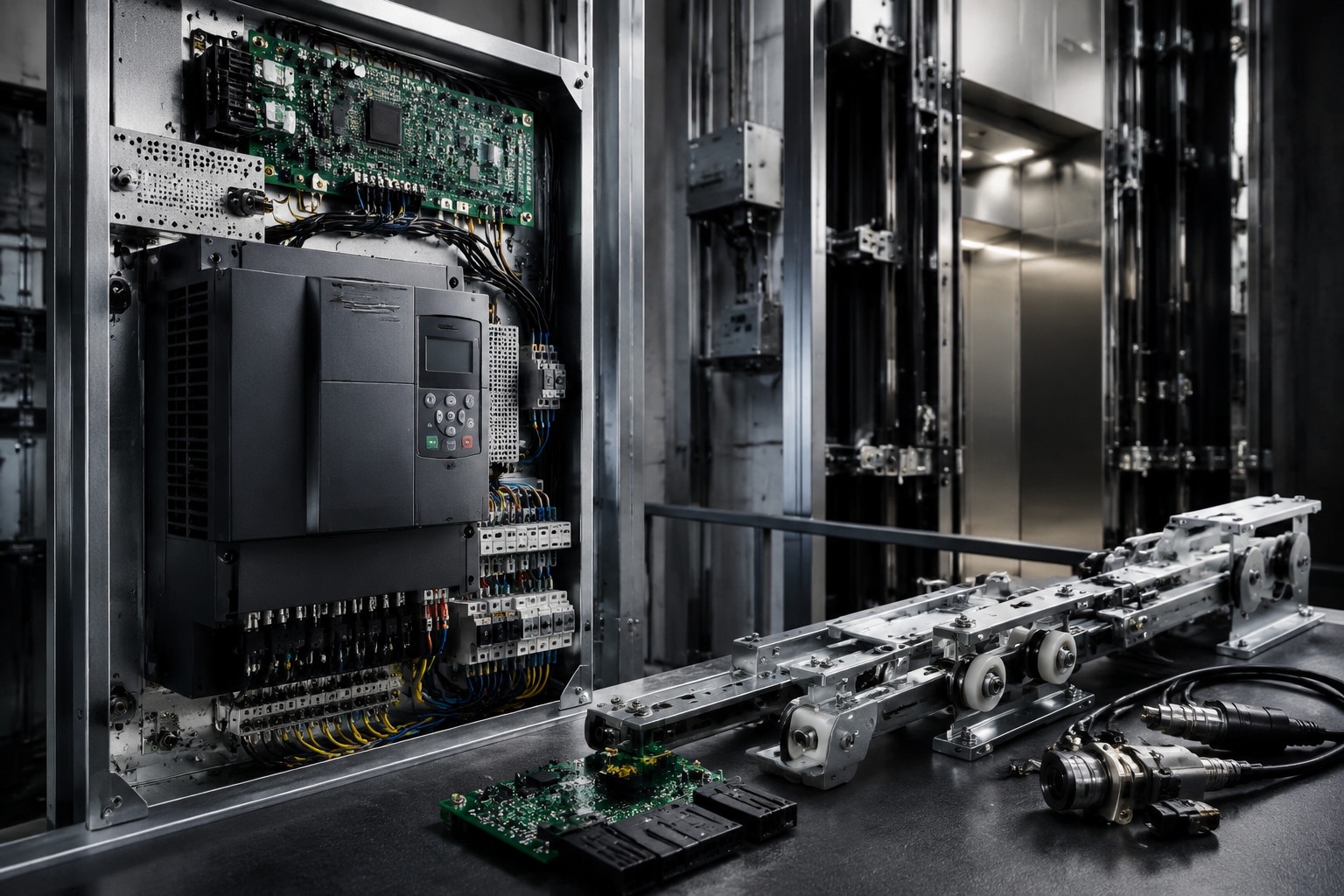
In modern lift systems, the frequency converter is the part that gives the motor smooth, accurate, and efficient control. For building owners, lift maintenance firms, modernization contractors, and parts distributors in India, choosing the right converter is not just about price. It affects ride comfort, landing accuracy, motor temperature, electrical stability, rescue performance, downtime risk, and long-term maintenance cost. Whether the site is a residential tower in Mumbai, a hospital in Chennai, a commercial block in Bengaluru, or a mixed-use development near Delhi NCR, the correct elevator frequency converter can reduce nuisance trips and improve daily reliability.
The direct answer is simple: select the converter based on motor nameplate data, starting torque requirement, duty cycle, braking demand, supply quality, shaft travel pattern, cabinet ventilation, and the control system already installed in the elevator. In India, 15KW and 22KW models are among the most commonly discussed ratings because they fit many mid-rise passenger lifts, goods lifts, and modernization projects. However, model selection should never rely on kilowatt rating alone. Voltage, current, overload capability, encoder compatibility, brake resistor design, and communication interface all matter.
Demand for reliable lift electronics is growing across Indian cities because of urban redevelopment, metro-linked housing, logistics parks, hospitals, hotels, and aging building stock that needs modernization. Ports and trade hubs such as Nhava Sheva, Chennai Port, Mundra, Kolkata, and Visakhapatnam influence spare part flow and delivery timing, while major service corridors in Pune, Ahmedabad, Hyderabad, Kochi, and Coimbatore shape after-sales expectations. Buyers increasingly want parts that are model-matched, securely packed, and supplied with clear technical confirmation to avoid return delays and repeat site visits.
Our role in this market is practical: we support maintenance companies, distributors, building owners, and modernization teams with dependable sourcing of elevator control boards, inverter and frequency converter parts, door operator components, door locks, light curtains, guide shoes, oil cups, sensors, encoders, power supplies, buttons, COP panels, intercom parts, and other lift accessories for major brands including Hitachi, Toshiba, KONE, Mitsubishi, and more. The focus is on compatibility, stable quality inspection, protective packaging, and responsive service so customers can reduce downtime and keep lifts operating safely.
For buyers comparing options, it helps to look at actual product routes rather than generic catalog claims. For example, a project needing a higher-power replacement for a modernization job may consider a 22KW elevator frequency converter for lift spare parts, while a compact mid-duty installation may suit an HGE 15KW frequency converter for elevator applications. Sites that specifically require compatible branded inverter replacement may review an Emerson elevator inverter option after checking control logic, current rating, and motor feedback requirements.
Before going into technical details, it is useful to understand the market direction. India’s lift modernization segment is expanding because many buildings installed in earlier phases now require smoother ride quality, lower energy use, and easier spare parts access. Frequency converters are central to that shift because they allow acceleration and deceleration curves to be optimized, reduce mechanical shock, and support more intelligent fault protection than older constant-speed arrangements.
The line chart above illustrates a realistic growth index for elevator converter demand in India, supported by modernization projects, expansion in Tier 1 and Tier 2 cities, and increasing preference for energy-aware lift controls. Growth is also influenced by replacement demand in commercial buildings where downtime carries direct tenant and reputation cost.
Frequency converter versus inverter
In elevator discussions, the words frequency converter and inverter are often used interchangeably, but there are practical differences depending on who is speaking. In broad electrical language, an inverter converts DC to AC. A frequency converter, especially in lift systems, usually refers to the complete variable frequency drive assembly that rectifies incoming AC to DC and then inverts it into controlled AC output with adjustable frequency and voltage. Many technicians in India say “inverter” when they mean the whole elevator drive. That is common in field language, but for correct part selection, it is better to confirm the full drive function, not only the label.
For lifts, the real concern is whether the unit provides vector control, torque response, motor protection, regenerative or braking support, encoder feedback processing, and smooth low-speed operation. In a passenger elevator, ride comfort and leveling are as important as raw power. A basic industrial inverter may run a motor, but an elevator frequency converter is normally tuned for lift duty, with stronger overload handling, better stopping accuracy, and more suitable logic integration with the elevator controller.
| Aspect | General Inverter | Elevator Frequency Converter | Why It Matters in India |
|---|---|---|---|
| Main function | DC to controlled AC output | Complete variable-speed motor control package | Helps avoid confusion during replacement orders |
| Typical control | Basic V/F or standard vector | Lift-specific vector and speed profiling | Needed for smooth travel in apartment and office towers |
| Low-speed stability | May be limited | Optimized for starting and leveling | Critical for floor accuracy and passenger comfort |
| Overload capacity | General industrial rating | Often stronger for lift duty cycles | Useful where traffic peaks are high |
| Brake integration | Not always lift-focused | Designed for coordinated braking control | Important for descending loaded cars and rescue logic |
| System compatibility | Application dependent | More likely to match lift controller signals | Reduces site commissioning problems |
| Replacement risk | Higher if chosen only by KW | Lower when matched by full model data | Prevents costly repeat shipments across cities |
The table shows why naming matters. If a buyer asks only for “an elevator inverter,” the replacement may arrive with the right power class but the wrong control style, feedback interface, or braking arrangement. That is why experienced suppliers confirm motor current, control board signals, drive model number, encoder type, and site environment before shipping.
From a technology perspective, our technical capability is built around careful model matching rather than generic substitution. That includes checking drive labels, motor ratings, feedback devices, and application duty to help customers select compatible elevator electronic parts with lower installation risk. This is especially useful when older lifts in cities like Kolkata, Surat, or Lucknow have mixed-brand modernization histories and partial documentation.
How to select 15KW and 22KW models
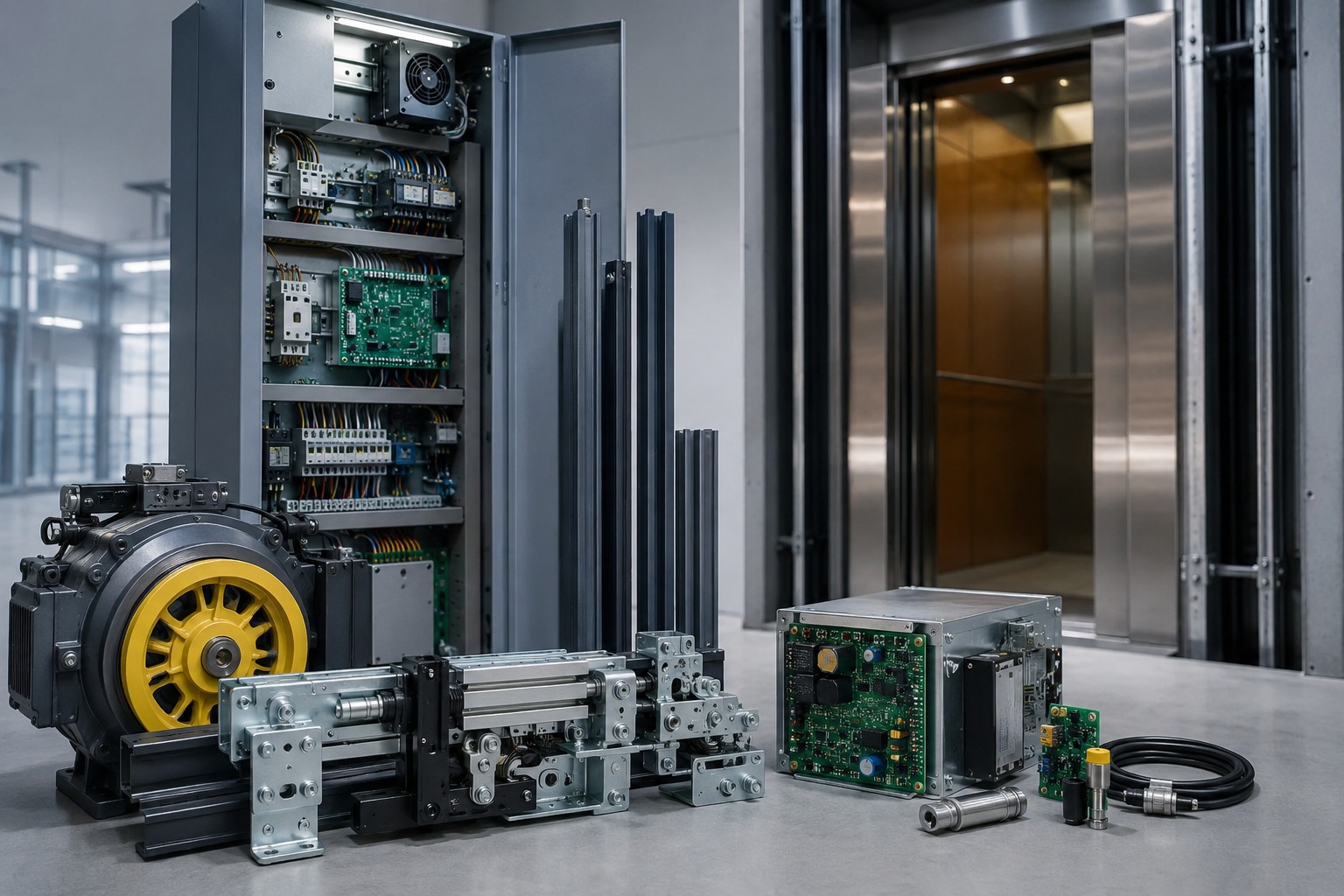
Choosing between 15KW and 22KW models starts with the motor, but the final decision should also account for current draw, starting torque, overload margin, car capacity, balancing, travel height, and traffic intensity. A 15KW model is common in many residential or moderate-traffic passenger elevators. A 22KW model is often preferred for higher load conditions, larger cars, goods lifts, or systems that require additional torque reserve due to shaft conditions or operating profile.
In India, many selection errors happen because teams rely only on the old drive’s kilowatt sticker. If the old unit was oversized, replacing it with the same rating may work but waste budget. If the old unit was undersized and survived only because traffic was light, repeating that size can cause trips once occupancy rises. Always compare the motor nameplate current with the new converter’s continuous current and overload capacity.
| Selection factor | 15KW Model | 22KW Model | Recommended Check |
|---|---|---|---|
| Typical use | Passenger lifts with moderate duty | Higher-load passenger or goods lifts | Review building use pattern |
| Motor current range | Lower | Higher | Match continuous current, not only KW |
| Torque reserve | Moderate margin | Higher margin | Check starting and low-speed load demand |
| Cabinet size impact | Smaller footprint | Larger and warmer running profile | Verify panel space and cooling path |
| Brake resistor need | Depends on travel and load cycle | More likely in dynamic duty cases | Calculate deceleration energy |
| Use in modernization | Good for many mid-rise upgrades | Better for heavy-duty or future reserve | Assess expected traffic increase |
| Cost | Lower initial spend | Higher initial spend | Compare against downtime risk and life-cycle cost |
A practical buying method is to collect six data points before asking for quotation: motor voltage, motor current, motor power, speed/encoder details, lift capacity, and existing drive model number. Add photos of the nameplate and cabinet layout. This reduces the chance of ordering a drive that fits electrically but cannot be commissioned easily.
Manufacturing capability also matters at this stage. We emphasize stable quality inspection, careful part verification, and protective packaging so power electronics reach customers safely whether the shipment is heading to Mumbai, Jaipur, Guwahati, or a regional distributor near Cochin. For replacement electronics, robust packaging is not a minor detail; it directly affects installation success after long-distance transport through India’s varied climate and logistics routes.
Below is a practical sizing guide that technicians and buyers can use during shortlisting.
| Project condition | Preferred rating direction | Reason | Site note |
|---|---|---|---|
| Residential tower, moderate passenger flow | 15KW if current match is correct | Efficient for standard duty | Good for many apartment blocks in Pune or Noida |
| Commercial building with peak office traffic | 22KW if load and duty justify | More thermal and torque margin | Useful in Bengaluru or Gurgaon business districts |
| Goods lift with frequent heavy loads | 22KW | Better overload handling | Confirm mechanical condition too |
| Older modernization with uncertain load history | Depends on current and shaft behavior | Legacy systems may hide issues | Do not guess from old label alone |
| Hotel or hospital requiring smooth ride quality | Either, based on motor data | Control quality matters as much as power | Check tuning capability and feedback |
| Future occupancy expected to rise | Lean toward margin if electrical design permits | Helps long-term reliability | Balance capex with heat and space |
Common fault codes and replacement triggers
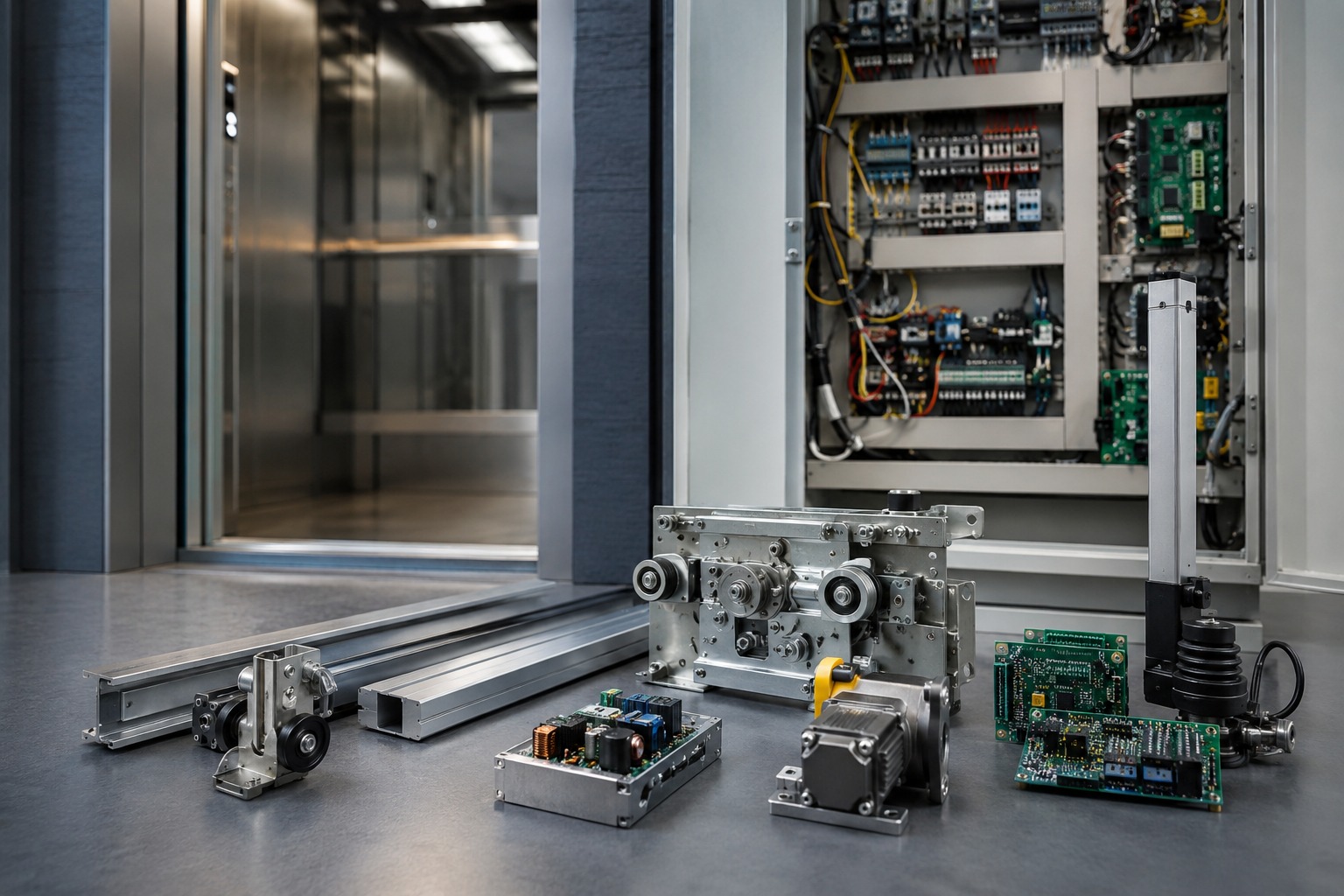
Most elevator frequency converter failures do not begin as catastrophic events. They usually start with intermittent overcurrent trips, undervoltage alarms, heatsink overtemperature, encoder loss, brake unit faults, or communication errors with the main controller. The meaning of a code varies by brand, so field teams should always read the specific manual. Still, several patterns are common across many systems.
In Indian installations, unstable incoming power, high ambient temperature, dust, poor panel ventilation, and neglected cooling fans are among the most common reasons a drive begins to trip. Sites near coastal zones such as Chennai, Kochi, or Visakhapatnam may also suffer from corrosion and humidity effects, while industrial corridors may expose cabinets to conductive dust or vibration.
| Typical fault category | Likely cause | Immediate check | Replacement trigger |
|---|---|---|---|
| Overcurrent | Motor issue, short circuit, bad tuning, mechanical drag | Inspect motor insulation and current profile | Replace drive if power stage is damaged or repeated trips persist after correction |
| Overvoltage | Braking energy not dissipated properly | Check brake resistor and deceleration settings | Replace if DC bus section is unstable or damaged |
| Undervoltage | Weak mains supply, loose terminals, incoming dips | Measure supply under load | Replace only after supply issues are ruled out |
| Overtemperature | Blocked airflow, failed fan, dusty heatsink | Clean cabinet and test fans | Replace if thermal stress has degraded power modules |
| Encoder/feedback error | Cable issue, wrong feedback type, encoder failure | Check wiring and parameters | Replace drive if feedback board channel fails |
| Brake unit fault | Resistor mismatch or brake transistor problem | Inspect resistor value and connections | Replace if brake circuit board is burnt |
| Communication fault | Controller-drive interface issue | Verify terminals, protocol, shielding | Replace if interface hardware is proven faulty |
The table above should be used as a decision aid, not as a substitute for brand-specific troubleshooting. A key replacement trigger is repeated trip behavior after the mechanical system, motor, encoder, and supply conditions have already been validated. Another clear trigger is visible board damage, burnt terminals, capacitor swelling, or repeated thermal shutdown even after cooling improvements.
Service capability becomes especially important here. Fast response, accurate identification, and shipment support can reduce lift downtime substantially. We work with maintenance teams that need reliable sourcing and quick confirmation when a site in Hyderabad, Indore, or Chandigarh is waiting for a converter or supporting electronic part. Clear photos, label data, and symptom history usually speed up this process.
Motor compatibility and braking needs
Motor compatibility is central to elevator converter performance. The drive must match motor voltage, frequency, current, insulation condition, and control mode. It must also support the motor type in use, whether geared or gearless, with or without encoder feedback depending on the application design. In lift service, even a drive that appears to run the motor can perform poorly if tuning and feedback compatibility are wrong. Symptoms may include jerky starts, floor leveling drift, noisy operation, rollback, and unnecessary heating.
Braking needs are equally important. Elevators generate energy during certain operating conditions, especially when a heavy car or unbalanced load drives the motor. That energy must be managed. In many systems, a brake resistor is used to absorb it. If braking capacity is insufficient, the converter may trip on overvoltage during deceleration or downward loaded runs. In high-duty or energy-conscious applications, regenerative solutions may also be considered, but the suitability depends on the full system design.
| Compatibility item | What to verify | Risk if ignored | Typical field sign |
|---|---|---|---|
| Motor voltage | Drive output class matches motor | Stress on motor or underperformance | Heating or unstable operation |
| Motor current | Continuous and peak current fit drive rating | Trips under load | Overcurrent alarm at start |
| Control mode | V/F, open-loop vector, closed-loop vector | Poor torque and ride quality | Rough acceleration |
| Encoder type | Pulse, resolver, or compatible feedback format | Loss of speed accuracy | Leveling errors |
| Brake control logic | Timing between drive torque and mechanical brake | Rollback or hard stop | Jerky take-off |
| Brake resistor sizing | Resistance and wattage fit duty cycle | Overvoltage or resistor damage | Trips during deceleration |
| Motor insulation health | Megger and winding condition | Drive damage over time | Leakage-related faults |
As a rule, 15KW and 22KW drives should never be chosen in isolation from brake system design. A frequent mistake is replacing the drive but reusing an unsuitable resistor or ignoring degraded brake contact wiring. In high-rise residential sites in Mumbai or premium hospitality projects in Goa, these details make the difference between smooth service and repeat callback visits.
The industry demand chart shows why residential towers and commercial buildings dominate replacement and modernization activity. However, hospitals and industrial goods lifts often require stricter reliability and braking review because operational continuity is more sensitive.
Heat dissipation and cabinet fan planning
Heat is one of the biggest enemies of elevator power electronics. A well-selected frequency converter can still fail early if cabinet airflow is poor. In India, this issue becomes more serious in machine rooms exposed to summer heat, low ventilation, dust accumulation, or inconsistent maintenance. Cities like Nagpur, Ahmedabad, and Delhi can see high ambient temperatures that push panel internals far above comfortable operating levels.
Cabinet fan planning should consider drive heat loss, panel size, intake and exhaust path, filter cleanliness, neighboring heat sources, and door sealing. A 22KW drive will normally need more careful airflow planning than a 15KW unit, especially when other heat-producing components such as brake resistors, transformers, and contactors share the same enclosure.
| Cooling factor | Good practice | Common mistake | Result if neglected |
|---|---|---|---|
| Air path | Clear bottom-to-top or side-to-side flow | Fan installed without exit path | Hot air recirculation |
| Fan capacity | Match airflow to heat load | Using undersized generic fan | Repeated overtemperature trips |
| Filter maintenance | Clean or replace regularly | Clogged intake left unchecked | Reduced cooling efficiency |
| Drive spacing | Maintain manufacturer clearance | Components packed too tightly | Localized heat buildup |
| Brake resistor location | Mount away from sensitive boards if possible | Placed close to drive electronics | Extra thermal stress |
| Ambient control | Assess machine room temperature | Ignoring summer peak conditions | Shortened capacitor and fan life |
| Dust control | Seal and clean cabinet routinely | Open panel with no cleaning schedule | Heatsink blockage and tracking risk |
Good cooling design pays back through fewer trips and longer component life. In practical terms, technicians should measure actual cabinet temperature under load rather than relying on room temperature alone. If the machine room reads 38°C, internal cabinet hotspots may be significantly higher. Heat also accelerates capacitor aging, which is one of the common life-limiting factors in variable-speed drives.
This trend chart reflects a broad shift in India from basic replacement buying to smarter selection that considers energy use, ride quality, and remote service readiness. Better thermal design is part of that change because it protects the value of the installed electronics.
Commissioning checks for technicians
Commissioning is where a suitable converter either proves itself or begins a chain of site problems. A disciplined checklist prevents many of the faults often blamed on the drive itself. Before first power-up, the technician should inspect input voltage, grounding, terminal tightness, output cabling, encoder wiring, brake circuit wiring, resistor value, and parameter group settings. Then, safe no-load and controlled load tests should be carried out in the correct sequence.
Because lift safety is involved, commissioning should always follow site procedures, controller logic requirements, and local regulations. The drive is only one part of the system. Mechanical brake condition, traction machine health, rope balance, and door system behavior can all influence drive tuning results.
| Commissioning step | What to do | Why it matters | Pass indicator |
|---|---|---|---|
| Nameplate verification | Match drive data with motor and site drawings | Prevents base selection error | All ratings aligned |
| Power supply test | Measure input voltage and phase balance | Avoids nuisance undervoltage trips | Stable readings under expected conditions |
| Grounding check | Confirm proper earth connection | Improves safety and noise control | Secure and low-resistance earth path |
| Output and motor wiring | Inspect cable terminations and insulation | Protects power stage | No loose or overheated points |
| Encoder/feedback test | Validate signal type and direction | Supports stable speed control | Correct feedback reading |
| Brake timing setup | Coordinate torque build-up and brake release | Prevents rollback and jerk | Smooth start and stop |
| Trial runs | Perform empty and loaded travel tests | Confirms real operating behavior | Stable travel, accurate leveling, no abnormal faults |
For technicians working across multiple brands, documenting final parameters is essential. A well-commissioned drive should also have cabinet photos, resistor values, fan details, and any wiring changes recorded for future service teams. This reduces dependency on memory when the next call comes months later.
Our service capability supports this practical field requirement through responsive communication and detailed confirmation before supply. This is particularly useful for maintenance providers who manage many sites and need consistent replacement references rather than one-time guessing.
Maintenance tips for longer service life
Elevator frequency converters can last many years when maintenance is preventive rather than reactive. The biggest gains come from cleaning, thermal monitoring, fan replacement planning, terminal inspection, and checking the health of surrounding components such as contactors, resistors, encoders, and power supplies. In India, dust, heat, voltage fluctuation, and uneven maintenance schedules are the most common reasons service life falls short of expectation.
A good maintenance routine should include periodic cabinet cleaning with appropriate safety procedures, inspection for discoloration or hot spots, checking fan noise and airflow, tightening control and power terminals, reviewing fault history, and comparing actual motor current with normal baseline values. If the drive stores trip logs, use them. Intermittent alarms often reveal developing issues long before shutdown becomes critical.
| Maintenance item | Recommended action | Suggested frequency | Benefit |
|---|---|---|---|
| Cabinet cleaning | Remove dust from vents, filters, and heatsinks | Monthly to quarterly by environment | Improves cooling and reliability |
| Cooling fan inspection | Check noise, rotation, and airflow | Quarterly | Prevents thermal trips |
| Terminal tightening | Inspect power and control terminals | Quarterly to half-yearly | Reduces heating and intermittent faults |
| Fault log review | Download or note recurring alarms | Monthly | Enables early intervention |
| Brake resistor check | Inspect condition and connection security | Half-yearly | Protects against overvoltage events |
| Temperature monitoring | Measure cabinet and heatsink temperatures | Seasonally and during peak load | Extends electronic life |
| Encoder cable inspection | Check shielding and connector integrity | Half-yearly | Maintains accurate control |
One useful habit is to plan fan replacement before complete failure, especially on heavily used lifts. Another is to review capacitor condition during major service intervals if the drive is older and exposed to heat. Where input supply quality is poor, consider broader electrical health checks at the building level rather than blaming the converter first.
We also see value in combining spare-part planning with preventive maintenance. Building owners and service firms can reduce downtime by keeping critical items identified in advance: drive model references, keypad type, brake resistor specification, feedback module type, and control board association. This is especially helpful for sites located away from major logistics centers.
FAQ about elevator frequency converters
What is the main benefit of a frequency converter in an elevator?
It gives controlled acceleration, deceleration, and motor torque management. That improves ride comfort, floor leveling, energy performance, and component life compared with less advanced speed control methods.
Is a frequency converter the same as an inverter?
In everyday field language, many people use the words interchangeably. Technically, an elevator frequency converter usually refers to the full drive system for variable-speed motor control, not just the inversion stage.
How do I know whether I need 15KW or 22KW?
Start with motor current, voltage, power, duty cycle, and lift application. Do not select only by old drive label. Continuous current and overload capacity are often more important than nominal KW alone.
Can I replace one brand with another?
Sometimes yes, but only after checking control compatibility, feedback type, braking arrangement, dimensions, and parameter capability. Generic substitution without data can create commissioning problems.
When should a converter be replaced instead of repaired?
Replace it when there is repeated power-stage failure, severe thermal damage, burnt boards, unreliable operation after mechanical and electrical causes are ruled out, or when parts support for repair is no longer practical.
Why does the drive trip during downward travel with load?
This often points to braking energy issues such as an incorrect or failed brake resistor, unsuitable deceleration settings, or a brake circuit problem causing DC bus overvoltage.
How important is cabinet cooling in India?
Very important. High ambient temperatures, dust, and inadequate ventilation are major causes of premature drive faults. Proper fan planning and filter cleaning should be part of routine maintenance.
Can a bad motor damage the converter?
Yes. Winding faults, insulation weakness, mechanical seizure, or abnormal current draw can stress or damage the power stage. Motor health checks should be part of fault diagnosis.
What information should I send when asking for a replacement quotation?
Send photos of the old drive nameplate, motor nameplate, fault code display, cabinet layout, resistor details, encoder details, and any controller model information. This speeds up accurate matching.
What trends should buyers in India watch through 2026?
Expect stronger demand for energy-efficient lift drives, better heat management, smarter diagnostics, easier modernization compatibility, and purchasing decisions influenced by sustainability goals and building uptime requirements. Policy direction around energy efficiency, safer electronics handling, and green building standards is likely to make high-quality drive selection more important, not less.
Looking ahead to 2026, the Indian market is expected to reward solutions that combine reliability, maintainability, and energy awareness. More buildings will ask for smoother ride quality, lower operating cost, and better replacement traceability. Modernization contractors will also prefer components that can be matched quickly across mixed installed bases. Sustainability will influence buying decisions through lower energy waste, longer component life, and reduced repeat transport caused by wrong-part orders.
The comparison chart shows what matters most to buyers choosing a supplier for elevator frequency converters and related spare parts. In real projects, reduced downtime and accurate model matching rank higher than headline price alone because every extra site visit costs time, labor, and user trust.
To summarize the buying advice for India: identify the exact duty, match the motor and feedback correctly, plan braking carefully, verify cooling, and treat commissioning as a system process rather than a simple part swap. If you are comparing a 15KW or 22KW elevator frequency converter, a replacement drive for a branded lift system, or supporting electronic accessories for modernization, a data-led approach is the safest path. It reduces risk for building owners, supports maintenance companies under time pressure, and helps distributors deliver dependable results across India’s diverse building and service environment.
When suppliers combine technical verification, stable inspection, careful packaging, and responsive support, customers benefit beyond the single purchase. That is especially true in the elevator sector, where safe operation depends on compatible parts and clear follow-up. For maintenance firms serving dense urban routes from Mumbai to Bengaluru, or for regional contractors supporting projects in Bhubaneswar, Raipur, or Madurai, this practical approach keeps lifts moving and downtime under control.