
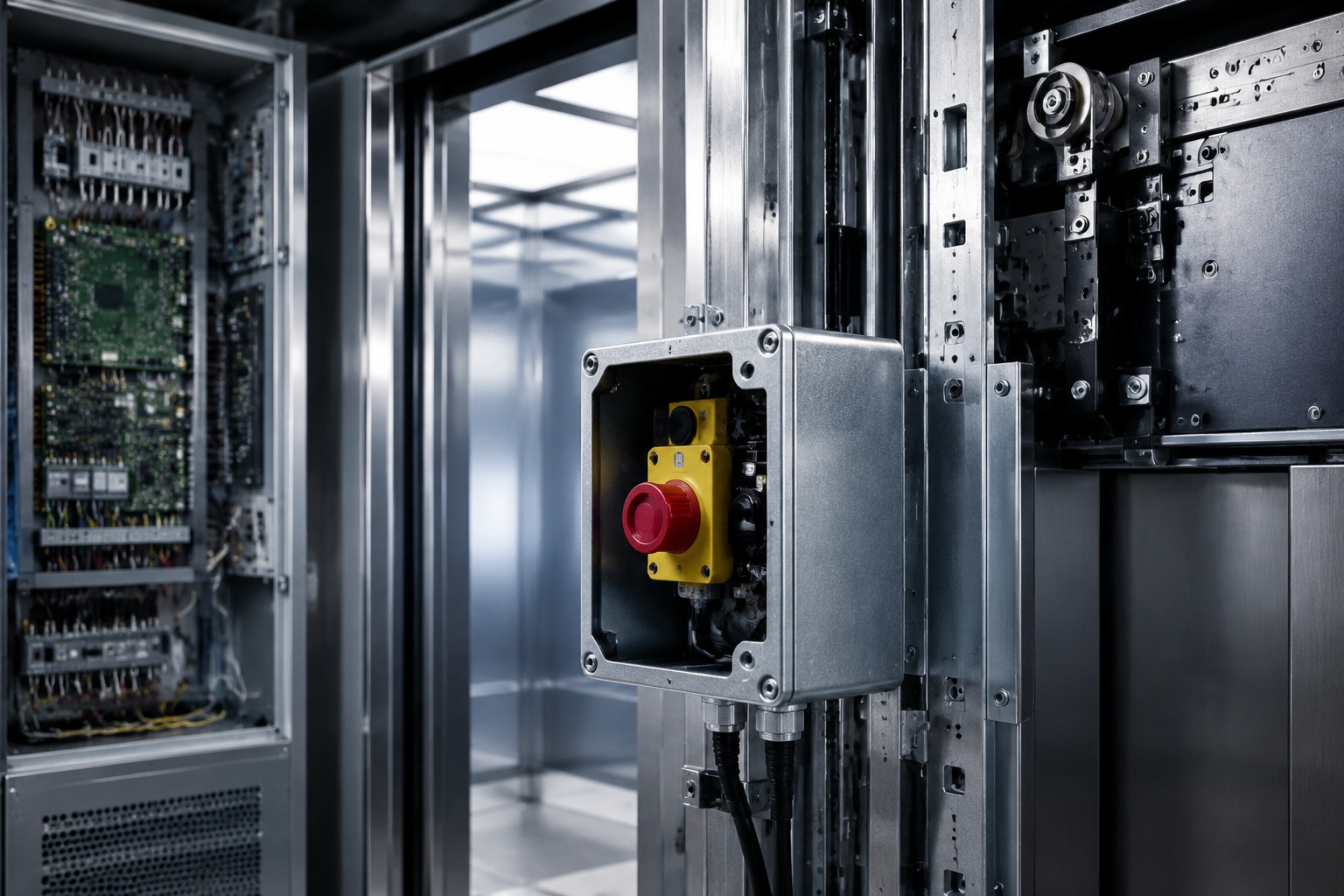
An elevator inspection box is a service control device used during maintenance, troubleshooting, and emergency inspection on the car top or in the shaft. In practical terms, it gives technicians a safer and more controlled way to move the lift at inspection speed, stop the car immediately when needed, and access key maintenance functions outside normal passenger operation. For maintenance companies, distributors, building owners, and modernization contractors across India, choosing the right inspection box is not just about replacing a part. It is about compatibility, technician safety, downtime reduction, and predictable field performance.
In Indian cities such as Mumbai, Delhi NCR, Bengaluru, Chennai, Hyderabad, Pune, Ahmedabad, and Kolkata, lift maintenance demand continues to grow with residential towers, hospitals, metro-linked buildings, hotels, and industrial campuses. At the same time, service teams often work with mixed elevator fleets that include old and new systems from Hitachi, Toshiba, KONE, Mitsubishi, and other brands. That makes model matching especially important when sourcing an inspection box, an LCA mobile switch box, a 12V inspection light power supply, or related communication parts such as intercom terminals.
This guide explains what an elevator inspection box includes, where an LCA mobile switch box is used, how control mode and emergency stop functions work, how to verify cable and connector compatibility, what safety checks matter during installation, and how to test a lift before returning it to service. It also covers buying advice, industry applications, 2026 trends, and practical sourcing points for the India market.
For buyers seeking replacement products, an elevator inspection box and LCA mobile switch box is typically selected together with lighting, communication, and control accessories. In many service scenarios, technicians also inspect the 12V inspection light power supply and, where applicable, the elevator intercom terminal to ensure a complete and safe maintenance environment.
What an Elevator Inspection Box Contains
A standard elevator inspection box is designed to support safe inspection work on the car top and, depending on the system, certain controlled service tasks in the hoistway. While exact layouts vary by brand and model, most units include a core set of controls and electrical interfaces. Understanding these parts helps buyers in India compare products correctly and avoid mismatched replacements.
| Component | Main Function | Why It Matters | Typical Check During Replacement |
|---|---|---|---|
| Inspection/Normal Mode Selector | Switches the lift between normal operation and maintenance control | Prevents uncontrolled passenger use during servicing | Verify switch positions and wiring logic |
| Emergency Stop Button | Immediately halts movement | Essential for technician safety on car top | Confirm latching action and reset function |
| Up and Down Push Buttons | Moves the elevator at inspection speed | Allows precise positioning for maintenance | Check contact response and mechanical feel |
| Indicator Lamp or Status Light | Shows power or inspection status | Helps technicians identify active control condition | Confirm voltage compatibility and brightness |
| Cable Harness | Connects box to the control system | Bad harnesses cause intermittent faults | Match pinout, length, and insulation condition |
| Connector Assembly | Provides plug-in interface | Enables faster replacement and safer connection | Confirm connector type, gender, keying, and pin count |
| Enclosure Housing | Protects the internal switching components | Important in dusty, humid, or high-use environments | Check sealing, mounting points, and material quality |
The table above shows why a visual match is not enough. Two boxes may look almost identical, yet differ in contact logic, voltage rating, connector layout, or button arrangement. In older buildings in Chennai or Kolkata, elevators may also have legacy modifications made during previous repairs. That is why professional replacement work should include photo confirmation, model number review, and wiring comparison before dispatch.
In many field cases, the inspection box works alongside the car-top lamp supply, communication line, and other safety-related service devices. If the box housing is cracked, the stop button is sticky, or the selector switch is unstable, technicians should inspect associated components rather than replacing just one visible fault item. A properly specified replacement lowers repeat service visits and helps restore confidence for building managers.
LCA Mobile Switch Box Applications
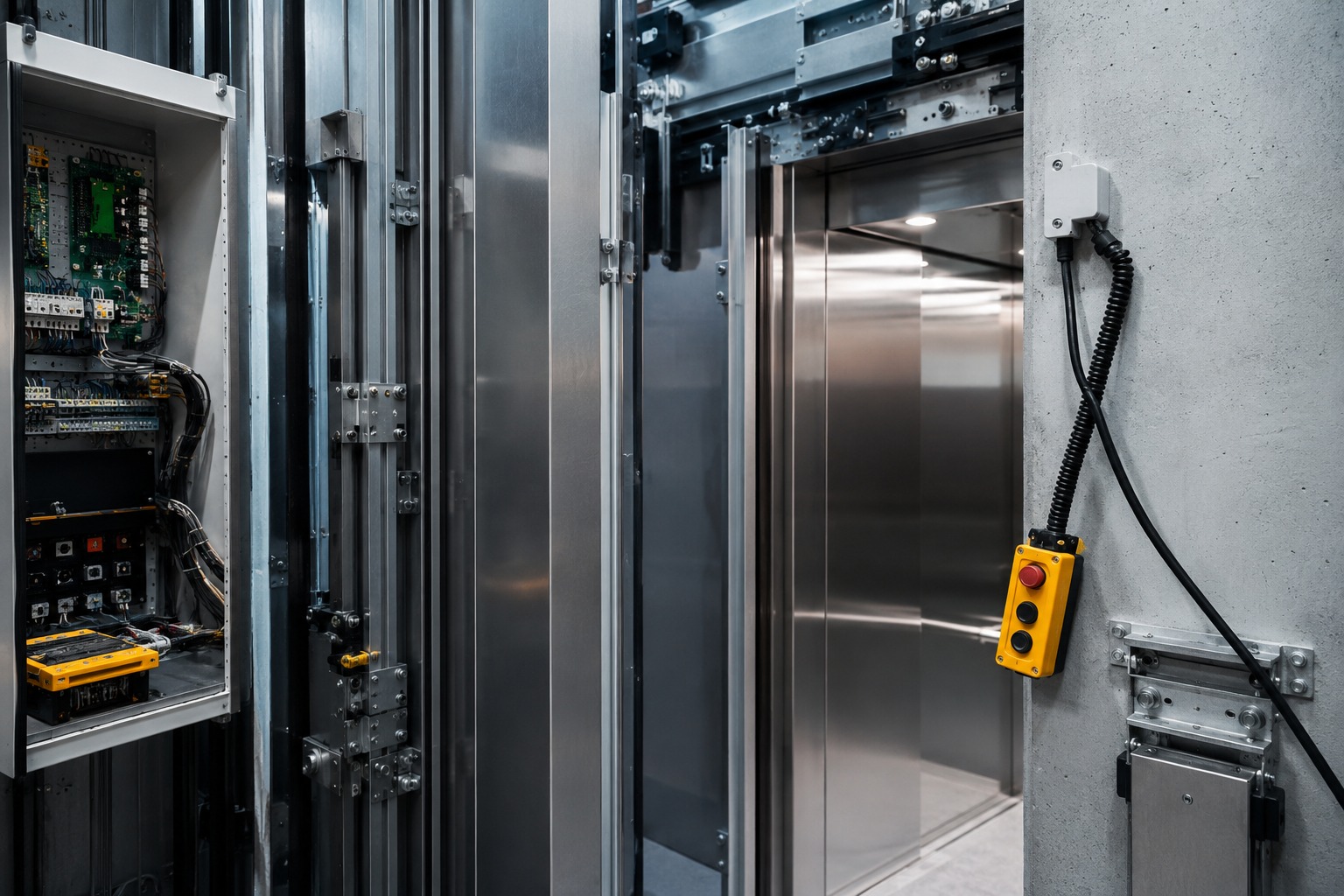
An LCA mobile switch box is commonly used as a portable or dedicated maintenance control device, particularly where technicians need temporary control access for inspection, testing, modernization work, or troubleshooting. In the India market, this type of switch box is often relevant for servicing mixed-brand installations and for jobs where a mobile, reliable, and easy-to-connect control point reduces labor time.
Typical use cases include preventive maintenance on high-rise residential elevators in Mumbai, modernization projects in commercial towers in Gurugram, and troubleshooting of older systems in institutional buildings in Pune or Ahmedabad. During component replacement, a mobile switch box can help technicians move the car under controlled conditions while monitoring door behavior, leveling performance, brake release response, or signal feedback.
| Use Case | Site Type | Primary Benefit | Typical Users |
|---|---|---|---|
| Preventive maintenance inspection | Residential towers | Controlled car movement during routine checks | AMC maintenance teams |
| Fault diagnosis | Commercial complexes | Speeds up troubleshooting of movement-related issues | Service engineers |
| Door system adjustment | Hospitals and hotels | Precise positioning for door operator work | Technicians and modernization crews |
| Controller replacement support | Old office buildings | Useful during phased modernization | Retrofit contractors |
| Safety validation after repair | Industrial plants | Controlled post-repair movement for checks | Commissioning staff |
| Temporary service access | Mixed-use projects | Flexible operation where permanent controls are limited | Mobile service teams |
| Training and supervised testing | Large maintenance depots | Supports structured service procedures | Senior engineers and trainees |
For distributors and buyers, the key advantage of an LCA mobile switch box is not only convenience but also repeatability. A well-matched unit helps standardize procedures across different service teams. This is especially valuable for organizations managing portfolios in multiple cities, from Bengaluru tech parks to logistics hubs near Nhava Sheva port and industrial clusters around Chennai port.
Buyers should still confirm whether the intended application is for a fixed replacement, a service accessory, or a temporary testing device. Labeling, cable length, connector shape, and enclosure handling requirements may differ between these scenarios.
Control Modes and Emergency Stop Functions
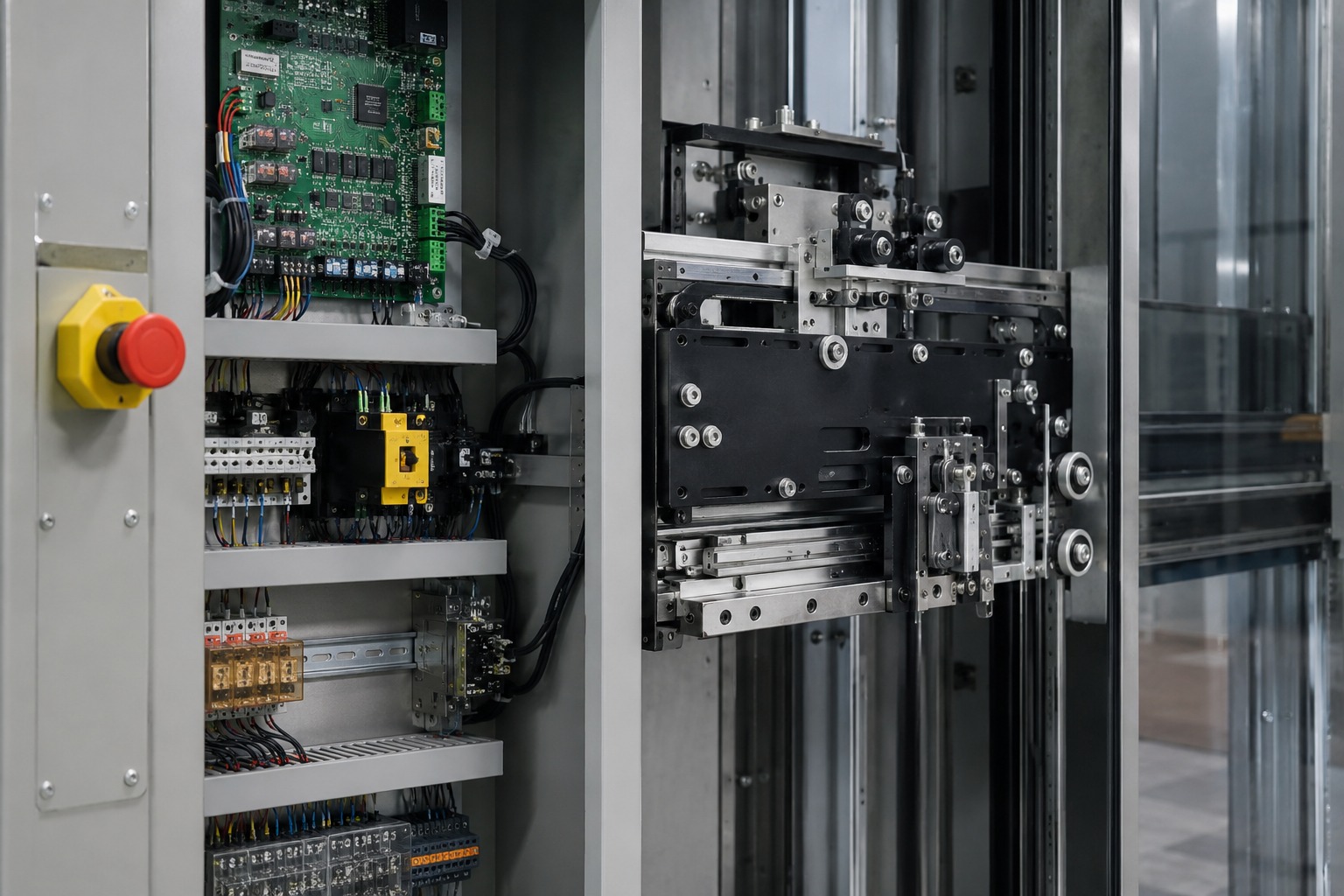
The most critical safety feature of an elevator inspection box is its ability to shift the elevator from normal passenger operation into inspection control mode. Once in this mode, movement is restricted to controlled service commands, usually at reduced speed and only while operating buttons are actively pressed. This protects technicians working on the car top or near moving equipment.
The emergency stop function is equally important. A proper emergency stop button should be easy to reach, mechanically reliable, and electrically consistent. If a technician encounters unexpected movement, noise, vibration, or interference in the shaft, the stop must halt the system immediately according to the elevator’s control logic.
| Function | What It Does | Safety Importance | Inspection Point |
|---|---|---|---|
| Normal/Inspection Selector | Transfers control authority | Prevents passenger commands during service | Check switch stability and labeling |
| Emergency Stop | Cuts movement command | Immediate personnel protection | Test actuation and reset sequence |
| Up Command | Moves car upward under inspection logic | Supports controlled positioning | Verify only operates in inspection mode |
| Down Command | Moves car downward under inspection logic | Supports controlled positioning | Confirm direction response is correct |
| Hold-to-Run Logic | Requires button to remain pressed | Reduces unintended continuous movement | Test release-to-stop behavior |
| Status Indication | Shows active mode or power presence | Improves technician awareness | Check lamp operation and visibility |
| Electrical Interlock Coordination | Works with wider lift safety circuit | Ensures system-level protection | Review compatibility with controller signals |
In India, maintenance contractors often inherit elevators with partial rewiring, altered terminal markings, or undocumented retrofit history. Because of that, control mode verification should be treated as a system-level exercise, not merely a box-level test. If the selector switch is replaced but the controller interprets its signal incorrectly, serious risk remains.
Good practice includes comparing wiring diagrams, reviewing maintenance records, and confirming that inspection mode disables normal hall and car call authority where applicable. Emergency stop function should be tested only within a controlled maintenance process and with all stakeholders informed, especially in occupied hospitals, offices, and residential towers.
Cable and Connector Compatibility
Many inspection box issues in the field do not originate from the buttons or enclosure. They come from cable fatigue, connector mismatch, wrong pin assignment, insulation wear, or poor contact pressure. Cable and connector compatibility is therefore one of the most important buying criteria for elevator spare parts in India.
Technicians working in coastal climates such as Mumbai, Kochi, Visakhapatnam, or Chennai may also face extra moisture and corrosion risk. In hotter inland regions, cable jackets can harden over time. In both cases, visual appearance alone can be misleading. A connector that fits physically may still be electrically incorrect.
| Compatibility Item | Why It Matters | Common Risk If Ignored | Recommended Verification |
|---|---|---|---|
| Pin Count | Ensures all required signals are available | Missing function or unsafe bypass condition | Count and compare with original connector |
| Pin Assignment | Defines signal routing | Wrong command direction or stop logic failure | Match wiring diagram and terminal numbering |
| Connector Keying | Prevents incorrect insertion | Forced fit may damage contacts | Check shape, notch, and lock style |
| Cable Length | Allows proper routing and strain control | Excess tension or slack snagging | Measure original route path |
| Voltage/Signal Suitability | Matches control system requirements | Component damage or unreliable switching | Confirm rated electrical parameters |
| Insulation Condition | Supports durability and safety | Short circuits or intermittent faults | Inspect jacket, bends, and abrasion points |
| Contact Material and Fit | Affects long-term reliability | Heat buildup or unstable signals | Review contact quality and mating force |
For purchasing teams, requesting clear connector photos, side-view images, label close-ups, wire color references, and overall dimensions can save days of delay. This is especially helpful when parts are moved through trade channels serving Delhi, Mumbai, Chennai, and inland distribution centers. Protective packaging also matters because connector pins and selector switches can be damaged in transit if unsupported.
From a sourcing perspective, our technical capability is built around careful model matching, cross-checking connector forms, and reviewing product details before supply. That approach helps maintenance companies reduce return risk and avoid avoidable site-side rewiring.
Installation Safety Checks
Installing or replacing an elevator inspection box is not a cosmetic job. It affects how maintenance personnel interact with the lift in a high-risk environment. Before installation, technicians should lock out normal operation according to site procedure, review the controller documentation, inspect wiring, and check the surrounding condition on the car top.
Indian buildings present a wide range of maintenance environments. Premium towers in Bengaluru may have structured maintenance access, while older residential blocks in dense urban areas may have limited headroom, dust exposure, or incomplete historical documentation. A disciplined safety checklist is therefore essential.
| Check Item | Purpose | Who Should Verify | Typical Result Standard |
|---|---|---|---|
| Isolation of normal service mode | Prevents passenger operation during work | Lead technician | Normal mode disabled and tagged |
| Visual review of old wiring | Detects undocumented field changes | Technician and supervisor | All wiring documented before removal |
| Mounting condition inspection | Ensures secure installation | Installer | No loose brackets or cracked supports |
| Connector integrity check | Confirms safe electrical connection | Installer | No bent pins or loose latch |
| Emergency stop continuity test | Verifies critical safety function | Qualified technician | Reliable stop and reset behavior |
| Direction button confirmation | Prevents reversed command action | Technician | Up and down response is correct |
| Car top housekeeping | Reduces trip, snag, and obstruction hazards | Service team | Work area clean and accessible |
The explanation behind the table is simple: many failures happen after a technically correct part is installed into a poorly prepared site environment. Dirt inside connectors, damaged cable clips, incorrect strain relief, and loose panel mounting can create intermittent faults that are difficult to diagnose later. A short installation checklist can prevent long callback cycles.
From a manufacturing perspective, we focus on stable quality inspection, enclosure condition control, and protective packaging so that service teams receive parts that are ready for field verification. This matters for shipments reaching customers in different climates and transport corridors, including metro regions and industrial logistics routes tied to ports such as Mundra, Chennai, and JNPT.
Testing Before Returning the Elevator to Service
After installation, the lift should never be placed back into public use without a structured test sequence. A technician must verify that inspection mode engages correctly, emergency stop works as intended, directional commands behave properly, and the elevator returns safely to normal operation only after inspection controls are cleared.
Testing should also confirm that there is no unexpected interaction with related components such as car-top lighting, intercom communication, and other service devices. For example, if a car-top maintenance lamp fails due to a weak power unit, visibility on the work area is reduced even if the inspection box itself is functioning. That is why some maintenance teams inspect associated products such as the 12V inspection light power supply for lift service lighting at the same time.
| Test Step | What to Confirm | Expected Outcome | Record Needed |
|---|---|---|---|
| Power-on inspection | No abnormal smell, heat, or visible fault | System powers safely | Basic observation log |
| Mode selector test | Inspection mode engages and disengages correctly | Control authority changes as designed | Switch response note |
| Emergency stop test | Movement stops immediately when activated | Safe stop and proper reset | Safety test record |
| Up button test | Car moves upward only while command is held | Correct hold-to-run behavior | Direction confirmation |
| Down button test | Car moves downward only while command is held | Correct hold-to-run behavior | Direction confirmation |
| Normal service restoration | Lift exits inspection mode fully | No lingering service lock condition | Return-to-service signoff |
| Communication and lighting check | Related maintenance aids are operational | Safe working environment confirmed | Accessory status note |
This table matters because rushed return-to-service decisions are a common risk point. In busy properties such as hospitals in Hyderabad, hotels in Goa, or office towers in Noida, building managers often push for fast restoration. However, a few extra minutes of documented testing protects both passengers and maintenance providers.
Our service capability is centered on responsive support, practical product confirmation, and reliable sourcing for compatible replacement parts. For customers dealing with difficult identifications, this includes reviewing product photos, labels, and application details to improve the chance of a correct first shipment.
Maintenance Tips for Elevator Inspection Boxes
Inspection boxes are exposed to frequent handling, vibration, dust, and occasional moisture. In heavy-use service portfolios, even a good-quality unit benefits from routine care. Preventive maintenance reduces sudden switch failure, weak stop-button response, or intermittent direction command issues.
Maintenance should be practical and disciplined rather than excessive. The goal is to preserve safe function and detect wear before it becomes a field emergency. This is particularly important in India’s mixed environmental conditions, from coastal humidity to dry dust-prone inland zones.
- Check the selector switch for smooth and positive movement between normal and inspection positions.
- Test the emergency stop button regularly for crisp actuation, latch stability, and proper reset.
- Inspect button legends and labels so technicians can read functions clearly during service.
- Look for enclosure cracks, loose screws, or weakened mounting points caused by vibration.
- Review cable routing and strain relief to prevent bending damage near the connector or box entry point.
- Clean dust and debris carefully without introducing moisture into switch contacts.
- Inspect connectors for oxidation, looseness, or heat discoloration, especially in older installations.
- Replace damaged harnesses early rather than waiting for intermittent faults to worsen.
For larger service organizations, standardizing inspection box checks across maintenance teams can improve performance. A simple checklist used in Mumbai, Bengaluru, and Chennai the same way makes trend tracking easier. If one box type shows repeated connector wear after a certain service interval, stock planning can be adjusted before downtime rises.
When inspection activity also depends on communication support, technicians may evaluate related accessories such as an intercom terminal for elevator communication support. This can be especially relevant in modernization projects or fault conditions where maintenance coordination is important.
FAQ About Elevator Inspection Boxes
1. What is the main purpose of an elevator inspection box?
Its main purpose is to give technicians safe local control of the lift during maintenance and inspection. It typically includes inspection mode selection, directional movement controls, and an emergency stop.
2. Is an LCA mobile switch box the same as every inspection box?
Not always. Some are application-specific, some are portable, and some are configured for certain brands or service procedures. Buyers should confirm the exact use case and compatibility.
3. Can I replace an inspection box based only on appearance?
No. You must verify model, wiring, pin assignment, voltage, connector type, and operating logic. Similar-looking units can behave differently.
4. Why does the emergency stop button deserve special attention?
Because it is one of the most important protection features for technicians working on the car top or in maintenance conditions. Any uncertainty about its action means the unit should be checked immediately.
5. What related parts should be checked at the same time?
Common related items include cable harnesses, connectors, maintenance lights, power supplies, and communication accessories. In many cases, replacing a damaged box without checking these parts leaves hidden faults unresolved.
6. Who usually buys elevator inspection boxes in India?
Maintenance companies, spare parts distributors, building owners with technical procurement teams, and modernization contractors commonly source these products.
7. Which sectors use them most?
Residential towers, commercial buildings, hospitals, hotels, industrial facilities, and public infrastructure all rely on safe inspection controls.
8. What should I ask a supplier before ordering?
Ask for model confirmation, product photos, connector details, cable length, electrical rating, compatibility notes, packaging method, and lead time.
9. Are inspection boxes relevant during modernization?
Yes. They are frequently involved during control upgrades, door operator adjustments, safety verification, and phased replacement work.
10. What trends should buyers watch for in 2026?
Buyers should watch for better component traceability, improved material durability, stricter safety documentation, sustainability-focused packaging, and stronger demand for compatibility support across older and mixed-brand fleets.
India Market Outlook, Buying Advice, Industries, Applications, and Supplier Comparison
The Indian elevator maintenance market continues to expand as urban density grows and the installed base matures. Demand is not limited to new buildings. A large part of the opportunity comes from maintenance, replacement, and modernization of aging systems. For inspection boxes and mobile switch boxes, this means steady need from service companies that must keep lifts running safely while controlling downtime and inventory costs.
Buying advice for the India market can be summarized in five points: confirm the model, verify connector and cable details, review control logic, check packaging quality, and choose suppliers that respond quickly when identification is difficult. Fast-moving cities such as Mumbai, Bengaluru, Hyderabad, and Delhi NCR often need urgent replacements, so stable sourcing and clear communication matter almost as much as price.
Applications span many industries. Residential high-rises need reliable service controls for routine AMC work. Hospitals require safe and carefully documented maintenance because lift uptime affects patient movement. Hotels need low-disruption repairs. Factories and warehouses often work under stricter scheduling windows. Metro-adjacent commercial real estate typically prioritizes rapid restoration of service and consistent documentation.
A practical case study from the field would be a modernization contractor in Pune handling an older mixed-brand building where the original inspection box had intermittent stop-button response. The replacement project succeeded not because the new box looked similar, but because connector pinout, cable route, mounting points, and function testing were all checked before reactivation. In another example, a distributor serving Chennai and Coimbatore reduced returns by requesting clear connector photos and selector switch labels before dispatching replacement units.
Local suppliers in India offer different strengths. Some focus on immediate stock, some on low-cost alternatives, and some on application matching. Buyers who manage critical buildings usually benefit from suppliers that combine technical review, careful quality checks, and secure packaging.
Our role in this market fits into that practical need. Technologically, we support careful model matching and compatibility review for elevator spare parts used by maintenance teams and distributors. From a manufacturing standpoint, we emphasize stable quality inspection and protective packing to reduce transit damage and field failure risk. From a service standpoint, we focus on responsive communication that helps customers identify suitable replacement parts and reduce lift downtime.
| Priority | Why Buyers Care | Risk If Ignored | Recommended Action |
|---|---|---|---|
| Exact model matching | Ensures functional compatibility | Wrong part, rework, delays | Share labels, photos, and application details |
| Connector verification | Prevents wiring mismatch | Unsafe operation or non-function | Confirm pin count and layout |
| Safety function reliability | Protects technicians | Serious maintenance risk | Review stop and selector quality |
| Packaging quality | Protects delicate controls in transit | Hidden damage on arrival | Request secure cushioning and inspection |
| Support response time | Reduces downtime | Longer lift outage | Choose responsive suppliers |
| Related part availability | Supports complete repair | Multiple orders and delays | Source from broader lift spare range |
| Consistency across fleet | Simplifies inventory and training | Fragmented spare strategy | Standardize where possible |
The table above is useful for procurement teams building long-term maintenance strategies. Lowest price alone rarely delivers the best total outcome when repeated site visits, technician time, and building complaints are considered.
This line chart illustrates a realistic growth trend driven by installed-base aging, modernization work, and stronger preventive maintenance activity in Indian metros and tier-2 cities.
The bar chart shows how residential and commercial segments lead demand, while hospitals and public infrastructure remain important due to stricter uptime expectations.
This area chart highlights an important market shift: buyers increasingly prefer suppliers who can confirm model matching and reduce field-side guesswork.
The comparison chart reflects why many professional buyers prioritize supply partners that can support technical confirmation, careful inspection, and consistent packaging rather than only quoting a low unit price.
Looking ahead to 2026, three trends are likely to shape the elevator inspection box segment in India. First, technology: service teams will increasingly expect better traceability, clearer labeling, and easier compatibility confirmation for mixed-brand fleets. Second, policy and safety: building owners and maintenance providers will face rising pressure for documented service procedures, especially in critical-use buildings. Third, sustainability: buyers will pay more attention to durable parts, waste reduction through correct first-time supply, and smarter packaging that protects products while lowering unnecessary material use.
In short, an elevator inspection box is a small part with a major safety role. The right choice protects technicians, reduces repeat faults, and supports efficient lift maintenance across India’s growing installed base. Whether the requirement is a fixed replacement, an LCA mobile switch box, or related service accessories, successful procurement depends on compatibility, inspection quality, and responsive support.