
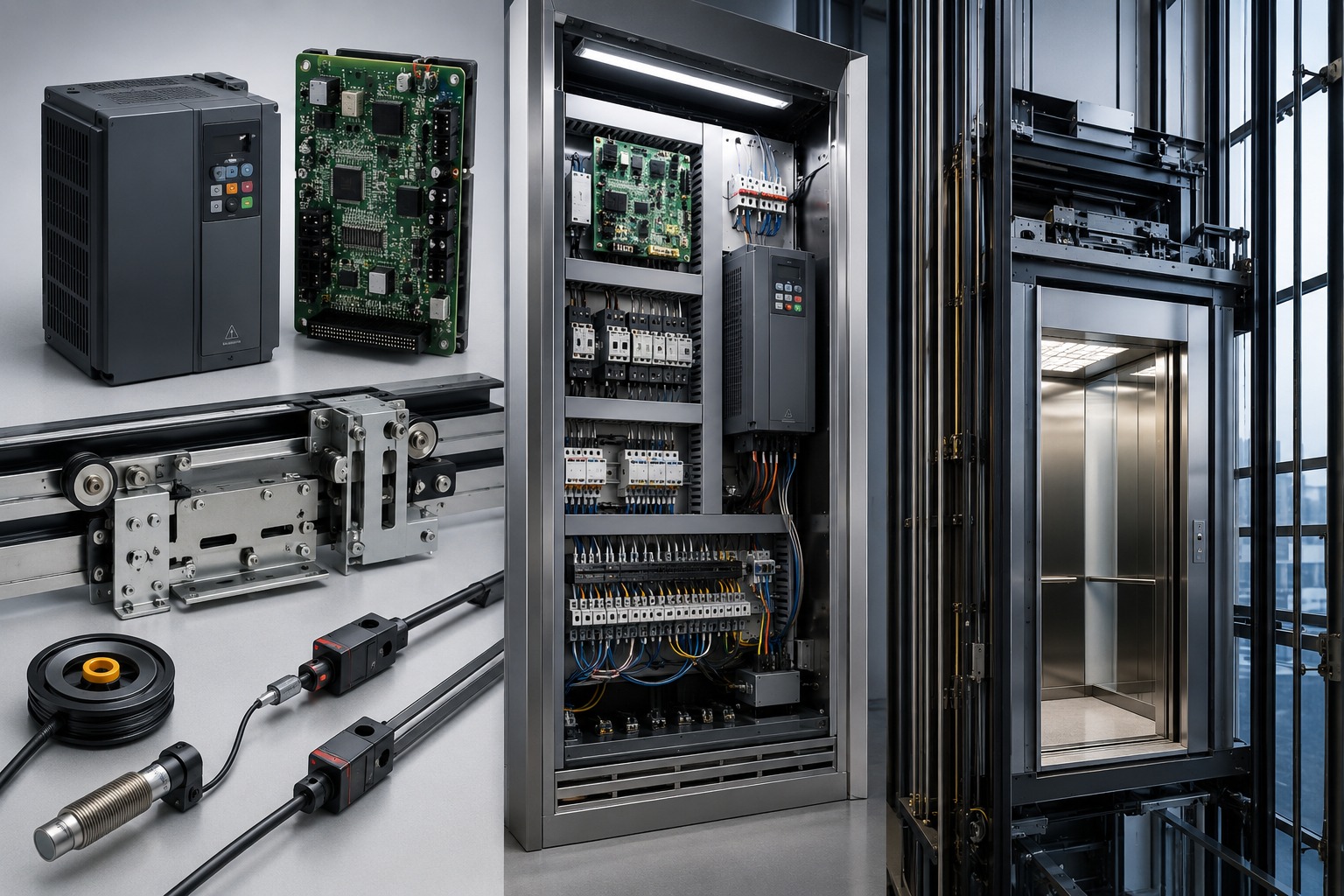
Elevator inverters play a central role in how smoothly a lift starts, accelerates, levels, stops, and uses electricity. In simple terms, the inverter, often called a frequency converter or VFD, controls the motor speed by adjusting voltage and frequency. For building owners, maintenance companies, distributors, and modernization contractors in India, choosing the right elevator inverter is not only a technical decision but also a downtime, safety, and lifecycle cost decision.
The direct answer is this: a well-matched inverter improves ride comfort, reduces motor stress, supports stable door-to-floor leveling, and can lower energy consumption compared with poorly controlled or aging systems. A mismatched or failing inverter can lead to jerking, nuisance trips, overheating, fault alarms, door timing issues, extended rescue events, and repeated service calls. In busy commercial centers such as Mumbai, Bengaluru, Delhi NCR, Chennai, Hyderabad, Pune, Ahmedabad, Kolkata, and Gurugram, where elevators run almost continuously, the quality of the inverter directly affects tenant satisfaction and maintenance budgets.
India’s lift market continues to expand with residential towers, metro-linked commercial complexes, hospitals, hotels, IT parks, warehouses, and mixed-use developments. As more older buildings undergo modernization, demand for replacement inverters has increased, especially for global brands and legacy models where exact model matching matters. Buyers often search for options related to KONE, Hitachi, Mitsubishi, Toshiba, and other systems while trying to balance compatibility, lead time, and price. If you are comparing options for KONE elevator inverter replacements, reviewing Hitachi elevator inverter parts, or looking at generic lift-ready solutions such as a 22kW elevator frequency converter or an HGE 15kW frequency converter, the key is to confirm both electrical and system-level compatibility before ordering.
This guide is written for the India market and covers direct buying advice, market conditions, product types, application industries, real operating considerations, local sourcing expectations, and practical commissioning checks. It is especially useful for elevator service firms, parts resellers, facility managers, and project teams that need reliable sourcing without guesswork.
The chart above reflects a realistic pattern seen across India: modernization demand is rising faster than pure new installation demand for many spare parts categories. Older installations in metros and tier-2 cities increasingly require inverter replacement because electronic components age even when the mechanical machine remains serviceable.
What an elevator inverter does
An elevator inverter converts incoming electrical power into controlled output for the traction motor. Instead of running the motor at a fixed speed only, the inverter varies frequency and voltage so the lift can start softly, run at the programmed speed, decelerate accurately, and stop close to floor level. This controlled motion is why modern lifts feel smoother than older direct-on-line systems.
In a traction elevator, the inverter works together with the controller, encoder, braking circuit, contactors, and safety chain. It receives commands from the control system, then regulates motor torque and speed. In many systems it also manages regenerative or braking energy behavior, fault protection, current limits, and acceleration profiles. This means the inverter has an effect on comfort, energy use, motor life, and call-handling performance.
For Indian operating conditions, inverters also help address practical field issues such as fluctuating incoming supply, frequent stop-start duty cycles, high ambient temperatures in machine rooms, and dust accumulation. Buildings near coastal areas such as Chennai, Kochi, Visakhapatnam, and Mumbai may face humidity and corrosion concerns, while inland industrial regions may face heat and airborne dust. A suitable inverter and enclosure condition matter in both cases.
| Inverter Function | What It Controls | Why It Matters in Practice | Common Building Impact |
|---|---|---|---|
| Soft start | Motor acceleration from standstill | Reduces jerk and rope shock | Better passenger comfort in offices and apartments |
| Speed regulation | Running speed and torque | Keeps travel stable under variable load | Consistent trip times in busy towers |
| Deceleration control | Approach to floor | Improves leveling and stopping accuracy | Safer entry and exit, especially for hospitals |
| Motor protection | Current, voltage, overload, thermal events | Protects machine and cables | Reduces emergency breakdown risk |
| Energy management | Power use during acceleration and braking | Can improve efficiency and reduce waste | Helpful for high-traffic commercial buildings |
| Fault diagnostics | Alarm codes and event monitoring | Speeds troubleshooting | Lower service time and downtime |
The table shows why the inverter is not just another spare part. It is one of the most influential components in ride quality and system stability. In many modernization jobs across Delhi NCR, Noida, Pune, and Bengaluru, replacing a tired inverter delivers noticeable improvement even when the machine and ropes are still in acceptable condition.
There are also different product types in the market. Some are brand-specific replacement inverters, some are configured generic frequency converters adapted for elevator use, and some are complete modernization kits paired with revised controller logic. The right choice depends on whether the project needs a like-for-like replacement, a parameter migration, or a broader control system upgrade.
Signs an elevator inverter needs replacement
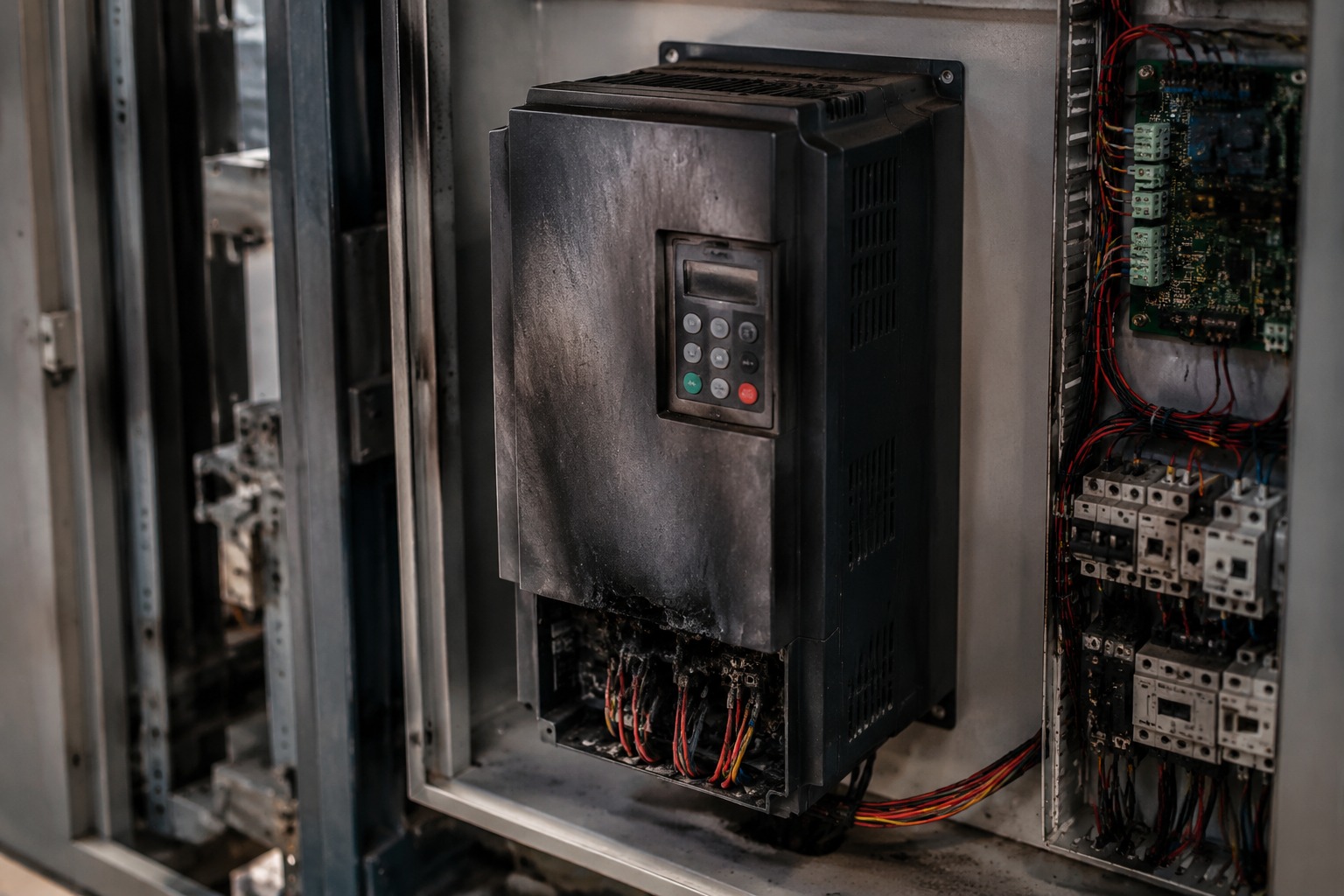
Not every trip or ride issue means the inverter must be replaced, but several recurring symptoms strongly suggest the drive is approaching end of service life or is already unsuitable for the current duty. Since elevators in India often operate in hot, high-demand buildings, electronics may degrade due to capacitor aging, fan failure, dust, moisture, unstable supply quality, or repeated overload conditions.
The most common sign is repeated fault tripping with the same or similar alarms, even after wiring checks and load tests. Another common sign is inconsistent ride behavior: the lift may run smoothly during some trips but jerk, overshoot, or stop harshly during others. Maintenance teams should also pay attention to excessive drive heat, visible capacitor swelling, burnt smell, cooling fan noise, damaged terminals, unstable DC bus readings, or communication issues between the inverter and main controller.
In buildings with frequent complaints from residents or office users, symptoms may first appear as comfort issues rather than outright breakdown. For example, the lift may start with a small shudder, take longer to respond, or level poorly under heavy load. When such issues increase during summer months in cities like Nagpur, Jaipur, Ahmedabad, or Hyderabad, thermal stress inside the drive cabinet is often part of the story.
| Warning Sign | Typical Field Symptom | Likely Cause | Recommended Action |
|---|---|---|---|
| Frequent overcurrent trips | Lift stops during acceleration | Drive deterioration, motor issue, or parameter mismatch | Review logs, inspect motor, compare original settings |
| Overheating alarms | Shutdown after repeated runs | Blocked ventilation, fan failure, high ambient temperature | Clean cabinet, replace fan, assess drive health |
| Jerky ride | Uneven acceleration or deceleration | Encoder feedback issue or unstable drive control | Check feedback loop and test with known good settings |
| Leveling errors | Stops above or below floor sill | Speed control instability | Inspect parameters, encoder, and braking response |
| Random communication faults | Controller cannot read drive status | Board aging or interface issue | Inspect control board and communication wiring |
| Visible component aging | Swollen capacitors or burnt marks | End-of-life electronics | Plan immediate replacement |
| Obsolete model support | No reliable repair parts available | Discontinued product line | Source compatible replacement or modernization option |
This table helps separate repairable site conditions from replacement-level concerns. If the same drive has already undergone repeated patch repairs, replacing it can be more economical than sending technicians back multiple times. For building owners, the cost of tenant complaints, lift outage, and emergency callbacks often exceeds the price difference between a temporary repair and a properly matched new inverter.
Industries that feel this most strongly include hospitals, hotels, IT campuses, shopping malls, logistics facilities, and premium residential towers. In these settings, reliability is more valuable than simply finding the lowest-price part. A hospital lift in Chennai or a hotel passenger lift in Goa cannot afford unstable stopping behavior during peak use.
How to choose inverter capacity and compatibility
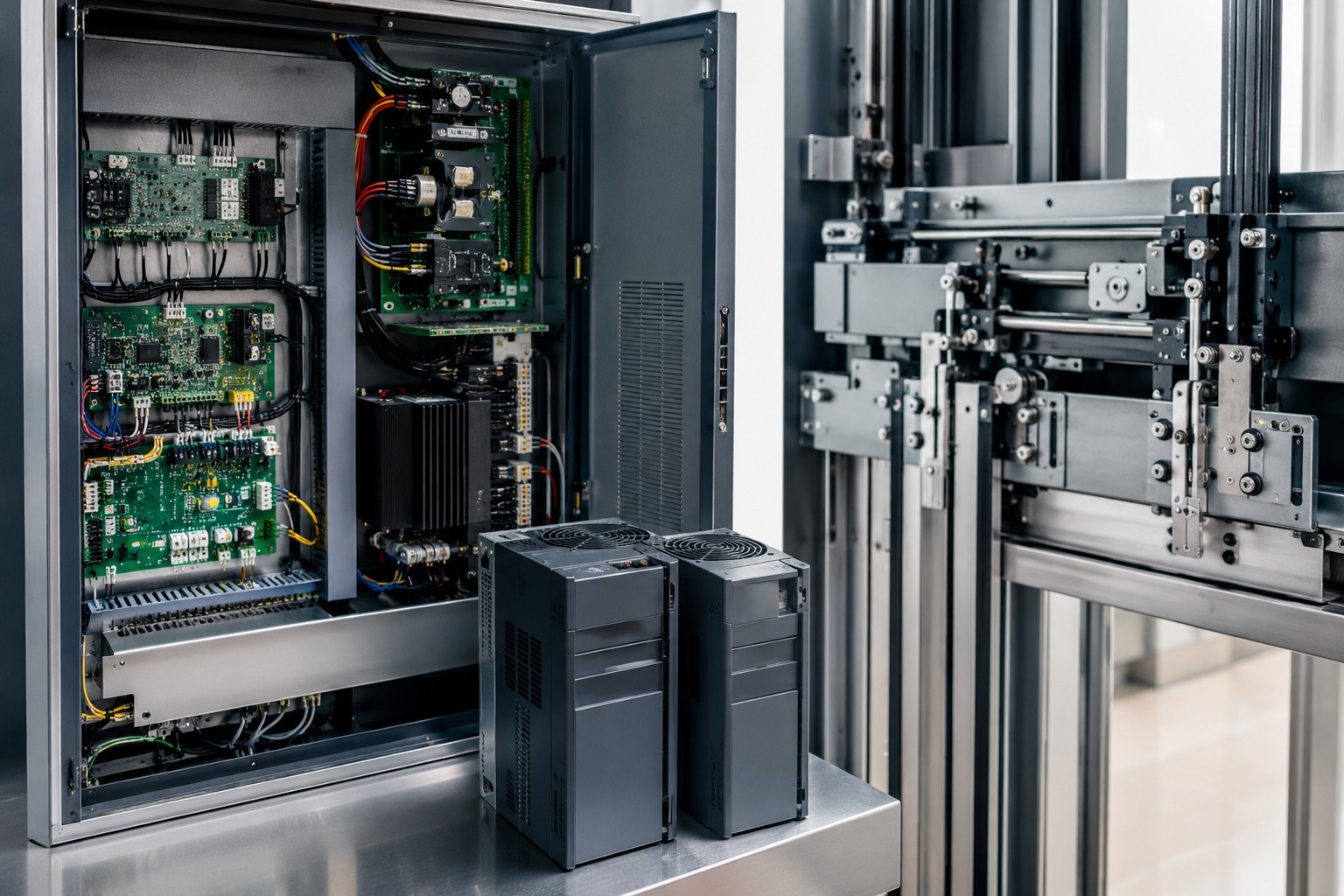
Choosing inverter capacity is not only about motor kilowatts. It requires matching the elevator’s electrical, mechanical, and control characteristics. The starting point is the motor nameplate and original drive specifications: rated power, rated current, input voltage, output voltage, frequency range, overload capacity, control mode, braking method, encoder type, and communication interface. A 15kW or 22kW label alone is not enough.
For elevator applications, buyers in India should verify at least the following: motor power rating, motor current, supply phase and voltage, speed feedback requirements, duty cycle, lift type, load class, controller compatibility, brake control logic, and physical installation dimensions. If the building uses a gearless machine, the encoder and tuning demands may be stricter than on some geared systems. If it is a modernization project, existing controller behavior may limit which drive can be used without additional programming.
Compatibility means more than the drive turning the motor. A technically “similar” inverter may still be unsuitable if its response curves, I/O mapping, parameter structure, EMC behavior, or communication protocol do not fit the original lift controller. This is why professional model matching is essential for KONE, Hitachi, Toshiba, Mitsubishi, and other branded elevator systems.
| Selection Factor | What to Check | Why It Is Important | Risk If Ignored |
|---|---|---|---|
| Motor power and current | kW, A, overload rating | Ensures adequate torque and thermal margin | Trips, overheating, weak acceleration |
| Input supply | 380V/415V, phase, frequency | Must match site power conditions | Immediate incompatibility or unstable operation |
| Control mode | Open loop, closed loop, vector control | Determines speed precision and ride quality | Poor leveling and rough travel |
| Encoder interface | Type, voltage, pulses, wiring | Critical for closed-loop elevator control | Feedback loss and speed errors |
| Brake and safety logic | Release timing and interlocks | Coordinates safe lift movement | Unsafe starts or nuisance faults |
| Communication interface | I/O, serial, protocol format | Allows controller-drive coordination | No response to commands or status faults |
| Physical dimensions | Cabinet fit, cooling clearance | Important in cramped machine rooms | Installation delay or overheating |
For buyers who need replacement parts fast, it helps to send the original inverter nameplate, controller model, motor plate, encoder details, fault photos, and wiring terminal images. This reduces the risk of receiving a unit that is electrically close but not operationally compatible.
Below is a practical capacity reference for common buying conversations in India.
| Approximate Lift Application | Typical Motor Range | Common Inverter Category | Buying Note |
|---|---|---|---|
| Small residential passenger lift | 5.5kW to 7.5kW | Compact elevator VFD | Check leveling quality and space constraints |
| Mid-rise apartment block | 7.5kW to 11kW | Standard passenger lift inverter | Frequent cycling needs thermal margin |
| Commercial office passenger lift | 11kW to 15kW | Closed-loop elevator drive | Peak traffic demands stable acceleration |
| Busy hospital or hotel lift | 15kW to 18.5kW | High-duty elevator inverter | Priority on ride comfort and fault stability |
| Freight or service lift | 18.5kW to 22kW | Heavy-duty frequency converter | Verify torque reserve and braking behavior |
| Modernization project with legacy controller | Varies by machine | Model-matched replacement | Controller protocol can be more important than kW |
The above ranges are only indicative. The actual selection must be based on the original system data. In Indian retrofits, especially in older buildings in Kolkata, Lucknow, Surat, Coimbatore, and Thane, a wrong assumption about motor current or feedback type is one of the most common causes of replacement delays.
Residential towers remain the largest replacement segment by volume, but hospitals and offices usually have stricter ride and uptime requirements. This affects how buyers prioritize spare inventory, response time, and model verification.
KONE elevator inverter buying considerations
When sourcing a KONE elevator inverter, the most important step is to identify the exact model family, system generation, software or parameter expectation, and matching control environment. KONE installations may vary significantly by project age and region. A replacement drive must not only fit the motor rating but also align with controller logic, interface structure, and practical commissioning requirements.
For India buyers, especially service companies handling mixed portfolios in Mumbai, Bengaluru, Delhi NCR, and Chennai, KONE-related parts often require careful cross-checking because similar-looking units may not be interchangeable across all systems. Before purchase, confirm the original part number, drive label details, fault history, motor data, encoder specifications, and any site modifications previously made. It is also wise to ask whether the replacement is direct-fit, parameter-ready, or needs additional setup.
If you are reviewing options for a replacement, this KONE elevator inverter product page is a useful starting point for model reference and sourcing discussion. However, the final decision should still be based on the exact unit installed on site.
In practice, KONE elevator inverter buying considerations usually include these questions: Will the drive integrate with the existing controller without extensive rewiring? Does it support the same encoder and braking sequence? Is the mounting format workable in the existing cabinet? Are the cooling requirements manageable in the machine room? Is there a realistic lead time for India projects where lift downtime must be minimized?
For modernization contractors, one more point matters: if the lift is already showing age in other areas such as door operator response, control boards, or sensors, replacing the inverter alone may not deliver the full comfort improvement expected by the client. A broader system review is often the better commercial recommendation.
Hitachi inverter sourcing notes
Hitachi elevator inverters are widely searched by maintenance teams because many buildings continue to operate Hitachi lift systems that need reliable spare parts support. Sourcing notes for Hitachi projects in India usually focus on exact model matching, product origin transparency, electrical compatibility, and documentation quality. A unit that is “for Hitachi” in a broad sense may still require confirmation of part number, series, current rating, connector layout, and parameter structure.
For technical buyers, the best approach is to provide clear photos of the original inverter label, cabinet layout, terminal block, controller reference, and any encoder interface modules. This helps avoid costly assumptions. In busy service markets such as Hyderabad, Pune, Gurugram, and Navi Mumbai, faster identification can directly reduce lift outage days.
If you need a starting point, this page for Hitachi elevator inverter sourcing can support preliminary model review. For projects that may accept an equivalent frequency converter subject to compatibility verification, options like a 22kW lift frequency converter or an HGE 15kW lift frequency converter may also be considered where technically appropriate.
From a sourcing standpoint, India buyers should evaluate more than just unit price. Ask about incoming inspection, packaging protection for long-distance transit, anti-static handling for boards, moisture protection for monsoon shipping periods, and response time for post-sale technical questions. Goods moving through Nhava Sheva, Chennai Port, Mundra, or Kolkata logistics routes may face handling and climate exposure, so packaging quality is not a small detail.
| Sourcing Checkpoint | Why It Matters for Hitachi Projects | Preferred Buyer Action | Commercial Benefit |
|---|---|---|---|
| Exact model identification | Prevents non-interchangeable substitutions | Share full label and photos | Fewer return risks |
| Current and voltage verification | Some similar models differ electrically | Confirm against motor and supply data | Safer installation |
| Connector and terminal review | Interface mismatch can delay commissioning | Compare cabinet photos before shipment | Faster replacement work |
| Parameter readiness | Not all drives are drop-in ready | Ask for setup support expectations | Reduced site tuning time |
| Packaging standard | Electronics need protection in transit | Request cushioned moisture-protected packing | Lower damage risk |
| After-sales response | Field questions arise during installation | Choose responsive supplier support | Less downtime for end user |
This table reflects real buying conditions in India. For many customers, a slightly higher purchase price is justified if the supplier offers better model confirmation, more careful packaging, and faster answers when installation questions come up.
Installation and commissioning checks
Even a correct inverter can perform badly if installation and commissioning are rushed. Replacement work should be handled by qualified elevator technicians following local safety procedures, lockout practices, and the lift manufacturer’s technical requirements. The installation stage is where many avoidable failures begin, especially when wiring is copied too quickly or parameter values are assumed from memory.
Before energizing the new drive, check power isolation, earth integrity, cable condition, terminal tightness, cooling path clearance, braking resistor condition if applicable, fan operation, encoder wiring, and input supply stability. Inspect the control cabinet for carbon dust, loose ferrules, oil contamination, insect ingress, and heat discoloration. These problems are common in aging installations and can affect the new inverter immediately if not corrected.
Commissioning should include parameter verification, direction test, low-speed motor run test, brake timing check, no-load travel, loaded travel, floor leveling validation, acceleration and deceleration review, trip log observation, and repeated cycle testing under realistic duty. In high-rise commercial buildings in Mumbai or Gurugram, peak-hour behavior may reveal issues that short tests do not show.
| Commissioning Step | What to Verify | Expected Result | If Result Is Poor |
|---|---|---|---|
| Power and grounding check | Input voltage and earth continuity | Stable and safe energizing | Stop and correct site supply issue |
| Wiring inspection | Terminal mapping and cable security | No loose or crossed connections | Recheck against original diagram |
| Parameter loading | Motor, encoder, speed, protection values | Drive matches lift system needs | Review saved settings and documentation |
| Motor direction test | Correct response to command | Controlled motion in proper direction | Reverse phase or control mapping if required |
| Brake timing test | Release and reapply timing | Smooth launch and stop | Adjust timing and inspect brake circuit |
| Leveling test | Stop position at each floor | Accurate landing under different loads | Retune speed loop and feedback checks |
| Thermal observation | Drive temperature during repeated runs | Within normal operating range | Improve ventilation or reassess selection |
For contractors and building owners, proper commissioning is also a reputation issue. A lift that returns to service quickly but develops leveling complaints two days later creates more disruption than one that is tested thoroughly before handover.
Case studies from Indian service environments repeatedly show that the best outcomes come from a structured process: verify model, inspect supporting components, replace carefully, test under load, and document final parameters. This is especially important in mixed-use towers where separate passenger, service, and fireman lift duties may stress the system differently.
Maintenance tips for frequency converters
Regular maintenance can extend the service life of elevator frequency converters and reduce sudden breakdowns. While electronic drives are not maintenance-free, they benefit from simple preventive actions performed at planned intervals. In India, where climate, dust, and voltage variations are common, preventive checks are often more important than in tightly controlled environments.
Start with cabinet cleanliness. Dust buildup blocks airflow and raises internal temperature, which shortens capacitor and semiconductor life. Check cooling fans for noise, vibration, or reduced airflow. Inspect terminals for looseness caused by heat cycling. Review fault history to catch rising trends before a failure occurs. Where the drive operates in a machine room with poor ventilation, consider whether ambient temperature control should be improved.
Capacitors, fans, and some auxiliary boards are wear items over time. If the drive is operating in a high-traffic building, these components may age faster. Maintenance teams should not wait for a total failure before planning replacement, especially where spare availability is limited. Keeping one verified spare for critical sites can be a smart strategy.
The area chart reflects a growing trend in India: maintenance companies are moving from reactive repair-only behavior toward planned electronic replacement, especially for elevator inverters, power supplies, and control boards. This is driven by client expectations for uptime and the increasing cost of repeated emergency visits.
Below are practical maintenance points that apply across brands and building types.
| Maintenance Item | Recommended Focus | Typical Interval | Benefit |
|---|---|---|---|
| Cabinet cleaning | Remove dust from vents and surrounding panels | Quarterly or based on site condition | Better cooling and lower fault risk |
| Fan inspection | Noise, airflow, free rotation | Quarterly | Prevents thermal shutdowns |
| Terminal tightening | Power and control wiring | Semi-annually | Reduces arcing and intermittent faults |
| Fault log review | Recurring alarms and trends | Monthly | Early diagnosis before breakdown |
| Temperature check | Drive and cabinet operating heat | Seasonally, especially pre-summer | Supports preventive action in hot climates |
| Encoder and feedback check | Signal quality and secure connections | Semi-annually | Protects ride quality and leveling accuracy |
| Spare readiness review | Critical site backup availability | Annually | Shorter downtime during failure events |
These maintenance practices are highly relevant in industries with continuous movement demands such as healthcare, hospitality, residential high-rises, business parks, and industrial logistics. Applications include passenger lifts, service lifts, goods lifts, hospital bed lifts, and staff-only operational elevators.
From a technology capability perspective, our team supports detailed model matching for elevator control boards, inverter and frequency converter parts, encoders, power supplies, sensors, door operator components, and other lift accessories across brands such as Hitachi, Toshiba, KONE, Mitsubishi, and more. That technical focus helps customers compare labels, interfaces, and application needs instead of relying on generic part descriptions alone.
From a manufacturing capability perspective, we place emphasis on stable quality inspection, careful verification of critical specifications, and protective packaging suited to long-distance shipment. For electronic elevator spare parts, packaging quality is essential when goods travel across India or arrive through major ports before inland transport to cities and project sites.
From a service capability perspective, we work with maintenance companies, distributors, building owners, and modernization contractors that need responsive communication, practical model confirmation, and dependable spare parts support to reduce downtime. In real projects, fast response and accurate identification often matter as much as the part itself.
FAQ about elevator inverters
1. Can any frequency converter be used as an elevator inverter?
No. Elevator duty requires specific control performance, safety integration, ride comfort tuning, and compatibility with the existing controller, motor, brake, and encoder. A general industrial VFD may not be suitable without proper elevator application support and compatibility confirmation.
2. How do I know whether to repair or replace the inverter?
If faults are repeated, components show visible aging, repair parts are scarce, or downtime costs are rising, replacement is often the better option. For a single isolated issue like a cooling fan or dirty cabinet, repair may still be reasonable.
3. Is matching kW enough when choosing a replacement?
No. You must also match current rating, supply voltage, control mode, encoder interface, communication method, brake logic, duty cycle, and sometimes mounting dimensions. Exact model matching is strongly recommended.
4. Why does the lift jerk after inverter replacement?
Possible reasons include incorrect parameters, wrong encoder settings, wiring errors, poor brake timing, controller communication mismatch, or unrelated mechanical issues. Commissioning should always include ride tuning and loaded testing.
5. Are KONE and Hitachi inverter replacements easy to source in India?
They are available, but sourcing quality varies. The best results come from suppliers who verify model details carefully, understand compatibility, and provide solid packaging and responsive support.
6. What site information should I send before ordering?
Send clear photos of the original inverter label, motor nameplate, controller model, encoder details, fault codes, terminal arrangement, and cabinet layout. This reduces mismatch risk significantly.
7. How important is local climate in India for inverter life?
Very important. Heat, dust, humidity, and unstable supply can shorten drive life. Machine room ventilation, cabinet cleanliness, and seasonal inspection matter a lot in Indian conditions.
8. Which industries need the most reliable inverter selection?
Hospitals, hotels, office towers, shopping centers, premium residential complexes, and logistics facilities usually require stricter uptime and smoother ride performance than low-use buildings.
9. Should building owners keep a spare inverter in stock?
For critical buildings with heavy traffic or difficult-to-source models, keeping a verified spare can reduce outage time dramatically. This is especially useful where service response windows are tight.
10. What trends should India buyers watch in 2026?
Expect stronger interest in energy-efficient drive systems, smarter diagnostics, predictive maintenance, better thermal management, modernization-friendly replacements, and sustainability-driven lifecycle planning. Policies and client expectations are moving toward lower downtime, higher efficiency, and more responsible asset management.
The comparison chart shows what serious India buyers usually value most: accurate compatibility support and model matching remain the top priorities, followed by responsive technical communication and reliable inspection standards.
Looking ahead to 2026, the elevator inverter market in India is likely to shift further toward smarter replacement decisions. Buyers will increasingly ask for not only part availability but also data-backed selection support, sustainable lifecycle planning, and better resilience to high-temperature operating conditions. Modernization demand will continue in older residential and commercial stock, especially in dense urban zones and fast-growing corridors linked to metro expansion, IT development, healthcare infrastructure, and hospitality projects.
For local suppliers and project teams, this means the market will reward accuracy over guesswork. The strongest suppliers will be those that combine technical understanding, dependable sourcing, careful inspection, and service discipline. Whether the requirement is for KONE, Hitachi, or another major brand, the winning approach in India is straightforward: verify carefully, match correctly, install properly, and maintain proactively.
For building owners and elevator service firms, the practical takeaway is also simple. If a lift suffers repeated inverter-related faults, do not judge options only by price. Evaluate ride quality risk, downtime cost, compatibility, thermal suitability, and supplier support. In a market as active and diverse as India, the most cost-effective inverter is usually the one that restores stable operation quickly and keeps the lift running safely over the long term.