
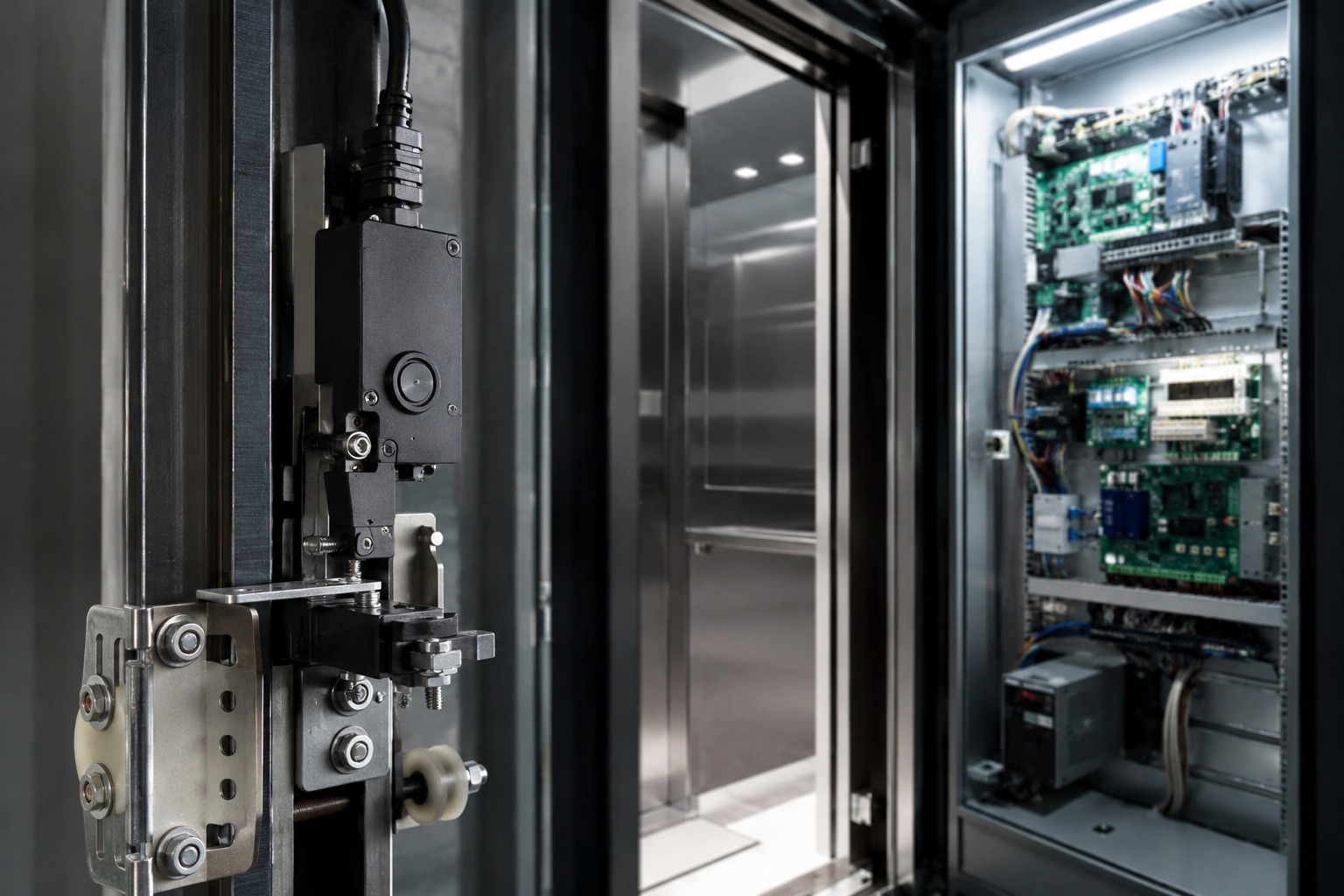
Elevator leveling sensors are small components with a very large safety and performance impact. When they work correctly, the lift car stops almost flush with the landing sill, passengers step in and out smoothly, and the controller receives stable position information for every trip. When they drift, get dirty, lose alignment, or fail electrically, the elevator may stop high or low, produce re-leveling events, trigger nuisance faults, or create a clear trip hazard. In India, where elevators operate in apartments, hospitals, metro-linked commercial towers, hotels, industrial plants, and mixed-use buildings under heavy daily traffic, accurate floor leveling is not a cosmetic detail. It is a practical requirement for safe access, ride comfort, and reduced downtime.
For maintenance companies, distributors, building owners, and modernization contractors, the main challenge is not only finding a replacement sensor. The real challenge is matching the right sensing method, confirming the model and mounting arrangement, checking installation position, and validating operation after replacement. This guide explains the key decision points in simple, technical terms, with practical notes relevant to the Indian market from Mumbai and Pune to Bengaluru, Hyderabad, Chennai, Ahmedabad, Kolkata, and Delhi NCR.
If you are comparing replacement options, you can review a range of elevator leveling sensor options, a dedicated GLS 326 leveling sensor, or a position detection sensor for Hitachi elevator applications when model matching is required.
Direct answer: what building operators in India should know first
If an elevator stops even 5 to 15 mm above or below floor level on a recurring basis, the issue should be investigated immediately. The root cause may involve the leveling sensor, vane or target, magnetic flag, mounting bracket, controller input, door zone signal, brake response, or traction-related slippage. However, the leveling sensor remains one of the first components technicians inspect because it directly affects the car’s floor position recognition during approach and leveling. Replacing a faulty sensor without checking alignment and system compatibility can leave the same symptom unresolved. The correct process is: verify the fault pattern, identify the sensor type, confirm part number and electrical characteristics, inspect mounting position, replace if needed, then test leveling under no-load and loaded conditions across multiple floors.
Market context in India: why demand is rising
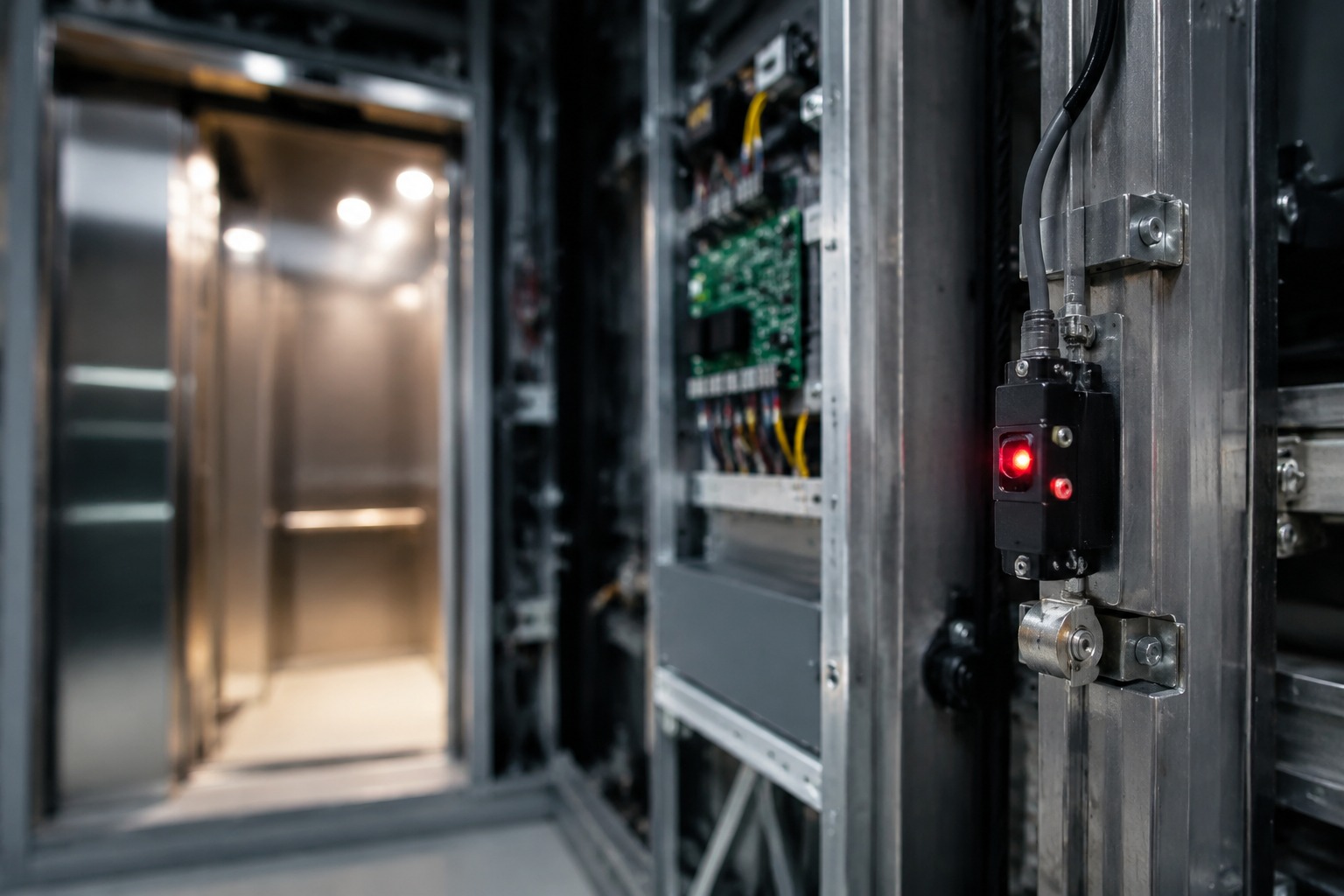
India’s elevator service market continues to expand due to urban redevelopment, high-rise housing, hospital construction, logistics parks, IT campuses, and aging installed bases that need modernization. Cities such as Mumbai, Gurugram, Noida, Chennai, Hyderabad, Bengaluru, Kochi, and Surat are seeing both new installation activity and a growing need for reliable spare parts support. Older lifts often require model-matched replacement sensors because brackets, target geometry, cable length, and controller logic vary by brand and generation. Imported parts also move through major trade corridors such as Nhava Sheva, Mundra, and Chennai Port, so lead time and packaging quality matter as much as unit price.
The chart above reflects a realistic directional view rather than official statistical reporting. It shows why buyers increasingly prefer suppliers who can support accurate model matching, protect fragile sensors during transit, and respond quickly when a building is offline. In India, delays caused by mis-supplied parts can be more expensive than the component itself, especially in residential towers and hospitals where elevator uptime has a direct operational impact.
Product types used for elevator leveling and position detection
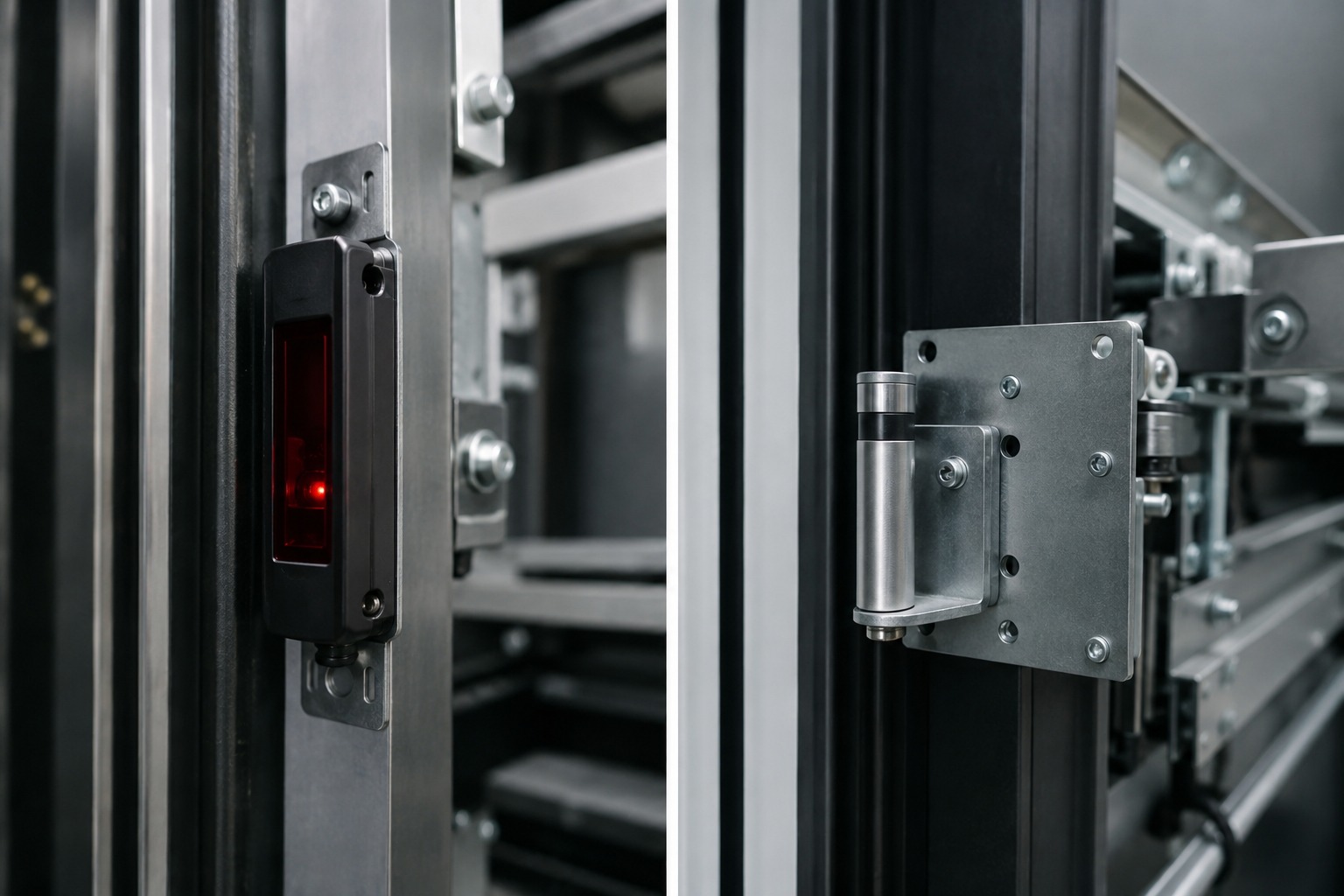
Leveling and position detection in elevators may use photoelectric sensors, magnetic sensors, reed-based systems, inductive methods, or combined arrangements depending on the brand and control design. Some systems use a dedicated leveling sensor and separate door zone or floor zone devices. Others combine position detection logic with specific target plates or magnets mounted in the hoistway. Modernization projects often replace obsolete parts with compatible alternatives, but physical envelope, sensing range, output logic, and environmental resistance must be checked carefully before substitution.
| Sensor type | Typical use | Main advantage | Main caution | Suitable environments | Buying note |
|---|---|---|---|---|---|
| Photoelectric leveling sensor | Detecting vane or flag position near landing zone | Precise switching and clear target-based response | Can be affected by dust, oil mist, or misalignment | Commercial towers, apartments, hotels | Check beam type, sensing distance, wiring, bracket style |
| Magnetic sensor | Reading magnets along the hoistway | Good tolerance to some dirt and lighting variation | Requires correct magnet spacing and polarity logic | Industrial and older systems | Confirm matching with existing magnetic targets |
| Reed switch assembly | Basic position confirmation | Simple structure and low cost | Mechanical fragility and lower switching robustness | Legacy installations | Often used where original systems remain unchanged |
| Inductive proximity sensor | Detecting metal target positions | Stable in dusty settings when correctly installed | Range and metal target consistency are critical | Selected modernized lifts | Verify supply voltage and output type |
| Door zone sensor | Confirming safe opening zone | Supports door opening logic near level | Not always the same component as leveling sensor | Most passenger elevators | Do not confuse door zone and leveling devices |
| Integrated position detection unit | Brand-specific lift control systems | Designed for exact controller compatibility | Higher risk if incorrectly substituted | OEM and model-specific applications | Part number matching is essential |
This table shows that “leveling sensor” is not a single universal category. Buyers in India should start from actual application data: elevator brand, model, controller generation, mounting dimensions, voltage, output signal, connector type, and sensing method.
Buying advice for maintenance teams and distributors
When a maintenance company in India needs a sensor urgently, speed matters, but so does disciplined verification. Ask for clear photos of the old part, the cable and connector, the mounting bracket, the target or magnet, and the machine room or car-top label where model information is available. If the installation is in a high-traffic building in Mumbai, Bengaluru, or Chennai, the cost of a second site visit can exceed the savings from buying an uncertain substitute. Reliable suppliers reduce that risk by checking model details, comparing dimensional references, confirming electrical characteristics, and packing the part to avoid shipping damage.
For imported or cross-border sourcing, pay attention to carton protection, moisture control, and labeling. Sensors are small but sensitive. Improper packaging during transport through long routes into India can lead to cracked housings, bent brackets, cable stress, or connector pin damage before the part ever reaches site.
Why elevator leveling accuracy matters
Leveling accuracy matters because a lift is only truly convenient and safe when passengers can enter and exit without a visible step or gap change. The safety issue becomes more serious for elderly users, children, wheelchair users, patients on stretchers, and staff moving carts or trolleys. In hospitals in cities such as Delhi, Chennai, and Hyderabad, even a slight uneven stop can disrupt critical movement of equipment and patients. In residential towers, poor leveling becomes a frequent complaint. In offices and shopping centres, it affects user confidence and building reputation.
Accurate leveling also improves ride quality. A lift that glides into the floor and stops cleanly feels better maintained. A lift that creeps, re-levels repeatedly, or stops unevenly feels unreliable even if it eventually opens its doors safely. Over time, poor leveling can also increase wear on brakes, doors, guide components, and mechanical interfaces because the control system keeps compensating for unstable position feedback.
| Issue seen at site | Risk to users | Operational effect | Likely technical relation | Common building type in India | Priority level |
|---|---|---|---|---|---|
| Car stops 5 to 10 mm low | Trip risk for passengers and trolleys | Complaints and re-leveling calls | Sensor drift, target shift, brake response | Apartments, offices | High |
| Car stops 10 to 20 mm high | Wheelchair and stretcher access difficulty | Potential service shutdown | Misalignment, input fault, traction change | Hospitals, hotels | Critical |
| Frequent re-leveling after door open | Unexpected floor movement concern | Higher wear and energy use | Unstable level signal or load shift compensation | Commercial towers | High |
| Nuisance floor zone faults | Reduced confidence in lift safety | Downtime and callbacks | Intermittent sensor output or loose wiring | Mixed-use buildings | High |
| Doors refuse to open at floor | Passenger entrapment concern | Service interruption | Door zone signal missing or wrong state | All building types | Critical |
| Uneven stopping only at select floors | Localized hazard at busy landings | Hard-to-trace service issue | Damaged vane, magnet, bracket, or rail vibration | Malls, transport hubs | Medium to high |
The table makes one point very clear: leveling accuracy is tied to both safety and operating cost. That is why many building managers in India now treat leveling faults as priority maintenance items rather than cosmetic complaints.
Common leveling sensor failure signs
Leveling sensor problems usually appear through repeatable symptoms. The most common signs are the car stopping slightly high or low, a change in stop quality on only some floors, intermittent door zone faults, delayed door opening, false controller alarms, or the need for repeated re-leveling after passengers enter or leave. Some failures are sudden, such as a broken cable or dead output. Others are gradual, caused by aging optics, vibration, loose mounting screws, target deformation, or contamination from dust and oil.
In India’s climate and building conditions, contamination is a real factor. Basement pits and service shafts may expose components to moisture, fine dust, cement particles during renovation, and temperature variation. In coastal zones like Mumbai and Chennai, corrosion on brackets or connectors may also contribute to signal instability. In industrial buildings around Pune, Ahmedabad, or manufacturing belts near Chennai, airborne residue can affect optical performance if cleaning intervals are irregular.
| Observed symptom | Probable cause | First inspection step | Need replacement? | Service urgency | Comment |
|---|---|---|---|---|---|
| Lift stops low at many floors | Sensor shifted, worn bracket, controller offset issue | Check mounting and reference position | Not always | High | Mechanical movement can mimic electrical failure |
| Lift stops high at random floors | Intermittent output or target misread | Inspect sensor face and wiring continuity | Often possible | High | Random pattern often suggests unstable signal |
| Doors stay closed though car appears at floor | Door zone/level signal missing | Check indicator state at landing zone | Possible | Critical | May involve related zone detection parts |
| Frequent re-leveling after loading | Weak sensing margin or brake interaction | Observe loaded and unloaded behavior | Sometimes | High | Do not blame sensor alone without testing load effect |
| Controller logs intermittent zone fault | Loose connector, broken core, contamination | Check cable flex points and terminal tightness | Often yes | High | Intermittent issues are common in aging harnesses |
| No sensor LED or no output change | Power loss or failed sensor electronics | Confirm supply voltage and output state | Usually yes | Critical | Electrical confirmation is essential before replacement |
This table helps separate symptoms from assumptions. A poor stop does not automatically prove the sensor is faulty, but if the sensor output is unstable or absent, replacement becomes the logical next step.
Photoelectric sensor versus magnetic detection
Photoelectric and magnetic detection each have advantages, and neither is universally better for every elevator. The right choice depends on the original design, the operating environment, and whether the project is routine maintenance or modernization.
Photoelectric sensors typically detect a vane, flag, or target interrupting or reflecting a beam. They are widely used because they can provide clean and repeatable switching when alignment is correct. They are especially useful where precise target geometry already exists in the lift design. Their weakness is that contamination, physical misalignment, or obstruction can affect performance.
Magnetic detection reads the presence or change of a magnet field. These systems can perform well in environments where light-based sensing is less desirable, and they can be more tolerant of certain types of dirt or ambient lighting. However, they depend on correct magnet placement, spacing, polarity, and compatibility with controller logic. If magnets weaken, shift, or are mismatched, errors can still occur.
| Comparison point | Photoelectric sensor | Magnetic detection | Best use case | Main risk | Buyer recommendation |
|---|---|---|---|---|---|
| Detection principle | Beam interruption or reflection | Magnetic field detection | Depends on original system design | Wrong substitution | Follow OEM logic first |
| Response precision | High when aligned well | Stable when magnet layout is correct | Precise leveling systems | Alignment or magnet spacing error | Check positional tolerances carefully |
| Dust tolerance | Moderate to low, depending on housing | Often better in dirty environments | Industrial or dusty shafts | False confidence in neglected maintenance | Do not skip cleaning and inspection |
| Ease of visual diagnosis | Often easier with LED indication | Requires checking magnet presence and sensor state | Routine maintenance | Misreading indicator behavior | Train technicians on device logic |
| Retrofit flexibility | Good if physical target path is available | Good if magnets can be matched correctly | Modernization projects | Bracket and space constraints | Survey site before ordering |
| Typical sourcing concern | Model-specific housing and cable length | Sensor plus magnet compatibility | Replacement procurement | Partial replacement mismatch | Source complete matched set when uncertain |
For the Indian market, the best commercial advice is simple: do not convert from one detection method to another unless the engineering basis is clear. A correct direct replacement is usually safer and faster than an improvised conversion during a maintenance emergency.
The highest replacement demand usually comes from high-cycle passenger buildings, especially residential towers and commercial assets with aging installed bases. That pattern is very visible in India’s fast-growing urban corridors.
GLS 326 sensor sourcing notes
The GLS 326 designation is often discussed by buyers looking for a photoelectric leveling sensor used in specific lift applications. When sourcing a GLS 326 or equivalent replacement, do not rely on the printed model name alone. Confirm the full part identification, housing style, mounting dimensions, cable exit direction, connector type, electrical rating, and switching logic. In some projects, users search by model name while the actual installed part has site-specific bracket or cable variations.
For buyers in India, careful sourcing matters because the same model family can appear in different maintenance records with incomplete shorthand. A dependable supplier should review photos, compare dimensions, and check application notes before shipment. This reduces the risk of receiving a part that is electrically similar but mechanically incorrect.
Where suitable, a dedicated GLS 326 sensor product page can help teams compare the structure and likely application. If you are still mapping a broader requirement, a general lift leveling sensor selection page may be useful for cross-checking alternatives before finalizing the order.
| Checkpoint | Why it matters | What to verify | Common mistake | Result if ignored | Recommended action |
|---|---|---|---|---|---|
| Full model code | Prevents confusion with similar variants | Label photo and controller record | Ordering from memory only | Wrong functional variant | Ask for nameplate and installed part photo |
| Mounting dimensions | Ensures fit without rework | Hole centers, bracket width, body size | Checking only sensor face | Cannot install on site quickly | Compare measured dimensions before dispatch |
| Cable and connector | Avoids wiring mismatch | Length, pin count, orientation | Assuming all cables are standard | Extra site splicing and failure risk | Confirm exact termination |
| Electrical rating | Protects controller input compatibility | Voltage, output type, current | Using “close enough” electronics | Faults or no response | Match specifications precisely |
| Application brand/model | Improves confidence in fit and behavior | Lift brand, controller series, installation age | Ignoring machine history | Unexpected logic mismatch | Share site details with supplier |
| Packing and transit protection | Prevents damage during shipping into India | Foam support, moisture protection, labeling | Using loose carton packing | Hidden damage and return delays | Choose suppliers with protective packaging practice |
The explanation behind this checklist is practical: most sourcing errors are not caused by the sensor technology itself but by incomplete verification before dispatch.
Installation position and adjustment checks
Even the correct replacement sensor can fail to deliver accurate leveling if installation position is off. A few millimetres of bracket shift, an incorrect angle, a twisted cable putting tension on the body, or a target sitting outside the intended sensing window can change stop performance. That is why qualified elevator technicians should check both the sensor and the related target or magnet arrangement during installation.
Adjustment checks typically include verifying the mounting height, lateral distance, sensing face orientation, vane pass-through path, magnet-to-sensor gap where relevant, fixing screw tightness, and cable routing. Technicians should also inspect for worn brackets, bent vanes, loosened target plates, and collision marks that indicate previous impact or vibration. If the lift has repeated issues only at selected floors, inspect shaft-mounted flags or magnets on those floors as well.
| Inspection item | What to look for | Acceptable condition | Common problem | Likely effect | Corrective approach |
|---|---|---|---|---|---|
| Bracket rigidity | Movement under vibration | Firm and square mounting | Loose or cracked bracket | Inconsistent switching point | Tighten or replace bracket |
| Sensor orientation | Face alignment to target path | Parallel and centered | Twisted body angle | Partial detection or missed trigger | Realign according to application spec |
| Gap or distance | Sensor-to-target spacing | Within rated operating range | Gap too wide or too narrow | Weak or unstable detection | Set correct clearance |
| Target or vane condition | Bends, wear, contamination | Clean and straight | Deformed or dirty target | Wrong switching position | Clean, repair, or replace |
| Wiring route | Stress, abrasion, interference | Secure and protected | Cable rubbing or tight bend | Intermittent faults | Re-route and clamp properly |
| Fastener security | Thread condition and locking | Stable after test runs | Vibration loosening | Gradual drift over time | Use proper locking method |
The purpose of this checklist is to ensure that replacement is not treated as only an electrical event. Elevator leveling is a mechanical and control alignment issue as much as a parts issue.
Testing leveling after replacement
After replacement, testing should be systematic. Start by confirming the sensor powers correctly and changes state at the intended target position. Then test the elevator through repeated runs to multiple floors. Observe no-load performance first, followed by loaded operation if site procedures allow. Compare stop accuracy at lower, middle, and upper floors because rope behavior, speed transition, and building conditions may produce different results across the travel range.
Technicians should also check whether door opening logic is stable, whether re-leveling happens excessively after passenger movement, and whether controller logs remain clear. If the lift serves hospitals, hotels, or premium residential towers, performance expectations are usually stricter, so multiple cycles should be recorded before handover.
| Test step | Method | Expected result | If result fails | Possible cause | Next action |
|---|---|---|---|---|---|
| Power and output check | Verify supply and switching state | Stable response at sensor | No LED or no output change | Wiring, voltage, defective unit | Recheck circuit and device |
| Static target alignment check | Confirm switching point at standstill | Correct response window | Late or early activation | Incorrect position or gap | Adjust mount |
| No-load floor stop test | Run to several floors repeatedly | Consistent stop level | Variation between floors | Target issues or controller parameters | Inspect floor-specific hardware |
| Loaded stop test | Test with realistic passenger/load condition | No major offset change | Loaded drift or re-leveling | Brake or traction interaction | Expand diagnosis beyond sensor |
| Door zone function check | Observe door opening consistency | Doors open normally in zone | Delayed or blocked opening | Zone logic mismatch | Verify related inputs |
| Final repeatability run | Multiple consecutive trips | Stable result over cycles | Intermittent deviation | Loose fixing or unstable signal | Retighten, retest, inspect harness |
Testing must prove repeatability, not just one successful trip. That is especially important for maintenance contractors handing over work to clients who expect dependable service in busy Indian buildings.
The area chart highlights a wider service trend: more building operators are moving from reactive breakdown replacement to preventive inspection and planned spare stocking. This shift is becoming stronger in India as buildings look to reduce downtime and complaint frequency.
Preventive maintenance recommendations
Preventive maintenance is the best way to reduce emergency leveling issues. For optical sensors, regular cleaning of the sensing face and target area is essential. For magnetic systems, checks should include magnet security, positioning, and cable integrity. Across all types, technicians should inspect bracket tightness, cable strain, connector condition, corrosion, and repeated impact marks.
Maintenance intervals depend on traffic intensity and environment. A hospital elevator in Chennai or Kolkata with continuous use may need more frequent inspection than a low-rise residential lift. A dusty construction-adjacent site in Gurugram or Pune may also require shorter cleaning intervals. Buildings that have already seen repeated re-leveling complaints should consider keeping a matched spare sensor in stock to shorten downtime.
| Task | Suggested interval | Why it matters | Tools needed | Risk if skipped | Notes for India |
|---|---|---|---|---|---|
| Visual inspection of sensor body | Monthly | Find cracks, movement, impact marks | Flashlight, checklist | Progressive failure without warning | Important in high-vibration older installations |
| Cleaning sensor face and target area | Monthly or bi-monthly | Maintains optical or positional reliability | Approved cleaning materials | False or weak detection | Especially useful in dusty and coastal areas |
| Bracket and fastener check | Quarterly | Prevents drift in switching position | Hand tools, torque practice | Gradual leveling error | Critical for lifts with repeated callbacks |
| Cable and connector inspection | Quarterly | Detects abrasion and loose connections | Meter, visual inspection | Intermittent faults and shutdowns | Watch for moisture and corrosion |
| Functional stop accuracy check | Quarterly or semi-annually | Confirms system performance in service | Measurement method, service log | Hidden drift becomes safety complaint | Increase frequency in hospitals and malls |
| Spare part review and stock planning | Semi-annually | Reduces outage duration after failure | Inventory records | Long downtime waiting for parts | Useful where logistics lead times vary |
The explanation here is straightforward: preventive work costs less than emergency service interruption. For building owners, that means fewer complaints. For maintenance teams, it means fewer urgent callouts and more predictable service planning.
Industries and applications where sensor quality matters most
Different sectors experience elevator leveling issues differently. Hospitals need smooth stretcher movement. Luxury residences focus on comfort and resident satisfaction. Warehousing and industrial facilities may prioritize tolerance to dust and long-duty service. Hotels and malls care about customer experience and uninterrupted traffic flow. Metro-connected retail and office towers want reliable performance during rush periods. In all these settings, the leveling sensor influences both safety perception and service continuity.
Case examples from the Indian market
In a residential tower cluster in Mumbai, repeated complaints about one elevator stopping slightly low during evening peak hours were initially blamed on load variation. Site inspection later showed a sensor bracket that had shifted under vibration. The replacement sensor alone would not have solved the problem without bracket correction and repeatability testing.
In a mid-size hospital in Hyderabad, a car intermittently delayed door opening at selected floors. The issue was traced to unstable zone detection from a worn sensor cable near a flex point. Correct replacement and cable routing restored operation, reducing callbacks and improving confidence for staff moving patients.
In an industrial property near Pune, a photoelectric setup experienced contamination from airborne residue. The maintenance team moved to a stricter cleaning routine and improved shielding around the sensing area instead of making an unnecessary system change. This is a useful reminder that application environment can be as important as component selection.
The comparison chart shows the sourcing priorities that matter most in actual maintenance work. Lowest price is rarely the deciding factor once downtime, repeat visits, and building complaints are considered.
Local supplier expectations and what buyers should ask
Whether you buy from a local distributor in India or from a specialist supplier serving the market, ask practical questions: Can the supplier review installed-part photos? Can they confirm likely compatibility before shipment? Do they inspect the part before packing? How is the sensor protected for transit? Can they support not only sensors but related elevator spare parts if a broader fault is found later? Buyers in major service centres such as Mumbai, Bengaluru, Chennai, Delhi NCR, and Ahmedabad often prefer suppliers that can support multiple brands and modernization needs, because one site issue can quickly expand from a single sensor to control board, door operator, or position detection components.
Our capabilities for the India elevator spare parts market
Technological capabilities: We support customers by focusing on careful model matching, application review, and compatibility-oriented sourcing for elevator control and sensing parts. For leveling sensors and position detection devices, this means checking part references, comparing structural details, and helping buyers reduce the risk of ordering a mechanically or electrically unsuitable replacement. This technical discipline is especially useful when dealing with brand-specific applications for Hitachi, Toshiba, KONE, Mitsubishi, and other elevator systems found across India.
Manufacturing and quality capabilities: We place strong emphasis on stable quality inspection and protective packaging. For delicate elevator sensors, reliable inspection and packaging are not minor details; they directly affect whether the part arrives ready for installation after long logistics routes through ports and inland distribution networks. Our product range extends beyond sensors to control boards, inverter and frequency converter parts, door operator components, door locks, light curtains, guide shoes, oil cups, encoders, power supplies, buttons, COP panels, intercom parts, and other lift accessories.
Service capabilities: We work to provide responsive communication and dependable sourcing support for maintenance companies, distributors, building owners, and modernization contractors. The goal is to help customers reduce downtime, source compatible replacement parts, and keep elevator systems operating safely. In the Indian market, fast and accurate support often matters more than simply shipping a catalog item, because every site has its own equipment history and urgency level.
2026 trends: technology, policy, and sustainability
Looking toward 2026, elevator leveling and position sensing will be shaped by three clear trends in India. First, modernization demand will continue to rise as older buildings seek better ride quality, improved reliability, and easier spare parts planning. Second, maintenance practices will become more data-driven, with more contractors tracking repeat faults and replacing marginal sensors before complete failure. Third, sustainability will influence buying behavior. Building operators increasingly want parts that help avoid unnecessary component replacement, reduce repeat service visits, and support longer system life through correct compatibility and preventive care.
Policy and safety awareness are also likely to encourage stricter attention to trip hazards and access quality, particularly in public-use buildings and healthcare facilities. While the exact compliance framework varies by jurisdiction and project type, the broader direction is clear: reliable floor stopping will remain a visible measure of elevator maintenance quality.
FAQ about elevator leveling sensors
What is the main job of an elevator leveling sensor?
It tells the elevator control system when the car is at or near the correct floor position so the lift can stop accurately and allow safe door operation.
Can poor leveling be caused by something other than the sensor?
Yes. Brake response, traction conditions, controller settings, target damage, wiring faults, and load-related effects can all contribute. The sensor is important, but it is not the only possible cause.
How much leveling error is a concern?
Any recurring visible mismatch should be checked by qualified elevator technicians. Even small offsets can become serious for wheelchairs, stretchers, carts, and elderly passengers.
Should a photoelectric sensor be replaced with a magnetic sensor?
Not unless the system design supports that change. In most maintenance situations, a correct direct replacement is safer than changing the detection method.
How do I confirm a GLS 326 replacement?
Check the full model reference, mounting dimensions, cable and connector details, electrical rating, and actual application. Photos of the installed part are very helpful.
Why does the elevator level correctly on some floors but not others?
The fault may be floor-specific. Inspect shaft targets, magnets, vane condition, bracket alignment, and vibration effects at the affected floors.
Is cleaning really enough to solve some leveling problems?
Yes, in some optical systems contamination can reduce sensing reliability. However, cleaning should be part of a full inspection, not the only action.
What spare parts strategy is best for Indian building operators?
For high-traffic buildings, keep records of installed models and consider stocking matched critical sensors and related components. This reduces downtime when failures occur.
Where can buyers review compatible sensor options?
Depending on the application, buyers can review a general elevator leveling sensor selection, a GLS 326 photoelectric sensor option, or a Hitachi position detection sensor for model-specific matching.
In summary, elevator leveling accuracy matters because it directly affects safety, comfort, and uptime. For the India market, successful replacement depends on more than fast procurement. It requires correct sensor identification, careful installation checks, proper testing, and a preventive maintenance mindset. When those steps are followed, building operators can reduce trip hazards, improve ride quality, and avoid unnecessary service interruptions.