
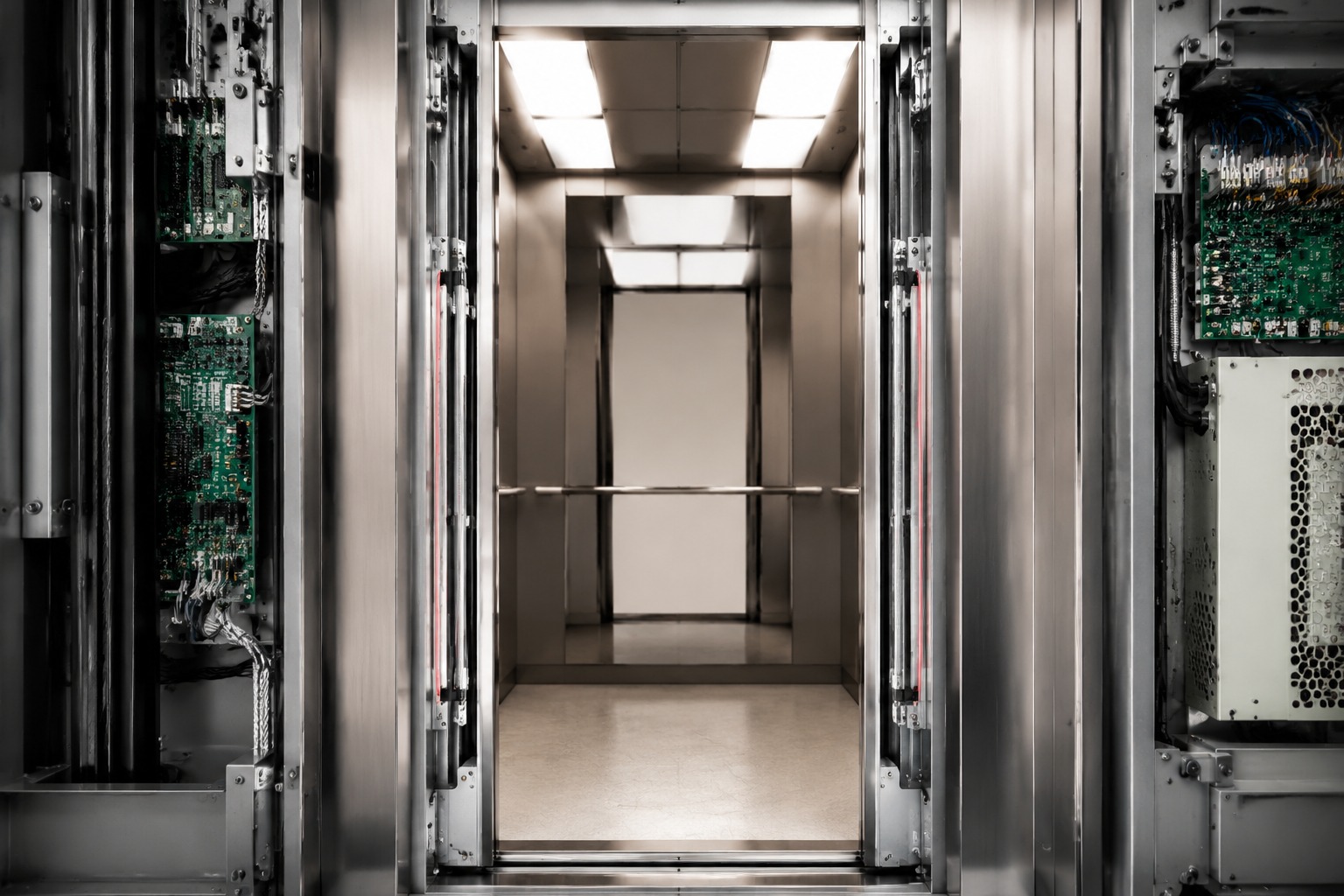
In practical terms, an elevator light curtain is a multi-beam door protection sensor that detects passengers, luggage, trolleys, wheelchairs, and small objects in the door opening before the door closes fully. When it works correctly, it reduces door strikes, nuisance reopening faults, and passenger complaints. For building owners and maintenance teams in India, replacing an old or weak door sensor with a modern light curtain is often one of the most cost-effective safety upgrades available, especially in busy residential towers, hospitals, metro-linked buildings, IT parks, hotels, shopping centres, and mixed-use properties.
Across India, elevator traffic patterns vary sharply between Mumbai high-rises, Chennai hospitals, Bengaluru tech campuses, Hyderabad commercial parks, Delhi NCR residential societies, and logistics-heavy properties near ports such as Nhava Sheva, Chennai Port, and Mundra-linked industrial zones. In these environments, lift doors cycle thousands of times per day. A narrow or aging sensor can miss fast-moving passengers, children, housekeeping carts, or unevenly carried goods. That is why many service companies now recommend replacing old mechanical safety edges or low-beam door detectors with denser beam-count light curtains.
This guide explains what a lift light curtain does, how to spot failure symptoms, how to choose beam coverage and model type, what to check when replacing an E GMS light curtain, how to verify wiring and controller compatibility, and what tests should be done after installation. It also covers when an old door sensor should be upgraded instead of repeatedly repaired.
For buyers in India, the main goal is not simply finding a “similar-looking” sensor. Correct sourcing means matching dimensions, beam layout, power supply, signal logic, cable routing, mounting position, controller expectations, and on-site conditions such as dust, humidity, vibration, and usage frequency. A reliable supplier helps maintenance contractors, distributors, modernization teams, and facility managers reduce downtime by checking model data carefully before dispatch.
Where a suitable replacement is needed, many customers review options such as the E GMS elevator light curtain replacement or compare another lift light curtain model for modernization projects based on beam count, housing size, and wiring requirements.
What an elevator light curtain actually does
An elevator light curtain creates an invisible screen across the landing door opening by sending multiple infrared beams from one side to the other. If any beam is interrupted while the door is closing or preparing to close, the sensor tells the door operator or controller to stop closing, reopen, or hold the door open according to the lift logic. This improves passenger protection and reduces direct contact between the door panels and people or objects.
Unlike a single-point photocell, a light curtain covers the full opening height with many beams. This matters in Indian buildings with varied users: schoolchildren in Pune, hospital stretchers in Kochi, airport passengers in Delhi, retail shoppers in Ahmedabad, and warehouse staff in industrial estates outside Surat. A single beam may miss small children, low-placed bags, or objects carried at an angle. A light curtain with dense beam coverage provides a much broader detection field.
Well-matched systems also help reduce service calls related to intermittent door impact faults. Door strikes are often blamed on the operator, but the root cause may be poor beam coverage, dirty lenses, failing cables, unstable power supply, or misalignment between transmitter and receiver. Upgrading the sensing layer can therefore improve both safety and operating smoothness.
| Function | How it works | Benefit to the site | Typical Indian application | Risk if missing | Upgrade priority |
|---|---|---|---|---|---|
| Passenger detection | Infrared beams detect a person in the doorway | Reduces door strikes | Residential towers in Mumbai | Passenger discomfort and complaints | High |
| Object detection | Detects trolleys, luggage, prams, cartons | Fewer blocked-door incidents | Hotels in Goa and Bengaluru | Door edge impact on goods | High |
| Child-height coverage | Lower beams sense small children and bags | Better family safety | Malls in Delhi NCR | Low objects may be missed | High |
| Wheelchair access support | Continuous curtain across the opening | Smoother accessible entry | Hospitals in Chennai | Door pressure on mobility users | Very high |
| Door reopening signal | Sends input to controller or operator | Prevents complete closure on obstruction | Offices in Hyderabad | Frequent impact faults | High |
| Traffic handling | Works through repeated cycles daily | Stable performance in busy lifts | Metro-adjacent buildings in Bengaluru | Service interruptions | Medium to high |
The table above shows why a light curtain is not just a comfort feature. It is a practical safety layer that supports smooth traffic handling, especially in lifts with high daily door cycles.
Common signs that a light curtain is failing
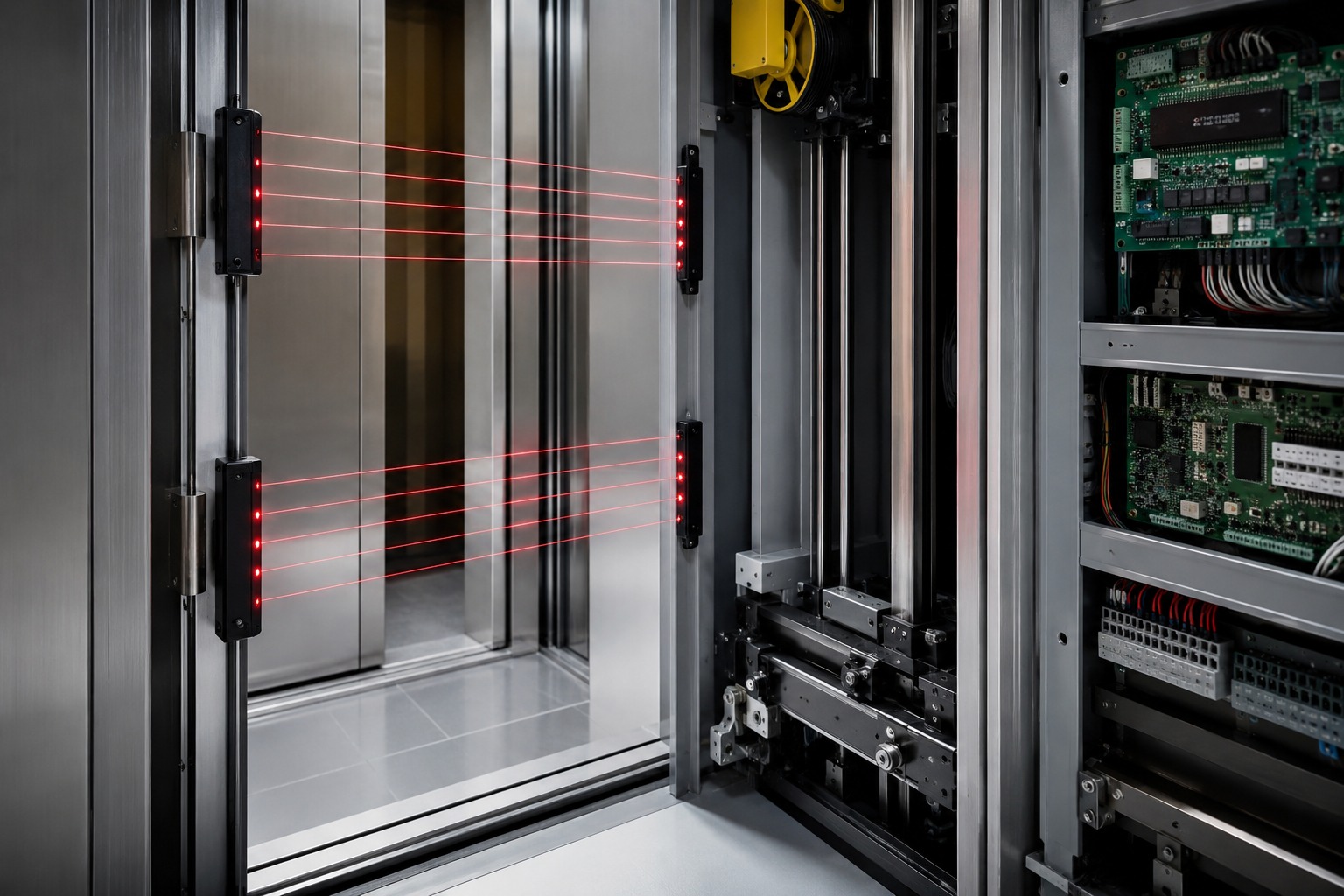
Most failing light curtains do not stop working all at once. They usually show intermittent symptoms first. A lift may close normally some days and then produce nuisance reopening or impact complaints during peak usage. Maintenance teams in India often see these issues in older installations exposed to dust, moisture, voltage instability, rough door vibration, repeated cable bending, and imperfect alignment after door repairs.
Common failure symptoms include doors closing on bags or clothing, random reopening without any passenger in the opening, a sensor status LED that flickers or remains off, repeated door protection faults on the controller, or faults that appear only when the car is moving, indicating cable stress in the traveling arrangement or at the door loop. Another symptom is reduced detection near the sill or at upper beam zones due to partial beam loss.
If the sensor housings are cracked, lenses are cloudy, or cables have hardened insulation, replacement is usually more economical than repeated cleaning and temporary rewiring. In coastal areas such as Chennai, Kochi, and Visakhapatnam, corrosion risk and humidity can accelerate degradation. In dusty industrial belts around Faridabad, Pune, and Sanand, lens contamination can also affect detection performance.
| Failure symptom | Likely cause | Field clue | Immediate action | Repair or replace | Urgency |
|---|---|---|---|---|---|
| Door hits passenger or bag | Missing beams or poor alignment | Protection weak at certain heights | Check alignment and LED status | Replace if beam loss persists | Critical |
| Door reopens randomly | Noise, unstable signal, damaged cable | No obstruction present | Inspect cable and controller input | Repair if wiring only; replace sensor if unstable | High |
| No response at all | No power or failed transmitter/receiver | LED off, controller shows inactive input | Measure supply voltage | Replace if power is correct | Critical |
| Works sometimes, fails in motion | Door loop cable fatigue | Fault appears during travel or vibration | Flex test cable | Often both cable and sensor should be renewed | High |
| Detection weak near floor | Dirty lens or low beam failure | Small objects not detected | Clean and retest with object pass-through | Replace if lower zone remains blind | High |
| Frequent controller door fault | Signal logic mismatch or intermittent sensor | Error logs repeat during peak traffic | Verify NO/NC and supply type | Replace with compatible model | High |
The table helps maintenance teams distinguish between wiring faults, alignment issues, and actual sensor failure. In many cases, proper diagnosis prevents ordering the wrong spare part.
How to choose beam coverage and the right model type
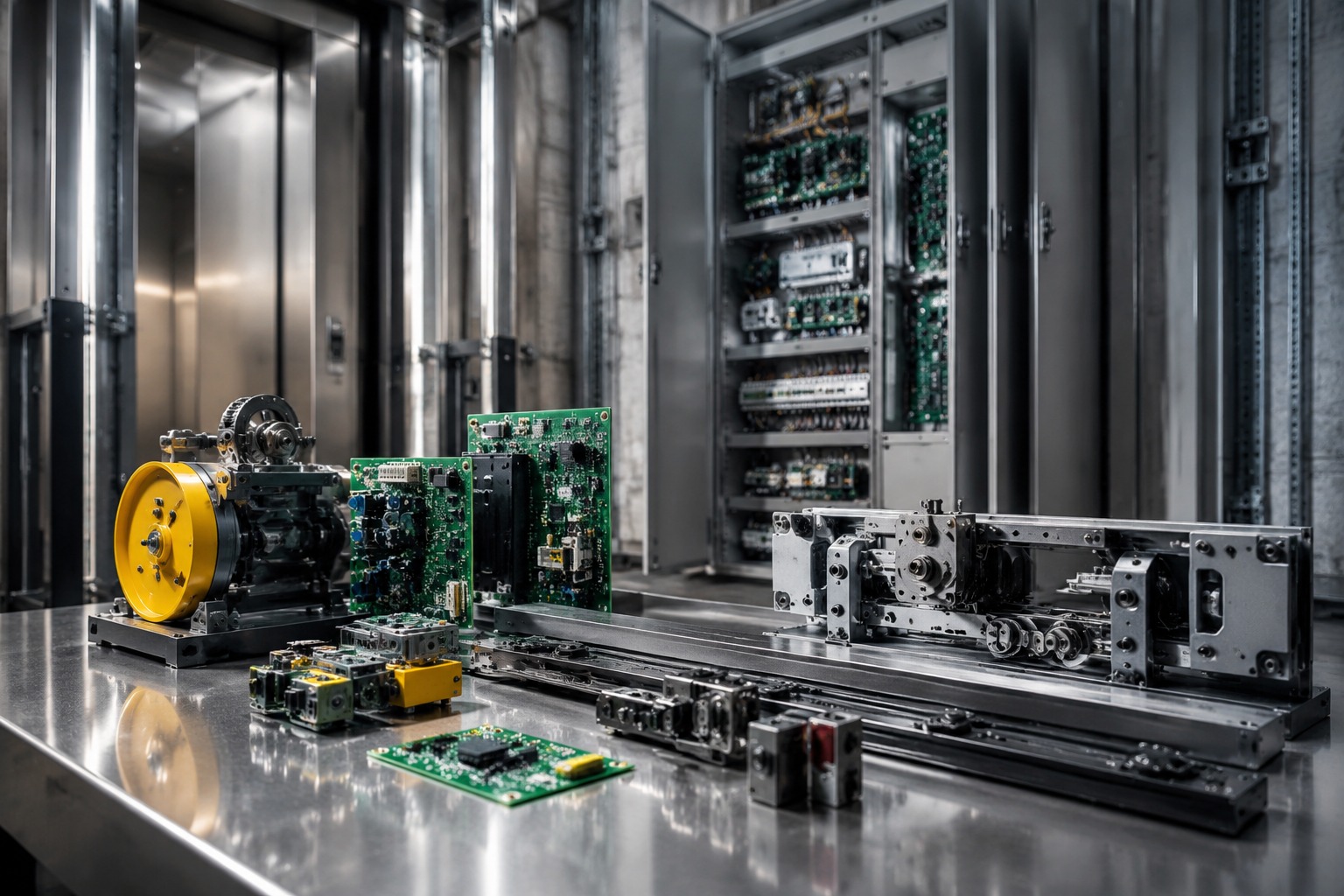
Choosing the right elevator light curtain begins with the actual site conditions, not just the old part number. Beam coverage should be selected according to traffic type, door opening width, door speed, and user profile. A low-rise apartment with moderate traffic may accept standard beam density, but a hospital, premium residential tower, convention venue, airport link building, or shopping mall usually benefits from denser beam coverage.
In India, building managers often compare costs only at the unit level. However, the better comparison is the full cost of operation: repeat call-backs, passenger complaints, door edge damage, and downtime. A slightly better model with more stable detection may lower service cost over 12 to 24 months.
Model selection should consider:
- Number of effective beams and beam spacing
- Coverage from near the sill to the upper opening
- Housing length and mounting method
- Operating voltage and current
- Output logic and controller interface
- Resistance to dust and vibration
- Cable direction, connector type, and loop arrangement
- Whether the site needs universal replacement or brand-specific matching
| Site type | Recommended beam coverage | Preferred model style | Why it suits the site | Typical city example | Buying note |
|---|---|---|---|---|---|
| Mid-rise residential society | Standard to medium density | Compact universal type | Balances safety and budget | Noida, Thane | Check mounting space carefully |
| Premium apartment tower | Medium to high density | Slim profile upgrade model | Better passenger comfort and fewer complaints | Mumbai, Gurugram | Prioritize stable detection |
| Hospital or clinic | High density full-height coverage | Fast-response model | Supports stretchers and wheelchairs | Chennai, Kochi | Do not under-specify |
| Shopping mall | High density | Heavy-traffic universal model | Handles children, bags, and group movement | Ahmedabad, Bengaluru | Need durable cable routing |
| Hotel | Medium to high density | Low-nuisance signal model | Protects luggage and service carts | Goa, Jaipur | Quiet reliable operation matters |
| Industrial or logistics building | Medium density with rugged housing | Dust-tolerant model | Better resistance to harsh conditions | Pune, Sanand | Inspect for contamination risk |
As a buying rule, the best model is the one that fits the elevator door geometry, voltage, and controller expectations while delivering the right beam protection for the traffic profile. When this matching is done well, replacements are faster and post-installation issues are much lower.
The line chart illustrates a realistic upward trend in demand for lift door protection upgrades in India as older stock is modernized and safety expectations rise.
E GMS light curtain replacement notes
When replacing an E GMS light curtain, the first step is to confirm that the old part identification matches the actual installation. In the field, labels may be faded, housings may have been swapped in earlier repairs, and connectors may have been modified. Therefore, part matching should include photographs, length measurement, cable exit direction, mounting hole positions, connector details, and power/signal specifications.
For E GMS replacement work, maintenance teams should inspect whether the original installation uses separate transmitter and receiver bars, integrated control modules, or a specific interface arrangement to the door operator. They should also verify whether the site expects a direct open/close protection input or uses an intermediary board. A mismatch here can cause false faults even when the new sensor itself is healthy.
Another useful step is to check the door panel condition before blaming the sensor. If the door is mechanically unstable, has severe vibration, damaged rollers, poor gibs, or cable pinch points, even a new light curtain may not deliver consistent results. In high-traffic sites in Mumbai and Bengaluru, it is common to replace the sensor and door loop cable together during modernization because labor access is already arranged.
When evaluating replacement stock, buyers should prefer suppliers that support careful model matching rather than “close enough” substitution. That is especially important for maintenance companies serving multiple brands and mixed portfolios.
| E GMS replacement checkpoint | What to verify | Why it matters | Common field risk | Best practice | Outcome |
|---|---|---|---|---|---|
| Part identification | Label, photos, dimensions | Avoid wrong model dispatch | Old labels unreadable | Confirm with multiple references | Better first-time fit |
| Housing length | Overall bar length and active area | Must match door opening zone | Top or bottom blind spots | Measure actual installed unit | Proper coverage |
| Mounting pattern | Hole spacing, bracket type | Reduces on-site rework | Technician forced to modify panel | Check drawings or photos | Faster installation |
| Power supply | Voltage range and polarity | Prevents damage or non-operation | Controller output misunderstood | Measure before energizing | Safe startup |
| Signal logic | NO/NC, relay, transistor, interface board | Controller must read correct state | Nuisance door faults | Cross-check with wiring diagram | Stable controller response |
| Cable and connector | Length, pinout, route, strain relief | Prevents intermittent failures | Cable fatigue after installation | Replace damaged loop sections | Longer service life |
For buyers needing a replacement path, it is helpful to review the E GMS-compatible light curtain option as part of a proper model comparison instead of ordering only by visual similarity.
Wiring and controller compatibility checks
Wiring compatibility is one of the most overlooked parts of lift light curtain replacement. Even a high-quality sensor will fail in application if the controller expects a different output logic or supply condition. Before installation, the technician should verify the power source, whether AC or DC, the nominal voltage, polarity, input common arrangement, and whether the door operator or main elevator controller processes the door protection signal directly.
In older elevators across India, especially in modernization projects in Kolkata, Lucknow, Nagpur, and Coimbatore, field wiring may not fully match the original schematic because of previous repairs. Spliced cables, changed connectors, and undocumented bypasses are common. For that reason, live measurement and continuity checks are safer than relying on old labels alone.
Compatibility checks should include the following:
- Measure actual voltage at the sensor input under operating conditions
- Verify transmitter and receiver orientation
- Check output state when beams are clear versus interrupted
- Confirm controller input expects the same active logic
- Inspect cable flex points for broken strands
- Ensure proper grounding and noise control where required
- Review whether extra interface boards or relays are installed
| Compatibility item | What to inspect | Test method | Common mismatch | Recommended correction | Result if ignored |
|---|---|---|---|---|---|
| Supply voltage | Actual operating voltage | Multimeter measurement | 24V expected but lower in field | Correct power source or module | No operation or unstable sensing |
| Polarity | Positive and negative terminals | Trace wire and meter check | Reverse connection | Correct terminal mapping | Sensor damage risk |
| Output logic | NO/NC or signal state | Observe input while blocking beams | Controller sees inverted status | Match proper output or use interface | Continuous fault or wrong response |
| Connector pinout | Pin position and wire color | Continuity test | Same plug, different pin assignment | Repin or use correct harness | Intermittent or dead unit |
| Cable flex life | Door loop bend area | Visual and flex test | Internal broken conductor | Replace cable section | Fault appears only in motion |
| Noise and grounding | EMI near inverter wiring | Observe instability under running conditions | False triggering | Improve routing and grounding | Random reopen events |
For maintenance contractors handling varied brands such as Hitachi, Toshiba, KONE, Mitsubishi, and other mixed installations, compatibility discipline is what turns a spare part into a reliable repair. Our work with customers in the India market often focuses on this exact stage: technical capability in model matching, photo-based verification, and checking practical interchange details before shipping.
The bar chart compares demand levels by sector. Residential towers and retail-heavy properties often generate the highest replacement volume due to traffic density and passenger sensitivity to door behavior.
Testing after installation
After installation, testing is not a formality. It is the stage that confirms whether the light curtain, cable routing, and controller logic are all functioning together correctly. A sensor can appear healthy with the doors open and still fail under actual operating speed, vibration, and repeated cycling. Therefore, field testing should include static checks and dynamic checks.
First, confirm power, LED status, beam interruption response, and controller input recognition. Then perform repeated door cycles with test objects at different heights and positions: near the sill, mid-height, upper section, and close to each jamb. Use realistic items such as a slim bag, trolley edge, folded wheelchair footrest, or housekeeping cart corner. In hospitals and premium residences, test with a wider range of obstruction widths because user behavior is less predictable.
Run at least 20 to 30 cycles after adjustment in a high-traffic installation. Observe for delayed reopening, random retriggering, or blind zones. Check the cable movement while the door operates. If the door vibration is severe, mechanical correction may still be needed. Testing should also verify that no fault appears during travel between floors if the cable path includes flexing sections.
| Test step | How to perform it | Pass criteria | Common issue found | Correction | Importance |
|---|---|---|---|---|---|
| Power-on check | Confirm LEDs and supply level | Stable indication and correct voltage | Low or fluctuating supply | Fix power source | Critical |
| Beam interruption test | Pass object through multiple heights | Door reopens consistently | Blind spots at top or bottom | Realign or replace sensor | Critical |
| Cycle test | Run repeated opening/closing cycles | No nuisance reopen or faults | Signal instability | Check wiring and noise | High |
| Edge-position test | Test near each side of opening | Uniform response across width | Misalignment at one side | Adjust mounting | High |
| Motion/flex test | Observe cable during operation | No intermittent response | Broken strands in loop cable | Renew cable section | High |
| Controller log review | Check for door protection faults | No repeated error after test cycles | Logic mismatch remains | Correct interface settings | High |
Proper testing supports service quality. This is also where responsive support matters: a good supplier does not simply ship the part, but helps maintenance teams confirm the expected wiring logic, dimensions, and installation checks so the site can return to normal operation quickly.
When to upgrade old door sensors instead of repairing them
There is a point at which repeated sensor cleaning, cable patching, and alignment adjustments become false economy. If the existing door protection uses a mechanical edge, a single-beam photocell, a low-density sensor, or a discontinued model with unreliable spares, upgrading is usually the better long-term decision. This is especially true for elevators that serve high passenger volumes or users who need better accessibility support.
In India, many older lifts in apartment associations, office buildings, and legacy hotels still run with outdated door sensing arrangements. These systems may technically function, but they often do not provide the detection performance expected by today’s residents, tenants, or hospital administrators. Door impact incidents, even minor ones, can damage a property’s reputation quickly.
You should strongly consider an upgrade if:
- The lift still uses a mechanical safety edge or sparse beam system
- Passenger complaints about door impact continue after adjustments
- The sensor model is obsolete or difficult to source
- The site serves children, elderly users, patients, or mobility equipment
- False reopen faults are increasing due to age and cable wear
- Modernization work is already planned for door operators or control boards
From a manufacturing perspective, reliable sourcing matters because consistent quality inspection, protective packing, and stable material control reduce field failures after transit. This is especially useful for customers ordering to India through major trade hubs such as Mumbai, Chennai, and Delhi, where projects often involve multiple sites and phased replacements.
The area chart reflects a realistic trend shift: modernization projects are steadily replacing older narrow-coverage sensors with full-height light curtain solutions.
Frequently asked questions about elevator light curtains
Is a light curtain better than a single photocell?
Yes. A light curtain offers multiple beams over the height of the opening, so it can detect more types of obstructions than a single-point sensor.
Can any universal light curtain fit any lift?
Not always. Mechanical size, cable routing, power supply, connector type, and signal logic must all be checked. “Universal” usually means broad application, not guaranteed compatibility.
How often do light curtains fail?
Service life depends on traffic, environment, cable movement, and installation quality. High-traffic buildings in humid or dusty regions may require earlier replacement than low-use sites.
Do we need to replace both the sensor and cable?
If the cable shows fatigue, cracks, intermittent continuity, or repeated movement damage, replacing both together is often the smarter choice.
What is the best beam coverage for hospitals?
High-density coverage is usually recommended because stretchers, wheelchairs, attendants, and equipment create varied obstruction profiles.
Can a new light curtain solve all door faults?
No. If the door operator has worn rollers, misalignment, poor gibs, or unstable control inputs, those mechanical or electrical issues must also be corrected.
What should buyers send before ordering?
Part photos, door opening photos, label details, dimensions, connector images, voltage information, and any available schematic or controller data. This speeds up accurate matching.
What are the 2026 trends in elevator door safety upgrades?
For 2026, the direction is clear: higher adoption of dense-beam curtains, more compatibility with modernization packages, stronger demand for low-fault sensors, and increased attention to sustainability through longer-life components, reduced repeat service visits, and better packaging efficiency. Policy and compliance expectations are also likely to push building owners toward more proactive safety upgrades, especially in premium residential and healthcare segments.
Are there local supply advantages in India?
Yes. Buyers often value suppliers that understand urgent replacement needs, can support shipments to Mumbai, Delhi NCR, Chennai, Hyderabad, Bengaluru, Ahmedabad, Pune, Kolkata, and tier-2 growth cities, and can help verify compatibility before dispatch.
The comparison chart highlights the supplier capabilities that matter most for successful replacement projects: technical matching, quality control, protective packaging, and responsive support.
India market outlook, applications, and buying advice
India remains one of the most active elevator service and modernization markets in Asia. New urban housing, redevelopment of aging properties, expanding hospital infrastructure, transit-oriented real estate, and vertical growth in tier-1 and tier-2 cities all support replacement demand for lift door safety parts. Light curtains are used not only in modernization projects but also in routine maintenance upgrades where older sensors no longer meet practical site expectations.
Applications are broad: residential towers, hospitals, hotels, malls, schools, corporate campuses, IT parks, metro-linked buildings, warehouses with passenger lifts, and mixed-use developments. In cities such as Mumbai, Bengaluru, Hyderabad, Chennai, Pune, Gurugram, and Ahmedabad, building owners increasingly ask maintenance contractors to reduce door-related complaints because user experience directly affects tenant retention and brand reputation.
For buyers, the best advice is simple: do not order by appearance alone. Confirm the technical details, ask for matching support, and think about life-cycle value rather than only unit price. A properly matched part can reduce callbacks, improve passenger comfort, and support safer operation.
Our role in this market is built around three practical strengths. First, technological capability: we help customers check model numbers, dimensions, connectors, and interchange details across mixed lift portfolios. Second, manufacturing capability: we focus on stable quality inspection and protective packaging so parts arrive ready for field use. Third, service capability: we respond quickly to maintenance companies, distributors, building owners, and modernization contractors who need compatible replacement parts to reduce downtime. This approach is especially useful for projects spread across multiple Indian cities where each site may have different elevator brands and door arrangements.
Below is a practical buying checklist for India-based sourcing teams.
| Buying factor | Why it matters | Question to ask supplier | Good answer looks like | Red flag | Benefit to buyer |
|---|---|---|---|---|---|
| Model verification | Prevents wrong-fit orders | Can you match by photo and dimensions? | Yes, with connector and wiring review | Only asks for a rough description | Higher first-time success |
| Compatibility support | Avoids controller issues | Will you check voltage and signal logic? | Yes, before dispatch | No technical confirmation offered | Lower installation risk |
| Quality inspection | Reduces field failures | Do you inspect before shipping? | Stable outgoing checks are in place | No test or inspection process | More reliable operation |
| Packaging | Protects sensor bars and lenses | How are long parts packed? | Protective packaging for transit | Loose or basic packing only | Less transit damage |
| Response speed | Important for breakdowns | How fast can you confirm the model? | Quick technical follow-up | Slow unclear replies | Reduced downtime |
| Range of spare parts | Useful for combined orders | Do you also supply related door parts? | Yes, broad elevator spare support | Single-item only, no system view | Better procurement efficiency |
The table above helps buyers compare suppliers on operational value, not only on price. In practice, accurate matching and dependable service usually save more money than chasing the lowest initial quote.
Case examples from real operating environments
Consider a residential complex in Navi Mumbai with frequent complaints that doors touched grocery bags and school backpacks during evening rush. The old sensor had limited detection coverage and the cable showed intermittent fatigue. After replacement with a better-matched light curtain and cable set, callbacks dropped and the society’s maintenance contractor reduced repeat visits.
In a Chennai hospital, an older door sensor arrangement was causing delayed response when wheelchairs entered at an angle. A higher-density light curtain, tested across multiple heights and door positions, improved reopening consistency and reduced concern from facility staff.
In a Bengaluru office tower, the issue looked like a sensor failure but the root cause included signal mismatch at the controller input after an earlier repair. Once wiring logic was corrected and the replacement model properly matched, nuisance faults disappeared.
These examples show that the best outcome comes from viewing the light curtain as part of the full door protection system, not as an isolated spare part.
In summary, an elevator light curtain protects passengers by creating a multi-beam safety screen across the door opening. The right replacement depends on beam coverage, physical fit, wiring logic, controller compatibility, and careful post-installation testing. For India’s fast-moving lift service market, upgrading older door sensors is often a practical way to improve safety, reduce impact faults, and lower repeat maintenance costs. Whether the project is a single building in Pune or a multi-site modernization program across Delhi NCR, Hyderabad, and Mumbai, careful part matching is the key to dependable performance.