
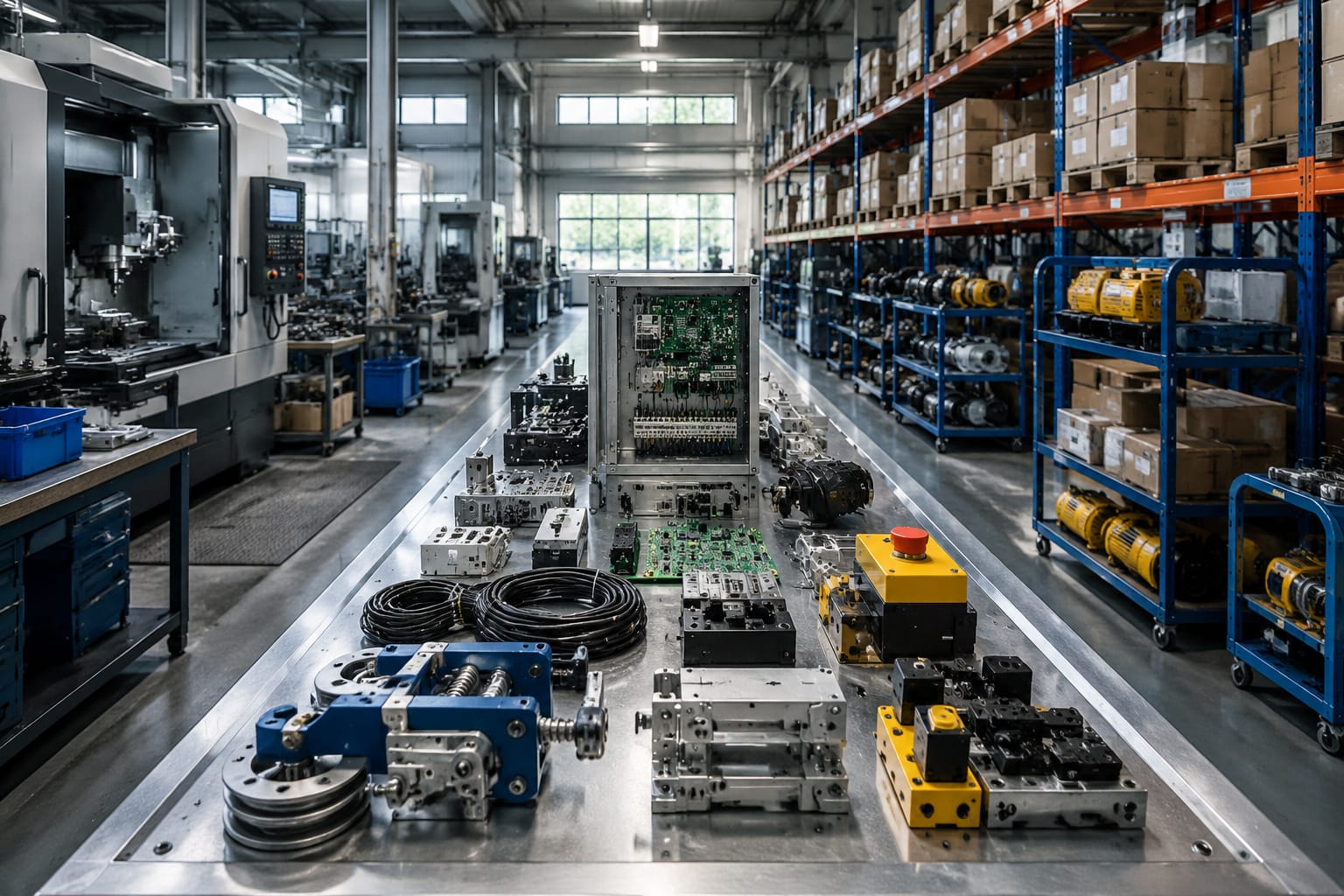
An elevator parts manufacturer makes components, usually for a defined product line or to an agreed engineering specification. An elevator parts supplier sources, stocks and distributes components, often across several brands and product categories. Neither route is automatically better: the right choice depends on the part, required compatibility, quantity, documentation needs and the time available.
For a standard replacement needed quickly, a capable multi-brand supplier is often the practical starting point. For a non-standard assembly, a design change, or a repeat production requirement, dealing with the original manufacturer or a specialist manufacturer may make more sense. The important step is to identify the exact part and buying risk before choosing the sourcing route.
Manufacturer and supplier roles explained
An elevator parts manufacturer designs, produces or assembles elevator components. The manufacturer may sell directly to lift OEMs, installation companies, modernisation firms and, in some cases, maintenance contractors. Its knowledge is usually deepest around its own product family, including approved variants, production drawings and test requirements.
An elevator parts supplier purchases parts from manufacturers or authorised distribution channels and makes them available to trade buyers. Suppliers may hold inventory, consolidate products from different makes, arrange dispatch and help buyers find an equivalent or compatible replacement. Their role is particularly useful where a maintenance team needs several unrelated items for one service call.
The distinction is not always absolute. Some companies manufacture selected products while distributing other brands. A supplier can also provide sound technical assistance, while a manufacturer may have long production lead times or only accept larger orders. Evaluate the actual offer, not only the label in the company name.
| Buying factor | Manufacturer route | Supplier route |
|---|---|---|
| Primary strength | Product-specific engineering and controlled production | Multi-brand access, stock consolidation and replacement sourcing |
| Best suited to | Custom, repeat-volume or product-line-specific requirements | Standard replacements, mixed orders and service inventory |
| Brand coverage | Usually focused on own makes or approved lines | May cover several makes and categories |
| Part availability | Often dependent on production schedule | Dependent on stock and supply network |
| Custom changes | More likely to be possible | Usually limited to available variants or sourced alternatives |
| Order quantity | May involve a minimum order quantity | Often more flexible for maintenance quantities |
| Documentation source | Can provide manufacturer-origin records where offered | May provide supplied documentation and traceability records |
| Compatibility responsibility | Buyer must still verify the application | Buyer must still verify the application |
A supplier should not be assumed to be the manufacturer, and a manufacturer name on a product should not be treated as proof that every offered component is original or suitable. Ask clearly about the item’s origin, brand, condition, interchangeability and documents before placing a purchase order.
Product range and multi-brand access
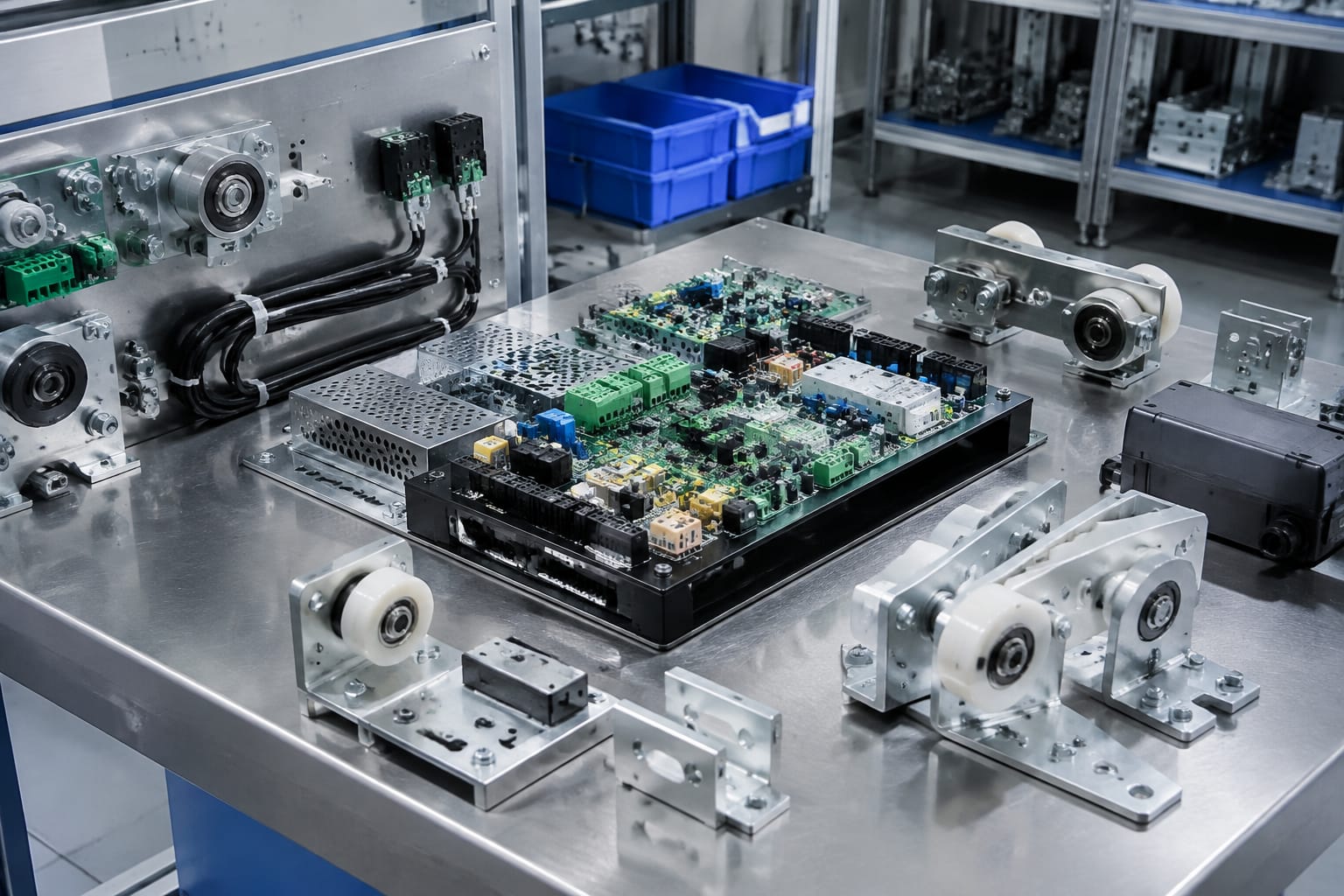
A manufacturer’s catalogue is commonly narrower but deeper. For example, it may offer a family of door operators, controllers, traction components or safety devices with related variants. This is valuable when the installed equipment belongs to that family and the buyer needs the correct approved version.
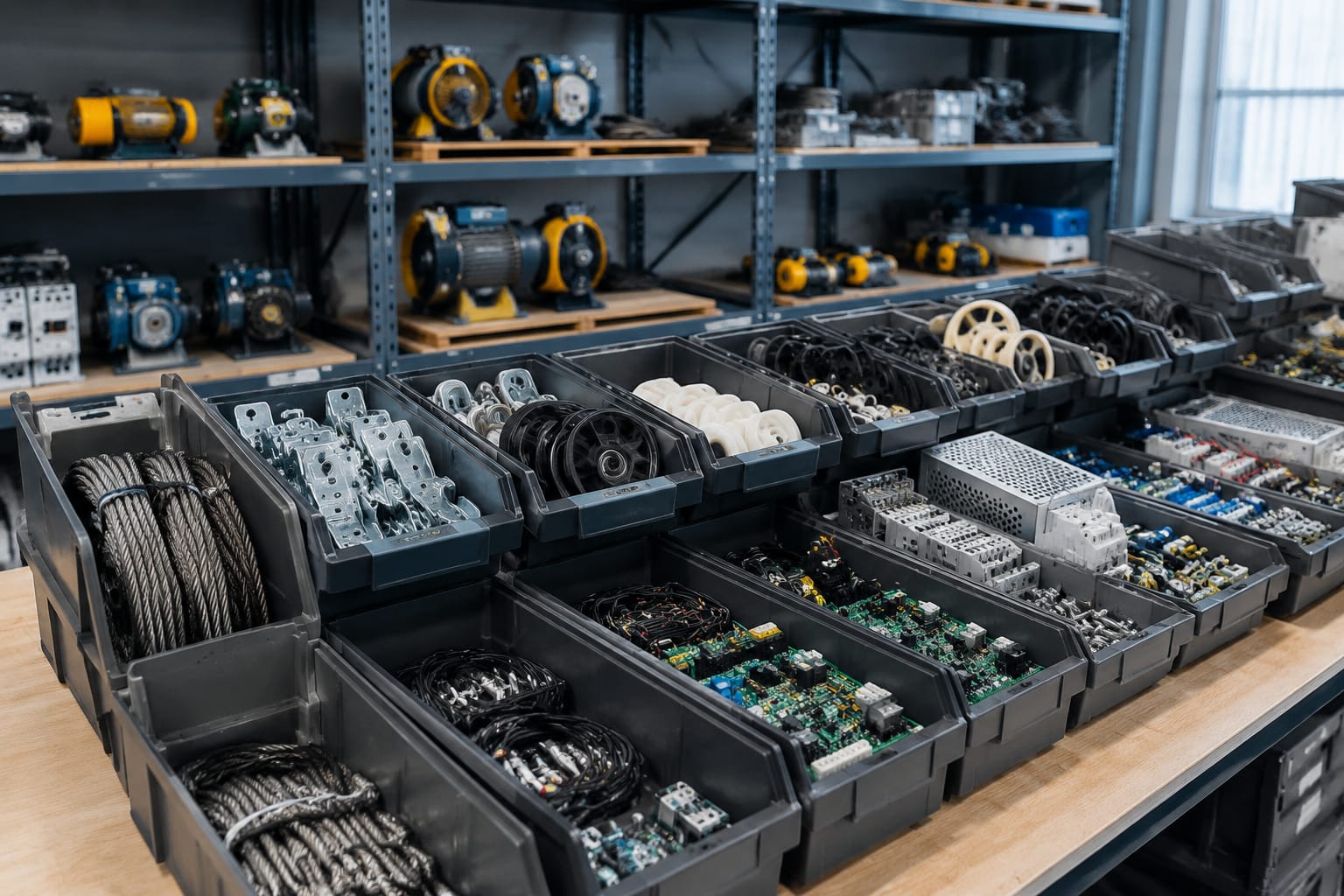
A supplier’s catalogue is typically broader. A maintenance contractor may need a door protection device, controller-related spare, emergency power accessory, contactor and wiring item for different lifts in the same week. Procuring those from separate manufacturers can create multiple enquiries, payment processes and deliveries. A multi-brand supplier can simplify the procurement exercise if it can identify and supply the right versions.
This benefit has a limit. “Multi-brand” does not mean that all parts are interchangeable. Components that appear similar can differ in:
- Input voltage, phase, frequency and current rating
- Connector type, terminal layout and pin assignment
- Firmware or parameter compatibility
- Mechanical dimensions, fixing holes and handedness
- Door opening width, beam count or sensing method
- Communication protocol and controller interface
- Safety-circuit arrangement and applicable approvals
For instance, a light curtain is chosen by more than its physical length. Door type, opening, mounting position, cable routing, supply requirements and controller interface all matter. Use the product details for a lift light curtain and door accessory as a basis for the enquiries you make, then verify suitability against the actual installation rather than relying on an image alone.
For mixed maintenance inventories, a supplier can reduce the number of vendor relationships. For critical proprietary electronics, the manufacturer or an authorised channel may be the lower-risk option. The part’s importance should drive the sourcing decision.
Customization and engineering support
Manufacturers are generally better placed to consider genuine customisation because they control or influence the production process. This may include altered mounting arrangements, cable lengths, enclosure configurations, labelling, interfaces or application-specific variants. Whether any change is possible depends on the product, safety implications, technical drawings, order volume and commercial agreement.
However, customisation is not a shortcut for repairing an unknown compatibility issue. An elevator system is an interconnected safety-critical installation. A modified component may affect performance, diagnostics, maintenance procedures or compliance responsibilities. The buyer should establish whether the change is technically permitted and who is responsible for validation.
Suppliers can still offer useful engineering-oriented support, especially during identification and replacement selection. A competent supplier may help compare:
- Existing part number and revision code
- Product photographs, including labels and terminal strips
- Dimensional drawing or mounting measurements
- Electrical ratings and wiring diagrams
- Existing controller model and lift configuration
- Whether an offered item is an exact replacement, an approved replacement or only a possible alternative
The language matters. “Compatible” can mean several different things. Ask the seller to state which of the following applies:
- Exact part number match: same make, model and relevant revision.
- Direct replacement: intended to replace the original without material changes, subject to installation checks.
- Equivalent alternative: similar function but may require wiring, configuration, brackets or commissioning.
- Unverified suggestion: potentially relevant, but suitability has not been confirmed.
For a controller-related purchase, provide the controller model, serial or revision information, fault details and clear label photographs. A product such as a Monarch 3000 integrated machine lift controller must be assessed against the installed system’s configuration; a matching product category is not enough to establish a replacement.
Availability for legacy equipment
Legacy lifts are where the practical difference between manufacturers and suppliers is often most visible. A manufacturer may have discontinued a model, replaced it with a newer generation or retained limited support for service parts. Even when a successor exists, the change may require a broader modernisation scope than simply fitting a spare.
Suppliers can be useful for legacy equipment because they may locate remaining stock, stock compatible service items, source from established channels or identify a suitable alternative. They can also consolidate components needed for a phased repair. This makes them an important option when maintaining mixed-age portfolios.
That said, availability should be treated carefully. A listing, quotation or photo does not establish that a legacy component is ready for dispatch, serviceable or appropriate for a particular lift. Before committing, confirm:
- Exact manufacturer part number, including suffixes and revision level
- Condition: new, surplus, refurbished or another clearly stated status
- Manufacturing date or shelf-life considerations where relevant
- Included accessories, connectors, programming media or mounting hardware
- Whether a replacement requires parameter transfer or commissioning
- Return position for an incorrectly identified electronic item
- Whether the original failed part should be retained for inspection or repair
Do not replace a legacy drive, controller board or safety-related device solely from appearance. Older installations can contain site-specific wiring changes and parameter settings accumulated over years of maintenance.
When an obsolete part cannot be safely replaced as a standalone item, a modernisation assessment may be the more responsible route. That assessment should consider the connected equipment, safety circuits, wiring condition, documentation available and future availability of service spares.
Quality assurance and documentation
Quality assurance begins with defining what must be verified. For a non-critical consumable, clear identification and basic inspection may be sufficient. For controller electronics, door protection devices, braking components or safety-related items, the required checks are more stringent and should reflect the application and contractual responsibilities.
Manufacturers may be able to provide product-specific documents for their own items, subject to the product and sales channel. Suppliers may provide documents received from their source, part traceability details, inspection information or a clear declaration of product condition. The exact documentation available varies, so request it before ordering if it is a procurement requirement.
Useful documents and information may include:
- Manufacturer name, part number and revision
- Data sheet, installation instruction or wiring diagram
- Packing label and batch, serial or lot reference where applicable
- Test certificate or conformity document where supplied for that product
- Country of origin information if required by your procurement process
- Warranty and returns terms in writing
- Clear condition statement for surplus or refurbished goods
Avoid treating generic paperwork as proof that a specific part is genuine, correctly rated or fit for a particular installation. Review whether the document actually names the product, revision and applicable standard.
For Indian projects and maintenance contracts, buyers should also check the requirements of the building owner, consultant, lift OEM, insurer and local authority where relevant. Requirements can differ by equipment type and project. A seller cannot remove the purchaser’s responsibility to ensure that the installed replacement is suitable and that the lift is tested and returned to service by competent personnel.
Minimum orders and lead times
Manufacturers frequently plan production around batches, scheduled components and customer forecasts. This can make them suitable for repeat demand but less convenient for one-off maintenance purchases. A minimum order quantity may apply, particularly for customised items, cable assemblies, sheet-metal parts or less commonly produced variants.
Suppliers are often more flexible for service quantities because they buy in larger volumes or hold trade inventory. A contractor may be able to obtain one or two units rather than a production batch. This can reduce excess stock, although single-unit pricing may be higher than a volume purchase.
Neither channel guarantees immediate availability. Lead time depends on the exact stock location, supplier confirmation, import process, product condition, order cut-off, technical clarification and transport arrangement. Never promise a lift restoration date based only on an initial quote.
For urgent requirements, make the enquiry easier to act on. State:
- The exact required quantity and required-by date
- Part number, revision and clear photographs
- Lift make, controller model and relevant equipment details
- Whether an exact match is mandatory
- Whether an alternative can be considered, and what changes are acceptable
- Delivery destination and whether freight needs to be included
- Any mandatory documents or inspection requirements
Ask for stock status separately from lead time. “Available” can mean available at a factory, in a regional warehouse, against an incoming shipment or physically ready to dispatch. Those are materially different positions.
Technical support after purchase
Post-purchase support matters most when the component needs commissioning, parameter setting, wiring changes or diagnosis after fitting. The manufacturer may be better positioned to explain its own product’s installation requirements, known revisions and approved procedures. Access can still be limited by product age, regional policy, authorisation status or whether the buyer is part of its support network.
A supplier may assist with identification, order confirmation and product documentation, but the level of commissioning support varies widely. Establish the boundary before ordering, especially for controllers, drives, emergency devices and parts connected to safety circuits.
Questions worth asking include:
- Is installation guidance supplied with this exact item?
- Is remote technical support available, and under what commercial terms?
- Who handles a suspected product fault after installation?
- Is a return material authorisation required before returning an item?
- Can the unit be returned if the part number supplied by the buyer was incorrect?
- Does fitting the item require software, passwords, parameters or proprietary tools?
- Is on-site commissioning included, excluded or unavailable?
The buyer should retain the original labels, fault records, photographs and installation notes. These details are useful if a problem arises and help distinguish a defective part from an application, wiring or configuration issue.
For an emergency electrical accessory, verify the supply and interface requirements before purchase. A Mitsubishi lift emergency power supply box should be assessed against the installed lift equipment and required emergency operation, rather than selected only by brand reference.
Choosing the right sourcing route
Choose the manufacturer route when the requirement is proprietary, safety-critical, custom or part of a planned repeat purchase. It is also a strong choice when you need manufacturer-origin technical information, a specific production variant or a controlled engineering change.
Choose a supplier when you need multi-brand sourcing, mixed spare categories, a smaller service quantity, help locating a legacy item or a single commercial point for several maintenance requirements. Kelevator, for example, supplies multi-brand elevator spare parts to B2B importers, distributors, maintenance contractors and OEM buyers. That type of supplier model is most useful where sourcing breadth and practical replacement identification are needed.
Use this decision checklist before issuing the enquiry:
- Classify the part. Is it consumable, operational, proprietary electronic, door-system related or safety-related?
- Capture evidence. Record every label, suffix, revision, connector and physical dimension. Take photographs before removal where permitted.
- Define the match requirement. Decide whether only an exact item is acceptable or whether an alternative may be evaluated.
- Assess outage impact. Separate genuinely urgent requirements from items that can follow normal procurement.
- Specify documents. State what records, drawings, condition details or certifications your process requires.
- Compare total risk, not unit price. Include wrong-part risk, rework, commissioning, freight, downtime and future support.
- Confirm the order acknowledgement. Check part number, quantity, condition, delivery terms and any exclusions before release.
- Inspect before installation. Compare received labels, packaging and physical features with the order and existing component.
A common mistake is to ask only, “Do you have this part?” A better enquiry says what is installed, what has failed, what evidence is available, whether the lift is operational and whether an alternative can be considered. That gives a manufacturer or supplier the information needed to respond accurately.
Frequently asked questions
Is an elevator parts supplier cheaper than a manufacturer?
Not necessarily. A supplier may offer a cost advantage for small quantities, mixed-brand orders or stock items, while direct manufacturing can be economical for repeat volume. Compare the complete landed and operational cost, including freight, lead time, commissioning needs, documents and the consequences of an incorrect part.
Can a supplier provide original elevator parts?
A supplier may supply original branded parts where it has access to them, but the buyer should confirm the item’s source, condition and documentation for the specific quotation. Do not assume originality from a product photograph or a general brand claim.
Is an equivalent part safe to install?
An equivalent may be suitable only after technical verification for the particular lift. Function alone is not enough. Check electrical ratings, interfaces, mechanical fit, software or parameters, safety-circuit implications and required testing. Installation and return to service should be handled by competent personnel.
What details should I send when requesting a legacy spare?
Send the full part number and revision, clear photos of all labels and connectors, lift make and controller model, dimensions where relevant, fault description, quantity, condition preference and required delivery date. Include whether a technically verified alternative is acceptable.
The best sourcing route is the one that gives you the correct, verifiable part with a support level proportionate to the lift’s risk and urgency. Start each requirement with precise identification, then use a manufacturer for product-specific engineering needs or a multi-brand supplier for practical cross-brand and maintenance sourcing.
Related product references
For practical catalog examples related to this topic, review [Monarch Elevator frequency converter 3000+ integrated machine Lift Controller](/products/monarch-elevator-frequency-converter-3000-integrated-machine-lift-controller/), [light curtain lift accessories elevator spare parts](/products/light-curtain-lift-accessories-elevator-spare-parts-6/), and [Elevator emergency power supply box Mitsubishi lift parts](/products/elevator-emergency-power-supply-box-mitsubishi-lift-parts/). Confirm the exact model, dimensions, ratings, and connectors before ordering.