
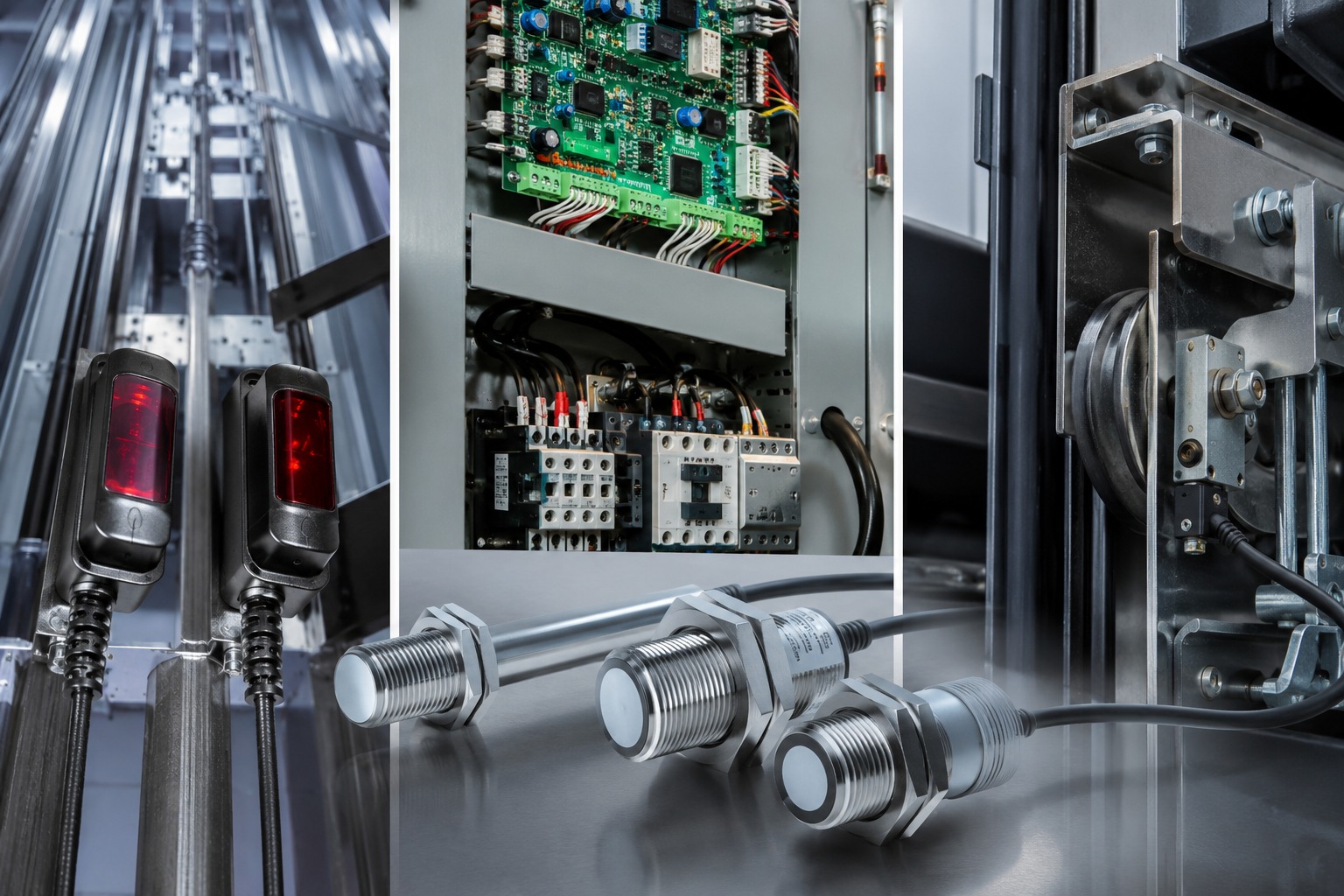
Elevator photoelectric switches and position detection sensors are small parts with a major job: they help the lift know where the car is, whether a door zone is correct, whether leveling is accurate, and whether control feedback is stable. In practical maintenance work across India, these sensors support smoother stops, better door timing, safer re-leveling, and fewer nuisance faults. When a switch becomes weak, misaligned, contaminated, or electrically mismatched, the elevator may show symptoms such as inaccurate leveling, intermittent door operation, false landing signals, or repeated shutdowns.
For maintenance companies, distributors, building owners, and modernization contractors, choosing the right replacement is not only about price. It is about matching sensor type, operating voltage, sensing method, body size, cable layout, mounting distance, response speed, and compatibility with the lift controller. This is especially important in Indian markets where elevators operate in diverse conditions, from humid coastal sites in Mumbai and Chennai to dusty construction-heavy zones in Delhi NCR, Ahmedabad, Hyderabad, and Pune.
If you need a quick answer, elevator photoelectric switches usually detect the presence or interruption of light for door zone confirmation, leveling reference, car position feedback, and safe sequence control. Position detection sensors are applied where the controller must identify exact movement points, floor approach signals, landing alignment, or door-related status. Correct selection, careful installation, and preventive inspection can reduce downtime and improve long-term reliability.
Buyers looking for reliable replacement parts often compare multiple product families, including elevator photoelectric switches, position detection sensors for lift systems, and leveling sensors for elevator door zone control. The best sourcing approach is to match the old part data, installation environment, and control logic rather than relying on appearance alone.
What Elevator Photoelectric Switches Detect in Real Operation
A photoelectric switch in an elevator system detects a change in light condition. Depending on design, it may work by beam interruption, reflection, or proximity to a target. In lift applications, this signal is converted into actionable control feedback. The controller then uses that feedback to decide whether the car is entering the leveling zone, whether a door-related sequence is correct, or whether a car movement command can proceed.
In everyday field use, these switches may detect:
- Car position relative to a floor zone
- Door zone entry and exit points
- Leveling accuracy during approach and stop
- Presence of a vane, flag, or metal target linked to car motion
- Required control sequence timing for deceleration or re-leveling
- Status feedback that supports controller logic and fault monitoring
Not every elevator uses the same sensing arrangement. Some systems use magnetic switches, some use inductive sensors, and some use photoelectric methods combined with vanes or coded plates. In many modernization and replacement cases in India, technicians find that an installed part has no clear label left, making it necessary to verify wiring, voltage, mounting, and output type before ordering.
| Detection Function | Typical Sensor Role | Where It Is Used | What the Controller Learns | Common Fault If Weak | Maintenance Note |
|---|---|---|---|---|---|
| Door zone detection | Beam or target sensing | Landing approach area | Car is in safe door opening zone | Doors do not open at correct point | Check alignment and bracket rigidity |
| Leveling reference | Precise position feedback | Final stopping stage | Car is at floor level | Car stops high or low | Verify sensing gap and controller input |
| Approach signal | Advance landing detection | Before floor arrival | Landing approach timing | Rough slowdown or floor loss | Inspect vane condition and target length |
| Re-leveling support | Position recheck | After passenger loading | Car drift correction needed | Repeated re-level movement | Inspect contamination and false triggering |
| Sequence feedback | State confirmation | Door or travel logic chain | Expected action completed | Intermittent controller faults | Check cable shielding and connector fit |
| Safety-related status | Signal integrity confirmation | Integrated control loops | Normal or abnormal condition | Nuisance shutdowns | Measure stable supply voltage under load |
The table above shows why these sensors are critical. A small detection error can lead to poor ride quality, unnecessary callback visits, or preventable shutdowns. In high-traffic sites such as metro-adjacent office towers in Bengaluru, mixed-use properties in Gurgaon, or hospitals in Kolkata, even short downtime can disrupt building operations and maintenance schedules.
Applications of Position Detection Sensors in Elevator Systems
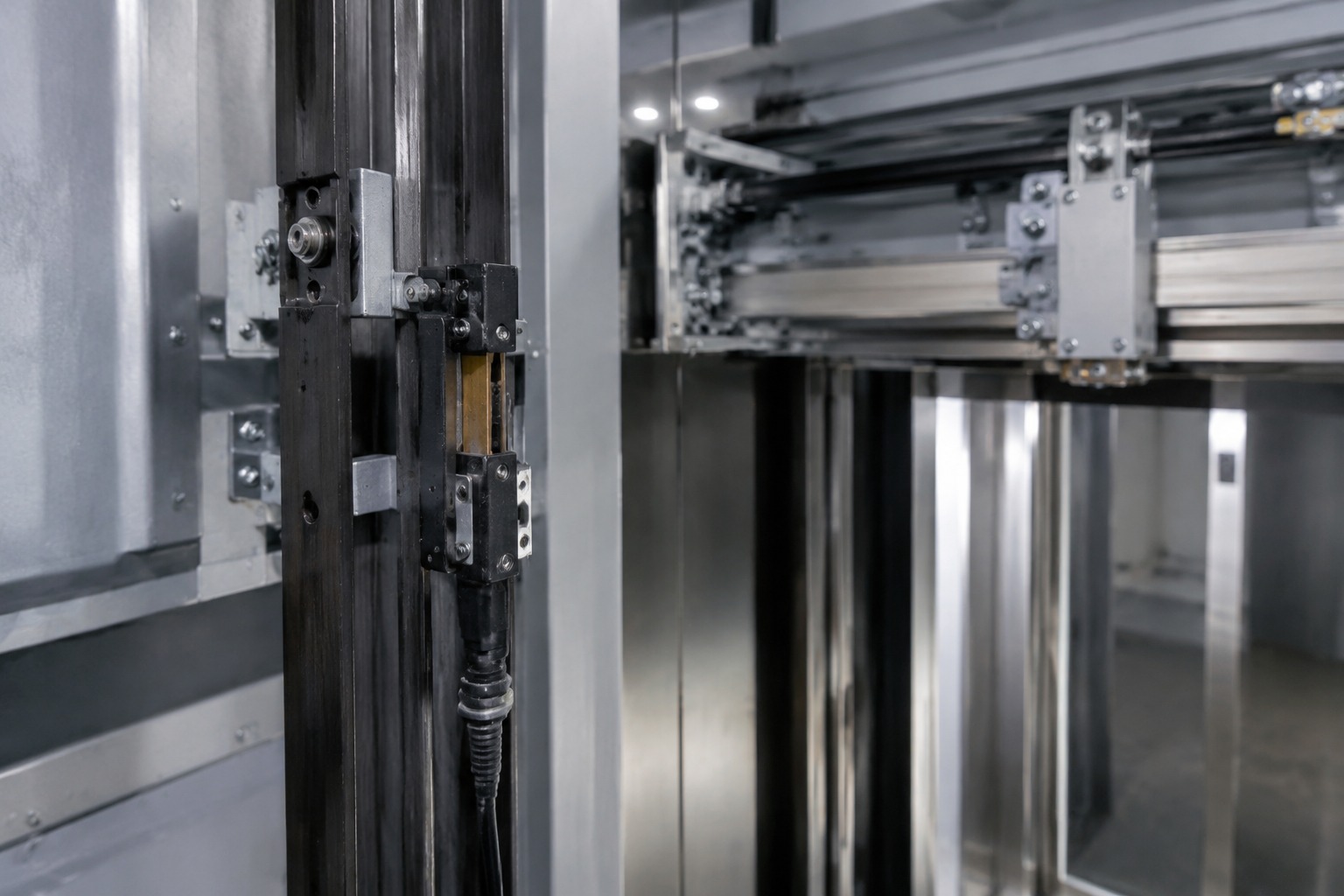
Position detection sensors are used wherever the elevator controller needs accurate movement information. While photoelectric switches detect light changes, the broader category of position sensors includes optical, magnetic, and proximity-based devices. Their job is to convert a physical position into an electrical signal that the controller can understand.
Typical applications include car leveling, floor zone recognition, travel path reference, door operator feedback, and landing sequence coordination. In some branded systems, especially when replacing older Hitachi or other OEM configurations, the sensor may be part of a tightly defined logic chain. In such cases, using a generic substitute without checking response type can create intermittent faults that are hard to diagnose.
Across India, these sensors are widely applied in:
- Residential high-rise lifts in Mumbai, Thane, and Navi Mumbai
- Commercial towers in Bengaluru, Hyderabad, and Chennai
- Hotels and hospitals requiring accurate floor leveling
- Industrial buildings with goods lifts needing robust position feedback
- Modernization projects in older buildings across Delhi, Jaipur, and Surat
- Metro, institutional, and public-use buildings with high traffic cycles
| Application Area | Sensor Task | Typical Benefit | Risk If Incorrectly Matched | Site Example in India | Recommended Check |
|---|---|---|---|---|---|
| Car leveling | Detect precise stop position | Smooth boarding and accessibility | High/low landing | Hospitals in Chennai | Confirm sensing repeatability |
| Door zone | Identify safe opening area | Reliable door operation | Doors fail to open | Offices in Bengaluru | Match output logic and bracket location |
| Floor approach | Signal deceleration point | Stable ride comfort | Jerky approach | Hotels in Goa | Verify response time and target length |
| Door operator status | Provide sequence feedback | Reduced nuisance trips | Door recycle faults | Malls in Delhi NCR | Check cable routing near moving parts |
| Goods lift control | Detect robust movement points | Operational reliability | Missed landing or stop errors | Warehouses near Mundra port | Choose dust-resistant design |
| Modernization retrofits | Replace obsolete OEM part | Extend equipment life | Logic incompatibility | Old towers in Kolkata | Cross-check part code and wiring |
This application view matters for buyers. A replacement that works in a clean passenger elevator may not be ideal for a freight lift in a dusty logistics building near Nhava Sheva port or an industrial site in Faridabad. Selection should reflect real operating conditions, travel frequency, and maintenance access.
How to Choose the Right Sensor Type and Voltage
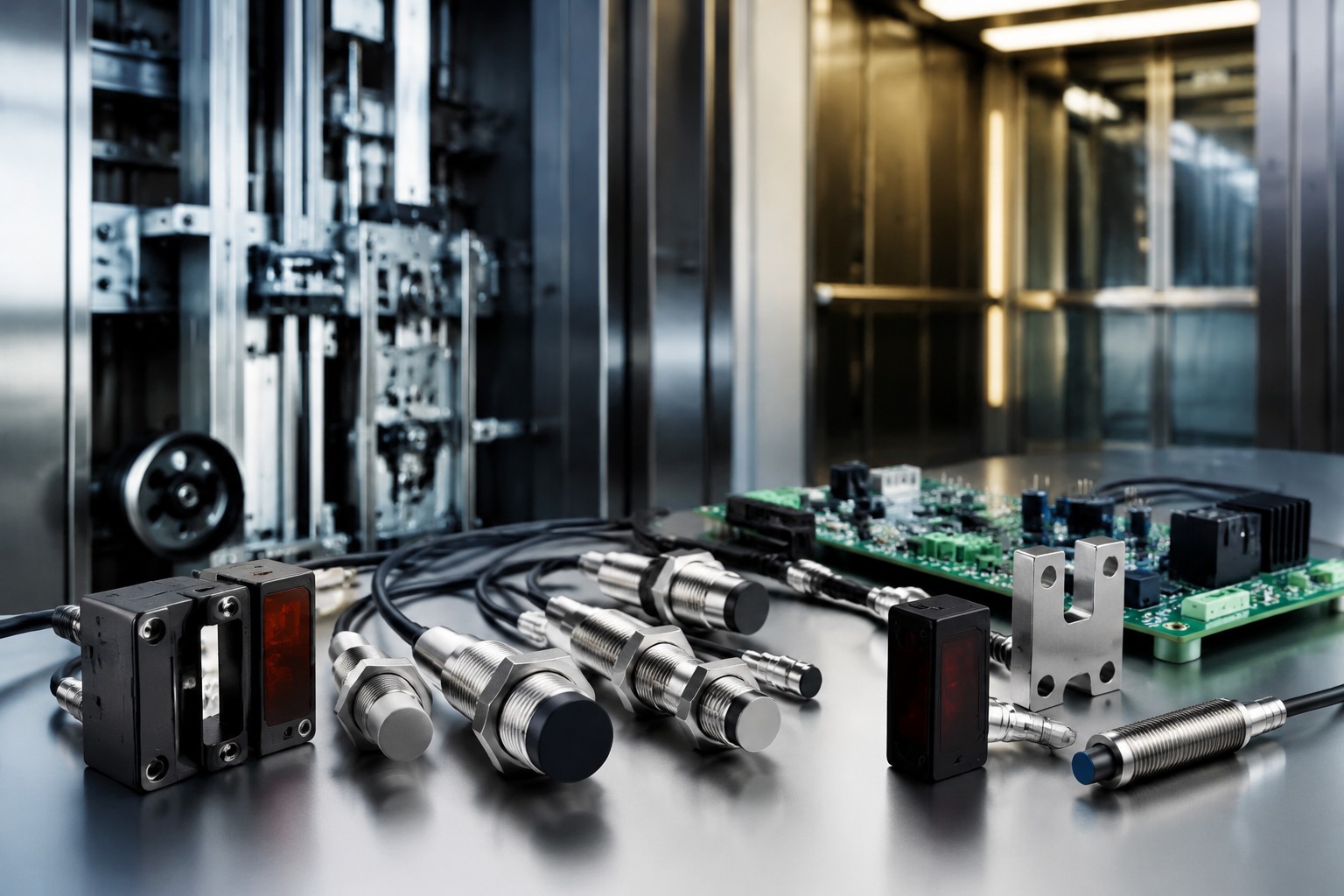
The correct sensor must match the mechanical setup and the electrical control system. Many replacement problems happen because a technician chooses a part with the right appearance but the wrong voltage, output mode, or sensing distance. Before buying, collect the old part number, photos of all sides, cable details, mounting dimensions, terminal markings, and controller input specifications.
Start with the sensor type. The common options include photoelectric, inductive, magnetic, and specialty leveling sensors. Then confirm whether the output is NPN, PNP, relay, normally open, normally closed, or a dedicated OEM signal format. Voltage is equally important: using the wrong supply can damage the sensor, produce unstable output, or trigger repeated control board faults.
In India, many maintenance teams manage mixed portfolios of imported and locally modernized elevators. That means one building may have controllers with 12V, 24V, or other signal expectations, while another may require a specific branded sensor profile. Careful matching helps avoid repeated shipping, site delays, and unnecessary board replacement.
| Selection Factor | Why It Matters | What to Check | Common Mistake | Result of Mistake | Buying Tip |
|---|---|---|---|---|---|
| Sensor type | Must suit detection method | Photoelectric, magnetic, inductive | Choosing by shape only | No reliable signal | Match working principle first |
| Supply voltage | Controls stable operation | Rated input and site voltage | Ignoring voltage label | Burnt unit or erratic output | Verify with multimeter and manual |
| Output logic | Controller must read signal correctly | NPN, PNP, NO, NC | Wrong logic type | False alarm or no action | Check controller input card details |
| Sensing distance | Affects detection reliability | Gap and target size | Installing with wrong range | Intermittent triggering | Measure actual mounting gap onsite |
| Mounting dimensions | Ensures correct fit | Bracket holes, body length | Forcing non-matching unit | Misalignment and vibration faults | Use exact dimensions from old unit |
| Environment rating | Impacts durability | Dust, humidity, temperature | Ignoring site conditions | Early failure | Prefer sealed housing for harsh sites |
As a practical buying rule, always confirm six points before placing an order: model code, voltage, output type, mounting size, cable or connector style, and application position. If any of these is unclear, compare the installed part with product drawings and site photos. This is especially helpful for mixed-brand buildings in Indian cities where original documentation may be incomplete.
The chart above reflects a realistic trend seen in the market: demand for replacement sensors is rising as India adds new lift installations while also modernizing older equipment. Growth is supported by urban redevelopment, hospital expansion, IT parks, mixed-use towers, and refurbishment of aging residential buildings.
Key Considerations When Replacing Hitachi Elevator Sensors
Hitachi elevator sensor replacement requires extra care because many installations depend on specific logic timing and mechanical arrangement. Even if a substitute looks similar, it may differ in sensing distance, response speed, cable polarity, or bracket position. For that reason, model matching should be treated as a technical process rather than a simple commodity purchase.
When replacing a Hitachi sensor, first identify whether the part is used for leveling, position detection, or door zone logic. Next, confirm the old label, wiring colors, body dimensions, target orientation, and any nearby vane or flag arrangement. If the label is faded, use site photos and controller documentation. In modernization projects across cities such as Pune, Lucknow, and Kochi, this step often prevents ordering delays.
Compatible replacement decisions should also consider:
- Whether the signal output matches the controller card input
- Whether the mounting holes and body thickness fit the original bracket
- Whether the operating voltage and current are correct
- Whether response timing is fast enough for the elevator speed
- Whether the target or vane material is still in good condition
- Whether the environment requires better sealing or cable protection
| Hitachi Replacement Check | Why It Is Important | Field Verification Method | What Happens If Ignored | Suitable Action | Procurement Advice |
|---|---|---|---|---|---|
| Original part code | Links to exact function | Read label or maintenance record | Wrong application part ordered | Cross-match code carefully | Send clear photos before ordering |
| Voltage rating | Prevents signal instability | Measure supply at connector | Controller input faults | Use correct rated unit | Do not assume all are 24V |
| Output form | Must match card expectation | Check wiring diagram | No response or reverse logic | Confirm NO/NC and polarity | Request terminal mapping |
| Mechanical fit | Maintains beam/target alignment | Measure bracket and gap | Intermittent operation | Use identical dimensions | Ask for drawing before shipment |
| Signal speed | Important at travel speed | Compare datasheet response time | Missed detection points | Select suitable response class | Especially important for high-rise lifts |
| Installation environment | Affects life span | Inspect shaft dust and moisture | Early repeat failure | Choose protected housing | Plan preventive cleaning schedule |
For customers seeking dependable sourcing, our technical capability is centered on careful model matching, application review, and compatibility verification for branded elevator spare parts. Instead of supplying by visual guess, we help compare part numbers, dimensions, wiring, and use-case conditions so maintenance teams can reduce wrong orders and shorten downtime.
Mounting Distance and Alignment Checks That Matter
Correct mounting distance and alignment are often as important as the sensor itself. A good sensor can still fail in operation if the target does not pass through the ideal sensing zone or if vibration shifts the bracket over time. Elevator shafts and car tops can experience dust accumulation, cable movement, and mechanical vibration, all of which affect sensing stability.
During installation or replacement, check the following:
- Distance between sensor face and target or vane
- Parallel alignment of beam path and target movement
- Bracket rigidity and fastener tightness
- Cable routing away from sharp edges and moving parts
- Signal LED indication during manual car movement
- Repeatability across multiple trips, up and down
In coastal areas such as Chennai, Visakhapatnam, and Kochi, corrosion on brackets and connectors may slowly alter alignment or electrical contact. In dusty inland construction zones, dirt on the optical face can reduce sensing strength. A proper inspection routine should combine mechanical checks and electrical verification.
| Alignment Check Item | What to Observe | Good Condition | Warning Sign | Likely Cause | Corrective Action |
|---|---|---|---|---|---|
| Sensing gap | Distance to target | Within rated range | Output flickers | Gap too wide or too tight | Reset bracket position |
| Target path | Vane passes sensor center | Stable and repeatable | Partial detection only | Misaligned bracket | Realign sensor and target |
| Bracket stability | Movement during travel | No looseness | Signal changes with vibration | Loose fasteners | Tighten and lock hardware |
| Optical surface | Cleanliness of face | Clear surface | Reduced sensitivity | Dust or oil film | Clean with proper method |
| Cable condition | Insulation and strain relief | No cuts or pull stress | Random faults | Flex damage or poor routing | Re-route or replace cable |
| Indicator response | LED changes with target | Consistent switching | Delayed or unstable LED | Weak supply or sensor wear | Check voltage and replace if needed |
The table above is useful during commissioning and callback diagnosis. A sensor that passes a static bench test may still fail in real shaft movement if the target path drifts slightly. That is why repeated travel testing matters before closing the service call.
The industry demand comparison highlights why stocking strategy matters for suppliers and maintenance firms. Residential and commercial segments drive volume, while hospitals and modernization projects often require tighter matching and faster service response due to safety and uptime sensitivity.
Typical Fault Symptoms and Practical Troubleshooting Steps
When a photoelectric switch or position sensor begins to fail, the symptoms are not always obvious. Some problems appear only during certain directions of travel, only after the machine room heats up, or only when the shaft is dusty. A methodical troubleshooting process saves time and reduces unnecessary parts replacement.
Common symptoms include incorrect leveling, doors not opening despite the car appearing at floor level, intermittent floor loss, repeated re-leveling, random stop faults, or controller alarms related to door zone or position feedback. Technicians should not replace the controller board first unless they have already confirmed that the sensor signal is correct under operating conditions.
Recommended troubleshooting sequence:
- Inspect the sensor body, lens, bracket, target, and cable for visible damage.
- Measure supply voltage at the sensor while the system is operating.
- Check indicator LED behavior during manual movement through the sensing zone.
- Verify gap, alignment, and target path.
- Confirm output polarity and switching logic at the controller input.
- Review maintenance history for repeat failures caused by environment or vibration.
| Fault Symptom | Possible Sensor Cause | Other Possible Cause | Test Method | Likely Fix | Priority Level |
|---|---|---|---|---|---|
| Car stops above floor | Weak leveling detection | Brake or control tuning issue | Observe level signal near stop | Realign or replace leveling sensor | High |
| Doors do not open at landing | Door zone not detected | Door lock circuit issue | Check zone signal at floor | Correct sensor gap or output type | High |
| Intermittent floor loss | Unstable position signal | Encoder noise or cable issue | Travel test both directions | Check sensor cable and bracket | High |
| Repeated re-leveling | False level drift signal | Load change or brake slip | Monitor after passenger loading | Clean or replace sensor | Medium |
| Random controller alarm | Signal flicker | Input card issue | Measure switching stability | Stabilize supply or change sensor | Medium |
| No sensor LED activity | No power or dead unit | Broken connector | Measure input voltage | Repair wiring or replace unit | High |
This fault approach is valuable for service teams in fast-paced urban markets where callback pressure is high. In office corridors in Noida or business parks in Hyderabad, quick restoration matters, but rushed replacement without diagnosis can create repeat calls and higher lifecycle cost.
The area chart shows a realistic shift in maintenance practice: more building owners and contractors are moving from reactive replacement after breakdown to planned replacement before failure. This trend is growing in India as uptime expectations rise in premium residential towers, hospitals, and managed commercial assets.
Preventive Maintenance for Longer Sensor Life
Preventive sensor maintenance is one of the lowest-cost ways to improve elevator reliability. Because photoelectric switches and position sensors are exposed to movement, dust, and sometimes moisture, they should be included in regular service checklists rather than inspected only after a fault occurs.
Best preventive tasks include lens cleaning, bracket inspection, cable condition review, connector tightening, target alignment confirmation, and switching verification. In high-traffic buildings, periodic operational testing during up and down travel helps identify weak or delayed switching before passengers notice a problem.
Good preventive maintenance is especially useful in Indian conditions where the operating environment varies sharply. For example, salt air can affect metal hardware in coastal districts, while dust and vibration are more common at construction-adjacent or industrial sites. Seasonal monsoon humidity can also influence electrical connectors and exposed installations.
From a manufacturing capability perspective, we focus on stable quality inspection, protective packaging, and sourcing control for elevator spare parts that must arrive in serviceable condition after domestic transport or international shipment. This matters because a sensor with hidden transit damage or poor connector protection can fail before installation.
From a service capability perspective, responsive communication, model verification support, and practical replacement guidance help maintenance teams reduce downtime and avoid mismatched orders. This is valuable for distributors and contractors managing multi-city supply to markets such as Mumbai, Delhi NCR, Bengaluru, Chennai, Ahmedabad, and Coimbatore.
| Maintenance Task | Suggested Frequency | What It Prevents | Tools Needed | Field Note | Expected Benefit |
|---|---|---|---|---|---|
| Clean optical face | Monthly or quarterly | Weak beam detection | Non-abrasive cleaning material | Do not scratch lens | Stable signal strength |
| Check bracket tightness | Quarterly | Misalignment from vibration | Basic hand tools | Use lock washers where suitable | Reduced intermittent faults |
| Inspect cable routing | Quarterly | Flex fatigue and insulation cuts | Visual inspection tools | Avoid pinch points | Lower random signal loss |
| Verify sensing gap | Quarterly or after repair | False or missed detection | Gauge or ruler | Record baseline measurement | Better repeatability |
| Test switching response | During scheduled service | Hidden weak performance | Meter and travel observation | Check both travel directions | Earlier fault discovery |
| Review connector condition | Half-yearly | Voltage drop or corrosion | Meter and inspection light | Important in humid zones | Improved signal integrity |
Preventive routines also support sustainability goals. Replacing sensors before they cause secondary faults can reduce unnecessary board replacement, emergency visits, and repeated transport. In 2026, this aligns with a broader market trend toward predictive maintenance, lower lifecycle waste, and more efficient spare parts planning.
India Market Outlook, Supplier Comparison, and 2026 Trends
The Indian elevator spare parts market is expanding because of continued urban construction, modernization of older stock, and stronger expectations for uptime and safety. Demand for sensor replacements is supported by the growth of residential towers, smart offices, logistics hubs, hospitals, and hospitality projects. Ports and trade corridors such as Mumbai, Chennai, Mundra, and Kolkata continue to influence spare part distribution efficiency for imported and cross-matched components.
Local buyers generally compare suppliers on five points: model matching accuracy, availability, packing quality, consistency, and after-sales responsiveness. A low unit price may not be attractive if it leads to wrong fitment, delayed maintenance, or repeated faults.
The supplier comparison chart demonstrates why professional sourcing matters. For critical parts like leveling and position sensors, better compatibility review and packaging protection can directly affect installation success and service speed.
Looking ahead to 2026, three trends are especially important:
- Technology trend: more predictive maintenance using controller data, fault history, and targeted preventive replacement of sensors before failure.
- Policy trend: stronger attention to lift safety, documentation, and service accountability in major cities and regulated building environments.
- Sustainability trend: increased preference for durable compatible parts, reduced emergency travel, smarter stocking, and longer service life through preventive care.
For buyers in India, the best long-term strategy is to build a documented spare part database by site, especially for branded and legacy systems. This helps maintenance teams in cities like Indore, Nagpur, Chandigarh, and Bhubaneswar respond faster when an urgent replacement is needed.
Frequently Asked Questions About Elevator Photoelectric Switches
1. What does a photoelectric switch do in an elevator?
It detects a light interruption or reflection and converts that into a signal for door zone, leveling, position, or sequence feedback.
2. Are photoelectric switches and position sensors the same?
Not always. A photoelectric switch is one type of sensor. Position detection can also be done by magnetic or inductive devices depending on the elevator design.
3. How do I know which voltage to order?
Check the old sensor label, wiring diagram, and actual supply voltage at the connector. Never assume the rating from appearance alone.
4. Can I replace a Hitachi sensor with a similar generic model?
Only after confirming voltage, output logic, sensing distance, mounting size, and application role. A visually similar unit may still be incompatible.
5. What symptoms suggest sensor trouble?
Common signs include poor leveling, doors not opening at the floor, intermittent floor loss, repeated re-leveling, and random control faults.
6. How often should sensors be checked?
They should be included in regular preventive maintenance, with frequency adjusted by traffic level and site environment.
7. What is the most common installation mistake?
Incorrect alignment or sensing gap is very common. Even a correct sensor can behave badly if the bracket shifts or the target path is wrong.
8. Why do sensors fail faster in some buildings?
Dust, vibration, humidity, corrosion, poor cable routing, and unstable supply voltage can shorten life. Coastal and industrial conditions are especially important to consider.
9. Is packaging really important for these parts?
Yes. Sensors are precision components. Protective packaging helps prevent connector damage, body cracking, and transit-related defects.
10. Where can buyers source compatible elevator sensor replacements?
Buyers usually work with specialist suppliers that understand model matching, quality inspection, and multi-brand compatibility for elevator spare parts.
In summary, elevator photoelectric switches detect essential movement and zone information, while position sensors support accurate stopping, door logic, and controller feedback. For the India market, the most reliable replacement results come from careful model matching, correct voltage selection, proper alignment checks, and routine preventive maintenance. Whether you are servicing a residential tower in Mumbai, a hospital in Chennai, a commercial project in Bengaluru, or a retrofit in Delhi NCR, the goal is the same: safe operation, reduced downtime, and dependable compatibility.