
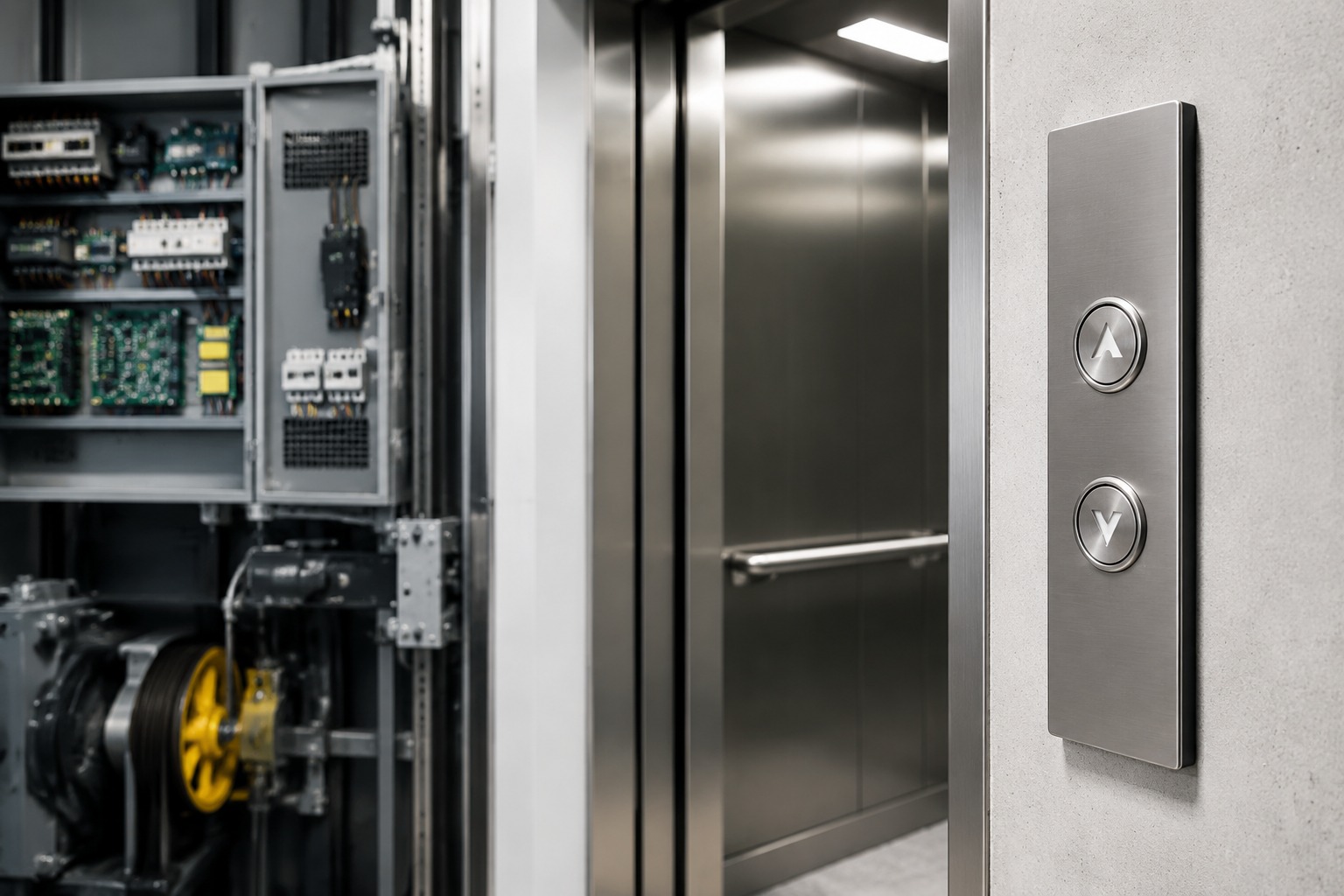
Elevator button panels look simple, but they influence daily lift performance more than many buyers expect. In India, where elevators serve apartment towers in Mumbai, office blocks in Bengaluru, hospitals in Chennai, hotels in Delhi NCR, factories in Pune, and mixed-use developments in Hyderabad, the right push button and outbound call panel choice affects passenger comfort, maintenance speed, and long-term operating cost. A panel that fits well, lights correctly, and matches the controller signal can reduce nuisance complaints, while a poor match can lead to repeated callbacks, wrong floor registrations, dim indicators, or damaged faceplates.
The direct answer is this: when selecting or replacing elevator buttons and call stations, buyers should confirm panel type, button shape, mounting dimensions, faceplate and bottom box compatibility, illumination voltage, contact logic, wiring arrangement, environmental durability, and accessibility requirements before installation. It is also important to test the button under real lift operation after fitting, not only on a bench. For modernization contractors and maintenance teams in India, careful model matching is especially important because many buildings operate mixed fleets, imported systems, and older branded components that have seen partial upgrades over time.
The Indian market for elevator accessories is shaped by rapid urbanization, retrofit demand, and the need to keep existing lifts running safely with minimal downtime. Property managers in Ahmedabad and Surat often seek cost-effective replacements that preserve the original panel cutout. High-rise residential operators in Gurugram or Noida may prefer visually upgraded panels that improve lobby appearance. Industrial sites near ports such as Nhava Sheva, Mundra, and Chennai Port often prioritize durable components and dependable sourcing because logistics delays can interrupt maintenance schedules. This is why replacement planning should combine technical checks with a realistic procurement strategy.
For buyers looking for compatible options, products such as a round elevator push button for lift replacement, an MCA outbound call panel for building entrance use, or a standard outbound call panel for lift modernization can be suitable starting points when matched correctly to the installed system and site conditions.
Below is a practical guide for maintenance companies, distributors, building owners, and modernization contractors across India who need to source elevator button panels with better confidence.
Common elevator button panel types
Elevator button panel types can be grouped by installation position, operating function, and construction style. The most common categories are car operating panels inside the lift car, hall or outbound call panels at each landing, destination entry panels in advanced systems, emergency service panels, and auxiliary panels for disabled access or fire operation. Within these groups, the button format may be round, square, braille-marked, flush-mounted, illuminated ring type, mechanical micro-switch type, or touch-style in premium projects.
In India, most replacement demand still centers on conventional mechanical push buttons with LED or lamp indication because they are familiar to technicians, relatively easy to maintain, and suitable for a broad range of residential and commercial lifts. However, premium office towers in cities like Mumbai and Bengaluru increasingly use sleeker stainless-steel faceplates with integrated indicators and minimalist design language. Hospitals and public buildings often prioritize large, high-contrast buttons with clear tactile feedback and braille markings.
The panel type should match the application, traffic level, and user profile. For example, a busy shopping mall in Kolkata may need vandal-resistant hall call stations with strong faceplates and bright indicators. A mid-rise apartment block in Kochi may prioritize budget-friendly replacements that fit existing cutouts. A heritage hotel in Jaipur may care more about finish quality so the replacement panel does not spoil interior aesthetics.
| Panel type | Typical location | Main function | Typical building use | Advantages | Key caution |
|---|---|---|---|---|---|
| Car operating panel | Inside elevator car | Floor selection, door open, alarm | Residential, office, hotel | Centralized user control | Must match car interior layout and wiring logic |
| Hall or outbound call panel | Landing entrance | Up and down call registration | All building types | Essential for passenger dispatch | Mounting size and signal type vary by system |
| Single button hall station | Terminal floors | One-way call | Top or bottom floor landings | Simple and economical | Incorrect use can confuse passengers on intermediate floors |
| Destination entry panel | Lobby | Pre-select destination floor | Premium office towers | Traffic optimization | Requires controller compatibility and software setup |
| Accessible auxiliary panel | Low mounting height area | Improved accessibility | Hospitals, public buildings | Better compliance and inclusivity | Needs clear tactile marking and suitable height |
| Fireman or service panel | Special access points | Emergency and service operation | Commercial, institutional | Supports safety procedures | Strict functional verification required |
The table shows why “button panel” is not a single product category. Buyers should define whether they need a car button, a hall station, a terminal landing button, or a special function panel. This first step avoids ordering an attractive but incompatible part.
The growth trend above reflects rising retrofit and replacement demand rather than only new installations. As elevators in Indian residential and commercial stock age, the need for compatible call stations and replacement buttons continues to increase.
Round push button replacement notes
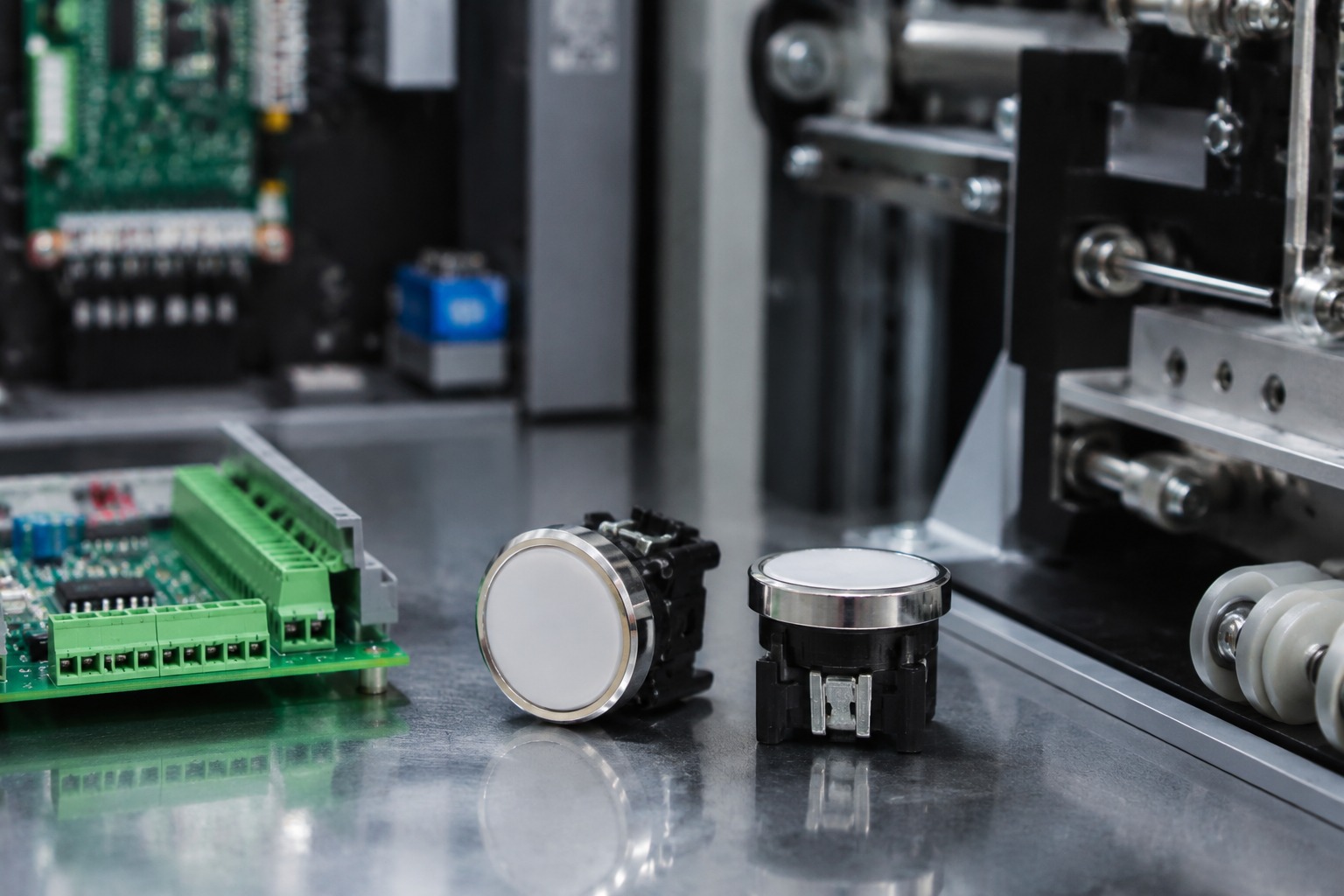
Round push buttons remain one of the most common replacement formats because they fit many legacy elevator designs and provide intuitive operation. However, replacing a round button is not as simple as matching the diameter alone. Technicians should check the outer bezel size, cutout diameter, rear depth, fixing method, contact type, LED or lamp rating, button travel, tactile feel, engraving or symbol style, and cable terminal arrangement. A button that looks nearly identical from the front may differ at the rear and fail to fit the original mounting plate or connector layout.
In many Indian retrofit projects, the practical goal is to retain the original faceplate and avoid costly sheet metal rework. This makes accurate dimension confirmation essential. It is common to see older buildings in Navi Mumbai, Thane, or Faridabad where a single broken button has been replaced several times with “close enough” substitutes, leaving uneven projection, weak illumination, or improvised wiring joints. These shortcuts save time in the moment but often increase maintenance risk later.
Another key point is usage frequency. Buttons for a low-rise apartment with 20 families may not need the same cycle life as a hospital lift in Chennai or a commercial tower near Connaught Place in Delhi. If traffic is heavy, a buyer should prioritize stronger actuator materials, dependable switch action, and stable LED indication over low upfront cost.
| Check item | Why it matters | Typical risk if ignored | Field verification method | Recommended action | Priority |
|---|---|---|---|---|---|
| Front bezel diameter | Determines visible fit on faceplate | Gap or overlap on panel surface | Measure with caliper | Match original sample exactly where possible | High |
| Mounting cutout size | Controls installation compatibility | Loose fit or impossible insertion | Measure panel opening | Confirm before dispatch | High |
| Rear depth | Affects space behind plate | Interference with wiring or structure | Measure clearance behind panel | Review panel cross-section | High |
| Indicator voltage and type | Ensures correct illumination | No light, flicker, or early failure | Check wiring diagram and meter reading | Match LED or lamp specification | High |
| Contact configuration | Needed for signal transmission | Button registers incorrectly | Compare terminal diagram | Confirm NO or NC logic as required | High |
| Symbol, braille, and finish | Affects usability and aesthetics | User confusion or poor appearance | Review original marking | Use clear engraved or embossed labels | Medium |
This checklist highlights that mechanical fit and electrical fit are equally important. Even when replacing only one failed button, it is good practice to compare the original sample from multiple angles and share measurements, photos, and controller details with the supplier.
Outbound call panel selection
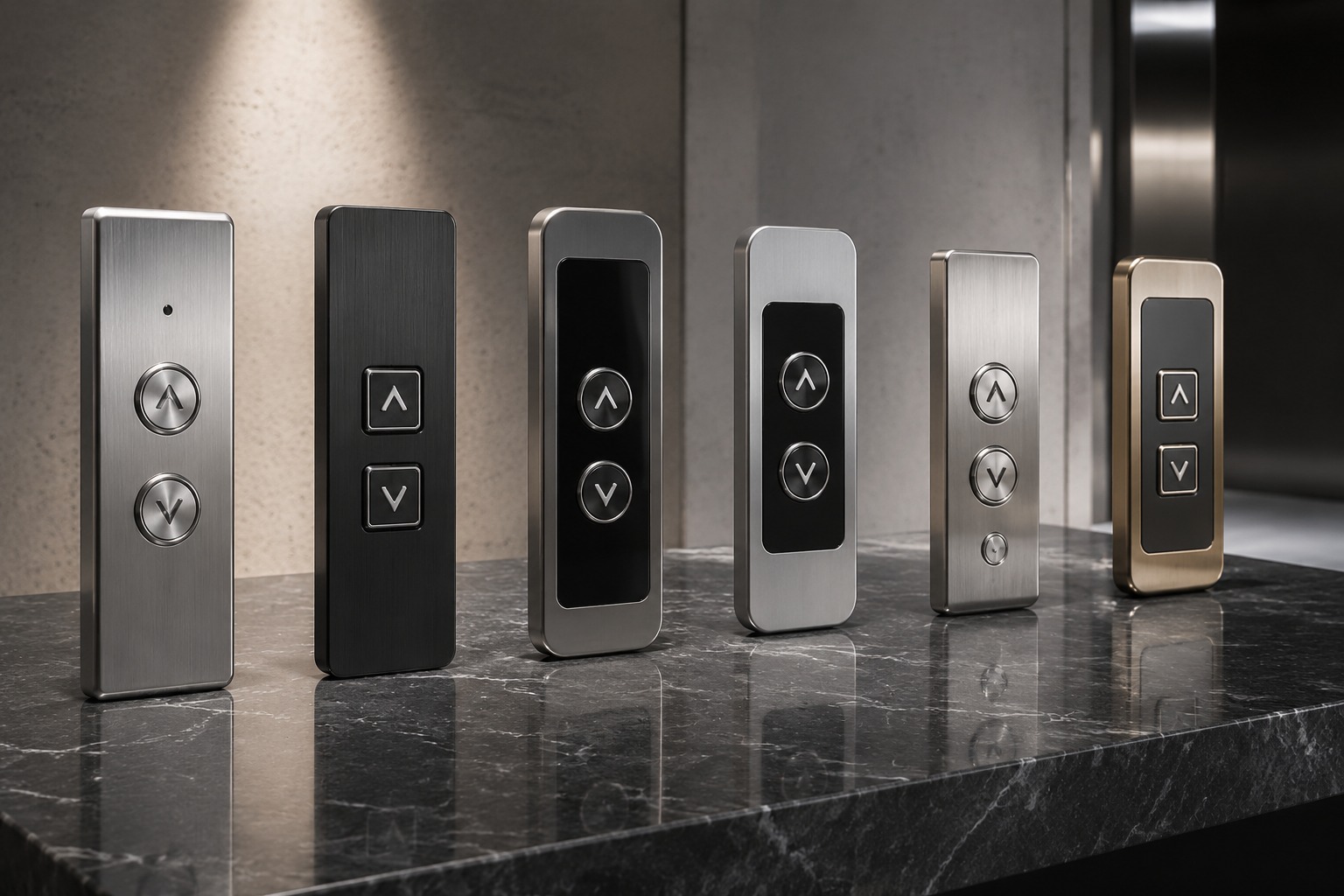
Outbound call panel selection should begin with traffic pattern, controller interface, and landing design. Hall stations typically register up and down calls, display directional arrows or arrival indication, and form the most visible part of the elevator system for waiting passengers. If the hall call panel performs poorly, the whole lift is often perceived as unreliable even if the machine room equipment is working correctly.
For Indian residential towers, builders often prefer simple stainless-steel hall stations with durable buttons and clear indicator lights. In commercial settings, the visual finish becomes more important because the hall panel contributes to the first impression of the building. Developers in Hyderabad’s financial district or Gurugram business parks may choose slim faceplates with integrated digital displays. Yet style should not outweigh serviceability. A panel that looks premium but is difficult to open, wire, or repair may become costly over time.
Selection should also consider environmental conditions. Coastal cities such as Chennai, Visakhapatnam, and Kochi may require better corrosion resistance. Industrial zones near Hazira or Mundra may need stronger dust protection. Schools, metro-adjacent commercial blocks, and public buildings may need tougher anti-vandal construction. In all these cases, panel material, button membrane sealing, edge treatment, and mounting rigidity matter.
| Application | Preferred panel style | Traffic level | Durability need | Appearance priority | Selection advice |
|---|---|---|---|---|---|
| Residential apartment | Simple stainless hall station | Medium | Medium | Medium | Choose easy replacement and stable illumination |
| Commercial office tower | Slim panel with indicators | High | High | High | Focus on signal compatibility and long cycle life |
| Hospital | Large clear accessible panel | High | High | Medium | Prioritize visibility, braille, and fast serviceability |
| Hotel | Decorative premium finish panel | Medium | Medium | Very high | Match finish carefully with lobby interiors |
| Industrial building | Heavy-duty protective panel | Medium | Very high | Low | Specify stronger housing and dust resistance |
| Public institution | Accessible vandal-resistant panel | High | High | Medium | Use tactile marking and robust front plate |
The table makes clear that one hall station design does not fit every property type. Building owners should balance cost, image, and lifecycle maintenance, not simply compare unit prices.
Residential and commercial buildings account for the largest volume in replacement demand, but hospitals and institutions often require stricter functional and accessibility review.
Bottom box and faceplate compatibility
Bottom box and faceplate compatibility is one of the most overlooked parts of elevator button panel replacement. Many failures during installation are not caused by the button itself but by mismatch between the rear box, fixing points, faceplate thickness, screw positions, and internal spacing. In older Indian buildings, previous repairs may have introduced non-original drilling, handmade brackets, or spacer washers. That means the current panel dimensions on site may not perfectly match the original catalogue drawing.
Before ordering, technicians should inspect whether the bottom box is recessed or surface mounted, whether it is vertical or compact, and whether there is enough depth for terminals and wiring bends. Faceplates should be checked for length, width, screw center distance, display window openings, edge radius, and material thickness. A call panel that matches the button but not the box will still create delays and extra site work.
For modernization contractors handling portfolios across India, especially in older residential societies in Pune, Vadodara, or Lucknow, standardizing panel replacement methods can save time. If many buildings use similar cutouts, keeping a documented matrix of panel dimensions, terminal arrangements, and faceplate finishes helps avoid emergency sourcing mistakes.
| Compatibility point | What to inspect | Common field issue | Impact on installation | Practical solution | Importance |
|---|---|---|---|---|---|
| Box depth | Rear clearance for button body and wires | Button body touches wall cavity | Cannot tighten panel correctly | Measure depth before ordering | High |
| Mounting hole spacing | Screw center distance | Faceplate will not align | Extra drilling or forced fitting | Use exact site dimensions | High |
| Faceplate thickness | Material gauge and stiffness | Panel flex or vibration | Poor finish and weak support | Choose adequate stainless thickness | Medium |
| Display window size | Cutout for arrows or indicators | Indicator hidden or misaligned | Reduced usability | Confirm display dimensions | Medium |
| Button center position | Distance from panel edge | Interference with old holes | Unprofessional appearance | Check drawing with sample photo | High |
| Surface finish and grain | Brushed, mirror, or coated finish | Replacement looks mismatched | Aesthetic complaints from owner | Match finish to lobby design | Medium |
The main lesson is that panel replacement should be treated as a system fit issue, not just a component purchase. Even a reliable button becomes problematic if the surrounding hardware does not support proper mounting.
Indicator lighting and wiring checks
Indicator lighting and wiring checks are critical because many apparent button failures are actually power, polarity, or signal issues. A landing call button may press normally but fail to light because the LED voltage is wrong, the common wire is loose, or the board output logic differs from the replacement part. Similarly, a car button may remain permanently lit because of incorrect wiring or incompatible contacts.
During replacement in India, technicians often encounter variations caused by historical modifications. A lift originally installed with one brand may later receive controller repairs, COP rewiring, or localized connector changes. Therefore, do not assume color coding alone is reliable. Use a meter, check the existing wiring diagram if available, and verify the signal condition under operation.
Common lighting systems include low-voltage LED modules, lamp-based illumination in older units, and integrated ring-lit buttons. Some systems activate the light when the call is registered; others use standby backlighting plus confirmation lighting. The supplier should know the required illumination behavior, because the visual logic matters to passengers. In a crowded building lobby, clear button feedback reduces repeated pressing and frustration.
| Symptom | Likely cause | Check method | Possible correction | Site impact | Urgency |
|---|---|---|---|---|---|
| Button does not light at all | Wrong LED voltage or open circuit | Measure output voltage and continuity | Replace with correct rated indicator | Passenger unsure if call registered | High |
| Button lights but no call registers | Contact wiring mismatch | Check NO or NC terminal use | Reconnect to correct contact pair | Lift not responding properly | High |
| Button registers but stays dark | Indicator line disconnected | Trace indicator supply path | Repair wiring or indicator module | Repeated passenger pressing | Medium |
| Indicator flickers | Loose terminal or unstable supply | Inspect connector and voltage stability | Tighten wiring and check driver source | Perceived low quality | Medium |
| Indicator always on | Signal logic error or short circuit | Test output state from controller | Correct wiring or output mapping | Confuses users and staff | High |
| Multiple buttons affected | Common supply or board issue | Inspect shared circuit and terminals | Repair source circuit before replacing more buttons | Unnecessary spare consumption | High |
A good practice after replacement is to operate the button repeatedly and observe both registration and cancellation behavior. If the indicator response differs from adjacent floors or other car buttons, the job should not be closed until the logic is understood.
The trend line suggests that retrofit-friendly illuminated panels are becoming more common in India, driven by modernization projects, better energy efficiency, and user expectations for clearer status indication.
Accessibility and durability factors
Accessibility and durability should be evaluated together because a button that is easy to identify but difficult to press consistently does not serve users well. In India, lift traffic includes elderly residents, children, hospital patients, office visitors, and delivery personnel. Buttons and hall stations should therefore support clear visual contrast, readable numbering, tactile recognition, and dependable actuation force.
Braille and tactile markings are especially important in public facilities, hospitals, educational institutions, and premium residential buildings that want inclusive design. Mounting height also matters. Even where formal requirements vary by building type and local interpretation, thoughtful accessibility improves real user experience and reduces complaints.
Durability is equally essential because button panels are high-touch components. In humid or dusty conditions, cheap materials can discolor, crack, or lose illumination quality. Stainless-steel faceplates remain popular because they offer a balance of appearance and resilience. For busy sites in cities like Bengaluru, Mumbai, and Chennai, long cycle life and stable switch feedback are better lifecycle investments than low-price parts that require frequent replacement.
From a 2026 trend perspective, buyers should also expect stronger attention to sustainability and energy efficiency. LED-based indicators, longer-lasting button assemblies, optimized packaging, and easier replacement of individual components rather than full panel scrap will matter more. Policies tied to building quality, public accessibility, and lifecycle maintenance standards are likely to push the market toward better documentation and traceability.
| Factor | User benefit | Durability impact | Best fit application | Buyer question | Recommended level |
|---|---|---|---|---|---|
| Braille marking | Supports visually impaired users | Minimal if engraved well | Hospitals, public buildings, premium residential | Is braille clear and permanent? | High |
| High-contrast symbols | Faster recognition | Improves long-term readability | All building types | Will markings remain visible after years of use? | High |
| Actuation force balance | Comfortable button press | Reduces misuse and impact damage | Residential, hospital, office | Is the push feel too stiff or too loose? | High |
| Stainless-steel faceplate | Clean and professional appearance | Resists wear and corrosion better | Commercial, hotel, coastal areas | What grade and finish is used? | High |
| Sealed indicator structure | Stable light quality | Improves dust and moisture resistance | Industrial, coastal, public sites | How is the light module protected? | Medium to high |
| Anti-vandal construction | Maintains function under rough use | Extends service life in public areas | Transit, institutions, public housing | Can bezel and plate resist impact? | As required |
The table demonstrates that accessibility features are not just regulatory boxes to tick; they contribute directly to smoother use. Likewise, durability is not only a materials question but a lifecycle operating strategy.
Testing after installation
Testing after installation is the final step that separates a completed replacement from a reliable one. Once the button or panel is installed, technicians should carry out functional, electrical, and user-facing checks. A quick press test is not enough. The button should be tested in normal operation, during repeated calls, and where relevant, during peak passenger flow.
A proper post-installation process may include verifying mechanical alignment, checking indicator lighting, confirming call registration at the controller, observing cancellation after car arrival, inspecting any buzzing or loose movement, and ensuring the panel sits flush without sharp edges. If a faceplate was changed, visual alignment with adjacent finishes should also be checked. For projects in premium hotels, office lobbies, and upscale residential towers, appearance matters nearly as much as function.
For maintenance teams managing multiple sites in India, documenting the model, dimensions, wiring arrangement, and installation date helps future service work. This documentation is especially useful where a building has several lifts of similar but not identical vintage. It prevents confusion when repeat orders are needed months later.
Our company approach supports this stage in a practical way. On the technological side, we emphasize careful model matching, part identification support, and compatibility review for elevator control-related accessories and lift panel components. On the manufacturing side, attention to stable quality inspection and protective packaging helps reduce transit damage and installation surprises, which is important when shipping parts to cities inland from major trade routes such as Mumbai, Chennai, or Kolkata. On the service side, responsive communication helps maintenance teams compare old samples, drawings, and photos before dispatch, reducing avoidable downtime.
These capabilities matter because elevator replacements are often urgent. A broken hall button in a busy apartment tower in Noida or a car button failure in a hospital in Pune can trigger immediate passenger complaints. Suppliers that understand urgency, compatibility, and packaging discipline can make a measurable difference to maintenance efficiency.
This comparison shows what buyers usually value most in a replacement parts supplier: correct match first, then dependable quality and communication. Lowest unit price alone rarely solves a lift downtime problem.
FAQ about elevator buttons
1. Can I replace only the round push button and keep the old panel?
Yes, if the cutout, rear depth, fixing method, contact type, and indicator rating all match. Many Indian buildings prefer this method because it lowers retrofit cost and preserves the original faceplate.
2. How do I know whether a hall call panel is compatible with my lift?
Check the panel dimensions, button arrangement, signal logic, display requirements, and wiring terminals. Sharing clear photos, measurements, and any controller details with the supplier is the safest approach.
3. Why does the replacement button light up but not register the floor?
This usually indicates a contact or wiring mismatch. The illumination circuit may be correct while the call signal terminals are not connected to the proper pair.
4. Why is indicator brightness important?
In high-traffic buildings, passengers rely on immediate feedback. Dim or inconsistent lighting causes repeated pressing, confusion, and a perception that the elevator is slow or faulty.
5. Are stainless-steel faceplates always the best option?
They are popular because they balance durability and appearance, especially in residential and commercial projects. However, the best choice depends on the environment, design, and maintenance budget.
6. What should be documented after installation?
Record the button model, panel dimensions, wiring arrangement, installation date, and test result. This helps future maintenance and repeat ordering.
7. How should buyers in India plan spare stock?
Sites with high traffic, remote service access, or mixed elevator fleets should keep critical button and hall station spares. This is particularly useful for large apartment societies, hospitals, and business parks.
8. What future trends should buyers watch through 2026?
Expect more retrofit-friendly designs, wider LED adoption, stronger accessibility focus, greater interest in corrosion resistance for coastal regions, and more attention to sustainable packaging and longer component life.
9. Is it worth upgrading the whole outbound call panel during modernization?
Often yes, especially when the old faceplate is damaged, indicator visibility is poor, or the lobby appearance needs improvement. A full panel upgrade can also simplify future maintenance if standardized across the property.
10. How can a supplier add value beyond selling a button?
The best suppliers help with identification, compatibility review, quality control, packaging, and fast communication. This reduces ordering errors and site downtime.
In summary, elevator button panels shape how users experience the lift every day. In India’s diverse building landscape, from dense urban towers to industrial facilities and institutional campuses, the right replacement strategy combines technical accuracy, durable materials, accessibility thinking, and responsive supply support. Whether the requirement is a single round push button, a replacement hall station, or a broader modernization package, careful checking of fit, function, lighting, and installation conditions is the best way to protect both reliability and building image.
Buyers who approach the task methodically usually gain three advantages: fewer return visits, better user satisfaction, and lower long-term maintenance cost. That is why a properly selected button panel is not a small detail; it is a practical investment in elevator uptime.