
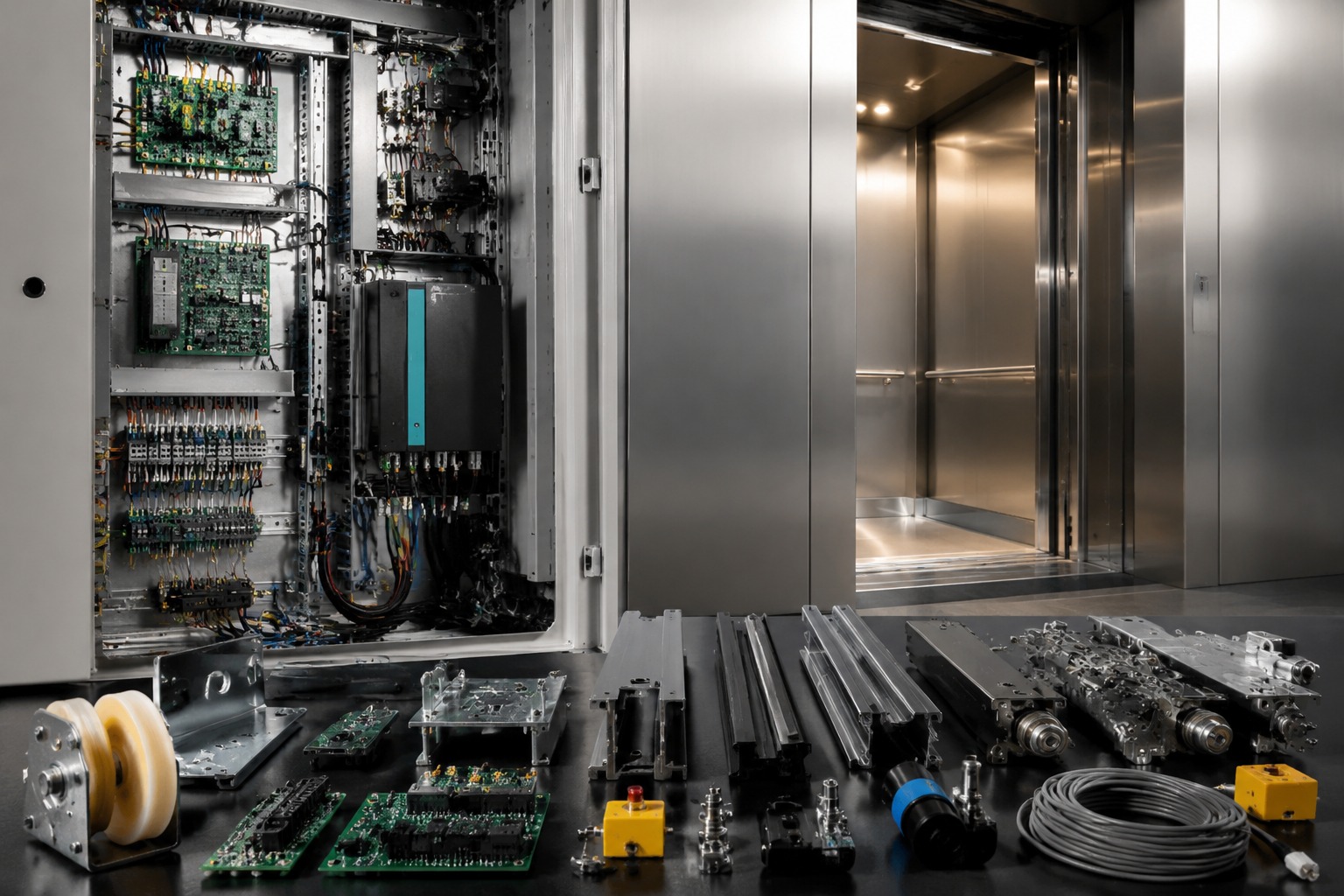
For building owners in India, buying elevator spare parts is not simply a purchasing task. It is a safety decision, an uptime decision, and a long-term cost decision. Whether you manage a residential tower in Mumbai, a hospital in Chennai, an office block in Bengaluru, a hotel in Delhi NCR, or an industrial site near Pune, the wrong lift accessory can lead to repeat failures, resident complaints, emergency callouts, and long shutdowns. The most reliable way to buy elevator parts is to begin with the exact elevator brand and model, focus first on high-failure items, verify part numbers and dimensions carefully, ask for testing and packing proof, and maintain emergency stock for critical systems.
India’s elevator service environment is diverse. Many buildings operate mixed fleets with old and new units from global and regional brands. It is common to find Hitachi, Toshiba, KONE, Mitsubishi, Fuji-based systems, and other installed equipment across commercial, residential, healthcare, retail, and transit projects. This creates a practical procurement challenge: the same component category, such as a door lock or sensor, may look similar but differ in connector layout, voltage, firmware version, mounting size, or signal protocol. A careful spare parts procurement checklist helps prevent those errors.
This guide is written for maintenance companies, distributors, facility teams, building owners, and modernization contractors in India who want dependable sourcing, fewer installation mismatches, and lower downtime. It covers market realities, common product categories, buying advice, industry applications, a practical case approach, supplier comparison methods, and a preventive replacement plan. It also explains what to expect from a professional elevator parts supplier in terms of technical support, manufacturing control, and responsive service.
Begin with the Exact Elevator Brand and Model
The first step in elevator spare parts procurement is simple but essential: identify the exact lift brand, model, controller family, and system configuration. Many buying mistakes happen because the request is too general, such as “need a door lock for KONE lift” or “need a Mitsubishi board.” In real projects across Ahmedabad, Hyderabad, Kolkata, and Kochi, one brand can have multiple controller generations, door operator setups, and regional modifications. A part that fits one installation may not match another.
Before sending an inquiry to a supplier, collect the following information from the site:
| Required Detail | Why It Matters | Example | Risk If Missing | Who Should Confirm | Priority |
|---|---|---|---|---|---|
| Brand name | Identifies original system family | Hitachi, Toshiba, KONE, Mitsubishi | Wrong compatible selection | Maintenance technician | Very high |
| Model or series | Narrows the correct spare range | Controller or door operator series | Similar-looking but incompatible part | Site engineer | Very high |
| Part number | Fastest route to accurate matching | Board code, lock code, encoder code | Trial-and-error ordering | Procurement and technician | Very high |
| Voltage and rating | Critical for coils, contactors, power supplies | DC48V, 18A, 400V | Electrical mismatch or failure | Technician | High |
| Photos of old part | Helps confirm connector, mounting, shape | Front, back, side, label | Incorrect physical fit | Site team | High |
| Installation location | Clarifies application inside the lift system | COP, car top, machine room, landing door | Wrong usage assumption | Service contractor | High |
| Fault symptom | Prevents ordering the wrong root-cause part | Door reopens, car not leveling, no display | Unnecessary replacement | Technician | Medium |
The table above shows why part identification should never rely on appearance alone. If a supplier asks for photos of the nameplate, connector side, dimensions, and mounting holes, that is usually a good sign. It means they are trying to reduce mismatch risk rather than simply quote quickly.
In India, mixed fleets are common in older apartment complexes and commercial campuses, especially where one building block was added years after the original phase. Procurement teams should maintain a digital asset register with model details for every elevator. This makes repeat buying easier and shortens response time during emergencies.
Focus First on Parts with the Highest Failure Rates
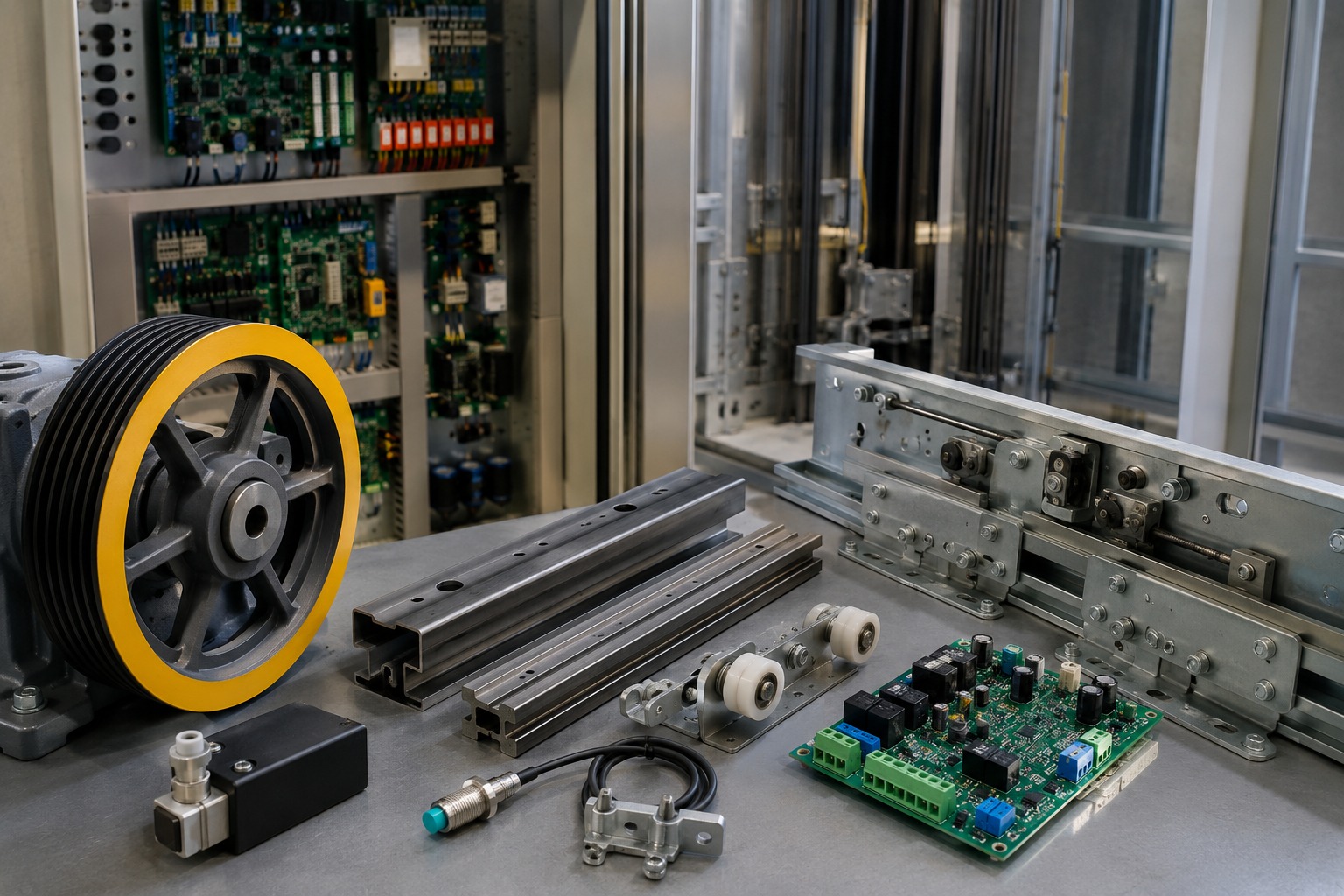
Not all spare parts deserve the same purchasing priority. Some items have much higher wear, environmental exposure, or electrical stress. If you are trying to cut downtime and build practical inventory, start with the parts most likely to fail or cause service interruptions. For most lift systems in India, these include door operator components, door locks, sensors, encoders, power supplies, contactors, buttons, light curtains, and guide shoe consumables.
High-failure-rate parts deserve closer attention because they affect system availability directly. A failed door lock can stop the car. A faulty sensor can create repeated nuisance faults. A weakened capacitor or contactor can cause unstable operation. A damaged guide shoe liner can affect ride quality and increase wear.
| Part Category | Typical Failure Cause | Operational Impact | Recommended Stock Level | Urgency | Best Buying Method |
|---|---|---|---|---|---|
| Door locks | Mechanical wear, dust, alignment issues | Lift cannot run safely | 2 to 4 per critical site | Very high | Keep emergency stock |
| Door operator components | Frequent movement, belt or roller wear | Door faults and shutdowns | Core repair kit on hand | Very high | Bundle by assembly |
| Contactors | Electrical arcing, coil fatigue | Intermittent running issues | 2 to 6 by voltage rating | High | Standardize by model |
| Sensors and switches | Dust, moisture, cable damage | False faults and door problems | Small quantity across sites | High | Buy tested units |
| Power supplies | Heat, unstable mains, aging capacitors | Controller and display failure | 1 to 2 per major site | High | Verify load rating |
| Encoders | Signal loss, contamination, age | Leveling and speed feedback issues | Limited stock for key models | High | Strict model matching |
| Buttons and COP parts | Heavy daily use, vandalism | User complaints, call registration failure | Moderate stock | Medium | Match finish and size |
| Guide shoe liners and oil cups | Routine wear | Noise, vibration, poor ride comfort | Planned maintenance stock | Medium | Buy in batches |
For example, if your team routinely replaces guide shoe consumables, it makes sense to source standard wear parts in advance. A practical option for maintenance inventory is a 130mm guide shoe lining rubber for lift systems, especially where regular preventive servicing is already scheduled.
Similarly, electrical wear items should be selected by rating and verified against the original application. If you are replacing a coil-operated switching component, a model such as a DC48V 18A elevator contactor may be suitable only when the voltage, current, and mounting arrangement match the existing system.
Across Indian metro cities, heavy passenger use in residential towers and commercial buildings makes door-related parts the most common emergency spend category. In humid coastal locations such as Mumbai, Chennai, Visakhapatnam, and Kochi, corrosion and moisture resistance should also be considered during buying decisions.
Verify Part Numbers, Photos, and Dimensions Carefully
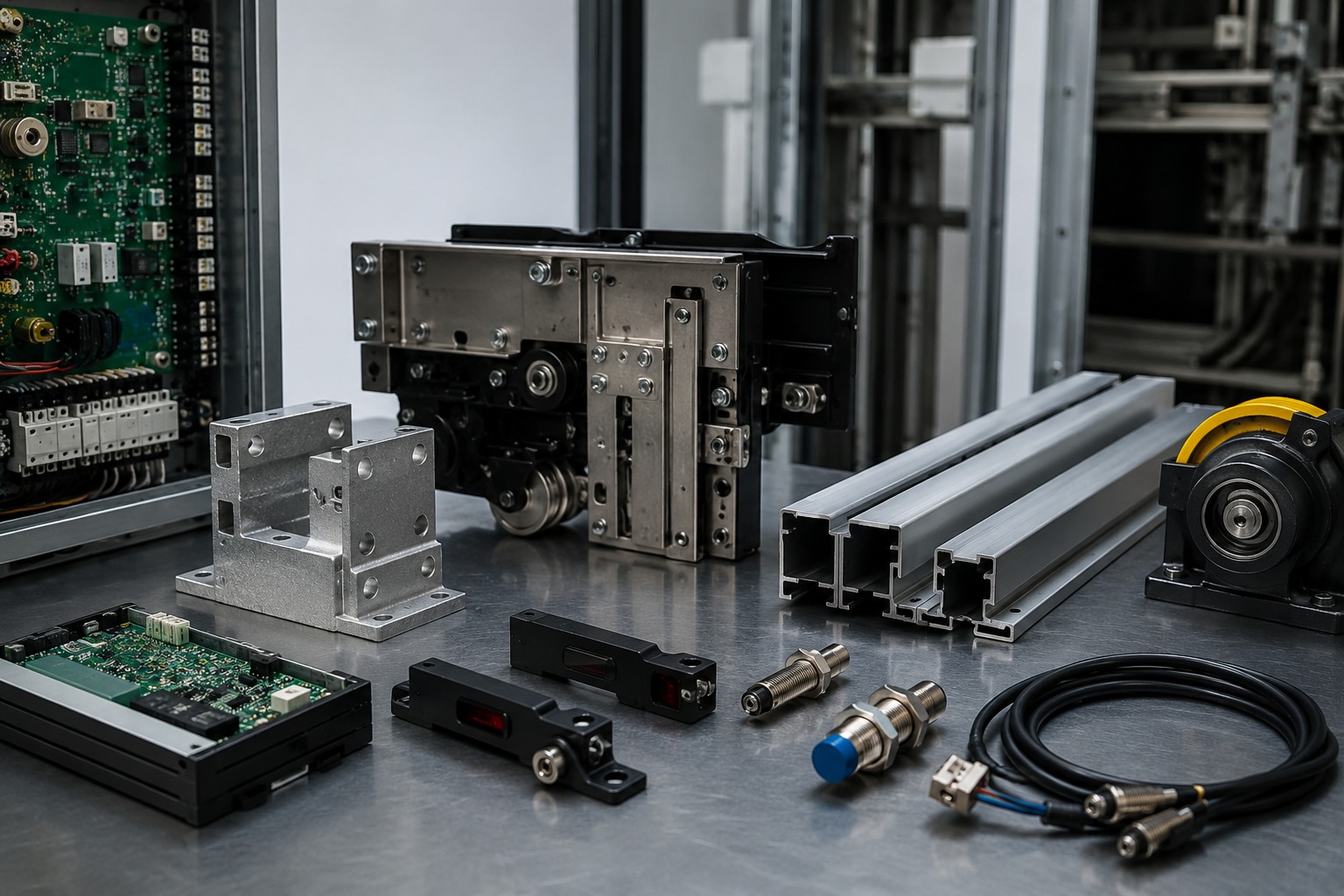
The difference between a successful replacement and a costly return often comes down to verification discipline. Part numbers are the first checkpoint, but not the only one. Suppliers should be asked to confirm label details, connector style, pin count, dimensions, mounting center distance, cable length, and interface photos before dispatch.
This is especially important for boards, encoders, door locks, sensors, and car operating panel components. In some lift systems, a minor difference in firmware label, plug arrangement, or bracket position can make installation impossible or unsafe.
| Verification Item | What to Request | Why It Prevents Errors | Useful Format | Who Reviews | Go/No-Go Rule |
|---|---|---|---|---|---|
| Part number label | Clear close-up photo | Confirms exact coded item | JPEG or PDF | Technician | No dispatch without review |
| Overall dimensions | Length, width, height in mm | Prevents fit issues | Dimension sheet | Site engineer | Must match tolerance |
| Mounting holes | Center distance and hole diameter | Ensures direct installation | Annotated photo | Installer | Must match exactly |
| Connector and pins | Front and rear views | Avoids electrical mismatch | Multi-angle photos | Electrical technician | Pin layout must match |
| Voltage/current rating | Nameplate or test report | Protects system safety | Label + report | Maintenance lead | No substitution without approval |
| Material and finish | Plastic, metal, coating details | Checks durability and appearance | Specification sheet | Procurement | Needed for visible parts |
| Functional test proof | Bench test video or report | Reduces dead-on-arrival risk | Video or QC sheet | Buyer | Recommended for electronics |
For weighing devices, boards, and electrical accessories, technical matching is more important than general product family names. If your system requires a weighing solution, a supplier may recommend checking a lift weighing device board only after verifying the exact system interface and original application details.
Capacitors are another example where visual similarity can be misleading. Rating, size, terminal arrangement, and operating environment all matter. When ordering replacement electrical components, confirm not just voltage but also capacitance, body size, mounting, and application, such as with a 400V or 450V capacitor element for elevator use.
In procurement practice, it helps to create a “three-proof approval” rule before payment release: photo proof, dimension proof, and label proof. This can significantly reduce repeat shipments, especially when parts move through trade routes connecting Delhi NCR, Mumbai, Chennai Port, Nhava Sheva, Mundra, and Bengaluru logistics hubs.
Ask About Testing Standards and Packing Protection
Reliable sourcing is not only about choosing the right part. It is also about receiving it in working condition. Elevator spare parts often include fragile electronics, coated sensors, machined metal items, and precision components. If testing and packaging are weak, failures can happen before installation.
Buyers in India should ask suppliers clear questions: Was the part function-tested? Was it inspected visually? Was it packed against vibration, compression, moisture, and static? Was the label protected and readable? Are there internal foam supports, anti-static bags, sealed cartons, or reinforced export boxes?
Professional suppliers usually provide stronger control in three areas:
Technological capabilities: reliable sourcing begins with technical matching, not just stock listing. A capable supplier reviews old part photos, confirms model references, checks connector and dimension details, and screens for compatibility risks before shipping. For control boards, inverter-related items, sensors, encoders, power supplies, and intercom parts, this technical review helps reduce on-site rejection.
Manufacturing capabilities: for standardized accessories and mechanical parts, the supplier should apply stable incoming inspection, size checking, surface review, and practical packing methods suited to elevator products. Protective wrapping, compartmentalized boxes, anti-rust measures where needed, and shock-resistant packing are important for movement across long domestic and international routes.
Service capabilities: responsive communication matters when a lift is down. Buyers should look for fast photo confirmation, quick quotation revision, dispatch coordination, and post-sale follow-up when there is uncertainty on fitment or testing records. In emergency procurement, the supplier’s response discipline can matter as much as unit price.
| Checkpoint | What to Ask the Supplier | Good Answer Looks Like | Warning Sign | Applies Most To | Priority |
|---|---|---|---|---|---|
| Functional testing | Was the item bench tested? | QC record, video, or pass note | No proof available | Boards, sensors, power supplies | Very high |
| Visual inspection | Was the item checked for damage? | Clean photos before packing | Generic catalog photo only | All parts | High |
| Anti-static protection | How are electronics packed? | ESD bag plus cushioning | Loose in carton | Boards, encoders | Very high |
| Moisture protection | Any sealed layer for humid routes? | Plastic seal or desiccant | Open paper wrap | Coastal deliveries | High |
| Shock protection | How is the product stabilized? | Foam support, partition, strong box | Free movement inside box | Fragile and heavy parts | High |
| Label protection | Will labels remain readable? | Covered but visible identification | Scratched or hidden labels | All parts | Medium |
| Dispatch photos | Can you share packed item images? | Actual item and carton photos | Not possible | Urgent orders | Medium |
The explanation behind this table is straightforward: in elevator maintenance, dead-on-arrival parts waste more than money. They consume technician time, prolong shutdowns, and increase resident frustration. This is why smart building owners now evaluate packing standards as part of supplier qualification.
Maintain Emergency Stock for Critical Lift Functions
If your building depends heavily on elevators, emergency stock is not optional. It is a practical risk-management tool. This is especially true for hospitals, high-rise residences, hotels, IT parks, malls, metro-connected properties, and elderly-care buildings. In these environments, even a short shutdown affects safety, operations, and reputation.
Emergency stock should focus on components that are both failure-prone and operationally critical. The exact list depends on your installed brands and traffic level, but most sites should consider stocking selected door locks, door rollers or operator parts, contactors, power supplies, standard buttons, sensors, light curtains, and a small set of consumables.
| Building Type | Critical Spare Parts to Hold | Suggested Stock Logic | Review Cycle | Main Risk If Not Stocked | Notes |
|---|---|---|---|---|---|
| Residential high-rise | Door lock, buttons, light curtain, guide shoe consumables | Based on number of cars | Quarterly | Resident complaints and long wait | Important in towers with 2 to 4 lifts |
| Hospital | Door operator kit, sensors, power supply, intercom parts | Keep on site for essential lifts | Monthly | Service disruption for patients | Prioritize stretcher lifts |
| Commercial office | Contactors, display parts, encoder, hall buttons | Stock by traffic and age | Quarterly | Tenant dissatisfaction | Peak-hour uptime is key |
| Hotel | COP buttons, display modules, door parts | Protect guest-facing appearance | Quarterly | Brand image damage | Visible finish matching matters |
| Retail mall | Door sensors, locks, buttons, power modules | Keep fast-moving items ready | Monthly | High footfall disruption | Weekend outages are costly |
| Industrial site | Contactors, switches, sensors, power supplies | Stock by environment severity | Quarterly | Operational downtime | Dust and heat resistance matter |
| Mixed-use complex | Common wear kit across brands where possible | Centralized store by model list | Bi-monthly | Slow emergency response | Useful for multi-tower projects |
This table shows that emergency stock should match building function, not just maintenance habit. A hospital in Hyderabad and a luxury apartment tower in Gurugram may own similar passenger lifts, but their downtime tolerance is very different. Stock planning should reflect that reality.
For larger property portfolios in India, a central stock point in a major logistics city such as Mumbai, Delhi NCR, Chennai, or Bengaluru can support multiple buildings. Items with predictable wear can be stored centrally, while site-critical components remain inside the building or with the resident maintenance contractor.
Compare Supplier Speed, Communication, and Delivery Reliability
Price matters, but in elevator spare parts procurement, supplier performance matters more. The lowest quote can become the highest real cost if it leads to mismatch, poor packing, or delayed dispatch. A dependable supplier should be measured across response time, technical clarity, stock visibility, packaging quality, delivery performance, and willingness to support verification.
For Indian buyers, delivery reliability can vary depending on route, customs handling for imported items, interstate logistics, and holiday periods. Buildings in Mumbai and Delhi may receive urgent material quickly, while remote sites in tier-2 or tier-3 cities may need stronger planning buffers. Always compare not only stated lead time, but also actual dispatch behavior and tracking transparency.
| Supplier Metric | Excellent | Acceptable | Weak | Why It Matters | How to Measure |
|---|---|---|---|---|---|
| Inquiry response | Within 2 hours | Same working day | More than 24 hours | Emergency fault handling | Email or message logs |
| Technical confirmation | Checks photos and labels thoroughly | Basic model review | No verification questions | Prevents mismatch | Quotation process |
| Lead time accuracy | Matches dispatch promise consistently | Minor variance | Frequent delay | Improves planning | Past order record |
| Packing quality | Protected, labeled, documented | Adequate standard packing | Damage risk visible | Reduces transit failure | Receiving inspection |
| After-sales support | Fast feedback after receipt | Available during working hours | Unresponsive after payment | Helps solve fitment issues | Post-delivery cases |
| Brand coverage | Supports multiple lift brands | Strong in limited range | Very narrow scope | Useful for mixed fleets | Product portfolio review |
| Documentation quality | Clear invoice, labels, photos, test proof | Standard commercial papers | Missing or unclear details | Audit and maintenance records | Order file review |
To make supplier comparison more objective, use a weighted scorecard. For critical lift systems, technical confirmation and delivery reliability should carry more weight than small price differences. This is especially true for control boards, inverter-related parts, door operators, and safety-linked components.
The line chart above illustrates a realistic demand growth pattern in India as urbanization, modernization projects, and aging installed equipment expand the replacement market. Growth is supported by residential towers, office retrofits, healthcare infrastructure, and stricter uptime expectations.
The bar chart highlights that hospitals and residential high-rises often produce the strongest recurring spare parts demand. Hospitals need high reliability, while residential buildings experience heavy daily door cycles and continuous user exposure.
Create a Preventive Replacement Schedule
The best procurement strategy is not purely reactive. It combines emergency readiness with preventive replacement planning. When site teams wait for failure before buying every part, downtime becomes unpredictable and emergency costs rise. Preventive replacement is especially useful for wear items, electrical aging components, and accessories with known life cycles.
A practical schedule should classify parts into monthly review, quarterly review, annual review, and condition-based replacement. Maintenance logs, fault history, traffic intensity, environmental conditions, and age of equipment should all feed into the plan.
| Part Type | Recommended Review Frequency | Typical Trigger | Procurement Strategy | Documentation Needed | Expected Benefit |
|---|---|---|---|---|---|
| Guide shoe liners and oil cups | Monthly to quarterly | Wear, noise, vibration | Batch purchase | Inspection log | Smoother ride, less rail wear |
| Door rollers, belts, small hardware | Quarterly | Door noise or slow action | Keep repair kits | Door service checklist | Fewer shutdowns |
| Contactors and relays | Quarterly to annual | Arc marks, intermittent faults | Stock by rating | Electrical maintenance log | Stable operation |
| Power supplies and capacitors | Annual or condition-based | Heat aging, unstable output | Pre-approved replacement list | Voltage test record | Reduced surprise failures |
| Buttons and display parts | Quarterly | High user wear or cosmetic damage | Hold visible spares | Complaint log | Better user experience |
| Sensors and light curtains | Quarterly | False triggering, contamination | Selective stock | Fault history | Improved door reliability |
| Encoders and control boards | Condition-based | Signal or controller faults | Verify and source carefully | Error code records | Lower mismatch risk |
The explanation for this table is that not every part should be bought the same way. Consumables work well with batch planning. Electronics need deeper verification and often lower on-site stock, unless the building function is highly critical. A preventive schedule also helps finance teams budget better across the year rather than absorbing sudden emergency costs.
The area chart shows a realistic industry trend: more buyers are moving from last-minute part orders toward planned procurement. This shift is driven by tougher service-level expectations, digital maintenance logs, and rising awareness that downtime costs more than inventory discipline.
FAQ on Elevator Spare Parts Procurement
How do I know whether a spare part is compatible with my lift?
Start with the elevator brand, model, controller details, part number, and site photos. Then confirm dimensions, connector layout, voltage, and mounting. Compatibility should never be assumed from appearance alone.
Which spare parts should Indian building owners prioritize first?
Prioritize parts that stop operation or fail often: door locks, door operator components, sensors, contactors, power supplies, buttons, light curtains, and selected guide shoe consumables.
Should I buy original, equivalent, or compatible parts?
The right choice depends on the application, safety relevance, lead time, and budget. For many replacement needs, carefully matched compatible parts can work well if the supplier verifies model details, testing, and fitment. For critical systems, higher verification standards are essential.
What documents should I ask from the supplier?
Ask for actual product photos, label photos, dimensions, technical specifications, test proof where applicable, and dispatch packing photos for critical orders. For repeat buys, maintain a product approval file.
How much emergency stock should a building keep?
That depends on traffic, number of lifts, age of equipment, and downtime tolerance. A hospital or premium residential tower should keep more critical spares on hand than a low-use building. Review stock every quarter at minimum.
How can I reduce wrong orders?
Use a standard inquiry form requiring brand, model, part number, fault description, photos, dimensions, and installation location. Internally, require technician approval before placing the order.
What are the most common buying mistakes?
The most common mistakes are ordering by appearance only, ignoring voltage ratings, failing to confirm dimensions, choosing the cheapest quote without technical review, and not considering packing quality for electronics.
Can one supplier support multiple elevator brands?
Yes, and this is often useful for Indian building portfolios with mixed fleets. A supplier with experience across Hitachi, Toshiba, KONE, Mitsubishi, and other systems can simplify sourcing and shorten comparison time.
How do local logistics affect procurement in India?
Port access, interstate delivery speed, customs handling for imported items, and final-mile transport all influence lead time. Buyers near Mumbai, Chennai, Mundra-linked corridors, Delhi NCR, and Bengaluru may have faster options, but remote sites should plan longer buffers.
What should I expect from a professional elevator parts supplier?
You should expect careful model matching, stable quality inspection, protective packaging, responsive communication, and practical support before and after delivery. These service habits reduce downtime and procurement waste.
India Market, Product Types, and Applications
India’s elevator spare parts market is shaped by three overlapping forces: urban expansion, modernization of aging systems, and rising expectations for safe, uninterrupted operation. In large cities such as Mumbai, Delhi, Bengaluru, Chennai, Hyderabad, Pune, Ahmedabad, and Kolkata, older installations are increasingly being upgraded rather than fully replaced. This creates sustained demand for control boards, inverter and frequency converter parts, door accessories, guide shoes, sensors, buttons, power supplies, and intercom components.
Product demand varies by application. Residential towers often consume buttons, door-related parts, guide shoe items, and light curtains. Commercial offices tend to demand electrical control accessories, display components, and door system parts because uptime affects tenant operations. Hospitals require high assurance on door performance, communication parts, and stable electronics. Hotels focus on both function and visible finish, especially for COP panels and buttons.
Local environmental factors also matter. Coastal humidity can shorten life for exposed electrical items and metal parts without proper protection. Dust-heavy industrial areas can affect sensors and contact points. Voltage instability in some locations can increase stress on power modules, contactors, and capacitor elements. This is why a one-size-fits-all buying approach does not work well across India.
This comparison chart demonstrates why supplier capability should be evaluated beyond price. Strong technical matching, reliable packing, and faster response create measurable value, especially when a building cannot tolerate long elevator shutdowns.
Case Approach for Building Owners and Maintenance Teams
Consider a practical scenario in India. A residential complex in Pune with four passenger lifts experiences repeated door faults in one tower. The maintenance contractor initially changes a sensor and adjusts the door but the fault returns. Instead of continuing with reactive callouts, the procurement and service teams review fault logs, identify wear on the lock and operator components, verify the exact model, and create a small emergency stock for that door system. They also batch-order guide shoe consumables for the next preventive cycle. The result is not just one successful repair, but fewer emergency visits over the next six months.
Now take a hospital in Chennai. A stretcher lift shows intermittent electrical faults linked to switching components and power instability. Rather than waiting for a total breakdown, the facility team creates an approved replacement list that includes matched contactors, selected power-related accessories, and communication parts. Dispatch proof and protective packing are required for every electrical item because downtime risk is high. The hospital reduces service interruption and gains better control over maintenance budgets.
These examples show that the best elevator spare parts procurement method is not the cheapest one. It is the one that combines correct identification, supplier discipline, emergency readiness, and preventive planning.
Choosing Local and Overseas Supply Options
Indian buyers often use a mix of local distributors, maintenance-company channels, and specialized parts suppliers. Local availability is useful for standard fast-moving accessories, but technical breadth may be limited for mixed-brand or older installations. Overseas-linked sourcing may offer broader model coverage, especially for control boards, specific door operator parts, and less common accessories, but it requires stronger verification and delivery planning.
The most effective approach is usually hybrid. Keep local access for common emergency needs, while building a reliable relationship with a specialized supplier for model-matched replacement parts, modernization support, and mixed-brand sourcing. For portfolio owners, this creates both speed and depth.
Our Role in Reliable Lift Parts Supply
For customers in India, our role is practical: help reduce downtime through careful model matching, stable quality control, protective packing, and responsive support. We supply a wide range of elevator parts including control boards, inverter and frequency converter parts, door operator components, door locks, light curtains, guide shoes, oil cups, sensors, encoders, power supplies, buttons, COP panels, intercom parts, and other lift accessories across multiple brands.
From a technical standpoint, we focus on checking model details, comparing old-part photos, reviewing labels, and confirming dimensions where needed before shipment. From a manufacturing and quality standpoint, we emphasize stable inspection and suitable packing for sensitive or fragile parts. From a service standpoint, we aim to support maintenance companies, distributors, building owners, and modernization contractors with responsive communication and practical sourcing assistance.
2026 Trends: Technology, Policy, and Sustainability
Looking ahead to 2026, elevator spare parts procurement in India will be influenced by three major trends.
Technology: digital maintenance records, remote fault alerts, and data-based replacement planning will make procurement more predictive. Buyers will increasingly use fault histories to decide which parts to stock and when to replace them.
Policy and compliance: as safety expectations rise, documentation quality and traceability will become more important. Buyers will favor suppliers who can provide clearer identification, testing evidence, and more consistent product records.
Sustainability: preventive replacement, longer-lasting compatible parts, reduced repeat shipments, and stronger packaging efficiency all support lower waste. Modernization projects will also increase demand for parts that extend the useful life of installed elevator systems instead of forcing early full replacement.
For Indian building owners, these trends point in one direction: procurement must become more structured, more technical, and more proactive. The buildings that manage spare parts strategically will reduce downtime, improve passenger experience, and control maintenance cost more effectively.
In summary, reliable lift accessories are bought through process, not guesswork. Start with the exact elevator brand and model. Prioritize high-failure-rate parts. Verify part numbers, photos, and dimensions. Ask for testing and packing standards. Keep emergency stock for critical systems. Compare supplier response and delivery performance. Then build a preventive replacement schedule that fits your building type and traffic level. That is the most practical route to safer operation and lower downtime in India.