
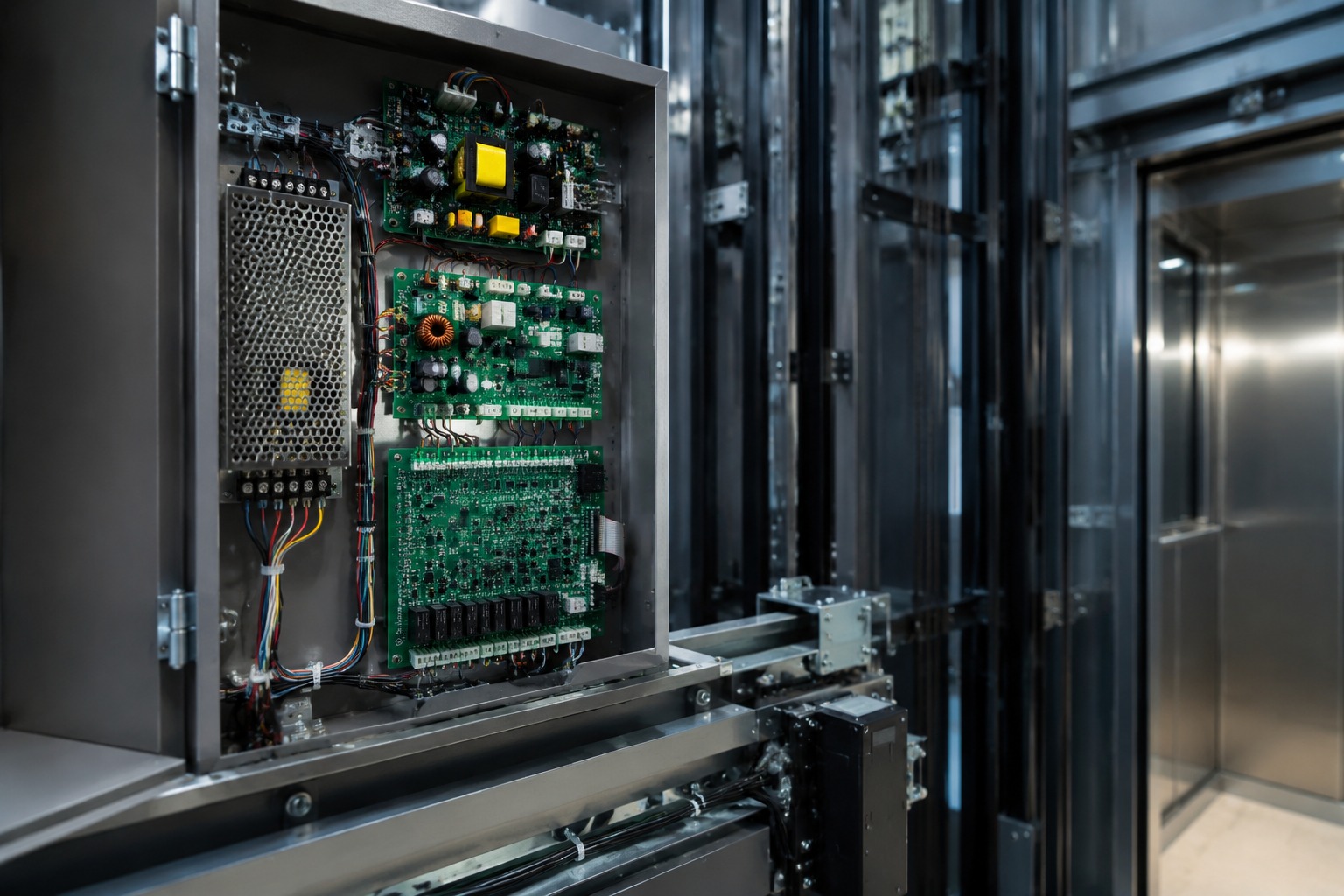
In Indian elevators, a switching power supply board is one of the most practical parts for keeping control circuits stable, responsive, and protected from uneven input conditions. It converts incoming electrical power into the DC voltages required by elevator controllers, door systems, relays, communication modules, display units, sensors, and other electronic assemblies. When the board is correctly matched, tested, packed, installed, and stocked, maintenance teams can reduce repeat faults, shorten lift shutdown time, and improve system reliability in residential towers, hospitals, malls, offices, hotels, metros, and industrial sites.
For buyers and service engineers in India, the key is not only finding a replacement board quickly, but also confirming compatibility with the lift model, verifying voltage output under load, checking connector layout, and ensuring safe transport from supplier to site. This is especially important in fast-moving maintenance markets such as Mumbai, Pune, Ahmedabad, Delhi NCR, Bengaluru, Hyderabad, Chennai, Kolkata, and Kochi, where downtime directly affects residents, tenants, and facility operations. Whether the requirement is for a standard replacement, an AVR HGE MCA board, or a 24V and 51V power board, correct sourcing decisions can prevent nuisance trips and control instability.
We support elevator maintenance companies, spare part distributors, building owners, and modernization contractors by focusing on accurate model matching, dependable sourcing channels, stable incoming inspection, and protective shipping methods suitable for India’s transport routes through trade hubs such as Nhava Sheva, Mundra, Chennai Port, and inland logistics corridors. In practice, that means not merely selling a board, but helping customers receive a compatible part that works correctly inside a real lift environment.
For teams searching for replacement options, product references such as the AVR HGE MCA switching power supply board, a broader elevator switching power supply board range, and the AVR power board 24V 51V are typically evaluated based on voltage specification, connector format, application position, and original equipment reference.
Typical Applications of Switching Power Boards in Elevators
Switching power boards are used wherever stable low-voltage power is needed inside the elevator system. In many lifts, the main controller does not work directly from building supply voltage. Instead, separate electronic modules depend on regulated DC output provided by a switching power board. In India, this matters even more in buildings facing load fluctuations, generator transitions, or mixed power quality conditions during summer peak demand.
The most common application is within the main control cabinet, where the board supports the elevator controller, logic circuitry, relays, feedback lines, and communication sections. Another important use is door operation control. Door operators require clean and stable power for opening and closing sequences, lock monitoring, and obstruction response. Hall and car operating panels also rely on regulated power for buttons, indicators, voice modules, displays, and intercom sections.
In high-rise residential projects in Gurgaon, Noida, Navi Mumbai, and Bengaluru, stable low-voltage distribution is essential because elevators operate continuously through long duty cycles. In hospitals across Chennai and Hyderabad, power instability can affect bed lifts and service lifts, making dependable replacement parts critical. In modernization projects in older commercial buildings in Kolkata or central Mumbai, switching power boards are often replaced as preventive action when original control electronics show signs of ageing.
| Elevator Area | Typical Board Role | Common Output Need | Why Stability Matters | Field Risk if Unstable | Typical Buyer Concern |
|---|---|---|---|---|---|
| Main controller cabinet | Supplies logic and control circuits | 24V DC / multiple regulated rails | Prevents erratic controller behaviour | Random stoppage or reset | Exact model matching |
| Door operator system | Powers door control electronics | 24V DC | Ensures accurate door cycles | Door reopening or incomplete close | Connector and mounting layout |
| COP and LOP displays | Feeds indicators and buttons | 12V DC / 24V DC | Keeps user interface responsive | Dark display or dead buttons | Voltage consistency |
| Intercom and communication | Supports emergency audio modules | 12V DC / 24V DC | Maintains emergency communication | Communication failure | Output ripple level |
| Safety monitoring circuits | Powers sensing inputs and relay interfaces | 24V DC | Supports signal accuracy | False fault indication | Load testing proof |
| Encoder or sensor interface | Provides regulated low-noise supply | 5V DC / 12V DC / 24V DC | Improves signal reliability | Leveling error or feedback issue | Noise immunity |
| Auxiliary boards in modernization kits | Supports add-on electronic modules | Mixed DC outputs | Allows integration with old systems | Accessory malfunction | Compatibility with legacy systems |
The table above shows why a switching board is not an isolated component. It affects the wider electronic chain. A good sourcing decision therefore starts with identifying exactly which elevator section the board supports, what output is required, and whether the site has a history of electrical stress or repeated board failures.
The market trend above reflects realistic demand growth driven by residential tower expansion, modernization of older installations, increasing expectations for uptime, and the wider use of preventive maintenance programs. By 2026, India is expected to see stronger demand for replacement electronic boards as service providers standardize spares for faster field response.
AVR HGE MCA Board Compatibility Explained
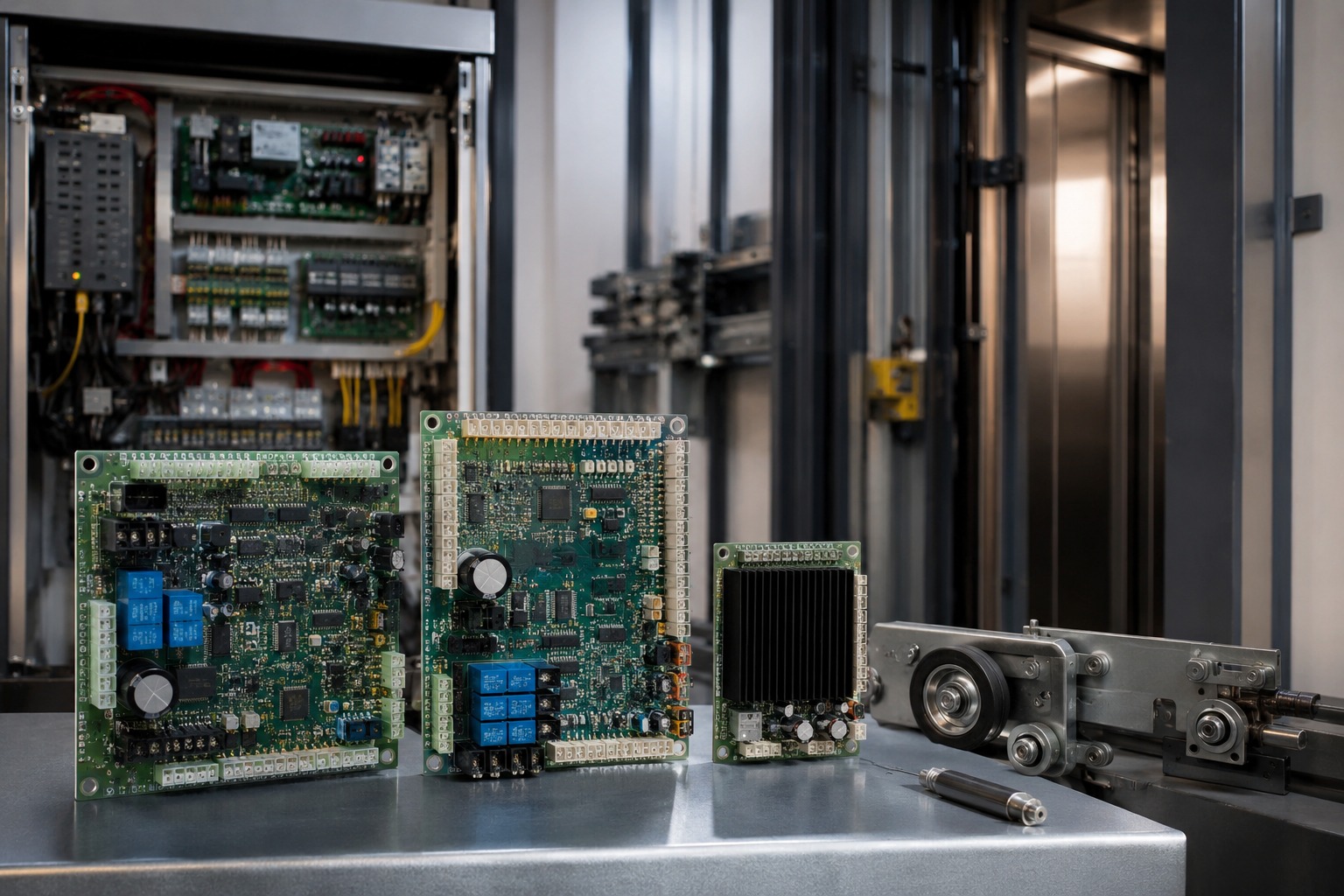
Compatibility is the first question any buyer should settle before ordering a replacement power board. An AVR HGE MCA board should never be treated as interchangeable simply because the product looks similar. The correct match must be based on model code, voltage specification, connector arrangement, mounting position, terminal definition, system function, and the related elevator brand or platform. In practice, many ordering mistakes happen when only a photograph is shared but no label, output data, or wiring reference is confirmed.
For Hitachi-related applications and similar replacement requests, field teams commonly compare the original board label, part number, output range, and cabinet position before selecting a new board. Some sites in India also have mixed service histories, where an older controller has already been repaired with substitute components. That makes visual confirmation alone unsafe. A disciplined compatibility method reduces unnecessary returns and site delays.
Our technical capability in this area is built around structured model matching. Instead of relying only on generic naming, we review part markings, connector orientation, terminal labeling, voltage output references, and photos from the installed location. This helps maintenance companies in cities such as Pune and Ahmedabad avoid ordering a board that appears correct but differs in pin layout or output sequence.
| Compatibility Check Point | What to Verify | Why It Matters | Field Mistake to Avoid | Recommended Proof | Purchase Impact |
|---|---|---|---|---|---|
| Part number | Exact printed code on original board | Confirms the closest match | Ordering by appearance only | Clear label photo | High |
| Brand and series | Lift brand, control system family | Avoids cross-series mismatch | Assuming all same-brand boards fit | Controller nameplate photo | High |
| Output voltage | 24V, 51V, 12V or multiple outputs | Protects downstream electronics | Matching input only, not output | Board spec image | High |
| Connector format | Pin count and plug orientation | Ensures physical installation | Ignoring plug shape difference | Front and rear photos | High |
| Mounting size | Board dimensions and screw positions | Avoids cabinet fit issues | Assuming cabinet space is flexible | Ruler photo or drawing | Medium |
| Application position | Main controller, auxiliary panel, door board | Distinguishes function | Using same voltage for wrong purpose | Installed location photo | High |
| Revision level | Board version or production revision | Reduces firmware or circuit mismatch risk | Ignoring suffix codes | Close-up marking image | Medium |
This checklist is useful for procurement teams, but it is equally important for field engineers. A board that powers up does not automatically mean the board is compatible. Correct compatibility means the board supplies the right outputs, fits the cabinet, works with the system load, and supports long-term stability after installation.
From a manufacturing capability perspective, reliable suppliers should be able to organize products by application group, inspect board condition before dispatch, and verify key identification details during packing. That process is especially valuable when customers need low-volume but urgent replacement parts shipped from stock into India for maintenance shutdowns.
The comparison chart highlights the supplier criteria most valued by Indian elevator maintenance teams. Price matters, but in urgent repair work the cost of a wrong part is often much higher than the cost difference between two offers.
Checking Voltage Outputs and Load Conditions
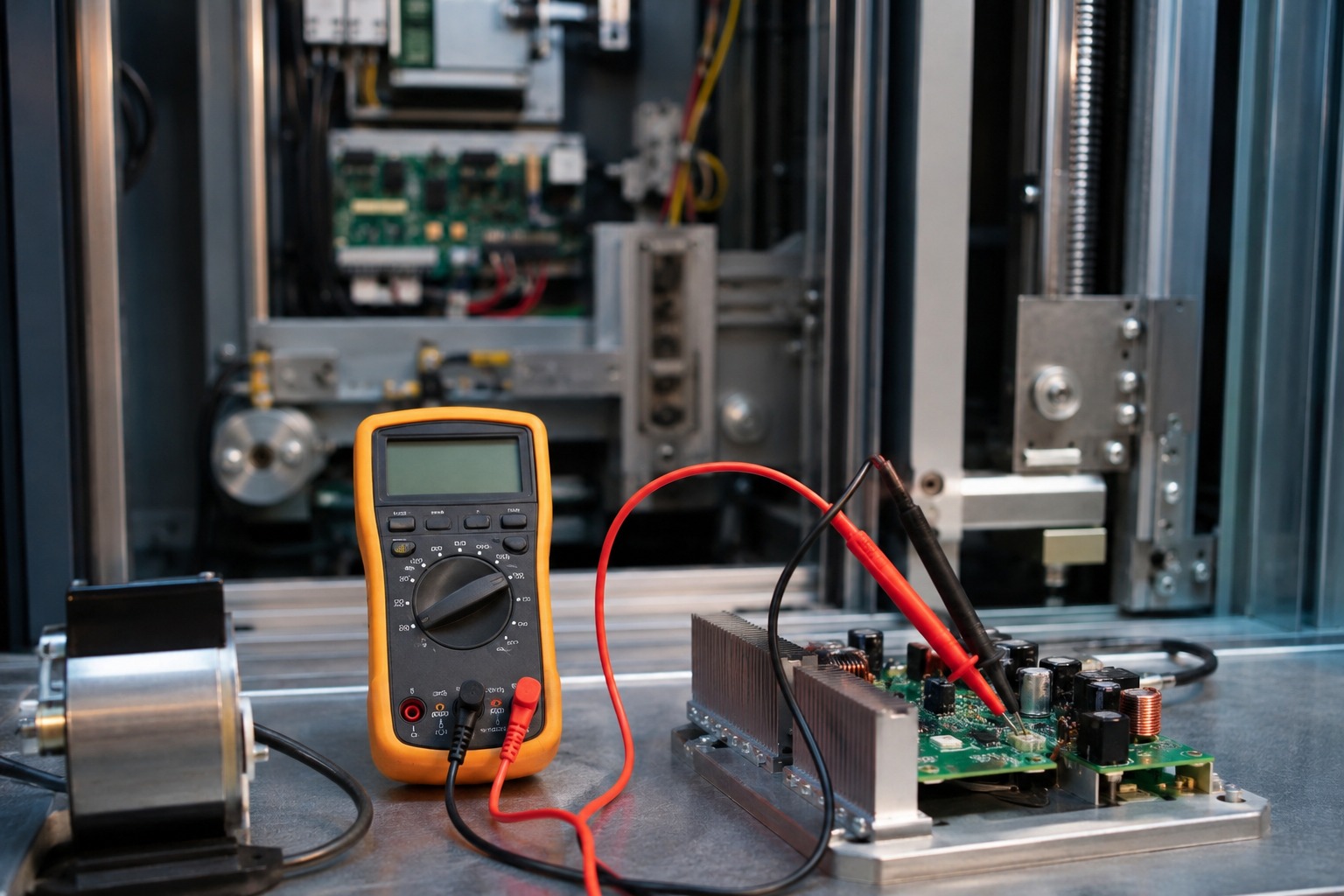
Voltage testing is essential before and after installation. A switching power supply board can appear healthy when tested without load but become unstable once connected to the real elevator circuit. That is why output verification should include both no-load and load conditions wherever practical. Engineers usually start by checking input voltage, fuse status, visual board condition, output terminals, and reference points. Then they confirm whether the expected 24V DC, 51V DC, or other listed output remains within acceptable tolerance while the connected system is active.
In India, field conditions may include unstable building supply, DG set changeover, high ambient temperature in machine rooms, and dust exposure in older structures. These factors can influence board behaviour. Therefore, a proper test routine should not rely on a single measurement. It should observe voltage value, ripple symptom, load response, heating trend, smell, and recovery after restart.
| Test Item | Typical Method | Expected Result | What a Bad Reading May Suggest | When to Test | Decision Use |
|---|---|---|---|---|---|
| Input voltage | Measure at board input terminals | Within specified AC/DC range | Upstream supply issue | Before replacement | Separates board fault from supply fault |
| No-load output | Measure output with downstream disconnected if safe | Near nominal voltage | Primary regulation fault | Bench or controlled field check | Initial screening |
| Loaded output | Measure with circuit connected | Stable within tolerance | Weak regulation or overload | After installation | Confirms real performance |
| Start-up behaviour | Observe voltage rise during power-on | Smooth and repeatable | Delayed start or intermittent switching | Commissioning | Identifies unstable components |
| Heat build-up | Touchless temperature check or thermal scan | Controlled operating temperature | Aging capacitor or overload | After running period | Predicts early failure |
| Output under door cycle or controller action | Observe while lift functions operate | No major drop or fluctuation | Insufficient current support | Functional testing | Verifies application fit |
| Grounding and noise symptom | Check grounding continuity and signal behaviour | Clean operation | Noise or grounding issue | Troubleshooting stage | Avoids misdiagnosis |
The explanation behind these checks is simple: the board must work as part of a loaded system, not just as an isolated component. A 24V reading that collapses to 19V during door action or relay pull-in is a practical fault even if the board looked acceptable on the bench. Likewise, a 51V board feeding a related circuit must hold steady enough to protect the rest of the electronics.
Service capability becomes important here. A reliable parts supplier should be able to discuss test labels, expected outputs, and matching references with the buyer before dispatch. Responsive communication helps Indian maintenance teams prepare the correct tools and avoid extra site visits, especially when the elevator is located in a remote industrial cluster or tier-2 city.
Common Signs of Switching Power Board Failure
Power board failures can be obvious, but many begin with subtle symptoms. The elevator may restart occasionally, the door may hesitate, indicator lamps may dim, communication may cut out, or the controller may show irregular faults that are hard to reproduce. These symptoms often point to unstable low-voltage supply rather than a defect in the controlled device itself.
Common physical signs include burnt smell, discoloration, swollen capacitors, damaged resistors, cracked solder joints, darkened PCB sections, loose connectors, and moisture residue. Operational signs can include intermittent resets, weak relay action, no output, unstable output, or failure only under load. In older buildings near coastal environments such as Chennai, Kochi, or parts of Mumbai, humidity and salt exposure can accelerate corrosion and connector degradation.
| Failure Sign | What It Looks Like | Likely Cause | System Symptom | Urgency Level | Recommended Action |
|---|---|---|---|---|---|
| No output voltage | Dead board, no measured DC output | Input stage failure, fuse issue, severe component damage | Lift non-responsive | Critical | Verify input, replace with matched board |
| Intermittent reset | Board works then drops out | Aging capacitor, thermal instability | Random stoppage or reboot | High | Test under load and heat |
| Output voltage drop under load | Normal idle reading, weak during operation | Current support weakness | Door/control instability | High | Confirm load demand and replace |
| Burn marks or smell | Dark PCB spot, odour near components | Overheating or surge damage | Immediate malfunction or future risk | Critical | Remove from service safely |
| Swollen capacitor | Bulging top or leakage | Age, heat, ripple stress | Ripple, unstable voltage | High | Do not reuse without evaluation |
| Loose or damaged connector | Poor contact or cracked housing | Vibration, repeated handling | Intermittent power delivery | Medium | Inspect mating side and secure replacement |
| Corrosion or moisture trace | Oxidation around pins or tracks | Humidity, condensation, coastal air | Unpredictable faults | High | Replace and improve cabinet protection |
This table helps teams distinguish between a board that is fully failed and one that is degrading. The second category is particularly dangerous because it causes repeat callback visits. If a building in Delhi NCR reports random resets only during heavy traffic hours, the issue may be a weak power board reaching instability when load and heat rise together.
The industry demand chart reflects where switching power board replacements are commonly required. Residential towers and modernization projects show strong activity because of large installed base, high usage, and ageing control systems.
How to Protect Power Boards During Shipping
Shipping protection is not a secondary issue. Electronic boards can arrive damaged even when the outer carton looks acceptable. Vibration, compression, static discharge, moisture, rough handling, and connector impact can all affect performance. For buyers in India, the challenge is greater when goods move through multiple transfer points, including overseas freight, customs handling, regional warehousing, and last-mile courier delivery to job sites.
Good packaging starts with anti-static protection, followed by cushioning that supports the board without stressing components. Connectors, edges, and elevated parts should be protected against direct impact. Moisture barrier packing is recommended for coastal or monsoon-prone logistics routes. Outer cartons should be rigid enough to resist stacking pressure, and labels should clearly identify fragile electronic contents. For urgent dispatches into Chennai, Hyderabad, or Guwahati, protective packing can be the difference between a first-time successful replacement and a costly second shipment.
| Protection Step | Purpose | Risk Prevented | Best Practice | Useful for India Logistics | Buyer Benefit |
|---|---|---|---|---|---|
| Anti-static bag | Controls electrostatic damage | Invisible electronic failure | Seal board individually | Yes | Protects sensitive circuits |
| Foam cushioning | Absorbs vibration and shock | Cracked solder joints | Use fitted foam on both sides | Yes | Reduces transit damage |
| Connector guards | Protects protruding plugs and pins | Bent pins or broken housings | Cap or brace exposed connectors | Yes | Avoids installation delay |
| Moisture barrier layer | Limits humidity exposure | Corrosion and condensation | Add sealed inner wrap | Very useful in monsoon and coastal routes | Improves storage safety |
| Rigid outer carton | Resists crushing | Board flex and component damage | Use double-wall carton | Yes | Better survivability in transit |
| Shock and orientation label | Improves handling awareness | Rough transport treatment | Mark as fragile electronics | Yes | Lower handling risk |
| Item identification sheet | Confirms model on receipt | Site confusion after delivery | Include part reference in package | Yes | Faster installation readiness |
The explanation is practical: careful packaging is part of product quality, not separate from it. Our manufacturing-side process includes organized packing checks and board protection suitable for long-distance transport, helping customers receive serviceable parts rather than spending time resolving damage disputes after arrival.
Installation and Test Workflow After Replacement
Once the replacement board reaches site, installation should follow a disciplined workflow. This protects both the new component and the rest of the elevator electronics. The exact procedure depends on the lift model and site safety protocol, but most teams follow a sequence that includes lockout, visual confirmation, wiring comparison, controlled energizing, output verification, function test, and monitoring.
In Indian service conditions, many faults are caused not by the replacement board itself, but by rushed installation, poor connector seating, loosened terminals, or failure to check upstream and downstream issues. If a damaged peripheral circuit remains connected, the new board may fail immediately or show misleading behaviour. That is why replacement should be treated as a system event, not just a parts swap.
| Step | Action | Reason | Tool or Evidence | Common Error | Good Result |
|---|---|---|---|---|---|
| 1 | Isolate power and follow site safety rules | Protect personnel and electronics | LOTO procedure | Live handling | Safe work start |
| 2 | Confirm old board code and replacement code | Stops wrong installation | Photo and label check | Skipping final ID review | Correct part fit |
| 3 | Inspect cabinet, connectors, and surrounding damage | Find related causes | Visual inspection | Ignoring burnt terminal or moisture | Cleaner root-cause control |
| 4 | Install board and secure mounting | Prevents vibration or poor grounding | Proper tools and torque care | Loose fitment | Stable mechanical support |
| 5 | Reconnect wiring exactly as verified | Maintains correct circuit path | Wiring photo/reference | Pin misplacement | Accurate electrical connection |
| 6 | Energize and measure outputs | Checks immediate electrical health | Multimeter | Assuming power-up equals success | Verified voltage |
| 7 | Run functional elevator test | Confirms real load performance | Door and travel operation check | No loaded test | Stable system behaviour |
| 8 | Monitor for heat, drop, or intermittent fault | Detects early weakness | Observation or thermal scan | Leaving site too early | Confident handover |
For service teams, this workflow reduces repeat breakdowns and supports stronger maintenance records. It also helps in building owner communication, because the technician can explain what was tested rather than simply reporting that a board was changed.
A useful case example comes from a mid-rise residential property in Pune where recurring controller resets were initially blamed on relay faults. After the replacement workflow included loaded output checks, the issue was traced to an unstable low-voltage power board that dropped during peak door activity. Replacing the board and verifying loaded voltage removed the repeat callback issue. In another modernization case in Chennai, the correct 24V and 51V reference check prevented installation of a similar-looking but unsuitable board.
How Service Teams Should Stock Spare Power Boards
Stocking strategy is often overlooked until a breakdown occurs. Yet for elevator maintenance companies across India, a small but well-planned spare board inventory can significantly cut downtime. The right stock mix depends on installed base, brand concentration, controller age, service contract level, and city response expectations. Teams supporting large residential clusters in Bengaluru or Gurugram may prioritize high-rotation power boards, while modernization contractors may keep a wider range of lower-volume legacy models.
The best inventory approach is to classify boards by movement rate and service risk. Fast-moving standard boards should be stocked locally. Slower-moving specialized boards can be held centrally with quick dispatch readiness. For urgent service networks covering Mumbai, Surat, Nashik, Indore, and Jaipur, lead time planning is as important as unit price.
| Stock Category | Recommended Board Type | Who Should Keep It | Stock Level Logic | Best Location | Main Benefit |
|---|---|---|---|---|---|
| Fast-moving service stock | High-frequency 24V control boards | Maintenance companies | Based on installed fleet count | City service branch | Quick breakdown response |
| Critical emergency stock | Boards causing total lift shutdown when failed | Regional service hubs | At least one per major model group | Mumbai, Delhi NCR, Bengaluru hubs | Reduced critical downtime |
| Brand-specific stock | Hitachi or other platform-specific boards | Specialist distributors | Demand-led stocking | Central warehouse | Better matching accuracy |
| Modernization support stock | Legacy replacement boards | Contractors and retrofit teams | Project-based reserve | Project city or central depot | Smoother project execution |
| Low-volume backup stock | Rare or older revision boards | Importer or master distributor | Shared regional inventory | Trade hub warehouse | Avoids long import delay |
| Transit-ready stock | Packed and labeled tested units | Responsive supplier | Ready for same-day dispatch | Near airport or freight corridor | Faster dispatch to site |
| Seasonal buffer stock | Boards for high-failure summer routes | Service planners | Increase before peak months | Hot-climate regions | Prevents stockout risk |
The table shows that stocking is not only about quantity. It is about where to place inventory, which models to prioritize, and how to protect service response times. Many Indian companies now combine city-level emergency stock with central warehouse backup to balance speed and cost.
The area chart illustrates a real shift in the Indian elevator service market: companies are moving from purely reactive replacement to planned stocking. This trend is expected to strengthen in 2026 as uptime commitments, service penalties, and building owner expectations become stricter.
Our service capability is designed around this reality. We support customers with responsive quotation handling, practical compatibility discussion, careful dispatch preparation, and protective packaging that helps field teams receive usable parts faster. For service organizations, these details matter because every extra day of downtime affects both reputation and contract performance.
FAQ About Elevator Switching Power Supply Boards
1. What does a switching power supply board do in an elevator?
It converts incoming electrical power into controlled output voltages required by control electronics, sensors, door systems, communication units, and related modules. Without stable output, elevator electronics may reset, misread signals, or stop functioning.
2. Where are these boards commonly installed?
Most often in the main control cabinet, but also in auxiliary electronic sections, door operator circuits, display systems, and communication-related modules depending on the lift design.
3. How do I confirm AVR HGE MCA board compatibility?
Check the exact part number, brand series, output voltage, connector layout, board dimensions, revision code, and installed position. Clear photos of the original board label and connectors are highly recommended before ordering.
4. Is the same-looking board always interchangeable?
No. Boards with similar appearance may differ in output voltage, pin assignment, revision, or function. Visual similarity alone is not a safe matching method.
5. Why is load testing important after installation?
A board may show correct voltage without load but fail when connected to the real circuit. Loaded testing confirms that the board can support actual operating conditions.
6. What output values are commonly checked?
This depends on the model, but 24V DC and 51V DC are common references in related applications. Always verify against the original board specification and the controller requirement.
7. What are the first warning signs of failure?
Intermittent resets, unstable door action, display flicker, no communication, burnt smell, heat rise, swollen capacitors, or voltage drop under load are all common warning signs.
8. Can power quality in India affect board life?
Yes. Voltage fluctuation, heat, dust, humidity, generator changeover, and poor cabinet ventilation can all reduce board life or trigger unstable behaviour.
9. How should boards be packed for shipping?
Use anti-static bags, cushioned internal support, connector protection, moisture-resistant wrapping, and rigid outer cartons. This is especially important for long-distance shipping and monsoon-season transport.
10. Should service companies keep spare boards in stock?
Yes, especially for fast-moving or critical shutdown models. Local stock shortens downtime, while central backup stock covers less common models more economically.
11. What should buyers send when asking for a quote?
Share the board photos, label close-up, controller details, output voltage information, connector pictures, and application position inside the lift. This improves matching accuracy.
12. Are replacement power boards relevant in modernization projects?
Absolutely. In many retrofit projects, stable power supply boards are necessary to support refreshed control circuits, improve reliability, and reduce unpredictable faults in older systems.
India Market Outlook, Buying Advice, and 2026 Trends
The Indian market for elevator electronic spare parts is becoming more quality-focused. Building owners increasingly expect fast restoration, especially in premium housing, healthcare facilities, IT parks, and mixed-use developments. This means procurement teams are placing greater value on accurate matching, documentation, and ready stock rather than choosing only the lowest initial price.
For buyers, practical purchasing advice is straightforward. First, define the application clearly: controller, door operator, display, or auxiliary system. Second, verify the original part data. Third, confirm output voltage and connector arrangement. Fourth, ask how the item is packed. Fifth, ensure the supplier can respond quickly if additional photos or technical confirmation are needed. In India’s service market, speed without accuracy creates repeat failures; accuracy without responsiveness creates downtime. Good sourcing requires both.
Looking ahead to 2026, several trends are shaping the elevator switching power board segment in India. Technologically, more buildings will adopt predictive maintenance and remote fault logging, which will make low-voltage instability easier to identify earlier. Policy-wise, maintenance documentation and building safety expectations are likely to become more formal in larger urban markets. Sustainability will also influence decisions: service companies increasingly prefer replacing only the failed module with a correctly matched part, extending system life and reducing waste versus broad unnecessary replacement.
Another clear 2026 trend is the strengthening of regional service networks. As cities such as Lucknow, Coimbatore, Visakhapatnam, Bhubaneswar, and Chandigarh expand vertically, the need for locally accessible spare parts will rise. At the same time, imports and specialized distribution through ports such as Mundra and Chennai will remain important for model-specific boards. Suppliers that combine technical matching, careful packaging, and responsive dispatch are likely to become preferred partners for Indian elevator maintenance firms.
About Our Approach for the India Elevator Spare Parts Market
Our approach for India is based on three practical strengths. First, technological capability: we help customers compare model references, output requirements, and connector details so that replacement boards are selected with better accuracy. This is important for applications involving main control boards, inverter-related accessories, door operator electronics, sensors, encoders, buttons, light curtains, and other lift accessories.
Second, manufacturing and supply capability: we emphasize stable sourcing, organized inspection, and protective packaging suitable for sensitive elevator electronics. Whether the need is for control boards, power boards, door locks, guide shoes, oil cups, intercom parts, or brand-related accessories for Hitachi, Toshiba, KONE, Mitsubishi, and others, disciplined handling helps reduce transit issues and mismatch risk.
Third, service capability: we support maintenance companies, distributors, building owners, and modernization contractors with responsive communication and practical shipment preparation. The goal is to help customers reduce elevator downtime, source compatible replacement parts more efficiently, and keep lift systems operating safely across India’s varied project environments.
In short, switching power supply boards are small parts with large operational impact. When buyers in India focus on correct application, verified compatibility, voltage testing, failure diagnosis, protective transport, installation workflow, and spare stocking strategy, they create a more reliable elevator service outcome for both technicians and end users.