
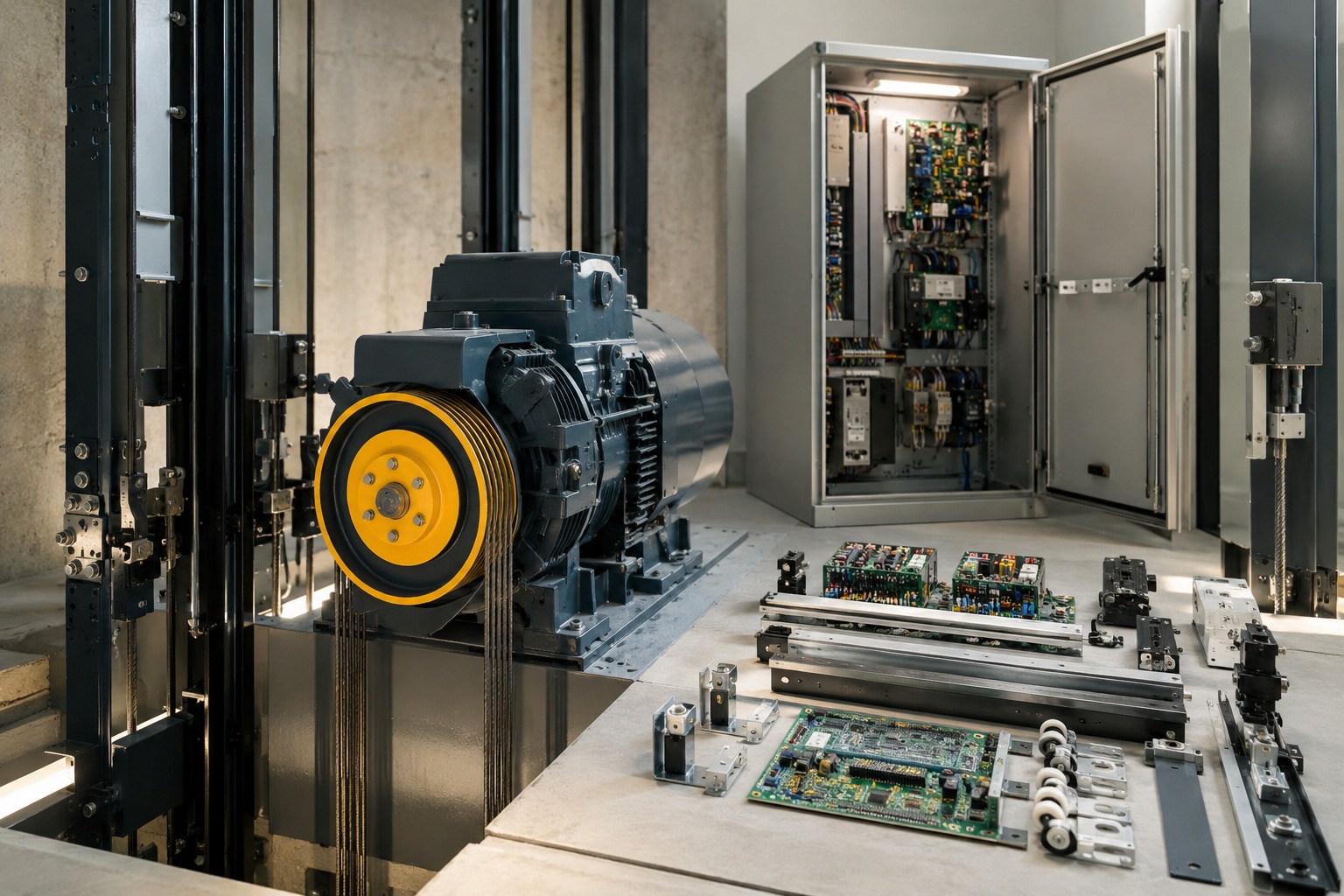
For most building owners and maintenance teams, the traction motor is the hidden component that decides whether a lift feels smooth, quiet, energy-efficient, and dependable, or noisy, jerky, and increasingly expensive to maintain. In simple terms, the right elevator traction motor improves starting torque, travel stability, levelling accuracy, and power consumption. The wrong motor, or a poorly matched replacement, can create vibration, overheating, controller faults, rope wear, and repeated service calls.
In India, this issue matters even more because lift usage varies widely across residential towers in Mumbai, office buildings in Bengaluru, hospitals in Chennai, hotels in Delhi NCR, mixed-use projects in Hyderabad, and industrial campuses around Pune, Ahmedabad, and Surat. Climate, power quality, duty cycles, and modernization budgets all affect motor selection. When teams plan a replacement or upgrade, they need to check not just the motor model, but also load profile, speed, shaft dimensions, brake compatibility, encoder signal, inverter setup, installation tolerances, and long-term spare availability.
This guide explains traction motor types, the advantages of permanent magnet synchronous motor designs, practical sourcing notes for Hitachi HGP applications, and the steps needed to match motor power with controllers correctly. It also covers installation checks, warning signs before failure, modernization planning, and common buyer questions. The focus is practical: reducing downtime, avoiding mismatch, and helping Indian maintenance contractors, distributors, modernization firms, and building owners make safer procurement decisions.
Across major trade corridors such as Nhava Sheva in Mumbai, Mundra in Gujarat, Chennai Port, and logistics hubs in Delhi NCR, reliable parts sourcing has become a key factor in modernization schedules. Delays in receiving the right traction motor or associated accessories can keep lifts out of service for weeks. That is why careful model identification, packaging protection, and inspection before dispatch are just as important as the motor itself.
Traction Motor Types Explained
Elevator traction motors are not all built on the same principle. Their design affects torque delivery, energy use, gearbox arrangement, maintenance demand, and suitability for old or modern lift systems. In the Indian market, most replacement discussions revolve around geared AC motors, gearless permanent magnet synchronous motors, older DC systems still found in select legacy sites, and specialized compact motors used in modernization projects where machine-room space is limited.
Geared traction motors remain common in older commercial buildings and mid-rise residential installations. They are usually robust, familiar to technicians, and easier to service with established practices. However, they often produce more noise, require more lubrication and gearbox attention, and may consume more energy than newer gearless solutions. For projects where the building already has a geared machine layout and budget is tight, replacement with a compatible geared unit may still make sense.
Gearless traction motors, especially permanent magnet synchronous motor designs, have become increasingly popular for modernization. They support smoother acceleration and deceleration, lower noise, improved efficiency, and compact installation. These are often preferred in premium residential towers, hospitals, corporate campuses, and hotels where ride quality is closely noticed by users.
Induction motors are still relevant in some applications, particularly where legacy controller architecture and site conditions favour conventional designs. They can be dependable when properly matched, but they may not offer the same compactness or efficiency as modern PM motors. In older buildings in Kolkata, Kochi, or Jaipur, technicians sometimes choose to retain proven control architecture and replace only the motor with a highly compatible equivalent rather than redesign the whole system.
The table below compares the main traction motor categories used in replacement and modernization work.
| Motor Type | Typical Use | Main Advantages | Main Limitations | Noise Level | Maintenance Need | Best Fit in India |
|---|---|---|---|---|---|---|
| Geared AC traction motor | Older mid-rise passenger lifts | Familiar service practice, strong availability of support knowledge | Higher noise, gearbox wear, lower efficiency | Medium to high | Regular gearbox and alignment checks | Budget-conscious replacement in existing geared systems |
| Gearless PM synchronous motor | Modern passenger and premium residential lifts | High efficiency, smooth ride, compact size | Higher initial cost, precise matching required | Low | Lower routine mechanical maintenance | Modernization in metros and high-use buildings |
| AC induction gearless motor | Select modernization or commercial sites | Reliable design, good high-duty performance | Larger size than PM alternatives | Low to medium | Moderate | Commercial retrofits with space allowance |
| DC traction motor | Legacy systems | Existing compatibility in old installations | Brush maintenance, outdated efficiency profile | Medium | High | Short-term continuity in old buildings before full upgrade |
| Compact machine-room-less PM motor | MRL modernization | Space saving, energy efficient, low noise | Installation precision and controller tuning are critical | Low | Low to moderate | Urban residential and office projects with limited space |
| Custom retrofit traction motor | Special modernization projects | Can solve dimensional or legacy constraints | Longer sourcing and verification cycle | Depends on design | Depends on design | Difficult replacement cases in old buildings |
This comparison shows why no single motor type is ideal for every lift. The best choice depends on traffic, shaft layout, machine room condition, expected life cycle, and whether the project aims for a simple replacement or full modernization.
Permanent Magnet Synchronous Motor Benefits
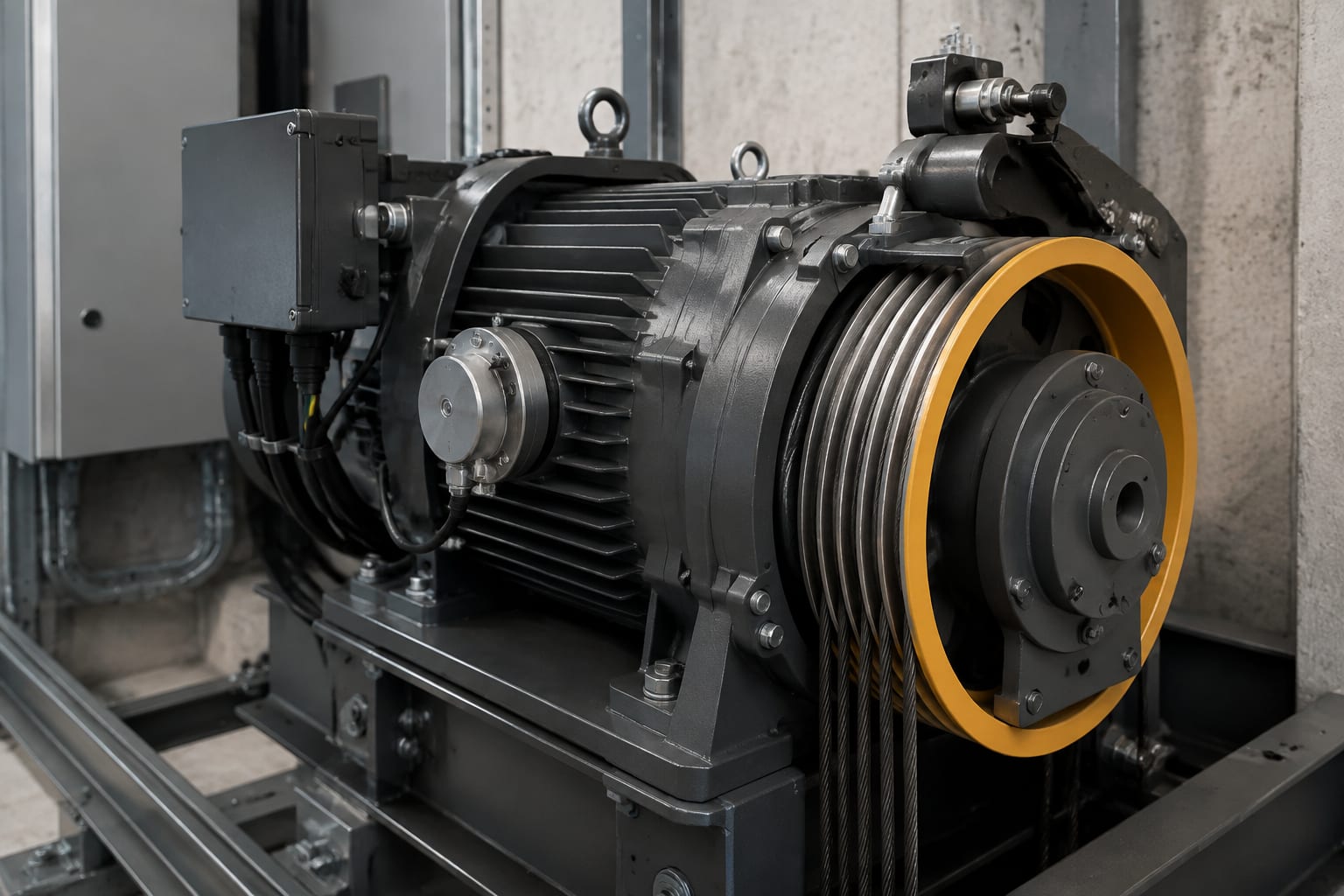
The permanent magnet synchronous motor, often called a PMSM, has become a leading choice in modern elevator systems because it combines compact construction with strong torque performance and efficient control. For Indian building owners facing rising electricity costs and growing expectations for quieter lift travel, this motor type offers clear operational benefits.
First, PMSM designs are generally more energy-efficient than traditional geared arrangements. They reduce losses associated with gearbox friction and can achieve better performance under variable frequency control. In buildings with high daily usage, such as office towers in Gurugram, hospitals in Chennai, or student housing in Pune, the energy savings can be meaningful over the motor’s service life.
Second, the ride quality is usually better. A properly selected and tuned permanent magnet synchronous motor supports smoother starts, less hunting at landing level, and more stable speed control. Passengers notice this most in premium apartments, hotels, and healthcare facilities where comfort matters.
Third, noise and vibration are often lower. This is especially valuable in Indian residential projects where lift shafts may be close to living spaces. A quieter motor can reduce complaints from occupants on lower and upper floors, especially during night-time operation.
Fourth, PMSM systems can be more compact. In modernization projects where machine room dimensions are tight or builders want to free usable space, compact gearless designs create flexibility. This is relevant in older properties in South Mumbai, central Bengaluru, or established commercial districts in Kolkata where retrofitting space is limited.
Fifth, routine mechanical maintenance can be reduced because there is no gearbox to lubricate and monitor in the same way as a geared system. This does not mean maintenance can be ignored; brake checks, bearing condition, encoder performance, and inverter tuning still matter. But the overall maintenance profile can be more manageable.
For teams evaluating compatible options, one route is to review a permanent magnet synchronous motor for elevator replacement projects where speed, load, encoder, and mounting data can be checked in detail before ordering.
The following table summarizes the practical benefits of PMSM systems for common Indian building scenarios.
| Benefit Area | How PMSM Helps | Impact on Building Operations | Most Relevant Building Type | Typical Buyer Concern | Expected Result | Notes |
|---|---|---|---|---|---|---|
| Energy efficiency | Lower mechanical and electrical losses | Reduced electricity cost | Commercial offices, hospitals | Operating expense | Better lifecycle economics | Strongest advantage in high-duty lifts |
| Ride quality | Stable torque and smooth speed control | Better passenger comfort | Hotels, premium residences | Passenger complaints | Smoother start and stop | Depends on controller tuning also |
| Noise reduction | Gearless operation cuts gearbox-related noise | Quieter lift operation | Residential towers | Night-time noise | Fewer resident complaints | Alignment still affects actual result |
| Space efficiency | Compact machine design | Easier modernization in constrained areas | MRL and retrofit sites | Machine room constraints | Better fitment options | Site dimensions must be verified |
| Maintenance profile | Fewer gearbox-related service tasks | Potential reduction in routine mechanical work | All building types | Maintenance burden | Cleaner service schedule | Brake and bearings still critical |
| Modern control integration | Works well with advanced inverter control | Improved levelling and response | Modernized lifts | Controller compatibility | Higher precision travel | Encoder and parameter setup must match |
In many modernization cases, PMSM is not just a motor choice; it is part of a broader upgrade strategy that includes controller refinement, brake assessment, encoder validation, and improved wiring discipline.
Hitachi HGP Motor Sourcing Notes
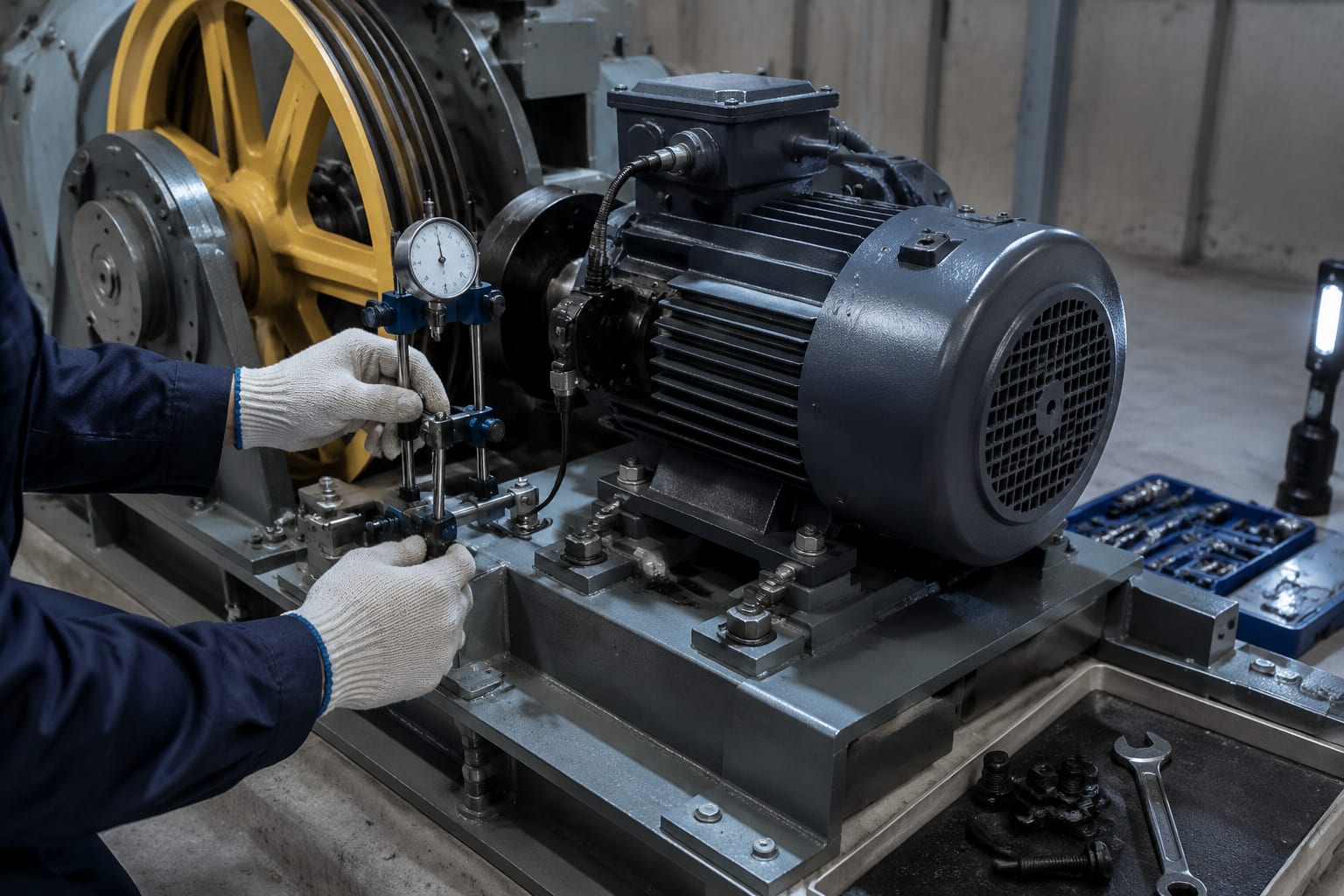
When buyers search for a Hitachi HGP traction motor or a compatible replacement, the most important point is that sourcing should start with exact model identification rather than assumptions based on appearance or brand name alone. A matching issue in shaft dimensions, brake voltage, encoder specification, rated speed, or controller communication can delay installation and create safety risks.
For Indian buyers, especially those supporting mixed-brand maintenance portfolios, the safest process is to collect the nameplate data, clear photos, motor dimensions, rope configuration, load and speed details, controller model, and site installation environment. In many older buildings, documentation is incomplete or inconsistent. That is why visual verification and measurement are often necessary before dispatch approval.
If the project specifically concerns Hitachi applications, teams often review a Hitachi HGP permanent magnet synchronous motor solution to compare mounting details, operating specifications, and replacement feasibility. For related door system work in the same modernization package, a permanent magnet synchronous door motor for Hitachi elevator systems may also be considered when the goal is to improve both travel and door performance during one shutdown window.
Reliable sourcing is not only about the product page. It depends on the supplier’s process. Strong suppliers typically support technical matching, stable incoming inspection, protective packaging against transit damage, and responsive follow-up when installation teams need confirmation. These capabilities are especially important for shipments moving to sites across India, whether to busy metros like Mumbai and Delhi or to fast-growing Tier 2 cities such as Indore, Coimbatore, Nagpur, and Lucknow.
Below is a practical sourcing checklist for HGP-related or similar traction motor procurement.
| Checkpoint | Why It Matters | What to Verify | Risk If Ignored | Who Should Confirm | Preferred Evidence | Procurement Tip |
|---|---|---|---|---|---|---|
| Motor nameplate | Confirms electrical and performance basics | Voltage, current, power, speed, serial data | Wrong operating range | Maintenance engineer | Clear close-up photo | Check against controller settings |
| Mounting dimensions | Ensures mechanical fit | Base, flange, shaft, hole pattern | Installation delay or rework | Site technician | Measured drawing | Measure twice before order release |
| Brake specification | Critical for safe holding and release | Voltage, torque, coil data, release method | Unsafe operation or fault trips | Electrical supervisor | Brake label and wiring photo | Never assume same brake for similar models |
| Encoder type | Needed for speed feedback | Signal type, connector, pulses, protocol | Controller communication failure | Controller specialist | Encoder label and connector image | Match cable pinout as well |
| Controller compatibility | Motor and drive must work together | Inverter model, parameters, tuning method | Poor ride or non-start condition | Commissioning engineer | Controller model record | Request pre-shipment review |
| Transit protection | Prevents hidden damage | Packing, moisture control, impact protection | Bearing or body damage on arrival | Supplier and consignee | Packing photos | Important for long-route deliveries |
For many Indian customers, sourcing success comes from process discipline more than price negotiation. A cheaper motor that does not fit or communicate correctly becomes the most expensive option on site.
Motor Power and Controller Matching
Power matching is one of the most misunderstood aspects of elevator traction motor replacement. The common mistake is to assume that if the kilowatt rating looks similar, the motor will work. In reality, proper matching involves several interconnected factors: rated torque, speed range, overload characteristics, feedback device, braking performance, duty cycle, rope traction requirements, and inverter control logic.
For example, two motors with the same rated power may behave very differently if one is designed for a gearless permanent magnet system and the other for a geared arrangement. Likewise, a controller programmed for a particular encoder resolution and torque curve may not regulate a replacement motor correctly without parameter adjustment. This can lead to noisy operation, poor levelling, unstable acceleration, or fault shutdowns during peak traffic.
In India, power quality variations in some locations add another layer of complexity. Voltage fluctuation, grounding quality, heat, and dust can influence inverter performance and thermal stress. A lift in an air-conditioned office tower in Hyderabad may have very different conditions from a residential installation in a coastal city such as Chennai or Kochi. Therefore, controller and motor matching should always consider real site conditions.
The table below lists the core technical points that should be checked before approving a motor-controller combination.
| Matching Factor | What to Compare | Why It Is Important | Common Mismatch Result | Site Data Needed | Action Before Purchase | Priority Level |
|---|---|---|---|---|---|---|
| Rated power | kW or equivalent rating | Baseline capacity check | Overload trips or underperformance | Nameplate data | Confirm against original motor and lift load | High |
| Rated torque | Torque curve and starting torque | Essential for launch and stable travel | Jerky start or slip risk | Motor data sheet | Verify with controller application range | High |
| Rated speed | RPM and lift speed relation | Impacts sheave output and ride profile | Wrong travel performance | Speed requirement | Check sheave and gearing relation | High |
| Encoder feedback | Signal type and resolution | Needed for precise inverter control | Fault alarms and unstable motion | Encoder details | Confirm connector, signal, and parameter support | High |
| Brake compatibility | Brake coil and release requirements | Safety and proper start sequence | Brake drag or unsafe release | Brake wiring info | Match voltage and sequence logic | High |
| Thermal characteristics | Cooling and duty cycle tolerance | Important for heavy traffic use | Overheating and shorter life | Usage pattern | Check building traffic profile | Medium to high |
A useful rule for buyers is this: do not order a replacement motor until the controller compatibility path is understood. In some jobs, controller parameters can be adapted. In others, the best result comes from planning a combined modernization rather than a motor-only change.
The line chart above reflects the ongoing growth trend in elevator motor modernization demand in India, driven by aging installed bases, rising passenger expectations, and increasing attention to energy efficiency in both private and institutional buildings.
Installation and Alignment Checks
Even the right motor will perform badly if installation quality is weak. Alignment errors can cause noise, rope wear, heat buildup, brake drag, bearing stress, and unstable ride quality. During modernization, schedule pressure often pushes teams to hurry mechanical setup, but that shortcut usually results in repeat visits and customer dissatisfaction.
At site, technicians should inspect the machine base, anchoring condition, levelness, shaft alignment, sheave position, rope line, brake release action, and electrical terminations. Before final commissioning, they should also verify vibration behaviour under no-load and loaded runs, then recheck after a short operating period.
Indian projects present a wide range of installation environments. Coastal humidity in Chennai and Kochi can affect corrosion risk. Dust in construction-heavy areas around Noida or Ahmedabad can enter mechanical spaces. Older machine rooms in Kolkata or central Mumbai may have poor ventilation. These local factors influence how carefully the installation should be protected and inspected.
The next table gives a field checklist that maintenance companies and modernization contractors can use during installation.
| Inspection Item | What to Check | Acceptable Outcome | Common Problem Found | Possible Effect | Corrective Action | When to Check |
|---|---|---|---|---|---|---|
| Machine base condition | Flatness, cracks, anchor integrity | Stable and level mounting surface | Uneven base or loose anchors | Vibration and noise | Repair or shim correctly | Before motor mounting |
| Shaft and sheave alignment | Position relative to rope path | True alignment with no side pull | Offset alignment | Rope wear and bearing stress | Re-align mechanically | During setup |
| Brake operation | Release timing and full movement | Clean release and secure hold | Brake drag or delayed release | Heat, noise, poor start | Adjust brake and wiring logic | Before test runs |
| Electrical termination | Tightness, insulation, earthing | Secure and correctly labelled | Loose terminals or poor grounding | Faults and thermal issues | Reterminate and retest | Before power-on |
| Encoder connection | Connector lock and signal integrity | Stable feedback signal | Intermittent wiring | Unstable travel or trips | Reconnect or replace cable | Before commissioning |
| Trial run vibration | Sound, heat, movement under load | Smooth run within expected range | Abnormal humming or shaking | Passenger discomfort and wear | Recheck alignment and tuning | During final testing |
Installation quality is also where supplier capability becomes visible. On the technology side, experienced parts suppliers support careful model matching, specification review, and data confirmation before shipment. On the manufacturing side, stable inspection and protective packing reduce the chance of hidden transport damage. On the service side, responsive communication helps site teams resolve connection or identification questions quickly during commissioning.
Maintenance Signs Before Failure
Most traction motor failures do not appear suddenly without warning. They usually send signals first, but those signals are often ignored because the lift still appears to be operating. Maintenance teams that catch these signs early can plan replacement work during a controlled shutdown instead of reacting to an emergency breakdown.
Common warning signs include increased motor temperature, unusual vibration, inconsistent start behaviour, louder-than-normal humming, brake smell, bearing noise, reduced levelling precision, repeated inverter faults, and visible wear in related mechanical parts. In high-traffic buildings, these symptoms can worsen quickly.
For Indian maintenance companies managing multiple sites, early diagnosis is particularly valuable because arranging shutdown windows can be difficult in hospitals, hotels, and premium residential towers. A planned replacement is far less disruptive than a sudden lift stoppage during peak occupancy periods.
The table below helps distinguish early warning symptoms from likely causes and recommended actions.
| Warning Sign | What It May Indicate | Operational Risk | Immediate Check | Likely Next Step | Urgency | Notes for Indian Sites |
|---|---|---|---|---|---|---|
| Rising motor temperature | Overload, poor ventilation, brake drag | Thermal trip or insulation stress | Measure current and inspect brake | Load analysis and cooling review | High | More common in hot machine rooms |
| Unusual humming or grinding | Bearing wear or alignment issue | Progressive mechanical damage | Listen under no-load and load | Bearing and alignment inspection | High | Dust and poor lubrication worsen risk |
| Jerky start or stop | Controller tuning or feedback problem | Poor passenger comfort and unsafe feel | Check encoder and drive logs | Retune or replace faulty components | High | Often seen after partial repairs |
| Levelling drift | Feedback inconsistency or brake issue | Landing inaccuracy | Review position feedback and brake | Correct encoder or brake condition | Medium to high | Critical in hospitals and elderly housing |
| Frequent inverter faults | Mismatch, overload, cable or motor issue | Unexpected shutdown | Read fault history | Joint motor-controller diagnosis | High | Power quality should also be reviewed |
| Burning smell near machine | Insulation stress, brake overheating | Serious failure risk | Stop and inspect immediately | Controlled shutdown and repair plan | Critical | Never continue normal operation |
In practice, the smartest maintenance strategy is trend monitoring rather than one-time observation. Temperature trend, noise trend, fault frequency, and brake response pattern often tell the story before a full failure occurs.
The bar chart highlights where demand for traction motor replacement is strongest. Residential and commercial segments lead in India because of the size of the installed base and the rising number of mid-life modernization projects.
Modernization Planning Tips
Modernization planning works best when it starts with a clear goal. Some projects only need a reliable replacement to restore operation quickly. Others aim to reduce energy use, improve ride quality, lower maintenance visits, or extend system life by another ten to fifteen years. The traction motor decision should align with that broader objective.
For example, if a residential complex in Bengaluru is facing repeated breakdowns on a geared machine, management may initially ask for the cheapest replacement. But if the controller is also aging and ride complaints are increasing, a motor-only change may simply postpone larger costs. In that case, a phased modernization plan can produce a better long-term result.
In contrast, if a business park in Pune has one damaged motor in an otherwise stable system and spare availability is confirmed, a targeted replacement may be the most practical route. The right answer depends on condition, budget, building occupancy, and service expectations.
Modernization planning in India also needs to account for logistics and scheduling. Import lead times, port clearance, intercity transport, and site readiness can affect the project timeline. Buyers near major ports such as Chennai, Mundra, or Nhava Sheva may receive goods more quickly than remote interior sites, but last-mile coordination still matters. Protective packaging is essential because traction motors are heavy and sensitive to handling stress.
The table below provides a planning matrix for common upgrade scenarios.
| Project Scenario | Typical Building Example | Best Motor Strategy | Controller Action | Main Budget Focus | Expected Benefit | Planning Advice |
|---|---|---|---|---|---|---|
| Single failed motor, stable system | Mid-rise office building | Like-for-like compatible replacement | Retain with parameter review | Fast restoration | Reduced downtime | Confirm fit and feedback before dispatch |
| Frequent faults and poor ride | Premium residential tower | Consider PMSM upgrade | Retune or replace controller | Performance improvement | Quieter and smoother service | Do not isolate motor from control analysis |
| Aging geared machine with high energy cost | Commercial complex | Gearless PM modernization | Integrated modernization package | Lifecycle cost reduction | Energy savings and lower noise | Check structural and rope path constraints |
| Space-limited retrofit | Older urban building | Compact machine-room-less solution | Controller compatibility study | Fitment and safety | Practical modernization path | Measure site dimensions carefully |
| Portfolio maintenance across many sites | Facility management group | Standardize verified compatible models | Create approved parameter library | Inventory efficiency | Faster response across sites | Build model cross-reference database |
| Legacy system nearing full overhaul | Hospital or hotel | Plan full modernization rather than patchwork | New integrated control strategy | Reliability and uptime | Lower long-term service disruption | Schedule in low-occupancy periods where possible |
Beyond products, buyers often evaluate supplier strength in three areas. Technological capability means accurate model matching, understanding of controller compatibility, and practical advice on encoders, brakes, and related electrical parts. Manufacturing capability means consistent quality checks, careful dimensional verification, and packaging that protects heavy parts in transit. Service capability means responsive communication, support for documentation review, and dependable follow-up when installers need fast clarification. These are not abstract claims; they directly affect downtime and project risk.
The area chart reflects the technology shift underway in the modernization market. By 2026, PM synchronous solutions are expected to take a larger share of replacement planning, especially where energy efficiency, smoother ride, and space savings are priorities.
India Market, Applications, and Local Buying Context
The Indian lift market is broad and uneven, which is why traction motor buying decisions need local awareness. Metro cities such as Mumbai, Delhi NCR, Bengaluru, Chennai, Hyderabad, and Pune have a high concentration of modernization opportunities, especially in towers built more than a decade ago. At the same time, fast-growing cities such as Ahmedabad, Lucknow, Coimbatore, Jaipur, and Bhubaneswar are adding new projects while also beginning to experience early replacement cycles in first-generation developments.
Applications vary by sector. Residential towers prioritize quiet operation and predictable service. Commercial offices focus on handling traffic and minimizing downtime. Hospitals demand smooth levelling, safe stopping, and dependable operation under continuous use. Hotels care about passenger comfort and acoustic performance. Industrial campuses and institutional buildings often prioritize robustness, maintainability, and availability of compatible spare parts.
Local supply conditions also matter. Buyers near distribution hubs may expect faster lead times, but heavy components still require disciplined packing and handling. Moisture protection is important for coastal routes, while impact-resistant packing is necessary for long inland transport. A supplier that handles control boards, inverters, door operator parts, sensors, encoders, power supplies, buttons, COP panels, intercom parts, guide shoes, door locks, and other lift accessories can often support broader modernization coordination instead of treating the motor as a standalone purchase.
This wider product coverage becomes useful when a motor replacement exposes related problems such as weak encoder signals, aging frequency converter parts, worn guide shoes, or unstable door operation. In real projects, one component issue often leads to another, so coordinated sourcing reduces time lost between vendors.
The comparison chart shows the factors Indian buyers often value most when choosing a supplier. Accurate model matching ranks at the top because it directly affects whether the lift returns to service quickly and safely.
FAQ About Elevator Traction Motors
1. How do I know whether a lift needs a motor replacement or just controller tuning?
If the main symptoms are jerky movement, levelling issues, or intermittent faults, controller tuning and encoder checks should come first. If there is mechanical noise, heat, bearing wear, or brake-related stress, the motor may be part of the problem. A joint mechanical and electrical assessment is the best approach.
2. Is a permanent magnet synchronous motor always better than a geared motor?
Not always. PMSM solutions are usually better for efficiency, noise control, and modernization goals, but the best choice depends on compatibility, budget, building type, and whether the existing controller can support the upgrade properly.
3. Can I replace a Hitachi HGP motor based only on photos?
Photos help, but they are not enough on their own. You should also verify nameplate data, mounting dimensions, brake details, encoder type, load, speed, and controller model. Small differences can create major installation issues.
4. Why does the lift still feel rough after installing a new motor?
Possible causes include poor alignment, incorrect controller parameters, brake drag, mismatched encoder feedback, or rope/sheave issues. A new motor does not automatically solve system-level problems.
5. What is the biggest mistake buyers make?
Ordering by brand or kilowatt rating alone. Proper sourcing requires confirmation of both mechanical and electrical compatibility.
6. How important is packaging for a traction motor shipment?
Very important. Traction motors are heavy and can suffer hidden damage during transport. Good packing helps protect bearings, connectors, body surfaces, and mounting areas, especially on long routes within India.
7. Should modernization include other lift parts too?
Often yes. If the motor is aging, related components such as inverter parts, encoder assemblies, door operator items, sensors, power supplies, or guide shoes may also need review. Coordinated planning can reduce repeat shutdowns.
8. Which sectors in India are most active in traction motor replacement?
Residential towers and commercial buildings lead the market, followed by hospitals, hotels, and institutional properties with aging installed bases and growing expectations for ride comfort and uptime.
9. What 2026 trends should buyers prepare for?
By 2026, Indian buyers should expect stronger demand for energy-efficient gearless motors, better integration with advanced inverter control, more focus on low-noise systems in urban residences, and higher attention to sustainability. Policy pressure on energy performance, building modernization, and lifecycle efficiency is likely to increase. Digital diagnostics, predictive maintenance, and better spare traceability will also become more important.
10. What should I send to a supplier before requesting a quotation?
Provide nameplate photos, overall motor photos, mounting and shaft measurements, brake details, encoder information, controller model, lift load and speed, and any site limitations. The more accurate the input, the better the sourcing result.
Final Buying Advice for Building Owners and Contractors in India
If you need a direct recommendation, here it is: treat traction motor replacement as a system decision, not a single-part purchase. Start with precise identification. Confirm controller compatibility. Check alignment conditions before installation. Use maintenance warning signs to act before failure. And when modernization is already under discussion, compare the long-term value of PMSM upgrade options instead of only the immediate price of a like-for-like replacement.
For India’s building environment, this approach is practical across many sectors. Residential societies want quieter operation and fewer breakdowns. Commercial towers need uptime and efficient traffic handling. Hospitals need stable stopping and reliable service. Hotels want passenger comfort. Modernization contractors need predictable fitment and responsive technical support. In all these cases, the best outcome comes from disciplined matching, quality inspection, safe packaging, and coordinated service.
A professional elevator parts supplier adds value when it can help maintenance teams reduce downtime, source compatible replacement parts accurately, and keep lift systems operating safely through better technical review, stable quality control, and responsive communication. That is especially relevant when managing mixed-brand portfolios including Hitachi, Toshiba, KONE, Mitsubishi, and other systems found across the Indian market.
Whether your project is in Mumbai, Delhi NCR, Bengaluru, Chennai, Hyderabad, Pune, Ahmedabad, Kolkata, or a fast-growing Tier 2 city, the same principle applies: the right traction motor choice improves efficiency, noise control, and ride quality only when the whole replacement process is handled correctly from identification to commissioning.