
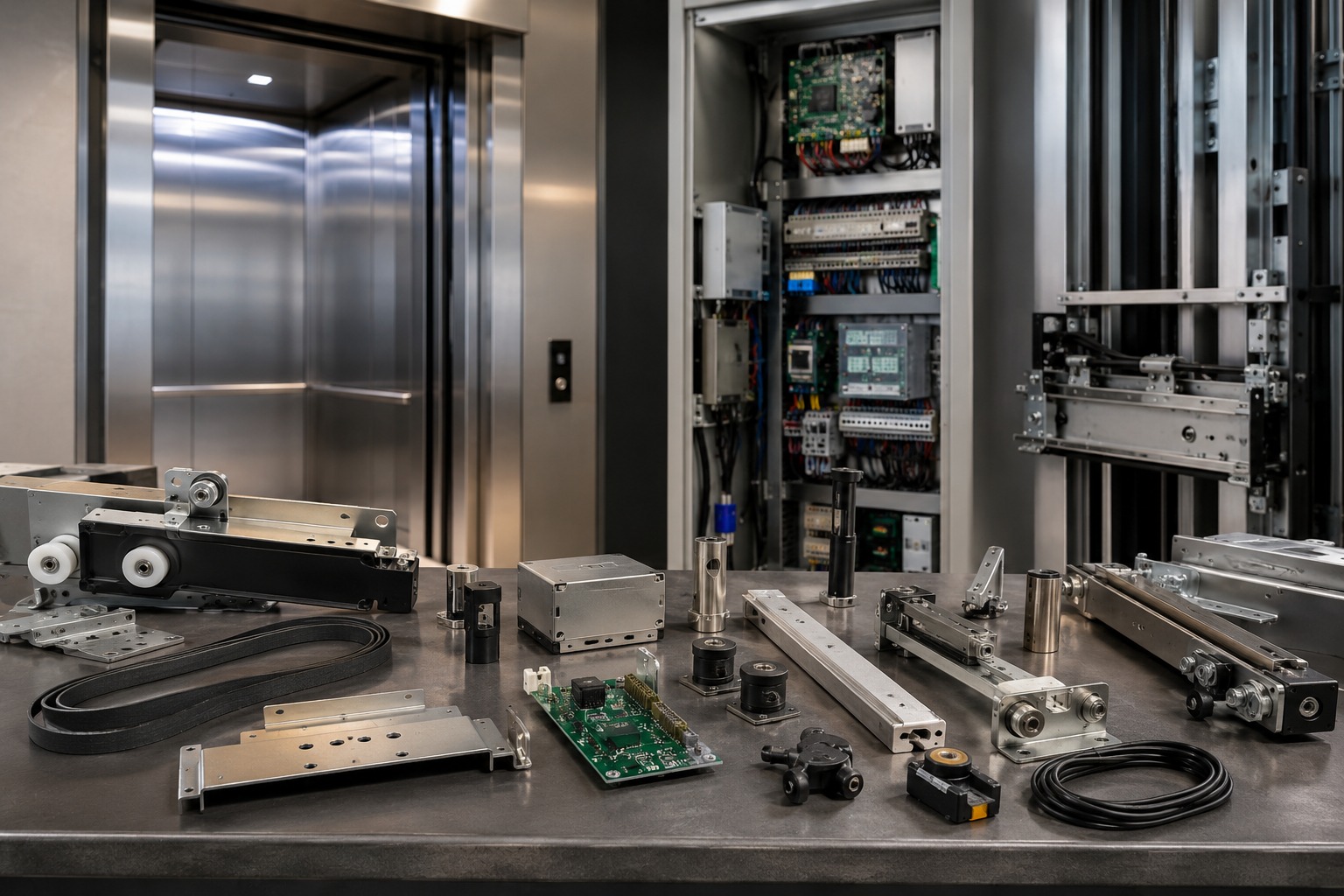
For maintenance contractors, modernization companies, distributors, and facility managers in India, lift accessories are not just small spare parts. They are the items that keep passenger lifts, freight elevators, hospital lifts, and commercial vertical transport systems running safely every day. In practical terms, the most searched lift accessories categories in India usually include door components, safety devices, guide shoes, oil cups, control boards, sensors, power supplies, frequency converter parts, COP buttons, indicators, intercom parts, and brand-compatible electrical modules. These categories generate repeat demand because they are exposed to wear, environmental dust, voltage fluctuations, heavy traffic, and long operating hours.
Across Mumbai, Delhi NCR, Bengaluru, Chennai, Hyderabad, Pune, Ahmedabad, Kolkata, and fast-growing tier-2 cities, building managers increasingly want faster replacement cycles, compatible matching, and lower elevator downtime. For this reason, buyers are looking beyond simple low-price sourcing. They want a supplier that can confirm model matching, protect electronic parts in transport, and provide stable quality for daily service work. In the Indian market, where imported and locally integrated elevator systems often coexist in the same portfolio, spare parts selection must be technical, practical, and fast.
This guide explains where replacement demand is strongest, which lift accessories move fastest, how distributors build a profitable product range, and how service companies can connect educational content with product pages to improve sourcing decisions. It is designed for customers handling branded systems such as Hitachi, Toshiba, KONE, Mitsubishi, and other installed units commonly found in residential towers, IT parks, hospitals, hotels, metros, airports, and industrial buildings.
Lift accessories categories most searched by buyers in India
In India, the search pattern for elevator spare parts is strongly linked to maintenance urgency. Buyers usually search by symptom first and part number second. For example, a contractor may search for “lift door lock replacement,” “elevator control board,” “guide shoe oil cup,” “light curtain sensor,” or “VFD spare for lift.” This means the highest-demand categories are those tied directly to stoppages, callbacks, passenger complaints, or safety inspections.
The strongest replacement categories generally fall into five groups. First, mechanical wear parts such as door rollers, door springs, locks, guide shoes, seals, and traction-related accessories. Second, electrical control components such as relay boards, control boards, communication boards, call boards, and power supplies. Third, sensing and protection devices including encoders, limit sensors, proximity sensors, photocells, and light curtains. Fourth, user interface parts like buttons, COP panels, indicators, and intercom components. Fifth, drive-related parts such as inverter modules, frequency converter accessories, cooling fans, and associated power electronics.
Demand also differs by building type. Residential complexes in cities like Pune and Gurugram often generate frequent demand for door accessories, buttons, indicators, and light curtains because of repeated daily use. Hospitals in Chennai or Hyderabad prioritize door safety devices, emergency communication parts, and stable control electronics because service interruption has direct operational impact. High-rise office towers in Mumbai and Bengaluru often create more demand for drive parts, communication modules, and modernization accessories due to heavy traffic cycles and mixed-brand installed bases.
| Category | Typical Parts | Main Reason for Demand | Common Buyer Type | Replacement Frequency | Search Intent |
|---|---|---|---|---|---|
| Door system parts | Locks, rollers, springs, shoes, hangers | High wear and frequent door faults | Maintenance contractors | High | Immediate repair |
| Safety devices | Light curtains, interlocks, switches | Passenger protection and compliance | Building owners, service firms | Medium to high | Safety replacement |
| Guide and lubrication parts | Guide shoes, oil cups, liners | Noise, vibration, rail wear | AMC providers | Medium | Preventive maintenance |
| Electronic boards | Main boards, call boards, display boards | Control failures and communication faults | Modernization teams | Medium | Model-specific sourcing |
| Sensors and encoders | Door sensors, leveling sensors, encoders | Positioning and signal issues | Technical buyers | Medium | Troubleshooting |
| Power and inverter parts | SMPS, VFD parts, fans, modules | Voltage fluctuation and drive errors | Industrial and commercial service teams | Medium | Critical uptime |
The table shows why buyer demand remains steady: these parts solve real operating problems. In a market like India, where environmental dust, power variations, coastal humidity, and extended usage cycles can affect lift performance, these categories remain essential for regular procurement.
Demand for door parts and safety devices
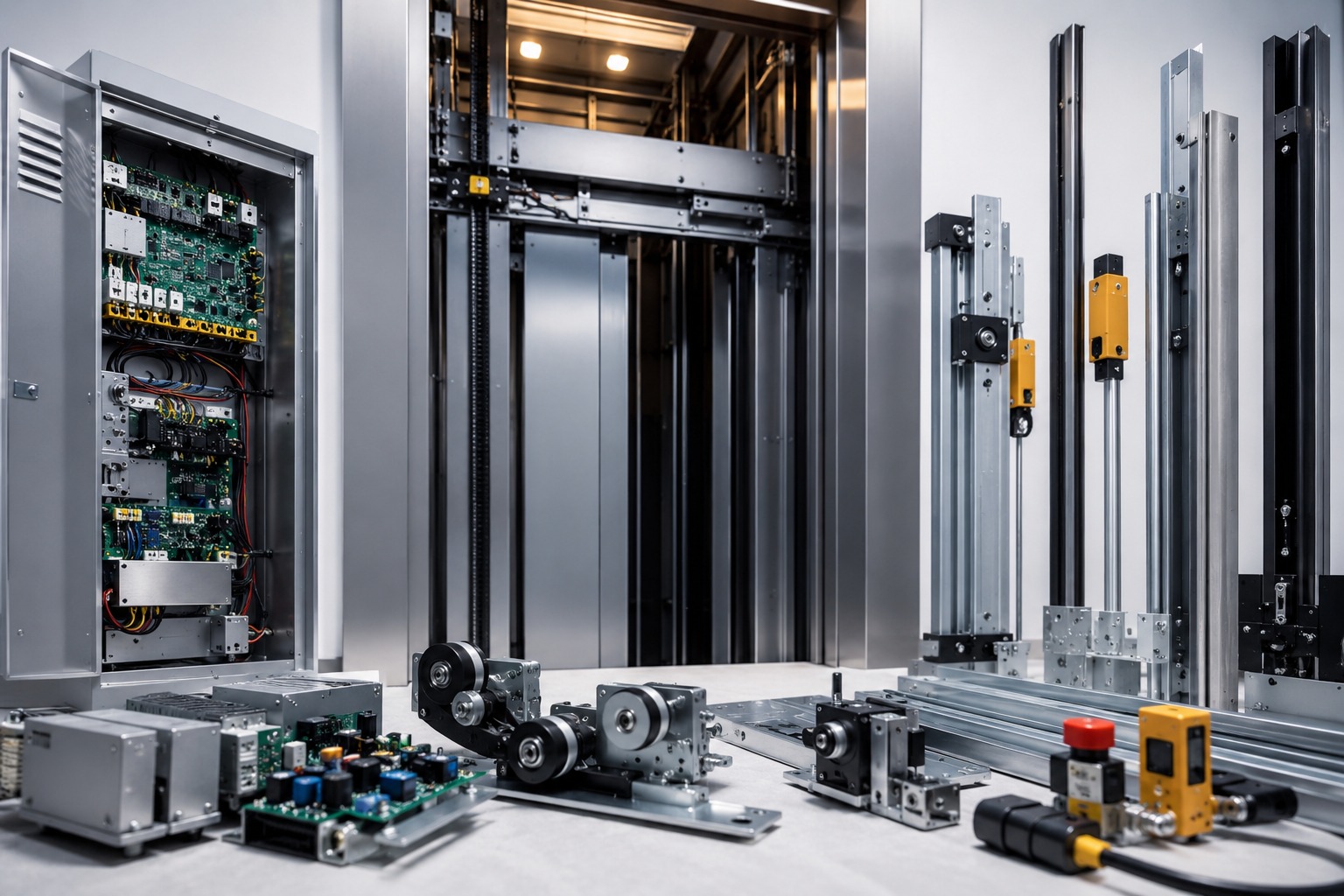
Door-related parts are consistently among the fastest-moving elevator accessories in India because the door system is one of the most active and sensitive parts of the lift. Every landing call and every car stop triggers door operation. Over time, this creates mechanical wear in springs, rollers, locks, couplers, and related assemblies. Door faults are also highly visible to users. A noisy landing door, delayed opening, improper closing, or repeated reopening quickly leads to complaints and service calls.
In practical field conditions, maintenance teams often report that door faults account for a significant share of routine callbacks. This is especially common in residential societies with high movement peaks in the morning and evening, shopping centres with irregular user patterns, and hospitals where smooth door operation is critical. Safety devices within the door system, such as light curtains and interlocks, are equally important. When these components begin to fail, they can cause false obstructions, nuisance stoppages, or actual safety concerns.
For India-based buyers, this makes door accessories one of the best categories for inventory planning. A distributor that keeps common door consumables and model-specific safety parts can support both emergency repairs and annual maintenance schedules. Items such as lift door springs for elevator maintenance are often purchased not because they are expensive, but because they are essential and frequently needed.
Another important factor is compatibility. In mixed-installation portfolios across Navi Mumbai, Noida, Kochi, and Surat, service companies may handle both original brand systems and modernized lifts using adapted accessories. That is why clear photo verification, dimensions, mounting details, connector matching, and usage confirmation are crucial before dispatch.
| Part | Primary Function | Typical Failure Sign | Best Use Case | Urgency Level | Stocking Advice |
|---|---|---|---|---|---|
| Door spring | Supports door return and balance | Slow or uneven movement | Residential and office lifts | High | Keep regular stock |
| Door lock | Ensures landing door safety | Lift not running, lock error | All building types | Critical | Stock by model family |
| Light curtain | Passenger detection at doorway | Door reopens repeatedly | Malls, hospitals, hotels | High | Stock common beam counts |
| Door roller | Allows smooth travel of panel | Noise and jerking | High-traffic buildings | Medium | Good fast-moving item |
| Interlock switch | Verifies safe closure | Intermittent no-run faults | Older installations | High | Keep with lock kits |
| Door hanger accessory | Supports panel alignment | Misalignment and drag | Modernization jobs | Medium | Order after measurement |
The explanation from the table is straightforward: door and safety parts combine frequent wear with direct operational impact, making them some of the strongest replacement categories for both contractors and distributors.
Demand for guide shoe oil cups and lubrication parts
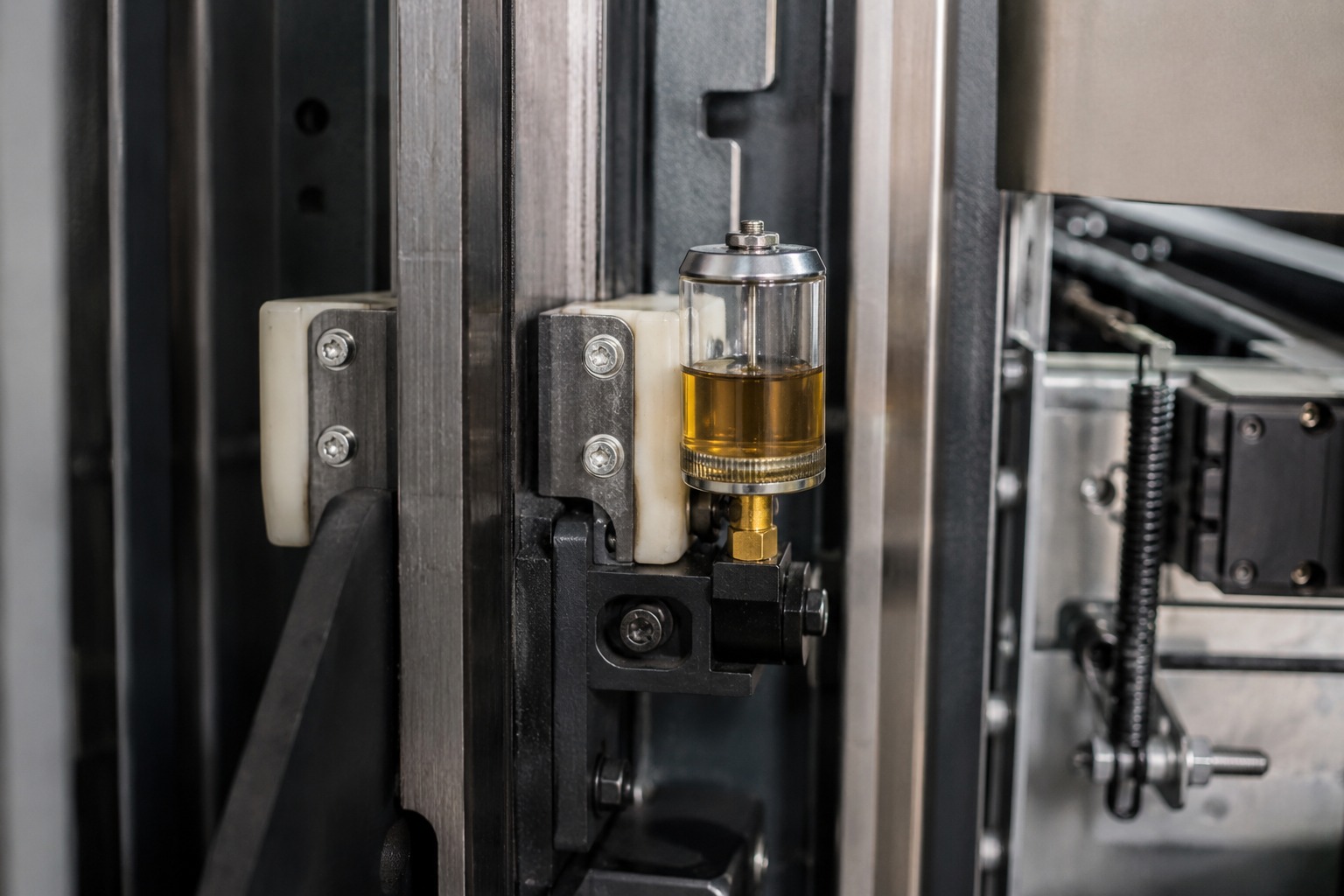
Guide shoe oil cups and related lubrication parts may look simple, but they serve a vital function in maintaining smooth vertical movement and reducing wear between car or counterweight guide assemblies and rails. In India, these accessories become even more important in environments with dust, temperature variation, and long duty cycles. When lubrication is inadequate, lifts may develop vibration, noise, rough travel, rail wear, or accelerated guide component deterioration.
For many maintenance teams, guide shoe oil cup replacement is part of preventive servicing rather than emergency breakdown repair. This makes the category valuable for planned parts sales. It is especially relevant in older buildings in central business districts, legacy residential towers, and modernization projects where support hardware may no longer be sourced through original channels.
Lubrication demand is not limited to oil cups alone. Buyers often need liners, guide inserts, sealing accessories, felt components, fasteners, and traction-related sealing parts used in associated service work. A product such as traction seal accessories for lift maintenance can fit naturally into preventive maintenance procurement where technicians are inspecting moving mechanical systems and replacing aging support components.
In ports and coastal cities like Chennai, Visakhapatnam, Kochi, and Mumbai, corrosion resistance and protective packaging matter more because small metal components can degrade in poor storage conditions. For warehouses serving pan-India customers, labeling and part segregation are also essential, since guide shoe dimensions and oil cup styles vary across brand families and generations.
| Accessory | Main Purpose | Problem if Neglected | Applicable Buildings | Demand Pattern | Buyer Benefit |
|---|---|---|---|---|---|
| Guide shoe oil cup | Feeds lubrication to guide system | Noise and friction | Residential, office, hospital | Steady | Reduced wear |
| Guide insert | Supports aligned sliding contact | Vibration and poor ride quality | Mid-rise and high-rise | Steady | Smoother travel |
| Lubrication felt | Helps distribute oil | Dry contact area | Older installations | Moderate | Lower maintenance cost |
| Oil reservoir cap | Protects lubricant chamber | Contamination and leakage | Dust-prone sites | Moderate | Cleaner operation |
| Mounting bracket | Secures oil cup assembly | Loose fit and uneven flow | Modernization jobs | Project-based | Proper installation |
| Seal accessory | Prevents leakage and contamination | Oil loss and part degradation | All lift types | Moderate | Longer service life |
The value of this category is often underestimated. Yet the table shows that guide shoe and lubrication parts reduce wear, support ride quality, and create consistent repeat demand through scheduled maintenance cycles.
Demand for electronic boards and sensors
Electronic boards and sensors are among the most critical and technically sensitive lift accessories in the India market. When a control board fails, the lift may stop entirely or operate unpredictably. When a sensor fails, doors may not close correctly, car leveling may be affected, or positional signals may be lost. This is why maintenance teams spend considerable time verifying part numbers, board versions, firmware compatibility, connector layout, and system application before ordering.
Demand for electronic accessories is growing as the installed base ages and more buildings seek selective modernization instead of full replacement. Many properties want to extend the life of their elevators by replacing boards, call stations, display modules, and communication accessories rather than changing the entire system. In practice, this creates steady demand for control boards, hall call boards, display boards, bottom boxes, sensor sets, and arrival indicators.
For example, a buyer looking to replace a communication or call module may need an item such as an outbound call board bottom box for lift systems. Similarly, projects involving passenger information and floor arrival signaling may require an arrival light indicator for compatible elevator models. These parts are not generic commodities; they require careful model confirmation and reliable packaging because damage during shipping can create immediate installation delays.
Our technological capabilities are particularly important in this category. We support customers by checking model references, matching connectors and board layouts, reviewing photos from site teams, and confirming application details before supply. For India-based customers managing different brand portfolios, this reduces ordering errors and helps prevent repeated downtime caused by incorrect replacements. This practical technical approach matters more than simply listing a large number of SKUs.
| Component | Function | Common Fault Effect | Typical Demand Source | Matching Complexity | Supply Priority |
|---|---|---|---|---|---|
| Main control board | Core command and logic control | Lift shutdown or unstable operation | Commercial towers | High | Critical |
| Call board | Handles landing or car calls | Buttons not responding | Residential complexes | Medium | High |
| Display board | Shows floor and status information | No display or wrong indication | Hotels and malls | Medium | Medium |
| Leveling sensor | Monitors car position | Misleveling at floor | Hospitals, offices | Medium | High |
| Encoder | Provides speed and position feedback | Jerky travel or drive alarm | High-rise systems | High | Critical |
| Door sensor | Supports safe doorway operation | False reopen or no-close | Public and healthcare buildings | Medium | High |
The table highlights why this category commands strong attention: the more technical the part, the more important accurate verification becomes. Buyers in India increasingly prefer suppliers that can support compatibility checks and quality inspection, not just shipment.
Demand for power supply and inverter parts
Power supply units and inverter-related parts have become increasingly important in India due to the spread of sophisticated lift control systems and the reality of power quality variation in many operating environments. Elevators in manufacturing sites, mixed-use towers, hospitals, and older urban buildings may face voltage instability, heat stress, long working hours, and inconsistent service conditions. These factors contribute to failures in SMPS units, inverter modules, drive cooling accessories, and associated electronic support parts.
For service companies, drive-related failures are among the most urgent because they can immobilize the entire unit. Even when the main inverter itself does not need replacement, support components such as fans, connectors, display panels, filter parts, or power boards can become critical. Building owners increasingly prefer to replace specific subcomponents where possible to control cost and shorten downtime.
In India’s high-growth urban corridors, especially around Bengaluru, Pune, Gurugram, and Hyderabad, more mid-rise and high-rise developments are using systems that depend heavily on stable drive electronics. This trend increases the need for better spare planning. It also raises the importance of careful packing, anti-static handling, and transit protection for sensitive electronics shipped through hubs such as Nhava Sheva, Chennai Port, Mundra, and ICD locations serving inland cities.
Our manufacturing capabilities support this category through structured quality inspection, attention to connector and housing consistency, and protective packaging designed for transport reliability. Buyers value this because power and inverter parts often fail under stressful conditions, so replacement quality and handling discipline directly affect field results.
| Part Type | Role in System | Main Failure Cause | Where Demand Is Strong | Urgency | Procurement Note |
|---|---|---|---|---|---|
| SMPS power supply | Provides stable low-voltage output | Voltage fluctuation | Residential and office buildings | High | Check output specs carefully |
| Inverter control module | Supports speed control logic | Heat and electronic aging | Commercial high-rise lifts | Critical | Confirm model and firmware |
| Cooling fan | Maintains inverter temperature | Dust and wear | Industrial and hot-climate sites | Medium | Good stock item |
| Drive display panel | Shows inverter status and alarms | Electrical damage | Technical maintenance teams | Medium | Protect screen in shipping |
| Power board | Distributes and regulates power | Surge or age-related failure | Older building portfolios | High | Inspect connectors before dispatch |
| EMI/filter accessory | Supports electrical stability | Environmental stress | Modernized installations | Medium | Often ordered with drive parts |
The explanation is clear: as lift systems become more electronic, support demand shifts toward stable power parts and drive-related accessories. In India, where uptime is essential and electrical conditions vary by site, this category will continue to grow through 2026 and beyond.
How distributors build strong product ranges
Successful lift spare part distributors in India do not build inventory only by brand name. They build it by demand logic. The first layer includes fast-moving, recurring parts such as door springs, locks, guide shoe accessories, buttons, indicators, and standard sensors. The second layer includes model-specific electronics such as boards, encoders, and communication modules that need technical verification. The third layer includes project-based modernization items and less frequent but high-value drive or control parts.
Distributors serving multiple states often use city clusters to plan stock. For example, stock serving Mumbai and Pune may prioritize commercial tower and premium residential demand. Inventory for Chennai and Bengaluru may lean more toward electronics and modernization support. North India hubs around Delhi NCR, Ghaziabad, Faridabad, and Gurugram often require broad mixed-brand coverage because of dense installed portfolios.
Our service capabilities help customers in this process through responsive communication, careful model matching, and packaging suitable for domestic redistribution. This matters to distributors because a product range is only profitable when return rates stay low and technicians can install the part without extended rework. Reliable sourcing is not about stocking everything; it is about stocking the right mix of recurring items, technical replacements, and selective project parts.
| Range Layer | Product Examples | Demand Speed | Margin Potential | Technical Complexity | Recommended Strategy |
|---|---|---|---|---|---|
| Fast-moving basics | Door springs, locks, rollers, buttons | Very high | Stable | Low to medium | Keep ready stock |
| Safety essentials | Light curtains, interlocks, sensors | High | Good | Medium | Stock common models |
| Lubrication and guide parts | Oil cups, inserts, seals | Steady | Stable | Low | Bundle with maintenance kits |
| Electronic boards | Call boards, main boards, display modules | Medium | High | High | Sell with verification support |
| Drive and power parts | Power supplies, inverter accessories | Medium | High | High | Source selectively by brand |
| Modernization accessories | COP panels, indicators, communication parts | Project-based | High | Medium to high | Develop project quotation capability |
The table explains how a balanced range works. A distributor needs volume from fast-moving basics, credibility from safety and technical stock, and profitability from specialized electronic and modernization parts.
How to connect blogs with product pages
For companies selling lift accessories in India, blog content should not stay isolated from actual product pages. The best-performing content strategy connects technical education with commercial action. A useful article about door faults should naturally lead readers to a relevant product page for springs, locks, or rollers. A guide on hall call problems should link to suitable control board or indicator items. This improves user experience because buyers can move directly from diagnosis to sourcing.
For example, a blog on passenger call system troubleshooting can link naturally to an outbound call board product page. A blog on car arrival indication and modernization can direct readers to compatible indicator products. A lubrication-focused article can mention guide shoes, oil cups, and traction-related accessories. The key is to use links inside meaningful sentences, not in a random list.
Good content structure for India should also include local search intent. A contractor in Ahmedabad may search differently from a procurement manager in Bengaluru. Some will search by symptom, others by brand, and others by generic category plus city name. Therefore, articles should include phrases like “replacement parts for residential elevators in India,” “lift door accessories for maintenance contractors,” or “compatible elevator control boards for modernization.”
To make this strategy effective, each blog should answer one practical question, include model-matching advice, mention common site conditions in India, and link to one or two relevant product pages. It should also include FAQs and comparison tables, since technical buyers often scan before they read in detail.
From an SEO perspective, connecting blogs to product pages strengthens topical relevance and improves conversion. From a buyer perspective, it saves time. That is the real value. A maintenance contractor does not want theory alone; they want a clear path from fault understanding to part selection and dispatch.
FAQ about lift accessories
Which lift accessories have the highest repeat demand in India?
Door parts, safety devices, guide shoe oil cups, sensors, control boards, buttons, indicators, and power supply parts usually show the strongest repeat demand because they are linked to wear, usage frequency, and operating continuity.
Why are door parts so important for elevator maintenance?
Door systems operate constantly and are exposed to mechanical wear. Faults in springs, locks, rollers, or sensors can stop the lift or create safety complaints very quickly.
Are guide shoe oil cups really important?
Yes. They support lubrication and help reduce noise, friction, and rail-related wear. They are especially valuable in preventive maintenance programs.
What should buyers check before ordering electronic boards?
Part number, brand, model, board version, connector type, installation photos, and system application should all be checked. Electronic spare parts require careful matching.
Why is demand growing for inverter and power supply parts in India?
Lift systems are becoming more electronics-driven, while many sites also face heat, dust, and power variation. This increases replacement needs for drive-related accessories and support electronics.
How can a distributor build a better product range?
Start with fast-moving basics, add safety essentials, then expand into technical boards, sensors, and drive parts. Inventory should reflect local installed base and actual service demand.
How should blogs connect to product pages?
Each article should solve a real maintenance problem and link naturally to one or more related products within the text. This helps users move from information to purchase more efficiently.
What should Indian buyers expect from a reliable supplier?
They should expect careful model matching, stable quality inspection, secure packaging, clear communication, and responsive support before and after dispatch.
Buying advice for maintenance contractors and building owners in India
When buying lift accessories, the biggest mistake is to compare only by price. For mechanical items, dimensions and material consistency matter. For safety items, response reliability matters. For electronics, accurate matching matters. A low-cost part that causes a return visit, a service delay, or a recurring fault is usually more expensive in the end.
Buyers should classify spare parts into three urgency levels: emergency breakdown parts, scheduled preventive parts, and modernization or improvement parts. Emergency parts should come from suppliers with fast confirmation and careful shipping. Preventive parts should be planned in bundles to reduce procurement cost. Modernization parts should be reviewed with technical data and installation requirements before ordering.
It is also useful to work with suppliers who understand mixed-brand environments. In India, many service portfolios include brand-name elevators alongside partial upgrades, local control integrations, and older installed systems. A supplier with practical experience in compatible replacement parts can help reduce downtime when original channels are slow or costly.
Applications and industries driving demand
India’s demand for lift accessories is shaped by the growth of urban housing, IT parks, healthcare infrastructure, transport hubs, hotels, retail centres, and industrial parks. Residential towers create volume demand. Commercial complexes create technical demand. Hospitals prioritize safety and uptime. Hotels value appearance and passenger experience. Industrial facilities often need rugged reliability and responsive technical support.
By 2026, three trends are likely to strengthen accessory demand further. First, selective modernization will continue because many building owners want to extend asset life without full replacement. Second, safety expectations will rise, encouraging upgrades in door protection, communication, and signal accuracy. Third, sustainability and energy awareness will support demand for efficient power electronics, better-maintained mechanical systems, and longer-lasting compatible components.
Policy and compliance attention will also influence the market. Building owners are becoming more aware that deferred maintenance increases both risk and cost. As urban infrastructure expands and installed elevators age, demand for dependable replacement accessories should remain strong across India’s major metropolitan and regional growth corridors.
Case-based examples from the India market
In a residential tower cluster in Thane, a maintenance contractor may replace recurring door springs, rollers, and hall buttons every month while keeping a few control boards on standby for urgent breakdowns. In a hospital facility in Hyderabad, preventive replacement of door sensors and communication parts may be prioritized to avoid service interruption. In an office complex in Bengaluru, a modernization contractor may source display indicators, call boards, and power modules to extend system life without a full control replacement. In an industrial building near Ahmedabad, cooling fans and power support parts may move faster because of dust and heat.
These examples show an important point: the same broad category of lift accessories serves different commercial roles depending on the customer. For some, the priority is quick replacement. For others, it is technical accuracy. For distributors, it is stock rotation. For building owners, it is uptime and reduced callbacks.
Why many buyers choose a technically responsive supplier
In the lift spare parts business, confidence comes from process. A dependable supplier supports customers through technical verification, stable sourcing, and packaging discipline. On the technology side, this means helping confirm model references for boards, sensors, indicators, and brand-compatible components. On the manufacturing side, it means consistent inspection and attention to fit, finish, and connector accuracy. On the service side, it means responsive communication, protection during shipment, and support that helps customers avoid unnecessary downtime.
For India buyers serving maintenance companies, distributors, building owners, and modernization contractors, this combination is especially valuable. It supports faster field decisions, lower mismatch risk, and better continuity when projects involve different brands or legacy equipment.