
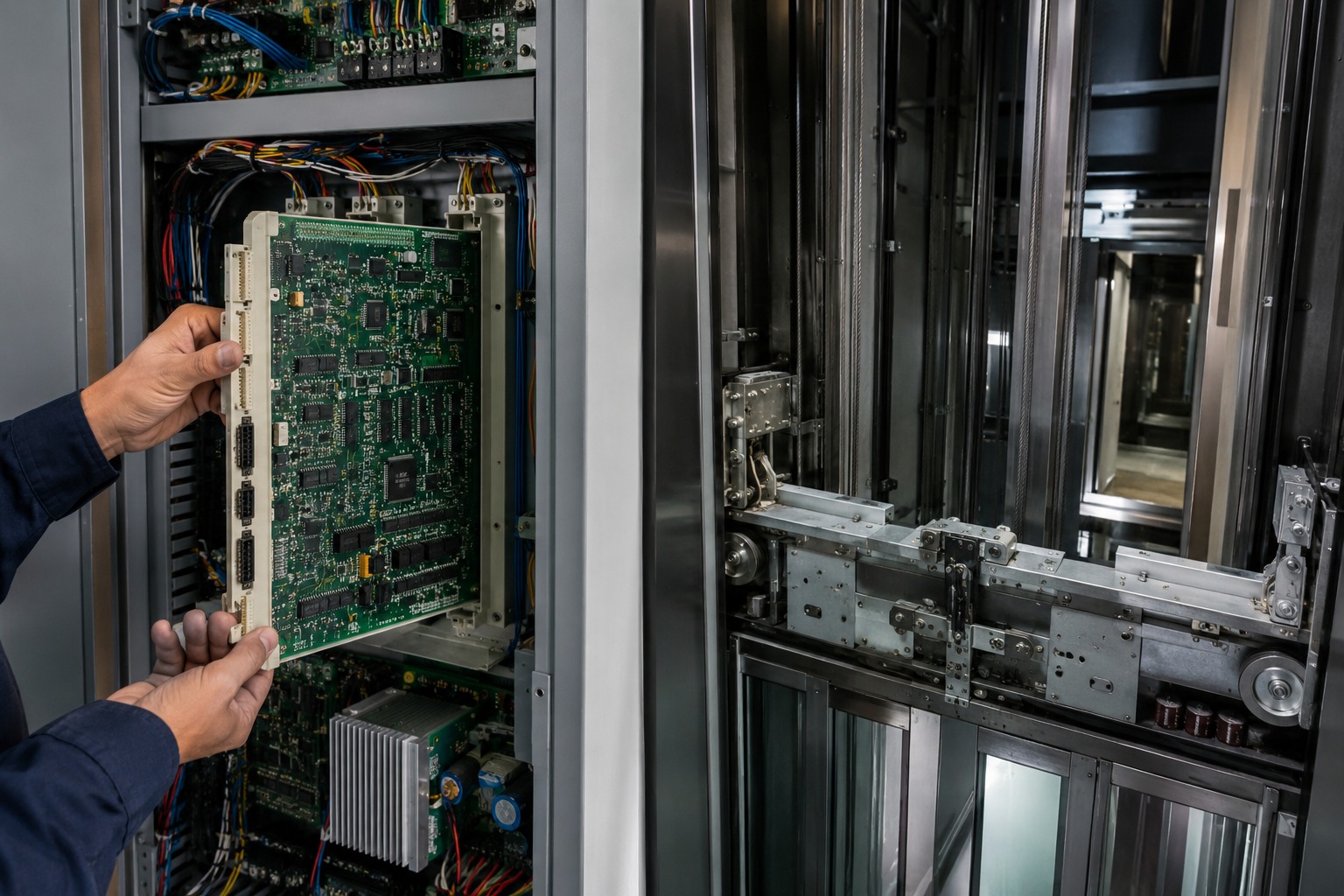
For maintenance teams in India, the right Toshiba elevator control board is not just a spare part; it is the difference between a quick return to service and repeated shutdowns. When an elevator controller develops faults, technicians usually need answers fast: which board failed, whether repair is practical, what part number matches the site controller, and how to avoid installing an incompatible board that creates fresh errors. A structured selection process reduces downtime, protects passenger safety, and helps service companies control maintenance costs across residential towers, hospitals, hotels, IT parks, metro-linked buildings, and industrial campuses.
In cities such as Mumbai, Delhi NCR, Bengaluru, Hyderabad, Chennai, Pune, Ahmedabad, and Kolkata, lift maintenance demand is rising with urban redevelopment and building modernization. Many sites still operate mixed fleets where original documentation is incomplete, labels are faded, and previous repairs may have replaced only some boards inside the controller cabinet. That is why board identification should always combine visual inspection, fault history, controller model confirmation, connector layout review, and application matching. Toshiba elevator boards may include the main motherboard, expansion board, inverter board, driver board, safety relay board, and car top communication board, each serving a different role in the control system.
This guide is written for maintenance companies, distributors, building owners, and modernization contractors in India who need dependable sourcing for replacement boards. It covers core board types, when a motherboard should be replaced, how to inspect driver and expansion boards, what to verify before buying safety circuit boards, where car top communication boards are used, and the practical compatibility questions technicians should ask before ordering. It also explains packaging and shipping protection, which is especially important when parts move through logistics corridors such as Nhava Sheva, Chennai Port, Mundra, ICD Delhi, and air cargo hubs serving urgent shutdown calls.
Reliable supply is not only about stock. It also depends on disciplined model matching, stable quality inspection, clear communication with field technicians, and protective packing that keeps delicate electronics safe from moisture, vibration, and electrostatic damage. For Toshiba applications, many buyers also compare controller repair economics against complete modernization budgets. In both cases, selecting the correct replacement board can extend system life, reduce repeat callouts, and support safer operation while long-term upgrade plans are being evaluated.
India Market Overview: Why Accurate Board Selection Matters
The Indian elevator service market has become more demanding because building owners now expect faster restoration, better spare traceability, and lower repeat failure rates. High-rise housing in Mumbai and Gurugram, healthcare facilities in Chennai and Hyderabad, warehousing in Pune and Ahmedabad, and mixed-use developments in Bengaluru all require elevators with reliable uptime. In these environments, control board replacement decisions affect resident satisfaction, tenant retention, and compliance with maintenance commitments.
Another challenge is product lifecycle diversity. Some properties operate newer digital control systems, while others still depend on older controller generations that have seen multiple service interventions. A technician may find a Toshiba main controller board installed with a non-original relay module, repaired wiring harnesses, and field-modified terminals. If board replacement is done without careful compatibility checking, the elevator may show door faults, leveling problems, communication loss, or unresolved safety chain errors. That is why sourcing partners must understand both part identification and use-case context.
| Factor | How It Affects Board Demand | Common Locations | Urgency Level | Typical Buyer | Selection Priority |
|---|---|---|---|---|---|
| Aging residential towers | More control and relay board failures due to long duty cycles | Mumbai, Thane, Noida | High | Maintenance contractor | Compatibility and fast dispatch |
| Commercial uptime pressure | Demand for tested replacement boards to reduce downtime | Bengaluru, Gurugram | Very high | Facility manager | Fault history verification |
| Hospital operations | Critical need for reliable boards in patient lifts | Chennai, Hyderabad | Very high | Service company | Safety board quality |
| Modernization staging | Short-term replacement parts needed before full upgrade | Pune, Ahmedabad | Medium | Modernization contractor | Lifecycle extension |
| Mixed documentation sites | Model matching becomes more complex | Kolkata, Jaipur | High | Distributor | Photo and label review |
| Remote project locations | Protective packing becomes essential during transit | Tier-2 and Tier-3 cities | Medium | Building owner | Packaging and support |
The table above shows that board demand in India is driven not only by technical failure, but also by building type, location, logistics urgency, and service expectations. Buyers should therefore assess both the board itself and the broader service environment before ordering.
Toshiba Elevator Board Types Explained
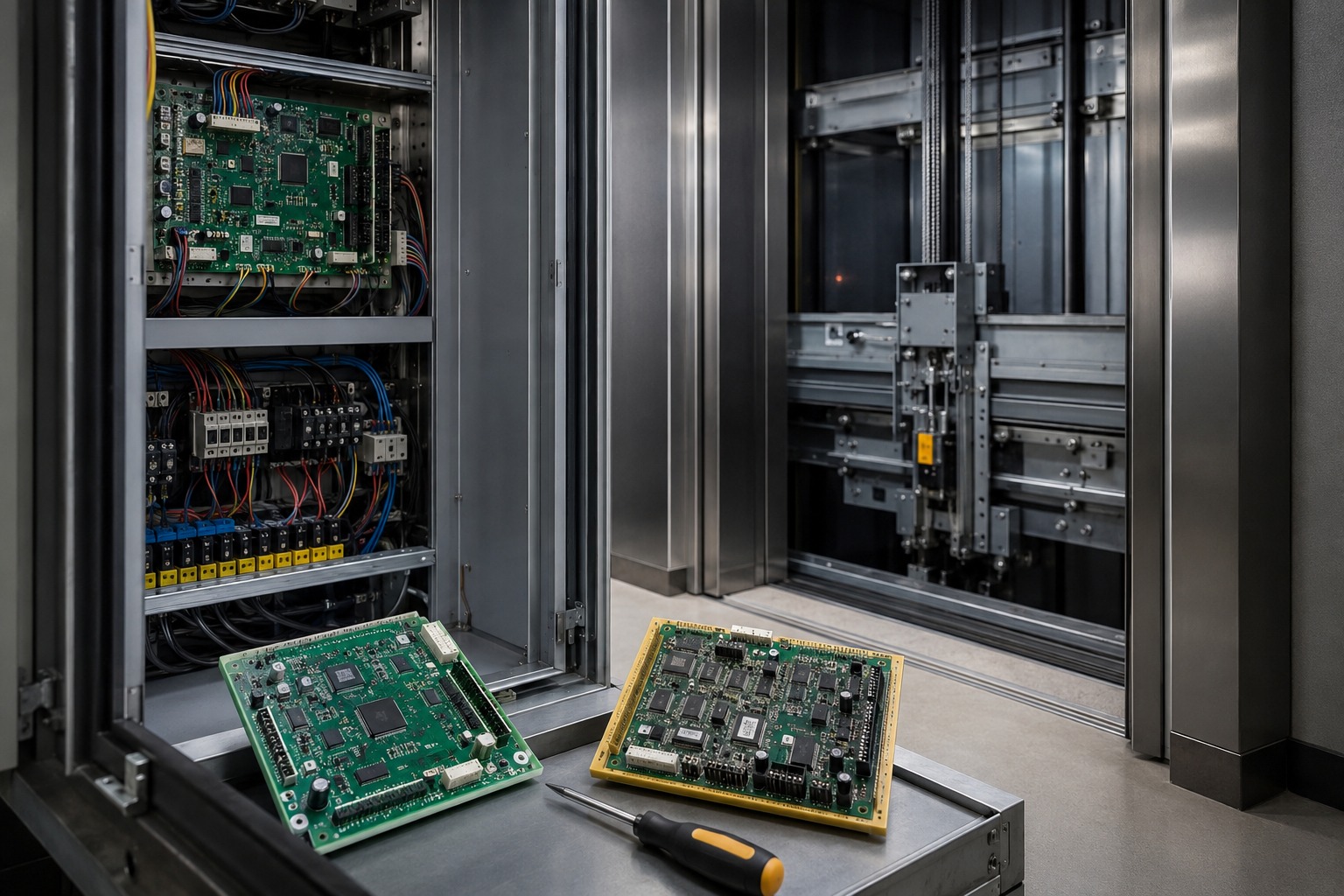
Toshiba elevator systems use several board categories, and each category should be selected according to function, controller series, firmware logic, connector type, and installation environment. The main motherboard is the core processing unit of the control system. It handles signal processing, command execution, system logic, floor operation coordination, and communication with related boards. If the motherboard fails, the lift may stop completely, fail to initialize, lose floor registration, or display multiple abnormal alarms.
Expansion boards are typically used to extend input and output capability. They may support additional landing signals, door-related status inputs, communication channels, or system-specific functions depending on the controller design. In some buildings, especially larger residential or commercial projects, expansion boards are essential because a standard base controller alone cannot manage all site signals. Driver boards are usually linked to actuation functions and may assist in controlling outputs, gate operations, or communication with power sections depending on board design.
Inverter and inverter driver boards are critical in systems where motor control and speed regulation depend on frequency conversion. If you are sourcing Toshiba drive-related parts, application matching is essential because the control logic, drive ratings, and connector arrangements must correspond with the installed unit. Buyers often review options such as Toshiba elevator inverter boards and Toshiba elevator inverter driver boards when troubleshooting acceleration faults, unstable speed control, or drive communication issues.
Safety circuit boards and relay boards manage or monitor the safety chain. These components should never be selected on appearance alone because small specification differences can affect system behavior. For projects requiring a suitable relay or safety module, technicians may compare details for Toshiba elevator safety circuit relay boards after confirming the controller model, board code, and safety application. Car top communication boards, meanwhile, are used where communication between the controller and car top devices is required, especially for door zone signals, inspection functions, service diagnostics, and car top operation coordination.
| Board Type | Primary Function | Typical Fault Symptoms | Inspection Focus | Replacement Risk | Notes for India Buyers |
|---|---|---|---|---|---|
| Motherboard | Core controller logic and system coordination | No start, erratic logic, communication loss | Part number, firmware, connector match | High | Always verify full controller details |
| Expansion board | Additional I/O and extended functions | Missing signals, landing call issues | I/O count, terminal labels, revision | Medium | Useful in larger building configurations |
| Driver board | Output actuation or linked control interface | Actuation failure, unstable response | Burn marks, capacitor condition, plug layout | Medium to high | Check linked system section carefully |
| Inverter board | Drive and speed control support | Speed instability, drive trips | Drive model, voltage class, board code | High | Critical in modernization planning |
| Safety relay board | Safety chain monitoring or relay logic | Safety lockout, no run condition | Relay state, circuit integrity, exact model | Very high | Never substitute without confirmation |
| Car top communication board | Car top signal and device communication | Inspection mode or signal reporting faults | Harness condition, communication ports | Medium | Common in door and service diagnostics |
The table above helps distinguish board functions so technicians do not treat every controller fault as a motherboard problem. Correct categorization saves time, reduces unnecessary purchases, and improves first-time repair success.
When a Motherboard Should Be Replaced
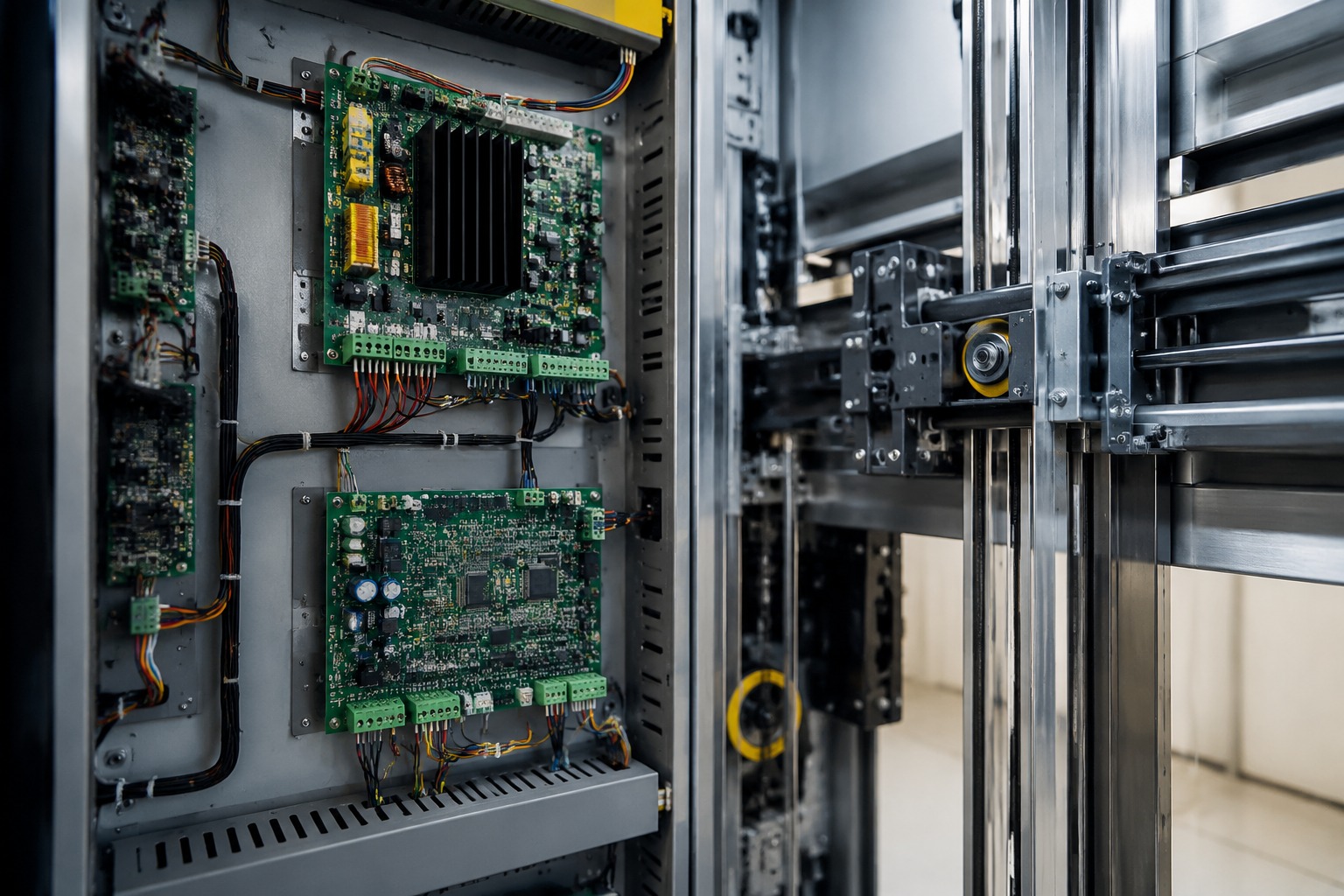
A Toshiba elevator motherboard should be replaced when it has a confirmed functional failure that cannot be safely or economically repaired, or when repeated intermittent issues make system reliability unacceptable. Common replacement triggers include severe component burning, damaged communication processors, persistent logic errors after external causes have been removed, unstable boot behavior, repeated watchdog resets, or corrupted program operation linked directly to the board. In India, where lifts in residential societies often face heavy daily traffic, prolonged intermittent faults can quickly escalate into resident complaints and service penalties.
However, replacement should not be the first assumption. Many motherboard symptoms are actually caused by power supply instability, loose connectors, moisture contamination, wiring faults, grounding problems, failed peripheral boards, or defective sensors feeding incorrect signals into the controller. Before declaring the motherboard faulty, technicians should verify supply voltages, inspect terminal tightening, review fault history logs, check for water ingress or insect contamination, and isolate related boards where possible. If the controller starts normally after connector cleaning or power stabilization, the motherboard may not need replacement at all.
Economic judgment matters too. If a board has already undergone multiple local repairs, shows lifted tracks, heat damage, poor solder rework, or recurring communication faults, replacement is often wiser than another patch repair. This is particularly true for lifts serving hospitals, premium office towers, and hotels where unpredictable downtime is costly. A stable replacement board, correctly matched and tested, can reduce future callouts and restore confidence for both technicians and building managers.
| Condition | Observed Symptom | Likely Cause | Repair Feasibility | Recommended Action | Reason |
|---|---|---|---|---|---|
| Minor oxidation | Intermittent startup or signal drop | Connector contamination | High | Clean and retest | Board may still be healthy |
| Stable power but no boot | No controller initialization | Processor or memory failure | Low | Replace board | Core logic likely compromised |
| Repeated resets | System restarts under load | Internal board instability | Medium | Assess history, likely replace | Intermittent faults are risky |
| Visible burn damage | Charred area or failed IC | Overvoltage or short circuit | Low | Replace after root cause review | Hidden damage may remain |
| Poor past rework | Lifted tracks, unstable solder joints | Previous repair degradation | Low | Replace board | Reliability becomes uncertain |
| External device fault | Input errors from sensors or wiring | Peripheral issue | High | Do not replace yet | Main board may not be faulty |
The decision table above helps service teams avoid replacing expensive controller boards without evidence. A careful diagnosis protects budgets and improves service credibility.
How to Inspect Expansion Boards and Driver Boards
Inspection of Toshiba expansion boards and driver boards should follow a repeatable checklist. Start with identification. Record the board label, revision, barcode, connector count, and any handwritten service markings. Compare these with the installed controller documentation or previous order records. In the field, technicians often use phone photos to capture both sides of the board, the mounting position, wiring colors, terminal identifiers, and adjacent modules. This is especially useful when parts are sourced from outside the city and remote model verification is required.
Next, perform a visual condition check. Look for discolored resistors, swollen capacitors, cracked solder joints, damaged relays, corrosion, insect residue, and signs of overheating around driver components. Expansion boards should also be checked for terminal damage, bent pins, and modified jumpers. A board that appears physically intact may still fail due to weakened connectors or vibration-related solder cracks, which are not uncommon in elevator machine rooms with fluctuating temperatures and dust exposure.
Functional context is just as important as physical inspection. If landing calls do not register on upper floors, an expansion board with I/O functions becomes a suspect. If door actuation or output command behavior is unstable, the driver board should be examined more closely. If a replacement is needed, confirm whether the board operates independently or requires matching with a motherboard revision, software setting, or corresponding power stage. Technicians searching for expanded I/O solutions may review Toshiba elevator expansion boards once site configuration is confirmed.
| Inspection Item | What to Look For | Why It Matters | Tool Needed | Pass Indicator | Fail Indicator |
|---|---|---|---|---|---|
| Board label | Model code, revision, serial details | Confirms compatibility | Camera or flashlight | Clear readable code | Missing or mismatched code |
| Connector condition | Loose sockets, bent pins, discoloration | Prevents signal loss | Magnifier | Clean and firm connection | Heat marks or pin damage |
| Capacitors | Bulging tops or leakage | Indicates aging or instability | Visual check | Flat intact surface | Swelling or residue |
| Solder joints | Cracks, dull joints, rework areas | Affects reliability under vibration | Magnifier | Uniform joints | Broken or lifted joints |
| Relay and output section | Burning or mechanical wear | Important for driver outputs | Visual and continuity tools | No heat damage | Char marks or dead relay |
| Terminal markings | Input/output labels and jumper positions | Supports correct reinstallation | Camera | Matches site wiring | Conflict with installed harness |
The checklist above makes remote support and procurement more accurate. A supplier can only match the right board if the field team captures clear evidence and fault context.
Safety Circuit Board Buying Notes
Safety circuit boards require the highest level of caution because they directly affect the elevator’s ability to monitor, transmit, or act on safety chain conditions. Buying decisions should begin with exact model identification, not visual similarity. Even boards that share the same size, relay arrangement, or connector count may differ in circuit logic, interface timing, or controller compatibility. For Indian service companies managing diverse building portfolios, a mistaken safety board order can waste critical time and create unnecessary site risk.
Before purchase, verify the original board code, controller series, site fault description, and whether the problem is truly within the safety board. For example, a safety lockout may be triggered by door interlock issues, shaft wiring faults, inspection switch problems, or limit device interruptions rather than the board itself. The safest process is to confirm incoming and outgoing signal conditions, inspect relay contacts, review event logs, and compare the failed board against installation photos. If a replacement safety relay board is required, technicians should document the cabinet layout and any interlinked modules.
Buyers should also ask whether the board has been functionally checked, how it was packed against electrostatic discharge, and whether visual inspection images are available before dispatch. For maintenance teams serving high-occupancy towers in Mumbai or corporate campuses in Bengaluru, the cost of an incorrect safety board is much higher than the price of thorough pre-shipment verification. Safety-focused purchasing is therefore a technical process, not a simple procurement transaction.
| Check Point | Question to Ask | Why It Is Important | Risk If Ignored | Preferred Evidence | Priority |
|---|---|---|---|---|---|
| Exact board code | Does the replacement code fully match? | Ensures functional compatibility | No-run condition | Label photo | Critical |
| Controller model | Which Toshiba controller series is installed? | Links the board to correct application | Interface mismatch | Controller nameplate | Critical |
| Fault confirmation | Has the board failure been isolated? | Avoids wrong replacement | Time and cost loss | Fault report | Critical |
| Visual condition | Are relays, tracks, and connectors intact? | Improves installation reliability | Repeat breakdown | High-resolution images | High |
| Testing status | Was the board inspected before shipment? | Reduces uncertainty | Dead-on-arrival risk | Inspection confirmation | High |
| Packing method | Is anti-static and shock protection included? | Protects electronics in transit | Shipping damage | Packing photos | High |
This table is especially useful for purchase managers who may not be on site. It translates technical risk into clear buying questions that support safer procurement.
Car Top Communication Board Use Cases
The car top communication board is commonly used where the elevator needs stable communication between the controller and devices mounted on or near the car top. Typical use cases include inspection operation, car top command handling, door-related communication, status feedback, and maintenance diagnostics. In practice, these boards become important when technicians encounter irregular car top inspection behavior, missing status transmission, communication interruptions, or faults linked to moving cable interfaces and signal exchange.
In residential and commercial buildings, the car top is a demanding operating environment. Vibration, humidity, dust, and cable movement all affect long-term reliability. If a Toshiba lift shows inconsistent inspection mode operation, unexplained signal loss during maintenance, or communication alarms linked to upper assembly devices, the car top communication board should be evaluated together with the traveling cable, connectors, and related sensors. Replacing the board without checking the signal path may not solve the actual issue.
These boards are also relevant in modernization staging projects where owners want to keep an older Toshiba lift running safely until a larger system upgrade is approved. In such cases, a car top communication board can help restore practical serviceability and avoid prolonged outages. The key is to verify the exact board function within that controller architecture, because “communication board” can mean different roles across different generations and configurations.
Compatibility Questions for Technicians
Compatibility is the most important topic in Toshiba elevator board sourcing. A technician should never ask only for “a Toshiba board” or “a motherboard for a passenger lift.” Instead, the request should answer precise technical questions. What is the exact board code? What controller model and lift application is it used on? Is the lift passenger, hospital, service, or freight? What are the observed fault codes? Has the original board been repaired before? Are there matching connector photos and cabinet overview images? Does the site use a paired board set or linked inverter arrangement?
Technicians should also ask whether firmware or revision differences matter in that application. Some boards can be swapped across close variants, while others cannot. If a board interfaces with the inverter, door operator, or safety chain, even a small mismatch may lead to non-start conditions or hidden operational instability. In India, where documentation gaps are common on older sites, photos of labels, terminal maps, and neighboring boards often become as important as the written part number itself.
Another key question is whether the board is for repair replacement, emergency restoration, or stock planning. Emergency orders require speed, but speed should not replace verification. For stock planning, it may be wise to standardize frequently failing board models across a service portfolio, especially in large maintenance networks covering cities such as Pune, Hyderabad, Chennai, and Delhi. A disciplined compatibility process creates better technical outcomes and stronger long-term inventory management.
Buying Advice for Maintenance Companies and Distributors
The best buying approach combines diagnosis, documentation, model confirmation, and quality assurance. First, collect site data: elevator brand, controller code, board part number, fault symptom, and clear photos. Second, confirm whether the failed board is truly the root cause. Third, compare alternative sourcing options based on compatibility support, inspection discipline, responsiveness, and packing quality rather than price alone. A cheap but poorly matched board can create more downtime and cost more in repeat visits, especially when the site is far from your engineering base.
For distributors in India, another practical strategy is to segment stock by urgency and complexity. Common relay and interface boards may be stocked locally for fast dispatch, while rarer motherboard and drive-related boards can be sourced through a partner with stronger model-matching capability. This reduces carrying costs without sacrificing service speed. Building owners and facility managers should also request traceable paperwork, pre-shipment photos, and communication records so that future replacements become easier.
Industries and Applications That Depend on Reliable Toshiba Boards
Toshiba elevator boards are used across many property types, but the risk profile varies by industry. Residential towers need consistent daily operation and low resident complaints. Hospitals prioritize dependable response and safe patient movement. Commercial offices focus on uptime during peak traffic. Hotels need smooth guest experience. Industrial sites and logistics buildings often value durable operation under demanding conditions. Educational campuses and public buildings must balance budget control with safe performance.
Because each application stresses the elevator differently, the right board choice must consider duty cycle, environment, and service urgency. A hospital board replacement decision in Chennai is not the same as a low-rise residential repair in Kochi or a freight-oriented installation near an industrial zone in Gujarat. The technical part may be similar, but the consequence of failure and the need for preventive stocking are very different.
Case Examples from the Indian Market
In one residential high-rise service case in Navi Mumbai, repeated controller resets led the building team to suspect the motherboard. After structured inspection, the actual cause was unstable power supply output affecting the controller startup sequence. Replacing only the power-related issue prevented unnecessary motherboard expense and restored reliable operation. This case shows why diagnosis should precede procurement.
In another example from a commercial building in Bengaluru, upper-floor landing signals failed intermittently. The field team initially suspected wiring faults, but detailed review of the expansion board revealed connector heat stress and weakened contact points. A correctly matched replacement board resolved the issue. The success came from good photo documentation and a supplier who reviewed the board revision before dispatch.
A hospital service contractor in Hyderabad faced a no-run condition linked to the safety chain. Instead of immediately ordering by appearance, the contractor supplied controller details, fault notes, and board label images. After confirming the exact safety relay board, the replacement arrived with anti-static packing and clear identification, helping the team complete the job quickly and safely.
Technology, Manufacturing, and Service Strengths That Improve Sourcing
Strong technological capability matters because Toshiba board replacement often depends on precise model matching rather than generic substitution. An experienced parts supplier should be able to review board photos, compare function categories, identify likely compatibility risks, and guide technicians on the specific information needed before shipment. This reduces ordering errors and helps maintenance companies solve faults faster, especially when they manage multiple brands and mixed controller generations.
Manufacturing and quality handling capability also play a practical role. Buyers benefit from suppliers who understand board inspection standards, maintain stable sourcing channels, examine connector condition, verify labeling, and apply protective anti-static and shock-resistant packaging. For electronics moving across long routes into India, careful packaging is not optional. It protects board integrity from vibration, moisture, dust, and handling stress during transit through ports, warehouses, and courier networks.
Service capability is equally important. Responsive communication, clear pre-shipment confirmation, support with model identification, and timely follow-up after dispatch all help reduce downtime. Maintenance companies and building owners usually need fast answers, especially during shutdowns affecting tenants or patients. A supplier focused on reliable sourcing, careful matching, stable inspection, and protective packing can make controller repair more predictable and cost-effective.
Packaging and Shipping Protection
Packaging is a technical issue, not only a logistics issue. Toshiba elevator boards contain components that can be damaged by electrostatic discharge, impact, moisture, or poor stacking. A proper packing sequence should include anti-static protection, cushioning around corners and connectors, moisture barriers where needed, rigid outer cartons, and clear labeling to prevent crushing or incorrect orientation. This is particularly important for urgent dispatches to India where a board may travel by courier, domestic road transport, air cargo, or multimodal shipping after import consolidation.
Routes through Chennai Port, Mumbai, Mundra, or inland hubs can expose cargo to humidity and handling stress. Even within domestic distribution, long-distance movement to cities such as Lucknow, Coimbatore, Bhubaneswar, Indore, or Guwahati requires stable packing. Buyers should ask for packing photos before dispatch, especially for motherboards, inverter boards, and safety boards. Good packaging reduces dead-on-arrival risk and preserves installation confidence for the field technician.
| Protection Element | Purpose | Best Use Case | If Missing | Recommended for | Importance Level |
|---|---|---|---|---|---|
| Anti-static bag | Prevents electrostatic damage | All electronic boards | Latent or instant failure | Motherboards, driver boards | Critical |
| Foam cushioning | Absorbs shock and vibration | Long-distance transit | Cracked components | All board types | High |
| Corner protection | Protects PCB edges and connectors | Fragile connector layouts | Broken terminals | Expansion and communication boards | High |
| Moisture barrier | Reduces humidity exposure | Coastal and monsoon routes | Corrosion risk | Shipments via ports | High |
| Rigid outer carton | Maintains structural protection | Courier and mixed handling | Compression damage | All urgent shipments | High |
| Clear labeling | Improves handling accuracy | Warehouse and customs flow | Mishandling or delays | Domestic and import shipments | Medium |
The protection standards above help buyers assess whether a supplier is serious about electronic parts handling. Good packaging lowers transit risk and supports smoother installation at site.
Local Supplier Evaluation in India
When comparing local distributors, import-based stockists, and specialized international parts suppliers serving India, buyers should evaluate more than availability. Useful criteria include technical understanding of Toshiba boards, willingness to verify labels from photos, ability to suggest related parts such as inverter boards or safety relay boards, packaging standards, response time, and consistency across repeat orders. For urgent repairs in cities like Delhi, Mumbai, and Bengaluru, quick dispatch matters. But for long-term maintenance performance, correct matching matters even more.
A balanced supplier evaluation helps maintenance firms avoid the trap of price-only purchasing. The best supply relationship combines product knowledge, disciplined handling, practical communication, and support for technicians working under pressure at site.
2026 Trends: Technology, Policy, and Sustainability
Looking toward 2026, several trends will shape Toshiba elevator board sourcing and controller repair in India. First, technical decision-making will become more data-driven. More service teams will use structured fault records, board photo archives, and digital service logs to improve compatibility checks and reduce wrong-part orders. Second, modernization pressure will continue as older elevators in major cities move toward selective upgrades. This will increase demand for interim replacement boards that help keep systems operational while long-term modernization budgets are prepared.
Policy and compliance expectations are also likely to increase attention on safe maintenance practice, traceable parts usage, and reliable repair documentation. Building owners are becoming more focused on uptime, safety accountability, and vendor transparency. In parallel, sustainability goals will encourage smarter repair-versus-replace decisions. Instead of premature full replacement, many owners will choose targeted board replacement to extend asset life, reduce waste, and delay major capital expenditure where safe to do so.
Packaging and logistics standards are expected to improve as buyers become more aware of electrostatic protection and moisture control. Demand for tested, well-documented, and carefully packed elevator electronics will likely rise across India, especially in climate-sensitive and high-density urban regions. Suppliers that combine technical matching, quality discipline, and responsive service will be better positioned in this environment.
FAQ About Toshiba Elevator Boards
1. How do I know which Toshiba elevator board I need?
Start with the exact board code, controller model, fault description, and clear photos of the board label, connectors, and cabinet location. This is the safest basis for model matching.
2. Can a visually similar board be used as a substitute?
Not safely unless compatibility is confirmed. Similar size or layout does not guarantee the same function, firmware logic, or interface behavior.
3. Should I replace the motherboard immediately if the lift is dead?
No. First check power supply, wiring, connectors, related boards, and environmental damage. Many dead-lift symptoms come from external causes.
4. What information should technicians send before ordering?
Board code, controller details, fault notes, photos of both sides of the board, cabinet overview, and any previous repair history are highly useful.
5. Are expansion boards and driver boards difficult to identify?
They can be, especially on older sites with incomplete documentation. Connector patterns, I/O labels, revision numbers, and installation position all help identification.
6. Why is anti-static packaging important?
Elevator control electronics can be damaged by electrostatic discharge even if no external damage is visible. Proper packaging reduces this risk during transit.
7. When is a safety relay board purchase most sensitive?
Always. Safety boards should only be sourced after exact model and application confirmation because mistakes can create serious system issues.
8. Can replacement boards help delay modernization?
Yes, in many cases. Correctly matched boards can extend system life and support stable service while owners plan a phased modernization strategy.
9. What related Toshiba parts are commonly ordered with boards?
Depending on the fault, buyers may also require inverter boards, inverter driver boards, expansion boards, relay boards, sensors, encoders, power supplies, and door operator components.
10. What makes a good supplier for Toshiba elevator boards?
Strong model matching, careful inspection, reliable sourcing channels, protective packaging, and responsive technical communication all matter.
Final Recommendation for India Buyers
If you need a Toshiba elevator board for controller repair in India, begin with exact identification and disciplined diagnosis. Match the board type to the actual fault, verify compatibility through labels and photos, give special attention to safety-related circuits, and insist on protective packaging for shipment. Whether you are replacing a motherboard, reviewing a driver board, checking an expansion board, or sourcing a communication module, a careful process will reduce downtime, lower repeat failures, and support safer elevator operation. The most reliable results come from suppliers that combine technical understanding, quality-focused handling, and practical service support for field technicians and maintenance teams.